Summary
Air New Zealand will retrofit its entire core Boeing 777-300ER fleet with Collins Elevation business-class seats featuring privacy doors and a reverse herringbone layout, aligning the aircraft with the airline’s already-upgraded 787-9 Dreamliner cabins. The 44-seat Business Premier cabin retains its current count but gains 43-inch pitch, lie-flat beds, 18-inch IFE screens, and sliding center dividers, while Economy expands to 246 seats with new ZIM-designed seating and a 35-inch stretch section.
The first aircraft enters modification in March 2027 and returns to service by May 2027. Premium Economy loses two seats, dropping to 52, yet the total seat count remains 342 — meaning the upgrade is a direct swap of the 777’s hard product without reducing capacity.
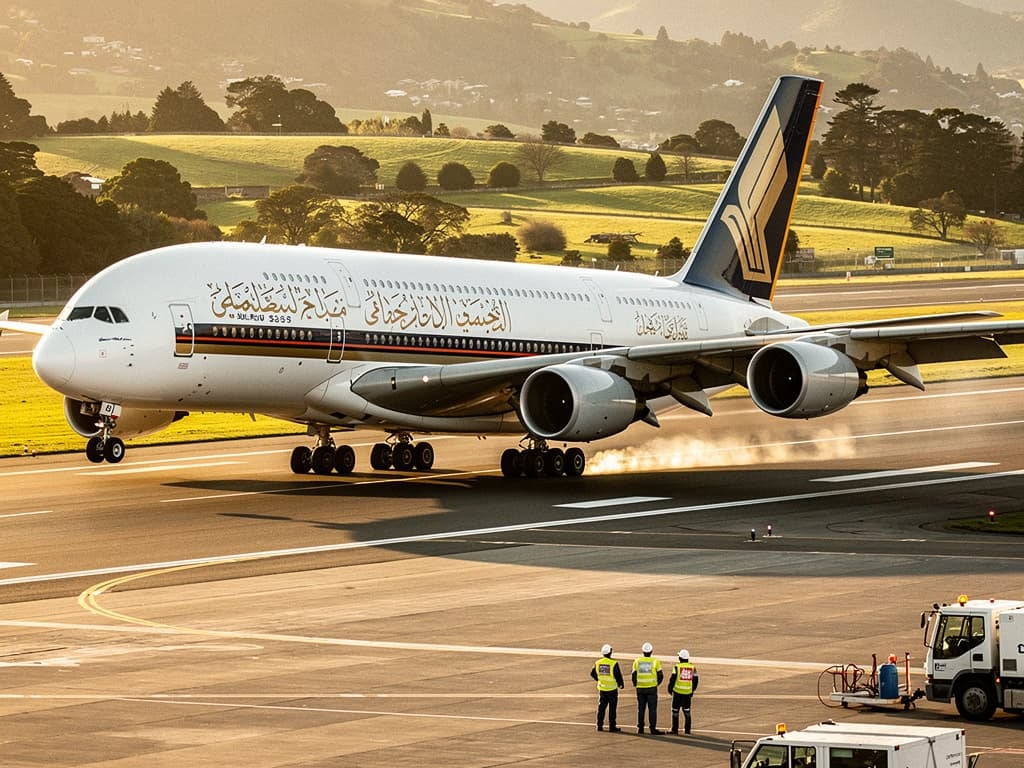
Air New Zealand has pulled back the curtain on a $100 million interior overhaul for its Boeing 777-300ER fleet, a move that will hand long-haul travelers a consistent premium cabin experience across the airline’s international widebody network. The upgrade, announced July 15, 2026, replaces the plush but aging herringbone Business Premier seats and conventional Economy rows with the same product suite already flying on the carrier’s retrofitted 787-9 aircraft.
The investment is partly about passenger comfort and partly about hard economics. Rising maintenance costs for the 777-300ER’s original interiors — some of which have been in service since late 2010 — made a refresh compelling, and the new cabins are designed to extend the aircraft’s operational life into the early 2030s. For premium travelers, the payoff is a fleet-wide product that finally matches the standard set by the Dreamliner conversions that concluded in 2025.
The seven core 777-300ERs — excluding the ex-Cathay Pacific frames — will each receive the new cabins. The retrofit program touches every part of the passenger experience except Premium Economy, which recently saw new seat covers and curtains and will lose only two seats to accommodate the forward cabin layout. The unchanged total of 342 seats means the airline can swap in upgraded aircraft without disrupting schedule density on prime routes to Los Angeles, London, Singapore, and Tokyo.
Inside the cabin refresh
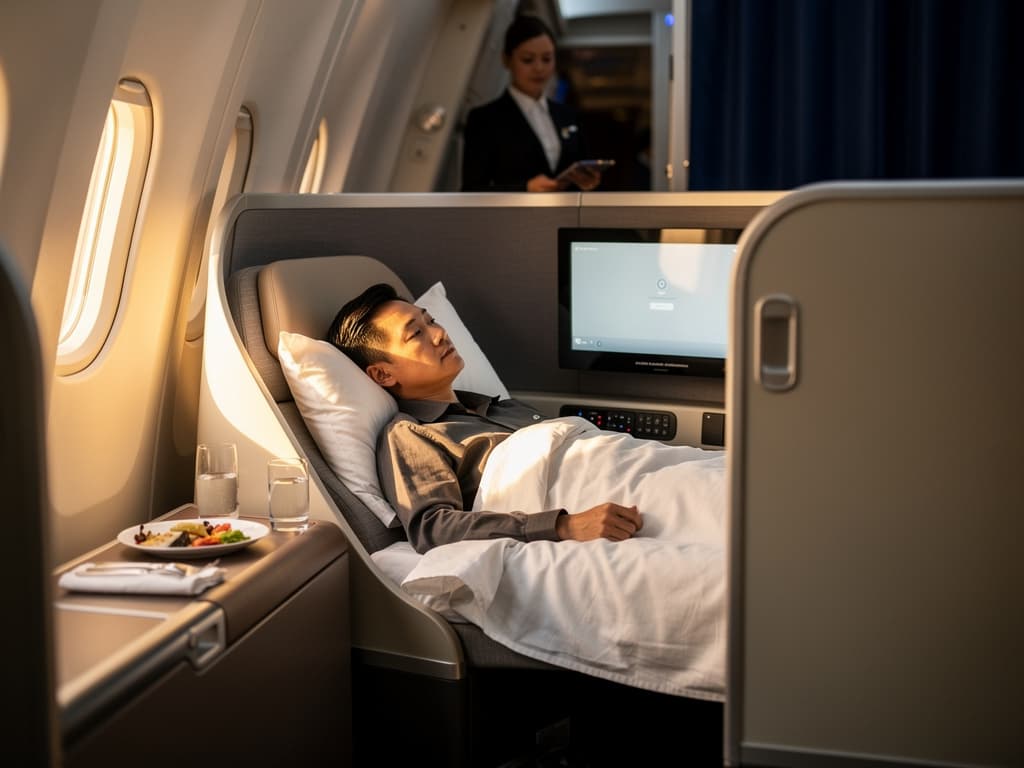
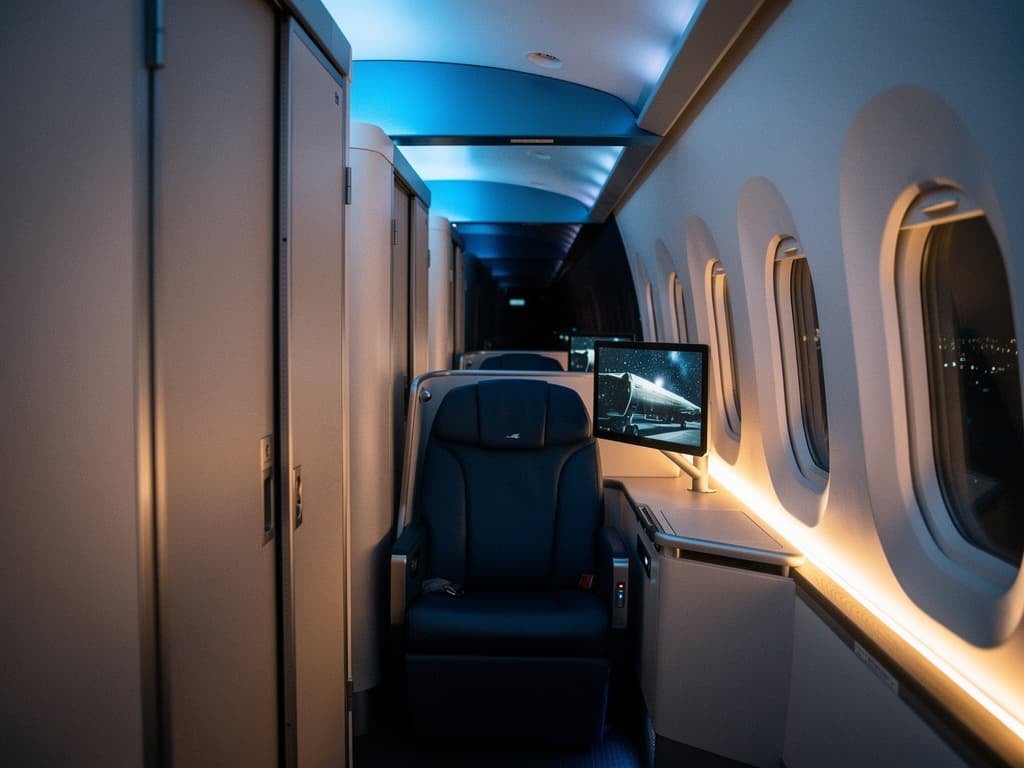
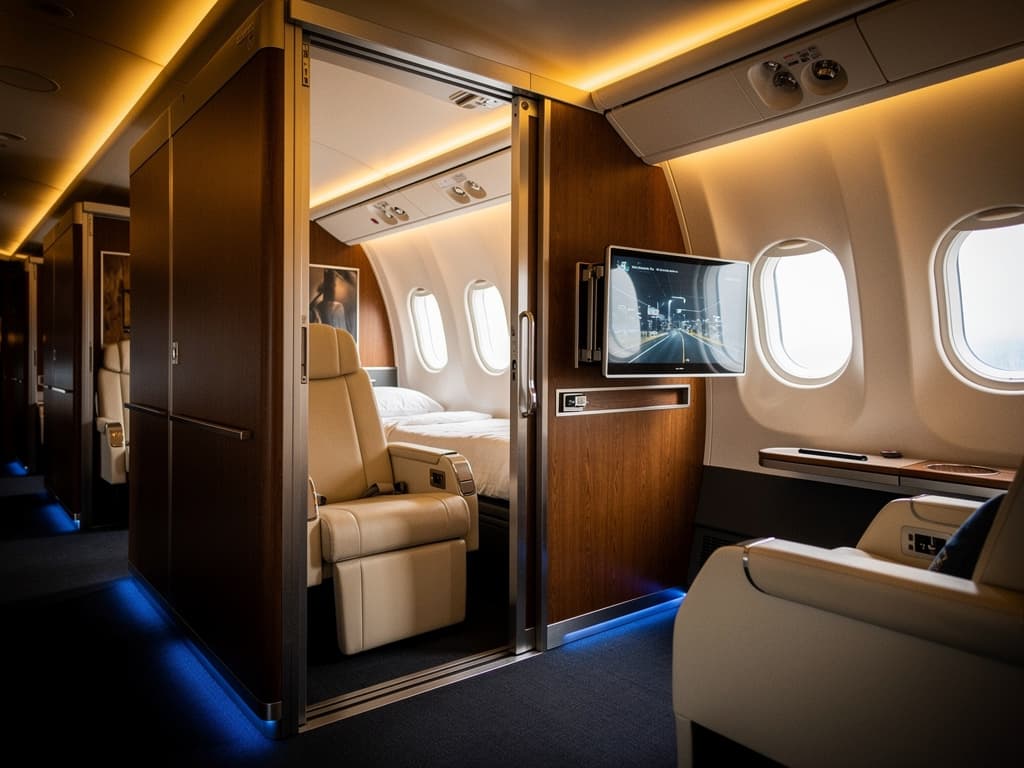
The new Business Premier cabin is built around the Collins Elevation platform, a forward-facing reverse herringbone design that gives every passenger direct aisle access and a sliding privacy door. The 44-seat layout is identical in count to the current cabin, but the experience is a generational leap: each seat converts to a fully lie-flat bed with 43-inch pitch, and center pairs feature a sliding divider that can be opened or closed, mirroring the flexibility of the airline’s 787-9 business class. An 18-inch inflight entertainment screen with Bluetooth audio and both USB-A and USB-C ports rounds out the personal space.
Economy receives a less dramatic but equally deliberate upgrade. The 246 seats — a net gain of two — are supplied by ZIM and introduce a dedicated Stretch section with 35-inch pitch, while standard rows settle at 31–32 inches. All seats get 13-inch screens with Bluetooth and USB-C, and the popular Skycouch rows remain at 16. The economy cabin, like business, now closely tracks the Dreamliner’s passenger experience, a detail the airline detailed in its announcement.
| Date | Event | Impact |
|---|---|---|
| July 2026 | Program announced; seat specifications and CGI renders released | Travelers can assess the upcoming product against current cabins |
| March 2027 | First 777-300ER enters modification | Aircraft removed from service for approximately two months |
| May 2027 | First upgraded aircraft returns to service | Premium travelers can book the new cabin on select routes |
| Early 2029 (est.) | All seven core 777-300ERs expected to be retrofitted | Full fleet consistency with the 787-9 across the long-haul network |

Flight deals most people never see
Our AI monitors 150+ airlines for pricing anomalies that traditional search engines miss. Air Traveler Club members save $650 per trip per person on average: see how it works.
Each deal saves 40–80% vs. regular fares:

Why the unified fleet matters for premium travelers
The 777-300ER retrofit eliminates the last major product inconsistency in Air New Zealand’s long-haul fleet. Until now, a passenger could step off a 787-9 with doors and Bluetooth IFE and onto a 777 with the older herringbone seat — a disjointed experience that undercut the airline’s premium positioning. From May 2027, the fleet will offer the same hard product, making award bookings and upgrade decisions less of a gamble.
That consistency also strengthens the airline’s hand against competitors like Qantas and Singapore Airlines on the key Auckland–Los Angeles and Auckland–London corridors. While the new seat doesn’t leapfrog Singapore’s suite product, it closes the gap with Qantas’s A380 business class and provides a more private, modern space than what the 777 previously offered. Air New Zealand’s willingness to innovate extends beyond the premium cabin, as Air Traveler Club’s analysis of the Skynest sleep pods shows — but the business-class upgrade is the one that matters most for long-haul award travelers.
Booking strategies for the new 777-300ER cabin
The first upgraded aircraft will be a scarce resource, so travelers who want to experience the new Business Premier on a specific route should plan their bookings around the airline’s initial deployment.
- Target the 11-month award window. United MileagePlus and Air New Zealand’s own program often release business-class award space 11 months out. Locking in early is the surest way to snag a seat on the first retrofitted aircraft.
- Prioritize Auckland–Los Angeles. Industry expectations point to the LAX route as the likely debut corridor for the upgraded 777-300ER. If confirmed, any booking on that service after May 2027 stands a strong chance of featuring the new cabin.
- Monitor seat maps for the reverse herringbone layout. Once the new cabin enters service, Air New Zealand’s seat maps will reflect the 1-2-1 configuration. Check the airline’s website or call reservations to verify before ticketing.
- Be flexible on dates. The retrofit will roll out aircraft by aircraft, so midweek flights or off-peak periods may see the new cabin sooner than peak-weekend services. If the product matters more than the specific date, widen your search window.
Watch for the airline’s first official route assignment for the retrofitted aircraft — expected in early 2027 — as the strongest signal of where the new cabin will appear first.
FAQ
When will the first upgraded 777-300ER enter service?
The first aircraft is scheduled to begin modification in March 2027 and return to revenue service by May 2027. Expect the exact date to be confirmed closer to the rollout as the retrofit progress is finalized.
Which routes are most likely to see the new cabin first?
Air New Zealand has not officially confirmed the initial route, but the Auckland–Los Angeles corridor is widely expected to be the first deployment, given its high concentration of premium demand and the airline’s pattern of introducing new products on its flagship North American routes.
How can I book the new business class with points?
Award space is searchable via United MileagePlus (united.com) or Air New Zealand’s own booking portal (airnewzealand.com). The best availability typically appears at the 11-month mark, so set alerts for your desired travel window and book as soon as seats open.
Are Premium Economy seats being upgraded?
No. Premium Economy recently received new seat covers and curtains, and the cabin will lose only two seats to accommodate the Business Premier layout. No further hard-product changes are planned for that cabin in this retrofit cycle.
Read more