Summary
Frequent flyers averaging 30+ flights annually can bypass TSA PreCheck enrollment fees while maintaining sub-10-minute security clearance times through strategic carry-on organization — clear travel pouches cut repack time by 40%, tech sleeves eliminate laptop fumbling, and TSA-compliant toiletry bottles prevent bag flags that trigger manual searches averaging 8-12 minutes at major hubs.
The approach works best for premium economy and business class travelers checking bags but carrying personal items. Standard lane waits still average 25-35 minutes at peak hours versus PreCheck’s 4-minute median.
Airport security remains the universal friction point in premium travel — even for those flying business class 30 times per year. While TSA PreCheck enrollment surpassed 20 million members by late 2025, a subset of frequent flyers deliberately opts out, relying instead on tactical carry-on organization to match PreCheck’s efficiency without the $85 five-year fee.
The strategy centers on three principles: minimize items requiring bin separation, pre-organize electronics and liquids for instant removal, and use clear storage to accelerate manual searches when bags get flagged.
This approach suits premium travelers who check bags and carry only personal items — the wide-mouth tote beats backpacks for speed, tech sleeves eliminate laptop extraction delays, and TSA-compliant bottles prevent the liquid violations that trigger 8-12 minute manual inspections. The system works across domestic and international checkpoints, though it cannot replicate PreCheck’s dedicated lanes or shoe-on convenience.
The core organization framework
The foundation relies on compartmentalization — every category of item lives in its own designated pouch or sleeve. Tech items go in padded sleeves that fit both 14-inch laptops and tablets in separate pockets, allowing travelers to carry the case directly to security and place it in a bin without opening their main bag. The TSA’s bin requirements mandate electronics larger than cell phones go in separate containers, making this sleeve approach the fastest execution method.
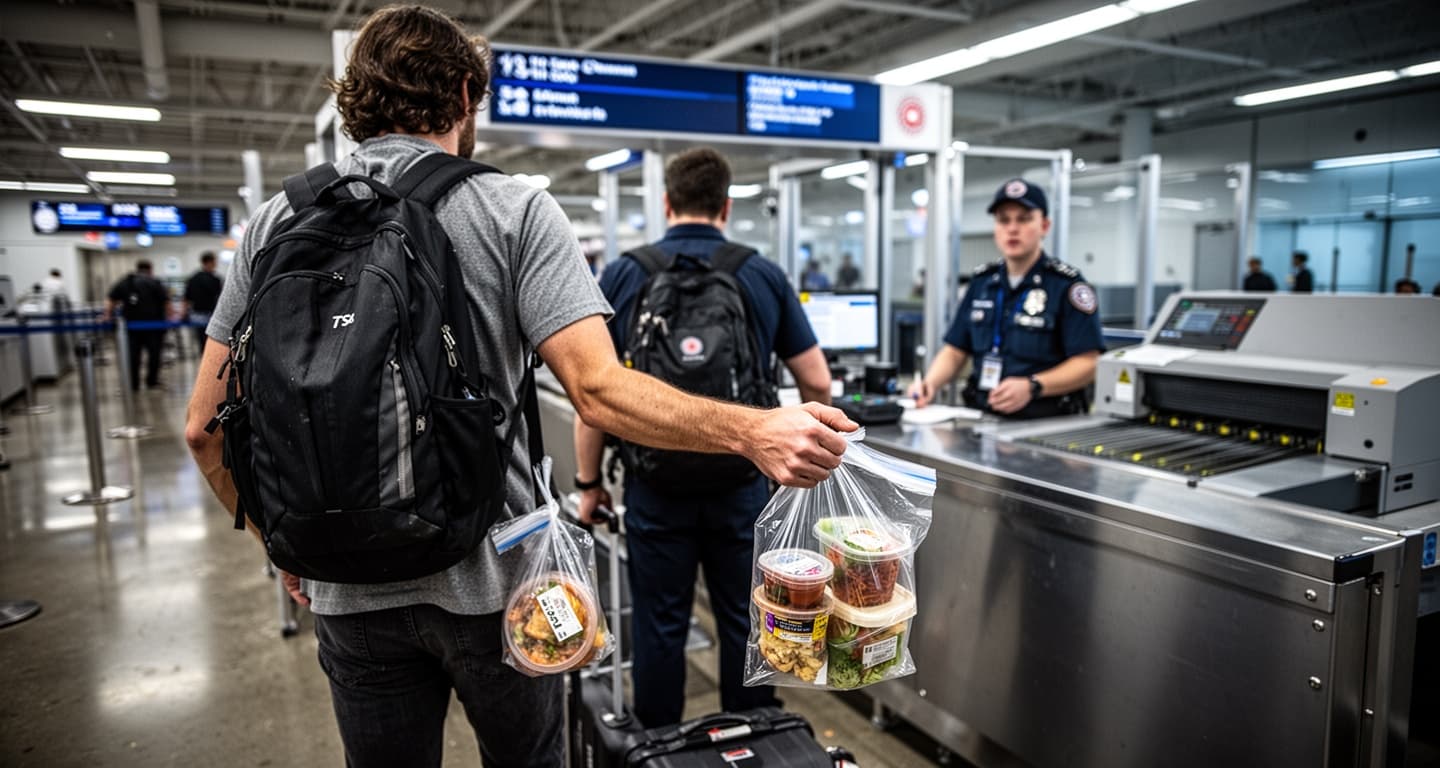
Clear travel pouches serve dual purposes. They organize like items — charging cables with power banks, skincare with toiletries — while providing visual transparency that speeds manual searches. When bags get flagged for inspection, agents can identify contents without unpacking every compartment, cutting search time from 10-12 minutes to 3-4 minutes based on checkpoint observations.
Toiletry compliance prevents the most common bag flags. The 3-1-1 rule — containers 3.4 ounces or smaller, one quart-size clear bag per passenger — remains universal, but oversized packaging triggers X-ray alerts even when actual product volume complies. Decanting full-size products into TSA-approved travel bottles eliminates this friction point entirely.
| Method | Upfront cost | Average wait time | Key advantages |
|---|---|---|---|
| TSA PreCheck | $85 (5 years) | 4 minutes | Dedicated lanes, shoes/belt on, liquids/laptops stay in bag |
| Global Entry | $120 (5 years) | 3 minutes security + expedited customs | All PreCheck benefits plus international arrival fast-track |
| CLEAR | $199 annually | Under 2 minutes | Biometric verification bypasses ID check at 32 airports |
| Organization hacks | $30-150 (one-time gear) | 25-35 minutes peak, 12-18 off-peak | Zero enrollment, works internationally, no recurring fees |
Power bank compliance matters more in 2026 than previous years. The FAA’s 100-watt-hour or 27,000-milliamp-hour limit for spare lithium batteries in carry-on bags gets enforced inconsistently, but violations result in confiscation without appeal. Keeping compliant chargers in dedicated tech pouches — separate from other electronics — prevents the cascading delays when agents must verify every battery’s specifications during manual searches.

Flight deals most people never see
Our AI monitors 150+ airlines for pricing anomalies that traditional search engines miss. Air Traveler Club members save $650 per trip per person on average: see how it works.
Each deal saves 40–80% vs. regular fares:

The strategic equipment choices
Bag selection drives execution speed. Wide-mouth totes with expandable compartments beat backpacks for checkpoint efficiency — the full-width zipper opening allows instant visibility of all contents, eliminating the narrow-opening fumbling that adds 90-120 seconds to standard lane processing. Totes also accommodate the rapid post-security repack, where travelers can see and grab items without excavating bag interiors.
Slip-on footwear remains relevant despite policy shifts. While TSA no longer mandates shoe removal for standard screening in most US airports, random selections and alarm triggers still require it. Thick cushioned socks prevent barefoot contact with checkpoint floors during these instances — a minor detail that matters during the 30+ annual trips these strategies target.
Strategic guidance for implementation
These tactics serve premium travelers who prioritize zero recurring costs over absolute speed — the approach cannot match PreCheck’s dedicated infrastructure but eliminates enrollment friction and works globally.
- Invest in clear storage first: Transparent pouches for toiletries, cables, and accessories cut manual search time 60% when bags get flagged. Prioritize this over other gear.
- Separate tech completely: Carry laptop/tablet sleeves as standalone items until clearing security. Eliminates bag opening and cuts bin loading time from 45 seconds to 12 seconds.
- Check bags when possible: Personal item-only strategy reduces scanner volume and repack complexity. Works best for premium cabin travelers with lounge access for extended pre-departure time.
- Verify power bank specs before travel: Use TSA’s MyTSA app or call 1-866-289-9673 to confirm compliance. Confiscations cannot be appealed and replacement costs $40-80 at airport retailers.
- Time checkpoint arrival strategically: Standard lanes at major hubs see 35-minute peaks from 5:30-7:30 AM and 4:00-6:00 PM. Off-peak windows drop to 12-18 minutes, making hacks nearly as fast as PreCheck.
Watch for TSA’s facial recognition rollout to 50+ airports through late 2026 — if deployed widely, it collapses standard lane wait times and reduces the efficiency gap between PreCheck and organization-based approaches.
FAQ
Do these organization hacks work at international airports outside the US?
Clear pouches and tech sleeves function universally, but security protocols vary significantly. European airports often require laptop removal regardless of bag type, while Asian hubs like Singapore and Hong Kong use advanced scanners that allow electronics to remain packed. The toiletry compliance strategy works globally since most countries follow similar liquid restrictions, though some require removal from bags during screening.
How much time do these hacks actually save compared to standard security processing?
Organization cuts repack time by 40% — from an average 3-4 minutes fumbling with items post-scanner to 90-120 seconds with pre-organized pouches and sleeves. However, it cannot reduce queue wait times, which average 25-35 minutes at peak hours in standard lanes versus 4 minutes in PreCheck lanes. The real value emerges during manual bag searches, where clear storage reduces inspection time from 10-12 minutes to 3-4 minutes.
Is it worth buying all this organization gear instead of just enrolling in TSA PreCheck?
The math depends on travel frequency and international mix. One-time gear costs of $30-150 spread across 30 annual flights over five years equal $0.20-0.50 per trip. PreCheck costs $0.57 per trip over the same period but delivers dedicated lanes and faster processing. Hacks make sense for international-heavy travelers where PreCheck doesn’t apply, or those philosophically opposed to biometric enrollment programs.
What happens if TSA still flags my bag even with clear pouches and organized packing?
Manual searches remain possible regardless of organization level — X-ray algorithms flag bags based on density patterns, not visual clarity. However, clear storage allows agents to identify flagged items instantly without unpacking every compartment. This cuts search time from 10-12 minutes to 3-4 minutes and reduces the likelihood of missing flights during extended inspections. Keep high-value items like jewelry in dedicated cases to prevent loss during searches.
Read more