Summary
The Transportation Security Administration confiscated consumer advocate Ralph Nader’s hummus at Bradley Airport on April 10, 2026, classifying the chickpea spread as a “liquid” under the agency’s 20-year-old 3-1-1 rule that limits containers to 3.4 ounces and requires placement in quart-sized bags. The incident exposes how TSA enforcement treats spreads, pastes, yogurt, peanut butter, and soft cheeses identically to liquid explosives despite technological advances that allow European and Asian airports to screen liquids without arbitrary volume restrictions.
The rule affects all travelers regardless of cabin class or elite status—TSA PreCheck members face identical confiscation risk. Enforcement remains inconsistent across checkpoints, creating unpredictability for frequent flyers packing provisions.
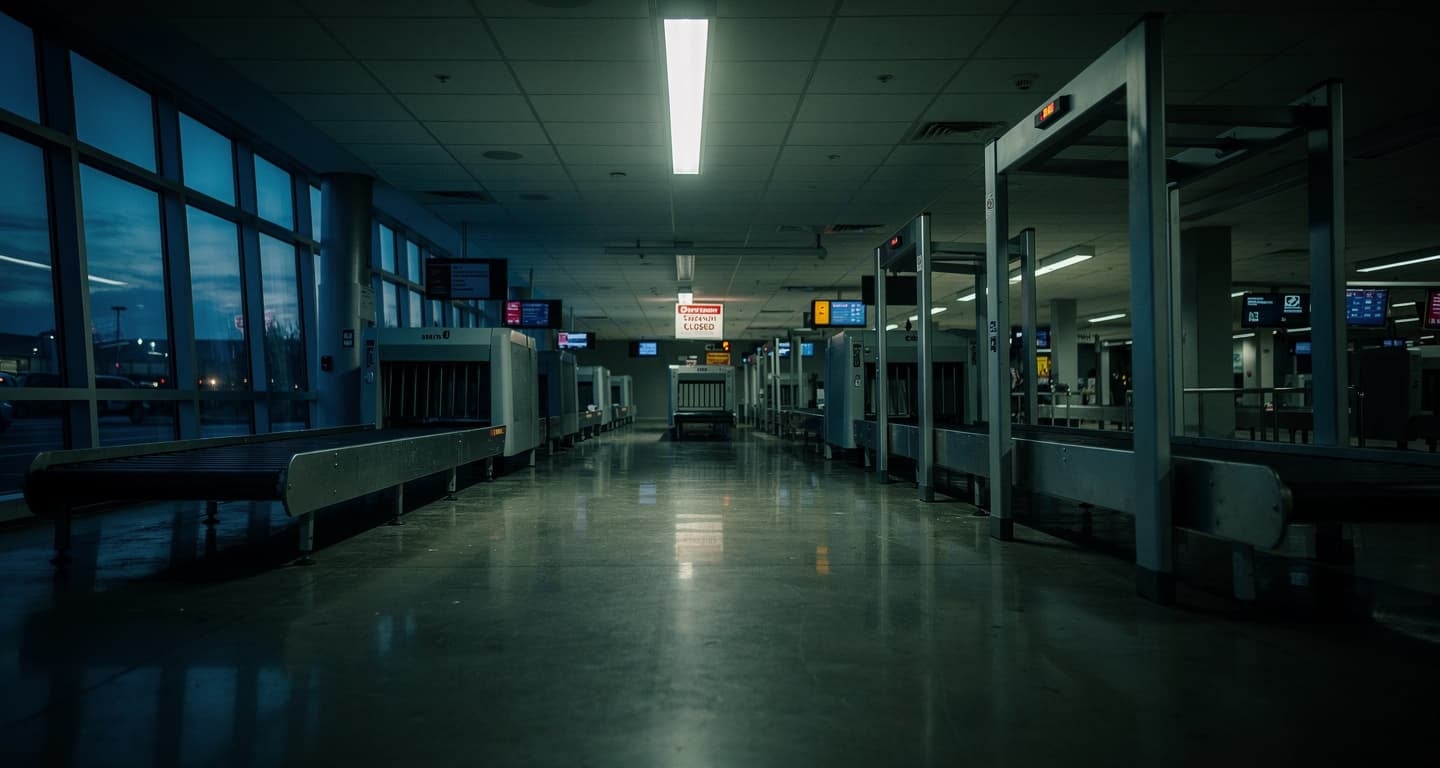
Ralph Nader discovered what millions of travelers learn annually: the Transportation Security Administration’s definition of “liquid” extends far beyond what physics textbooks would recognize. At Bradley Airport in Hartford, Connecticut, TSA officers confiscated his hummus container, triggering a social media post that crystallized two decades of passenger frustration with security theater.
“Hummus is not a mysterious liquid. It’s a nutritious popular vegetable!” Nader protested, according to his April 10 account. The officer’s response: “Doesn’t matter. Either leave the line with it or it goes into the garbage.”
The exchange reveals the operational reality behind TSA’s 3-1-1 rule—a 2006 emergency measure that became permanent policy. Spreads, pastes, and gels face the same 3.4-ounce container limit as shampoo or contact lens solution, regardless of security logic. The agency maintains an official guidance page specifically addressing hummus classification, confirming its status as a prohibited item when exceeding volume thresholds.
For business travelers and frequent flyers, this creates friction at premium checkpoints. Unlike European hubs deploying advanced CT scanning technology that analyzes liquid composition without volume restrictions, U.S. airports enforce the original 2006 standard. London Heathrow, Paris Charles de Gaulle, and Singapore Changi allow standard carry-on liquids; American passengers still pack quart-sized bags.
The details: what counts as a “liquid” under TSA rules
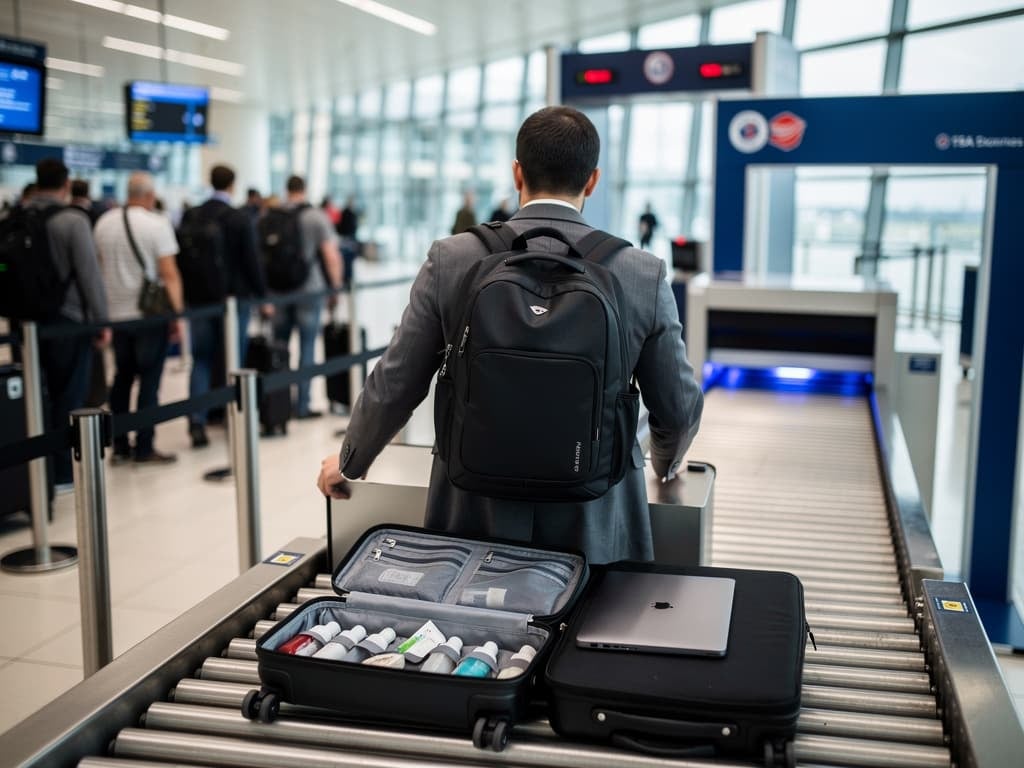
The Transportation Security Administration’s liquid ban originated following the 2006 transatlantic bomb plot, when authorities discovered plans to detonate liquid explosives aboard flights. The rule was implemented as an emergency measure and formalized as the “3-1-1” standard: 3.4 ounces per container, one quart-sized clear bag, one bag per passenger.
Twenty years later, the rule remains unchanged despite technological evolution. Advanced CT scanners deployed at international airports can analyze liquid composition and detect explosive compounds without arbitrary volume limits. The TSA has tested this equipment but hasn’t deployed it system-wide, citing infrastructure costs and operational complexity.
TSA classification treats anything that doesn’t fit neatly into a solid category as a liquid or gel. This includes hummus, peanut butter, yogurt, soft cheeses, jams, and similar spreads. The agency’s “What Can I Bring?” tool at tsa.gov provides item-specific guidance, but enforcement varies by checkpoint and individual officer interpretation.
| Item category | TSA classification | Carry-on limit | Checked bag status |
|---|---|---|---|
| Hummus, peanut butter | Gel/paste | 3.4 oz containers only | Unlimited |
| Yogurt, soft cheese | Liquid/gel | 3.4 oz containers only | Unlimited |
| Jam, honey, syrup | Liquid | 3.4 oz containers only | Unlimited |
| Hard cheese, solid chocolate | Solid food | No restrictions | No restrictions |
| Prescription liquids (labeled) | Medical exemption | Reasonable quantities | No restrictions |
Flight deals most people never see
Our AI monitors 150+ airlines for pricing anomalies that traditional search engines miss. Air Traveler Club members save $650 per trip per person on average: see how it works.
Each deal saves 40–80% vs. regular fares:

The value-add: how this affects premium travelers
Business and first-class passengers face identical enforcement despite premium cabin amenities. TSA PreCheck membership—$78 to $85 for five years—provides expedited screening but offers no exemption from the 3-1-1 rule. Confiscation applies equally regardless of frequent flyer status or cabin class.
Premium travelers connecting through U.S. hubs face additional complications. Duty-free food purchases made post-security at foreign airports—including specialty spreads or gourmet items—get confiscated upon re-entry if they contain gels or pastes. This creates friction for international premium passengers who expect seamless connections.
The competitive disadvantage is measurable. European Union airports using advanced CT scanning allow liquids in standard carry-on bags without the 3-1-1 restriction. Canada, Australia, and Singapore have adopted similar technology. U.S. carriers operating transatlantic and transpacific routes compete with foreign airlines whose passengers experience less restrictive screening at international hubs. Air Traveler Club’s biosecurity enforcement analysis examines how different countries balance security with passenger experience—New Zealand’s instant fines for undeclared items contrast with TSA’s confiscation-without-penalty approach.
Strategic guidance: what to do before your next flight
The Nader incident confirms that TSA enforcement prioritizes rule compliance over common sense—pack accordingly to avoid checkpoint delays and confiscation of legitimate provisions.
- Verify before packing: Use TSA’s “What Can I Bring?” tool at tsa.gov/travel/security-screening/whatcanibring to check specific items. When in doubt, pack spreads and gels in checked baggage or purchase post-security.
- Leverage premium lounge access: Business and first-class passengers should use airline lounges for pre-flight meals rather than packing provisions. United Club, American Admirals Club, and Delta Sky Club offer complimentary food that eliminates carry-on packing needs.
- Consider TSA PreCheck: While it doesn’t exempt you from the 3-1-1 rule, the $78–$85 five-year membership reduces time spent at checkpoints where confiscation occurs. Enroll at tsa.gov/precheck.
- International connections: Avoid purchasing duty-free food items containing spreads or gels when connecting through U.S. airports. Even post-security purchases from foreign airports face confiscation upon U.S. re-entry.
- Document enforcement inconsistencies: If you experience arbitrary confiscation, file a complaint at tsa.gov/contact-us with checkpoint details. Congressional pressure for reform requires documented evidence of enforcement problems.
Watch for TSA announcements regarding advanced CT scanner deployment at major hubs in 2026–2027. Pilot programs at Atlanta, Dallas, or Los Angeles would signal potential relaxation of the 3-1-1 rule within 12–24 months, though formal rulemaking would extend implementation to 2027–2028.
FAQ
Does TSA PreCheck exempt me from the liquid rule?
No. TSA PreCheck provides expedited screening but does not exempt members from the 3-1-1 liquid rule. All passengers—regardless of status—must comply with the 3.4-ounce container limit and quart-sized bag requirement for liquids, gels, and pastes.
Can I pack hummus in my checked baggage?
Yes. The TSA liquid rule applies only to carry-on baggage. You can pack unlimited quantities of hummus, peanut butter, yogurt, and other spreads in checked luggage without restriction.
What happens if I buy food after security and it contains spreads?
Items purchased post-security at the same airport are allowed through TSA checkpoints. However, if you’re connecting through another U.S. airport and must re-clear security, those items will be subject to the 3-1-1 rule and may be confiscated if they exceed 3.4 ounces.
Are other countries enforcing similar liquid restrictions?
No. European Union airports (London Heathrow, Paris CDG, Frankfurt), Canada, Australia, and Singapore use advanced CT scanning technology that allows liquids in standard carry-on bags without the 3-1-1 restriction. The U.S. remains one of the few major aviation markets still enforcing the 2006-era volume limits.
Read more