Summary
An ammunition magazine discovered on the cabin floor of Frontier Airlines flight F9-4765 triggered a full police response at Denver International Airport on the evening of May 10, 2026, forcing roughly 240 passengers to deplane and undergo TSA rescreening before the flight was ultimately delayed overnight until 6:15 a.m. on May 11. Frontier’s preliminary investigation indicates the magazine belongs to a law enforcement officer. The FBI is leading the investigation.
The incident marks the second time in six months that an ammunition magazine has been found aboard a Frontier aircraft before departure. Crew duty limits were exceeded during the response, leaving the airline unable to source a replacement crew until the following morning.
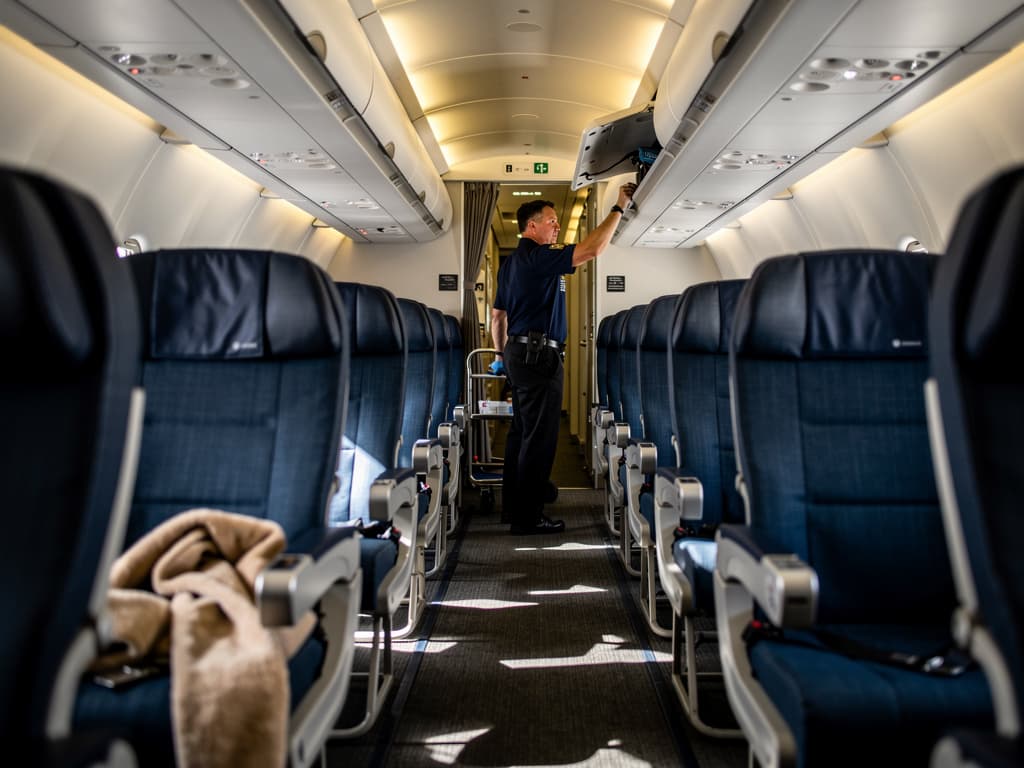
A routine Sunday evening departure out of Denver turned into a multi-agency security operation after a nurse — already on her feet responding to a separate medical emergency aboard the aircraft — spotted what appeared to be an ammunition magazine on the cabin floor beside another passenger.
The flight was Frontier Airlines service F9-4765, an Airbus A321neo scheduled to push back from Denver International Airport just after 8 p.m. on May 10 bound for Phoenix Sky Harbor. The aircraft had not yet left the gate. Within minutes of the nurse’s discovery, flight attendants had alerted the crew and the Denver Police Department was on scene.
All passengers — estimated at up to 240 — were removed from the aircraft and returned to the terminal for rescreening by the Transportation Security Administration. A full security sweep of the aircraft followed, with no additional items found.
The response consumed enough time that the operating crew exceeded their federally mandated duty hour limits. Frontier, despite being headquartered in Denver, could not source a replacement crew that night. The flight eventually departed at 6:15 a.m. on May 11 — more than ten hours behind schedule.
The airline confirmed the incident in a statement: “As a matter of precaution, passengers were deplaned and rescreened. The aircraft also underwent a security sweep with no additional findings.” Frontier’s preliminary investigation points to the magazine belonging to a law enforcement officer. The Denver Police Department declined further comment, citing the FBI as the lead investigative agency. The FBI had not responded to requests for comment at the time of publication.
What investigators found — and what they didn’t
The sequence of events aboard F9-4765 is notable for how the discovery was made. A medical incident occurred before pushback, prompting crew to request assistance from any trained medical professionals onboard. The nurse who responded was mid-assessment of the affected passenger when she noticed the magazine on the floor near an adjacent seat. That chain of coincidence — a medical call leading directly to a security find — is already drawing scrutiny from aviation safety observers.
Regulatory filings and airline statements confirm no weapon was recovered, and the sweep of the aircraft produced no further items of concern. Frontier’s indication that the magazine likely belonged to a law enforcement officer — if confirmed by the FBI — would represent a significant procedural failure, as law enforcement officers traveling armed are subject to strict TSA notification and documentation requirements. A magazine separated from its authorized carrier and left on a cabin floor would represent a breakdown in those protocols regardless of intent.
Industry sources confirm the TSA is aware of the incident, though no public directive on enhanced screening procedures had been issued as of publication.
| Time / Date | Event | Impact | Status |
|---|---|---|---|
| ~8:00 p.m., May 10 | Medical incident reported aboard F9-4765 at gate; nurse responds | Departure delayed; crew requests medical assistance | Resolved on scene |
| ~8:10 p.m., May 10 | Nurse discovers ammunition magazine on cabin floor near another passenger | Flight attendants alerted; Denver PD called | Confirmed by Frontier |
| ~8:30 p.m., May 10 | Up to 240 passengers deplaned; returned to terminal for TSA rescreening | Full security sweep of aircraft initiated | Sweep complete, no additional findings |
| Late evening, May 10 | Crew exceeds federal duty hour limits; Frontier unable to source replacement crew | Flight cancelled for the night; passengers require rebooking | Frontier confirmed overnight delay |
| 6:15 a.m., May 11 | F9-4765 departs Denver for Phoenix Sky Harbor | ~10-hour delay; passengers rebooked on morning departure | Flight operated |
| Ongoing | FBI leads investigation; Frontier preliminary finding points to law enforcement officer | TSA aware; no public directive issued as of publication | Active investigation |

Flight deals most people never see
Our AI monitors 150+ airlines for pricing anomalies that traditional search engines miss. Air Traveler Club members save $650 per trip per person on average: see how it works.
Each deal saves 40–80% vs. regular fares:

A pattern that raises harder questions about cabin security
This is not an isolated event for Frontier. On November 9, 2025, a passenger boarding a Frontier Airbus A320 at Atlanta Hartsfield-Jackson discovered a loaded handgun magazine — containing ten hollow-point rounds — on the cabin floor near seat 7A. That aircraft had just completed a short flight from Cincinnati. The response at Atlanta involved K-9 units, TSA, Homeland Security, and officials from the city’s Department of Aviation. The FBI opened an investigation there as well.
Two ammunition magazines found on Frontier cabin floors within six months — on different aircraft, at different airports — points to a systemic question rather than a one-off lapse. The common thread in both cases is the turnaround: items left behind by a previous passenger or crew member, not caught during the cabin check between flights.
In February 2026, a United Airlines aircraft at Newark Liberty International Airport was temporarily grounded and declared a crime scene after a bullet was discovered in an overhead bin — a separate carrier, a separate airport, but the same category of failure. Reporting on that Denver incident is available through Air Traveler Club’s coverage of Frontier’s DEN emergency response pattern, which documents the airport’s recent operational stress.
What these incidents share is a gap in the cabin turnaround process — the brief window between a flight’s arrival and its next departure when cabin crew conduct a visual check. That check is not a security sweep. It is not designed to find concealed or dropped items. And it is not conducted by TSA.
What the FBI timeline means for Frontier’s DEN operations
FBI investigations into aviation security incidents typically produce preliminary findings within 30 to 60 days. If the Denver probe confirms the magazine belonged to a law enforcement officer who failed to comply with TSA’s armed travel notification requirements, expect the TSA to issue updated guidance to carriers on LEO passenger verification — a procedural tightening that would add pre-boarding time on affected flights but would not constitute a systemic overhaul of cabin sweep protocols.
A broader outcome — one in which investigators cannot attribute the magazine to a specific individual — would carry more significant implications. That scenario would likely prompt the TSA and DHS to evaluate mandatory cabin security sweeps between flights, particularly on high-frequency leisure routes where rapid turnarounds are standard. Frontier‘s Denver hub, operating dozens of daily departures, would face the most operational disruption under such a directive.
Watch: If the FBI closes the Denver case with a confirmed LEO attribution within 45 days and the Atlanta investigation remains unresolved, the pressure for systemic change diminishes. If both cases remain open or produce no clear attribution, a TSA directive on enhanced turnaround procedures becomes significantly more likely before the end of Q3 2026.
FAQ
Is it legal to bring an ammunition magazine on a commercial flight?
Ammunition magazines are permitted in checked baggage under TSA rules when properly declared and packed in a hard-sided, locked container. They are prohibited in carry-on bags entirely. A magazine found loose on a cabin floor — whether carried on or left behind by a previous passenger — represents a violation of federal aviation security regulations regardless of how it arrived there.
What are the TSA rules for law enforcement officers traveling armed?
Law enforcement officers authorized to carry firearms on commercial flights must notify the airline in advance, present credentials at check-in, and comply with FAA regulations governing the storage and handling of the weapon during flight. A magazine separated from an authorized LEO and left unattended on the cabin floor would constitute a failure of those protocols, even if the officer’s overall travel was properly declared.
Are passengers entitled to compensation for the overnight delay on F9-4765?
Under current U.S. Department of Transportation rules, airlines are required to provide prompt refunds for significant delays — generally defined as three hours or more for domestic flights — if the passenger chooses not to travel. Cash compensation beyond a refund is not mandated under U.S. law for security-related delays, though Frontier may offer travel vouchers at its discretion. Passengers who incurred hotel or meal expenses should submit reimbursement claims directly to Frontier and check their travel credit card’s trip delay coverage.
Has Frontier faced other security incidents at Denver recently?
Yes. On May 8, 2026, Frontier flight F9-4345 struck and killed a runway trespasser at Denver International Airport, triggering an engine fire and emergency evacuation of 231 people. That incident is under active NTSB investigation. The ammunition magazine discovery on May 10 is a separate, unrelated event, but the two incidents within 48 hours have intensified scrutiny of Frontier’s Denver operations.
Read more