Summary
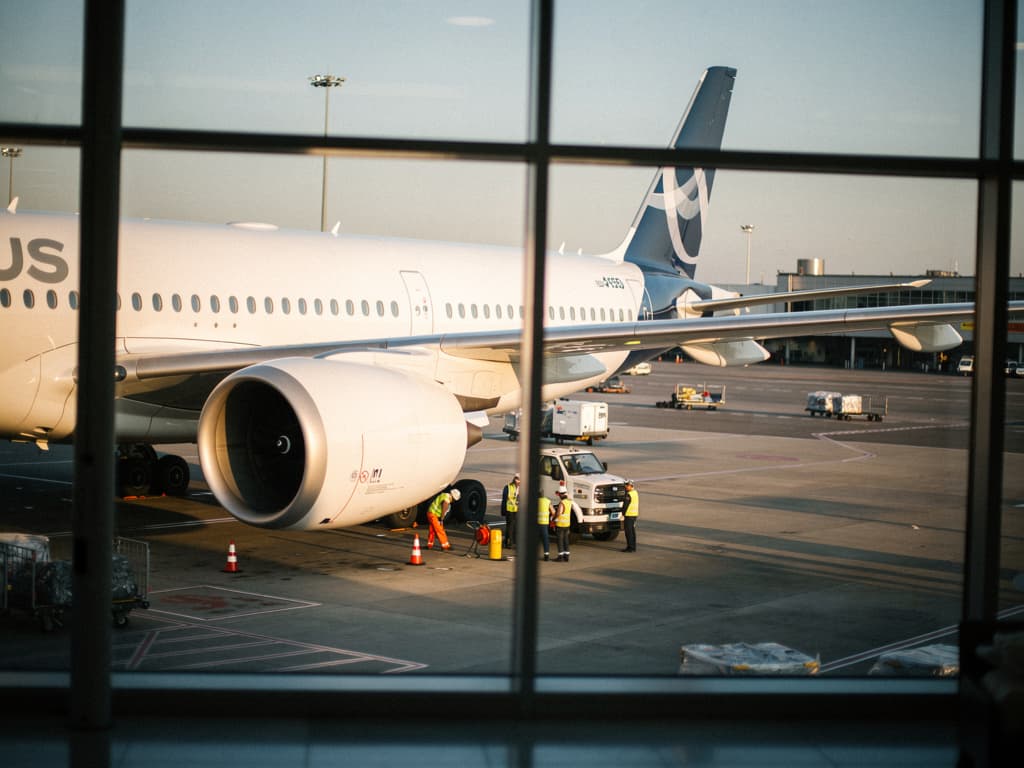
A celebratory water cannon salute at Guayaquil’s José Joaquín de Olmedo International Airport on June 4, 2026, ended with an Iberia Airbus A350-900 grounded and its return flight canceled. As aircraft EC-NXD taxied toward the runway, its left winglet struck a fire truck positioned for the salute, causing significant wingtip damage. Flight IB132 to Madrid — scheduled to depart at 11:25AM local time — was canceled, and the aircraft remained in Guayaquil pending technical inspection. No injuries were reported.
Passengers on the canceled service face an immediate rebooking or refund decision on a route that operates just four times weekly. Award travelers and those with onward Madrid connections should act within hours.
What was supposed to be a milestone moment for Iberia in Ecuador became one of aviation’s more visually documented ground incidents of 2026. The Spanish flag carrier had just inaugurated Airbus A350-900 service on its Guayaquil–Madrid route, upgrading from an older A330-200 — a meaningful step up in cabin quality and capacity on a roughly 10-hour transatlantic sector.
The inbound flight from Madrid arrived without incident. Then, as EC-NXD taxied out for the return leg, airport fire trucks positioned on both sides of the taxiway began the ceremonial water arch. The left wingtip closed on the truck’s water-dispersal equipment. Contact was made. Multiple plane spotters on the field captured the moment from every angle, and the footage spread rapidly.
The damage was not cosmetic. Engineers declared the aircraft unserviceable for the return sector, and IB132 was canceled outright. As of the time of reporting, EC-NXD remains on the ground in Guayaquil awaiting a full technical assessment before any return to service is authorized.
No passengers or crew were injured, airport operator statements confirm. The aircraft itself — approximately three years old — is another matter entirely.
What happened on the taxiway
The sequence is straightforward, and that’s precisely what makes it so striking. Guayaquil airport arranged the water cannon salute to mark Iberia‘s first A350 operation into the airport — a legitimate occasion for ceremony. Fire trucks were stationed on both sides of the taxiway. The aircraft began its taxi roll.
The A350-900 has a wingspan of 64.75 meters. The fire truck on the left side was positioned near the grass edge, reportedly constrained by an access road behind it. That positioning left insufficient clearance for the winglet as the aircraft tracked down the taxiway centerline. The left wingtip made contact with the truck’s water-salute apparatus, and the damage was immediately visible to spotters on the field.
Regulatory filings and airport statements confirm the aircraft was returned to stand and declared unserviceable. Video documentation of the incident shows the moment of contact clearly, with the winglet visibly deformed on inspection afterward.
Responsibility for clearance during a water salute sits with multiple parties simultaneously — the flight crew must judge wingtip clearance, and ground crews positioning the trucks must account for the aircraft’s full wingspan. Neither check appears to have caught the problem before impact.
| Time / Date | Event | Impact | Status |
|---|---|---|---|
| June 4, 2026 — inbound | IB131 Madrid–Guayaquil arrives; first A350 service on route | None — flight operated normally | Completed |
| June 4, 2026 — 11:25AM (sched.) | IB132 begins taxi for Guayaquil–Madrid departure | Water cannon salute initiated by airport fire trucks | Aborted |
| June 4, 2026 — during taxi | Left winglet of EC-NXD contacts fire truck water apparatus | Significant wingtip damage; aircraft returned to stand | Incident confirmed |
| June 4, 2026 — post-incident | EC-NXD declared unserviceable; IB132 canceled | All passengers disrupted; no injuries reported | Aircraft grounded |
| June 5, 2026 — ongoing | Technical inspection underway in Guayaquil | Return-to-service timeline unknown; route equipment uncertain | Pending assessment |

Flight deals most people never see
Our AI monitors 150+ airlines for pricing anomalies that traditional search engines miss. Air Traveler Club members save $650 per trip per person on average: see how it works.
Each deal saves 40–80% vs. regular fares:

Why this incident matters beyond one canceled flight
Water cannon salutes have caused aircraft damage before — the pattern is familiar enough that it has its own informal incident category in aviation safety circles. Ceremonial enthusiasm, a misjudged truck position, a winglet that travels further from centerline than ground crews anticipated. The result is almost always the same: an engineering hold, a grounded aircraft, and a disrupted schedule.
What distinguishes this case is the aircraft involved and the route context. Iberia‘s A350 deployment on the Guayaquil–Madrid sector represents a genuine product upgrade over the A330-200 it replaced — quieter cabin, newer long-haul layout, and meaningfully different sleep quality on a 10-hour overnight sector. With EC-NXD grounded and the route operating just four times weekly, Iberia has limited equipment flexibility to protect the cabin experience passengers booked expecting.
Air Traveler Club’s coverage of the EC-NXD grounding notes that Ecuadorian authorities required a full technical inspection before authorizing any further operation of the aircraft — meaning the timeline is not Iberia’s alone to control.
The broader signal is about ground-handling protocol, not fleet safety. A single wingtip strike does not indicate a systemic problem with Iberia‘s operations. It does indicate that water cannon clearance procedures at airports receiving large-wingspan widebodies for the first time deserve more rigorous pre-positioning checks than appear to have occurred here.
What the EC-NXD grounding means for the Guayaquil–Madrid route
This is an awareness story with one time-sensitive action layer: if you were booked on the canceled flight or upcoming departures, the clock on rebooking decisions is running now.
For the disrupted June 4 departure, Iberia’s obligation under EU261/2004 is clear — passengers are entitled to rebooking or a full refund. The more uncertain question is what happens to subsequent departures while EC-NXD undergoes technical assessment in Guayaquil. If the winglet repair requires parts or specialist engineering support not available locally, the aircraft could remain grounded for days rather than hours, forcing Iberia to either substitute equipment or operate reduced frequency on the route.
- Check your booking now: Iberia’s manage-booking portal at iberia.com shows current flight status and rebooking options. Do not wait for a proactive notification if you have onward connections at risk.
- Award tickets require a separate call: If your ticket was issued through Iberia Plus or a partner program, contact the issuing program directly to request reaccommodation or redeposit — the airline’s standard rebooking flow may not cover award inventory.
- Insist on cabin-class protection: If Iberia offers a substitute itinerary in a lower cabin, request written confirmation of downgrade compensation before accepting — EU rules require a partial refund of the fare difference.
- Document everything: Keep receipts for any hotel, meals, or alternative transport costs incurred as a direct result of the cancellation. These form the basis of any EU261 compensation claim.
Watch for an official statement from Iberia on EC-NXD’s repair timeline. If the assessment extends beyond 72 hours, expect the airline to announce equipment substitution or temporary schedule adjustments on the Guayaquil route.
FAQ
Is the Iberia Guayaquil–Madrid route still operating after this incident?
The route itself has not been suspended. The specific aircraft EC-NXD is grounded in Guayaquil pending technical inspection. Whether Iberia can maintain the four-times-weekly schedule depends on whether a replacement widebody is available. Passengers on upcoming departures should monitor their booking status directly through iberia.com.
Are passengers on the canceled IB132 entitled to compensation?
Yes. Under EU Regulation 261/2004, passengers departing from an EU airport — or arriving at one on an EU carrier — are entitled to a choice of full refund or rebooking at the earliest opportunity. The cancellation was caused by a ground incident, not extraordinary circumstances, so compensation claims for delays exceeding three hours on arrival are likely valid. Passengers should submit claims through Iberia’s customer service portal.
How long does winglet damage typically take to repair on an A350?
Winglet repairs on an Airbus A350 vary significantly depending on the extent of structural damage. Minor composite damage can be addressed in days with on-site repair kits; more significant structural deformation may require the aircraft to be ferried to a maintenance facility, extending the grounding to weeks. Iberia has not yet issued a public timeline for EC-NXD’s return to service.
Has this type of water cannon incident happened before?
Yes. Water cannon salutes have caused aircraft damage on multiple prior occasions, typically involving misjudged truck positioning relative to the aircraft’s wingspan. The incidents rarely result in injuries but frequently ground the aircraft for engineering inspection. The pattern is consistent: ceremonial positioning decisions made without precise clearance calculations for the specific aircraft type involved.
Read more