Summary
The UK’s Climate Change Committee has advised the government that a third runway at Heathrow Airport should only proceed if airlines, not taxpayers, fund the full cost of offsetting the additional emissions. This “polluter pays” framework could add an estimated £400 to a London–New York return fare by 2050.
The cost increases would be phased in over roughly 25 years, not applied overnight. The CCC’s central finding is that permanent carbon removals must account for 36% of aviation’s required emissions reduction, a technology pathway that remains commercially unproven at scale.
The decades-long debate over expanding Europe’s busiest airport has pivoted from a planning dispute to a pricing question. An assessment delivered to the Department for Transport makes Heathrow’s third runway conditional on the aviation sector absorbing the cost of its own pollution — a shift that would ripple through fares on every route out of the hub, with transatlantic premium cabins facing the steepest absolute increases.
The committee did not recommend blocking expansion outright. Instead, it outlined a framework where added capacity could operate within the UK’s legally binding carbon budgets — provided the industry pays for sustainable aviation fuel and permanent atmospheric carbon removal. Heathrow currently accounts for roughly half of all UK aviation emissions. Under the proposed expansion, the airport alone could consume 6.9% of the nation’s remaining carbon budget by 2050.
Nigel Topping, chair of the Climate Change Committee, stated that airport expansion should not proceed unless the sector takes responsibility and funds the required measures. The assessment lands as ministers weigh whether to attach legally enforceable conditions to any approval, a decision expected to crystallize when the government responds to its ongoing consultation later this year.
The details
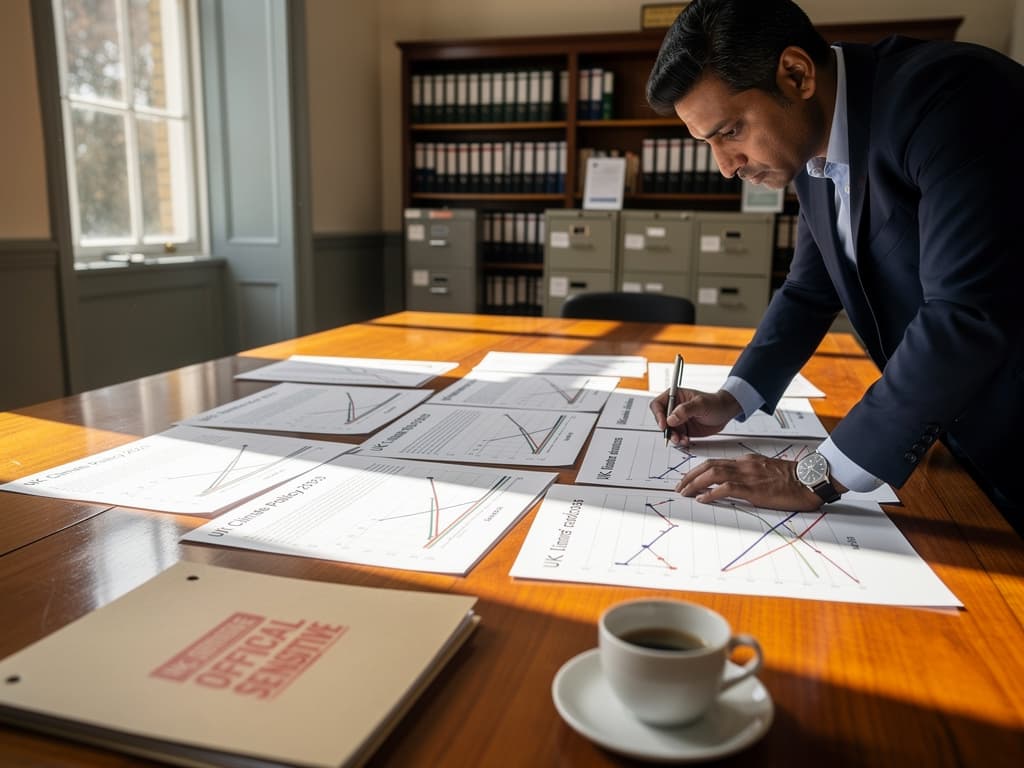
The CCC’s pathway to reconciling a larger Heathrow with net-zero targets splits the required emissions reduction across four levers. Permanent carbon removals — technologies that extract CO₂ from the atmosphere to offset what aircraft emit in flight — carry the heaviest burden at 36%. Lower demand growth, partly achieved through higher fares, contributes 24%. Efficiency gains from new aircraft and operational improvements provide 20%, with increased sustainable aviation fuel use delivering the remaining 20%.
The projected fare increases are the most tangible consequence for travelers. By 2050, a return trip to Alicante could cost approximately £150 more, while a New York return could rise by about £400. The CCC’s assessment, published in full by the committee, emphasizes that these figures represent a gradual phase-in over roughly 25 years rather than an immediate surcharge.
The government’s own timeline stretches well into the next decade. A formal consultation launched on 18 June 2026, with a final planning decision targeted for 2029. Heathrow’s internal projections point to parliamentary decision-making in autumn 2026, with first flights from a third runway envisioned roughly ten years from now.
| Reduction lever | Share of required cut | Mechanism |
|---|---|---|
| Permanent carbon removals | 36% | Industry-funded atmospheric CO₂ extraction |
| Lower demand growth | 24% | Higher fares suppressing traffic growth |
| Aircraft efficiency gains | 20% | New engines, lighter structures, improved aerodynamics |
| Sustainable aviation fuel | 20% | Increased SAF blending in conventional fleets |
Airlines UK, the industry trade body, warned that imposing these costs on tickets could make international travel unaffordable for millions. The Department for Transport responded that any airport expansion must align with net-zero targets, noting continued investment in cleaner aviation technologies.

Flight deals most people never see
Our AI monitors 150+ airlines for pricing anomalies that traditional search engines miss. Air Traveler Club members save $650 per trip per person on average: see how it works.
Each deal saves 40–80% vs. regular fares:

The value-add
The CCC’s framework matters less for the headline fare figure than for the precedent it sets. If the government hard-codes a polluter-pays condition into Heathrow’s expansion approval, it establishes a template for every future UK airport capacity decision — and potentially influences how European regulators approach the same question. Amsterdam Schiphol and Paris Charles de Gaulle already compete with Heathrow for premium long-haul connecting traffic. A unilateral carbon cost imposed on one hub would shift the competitive calculus, particularly for price-sensitive transfer passengers who can choose between European gateways.
The 36% reliance on permanent carbon removals is the framework’s most ambitious — and least proven — assumption. Engineered removal at the scale required does not yet exist commercially. If those technologies fail to materialize on schedule, the burden shifts back to demand suppression through even higher fares or tighter capacity constraints. Air Traveler Club’s analysis of jet fuel cost pressures shows airlines are already navigating margin compression from conventional operational expenses, making an additional regulatory cost layer particularly unwelcome for carriers with heavy Heathrow exposure.
What Heathrow’s carbon conditions mean for booking strategy
The fare impacts are distant enough that no immediate booking action is required, but the regulatory direction shapes long-term assumptions about Heathrow’s cost competitiveness on premium routes.
- Lock in premium fares on Heathrow transatlantic routes while pricing reflects current cost structures. Any eventual carbon obligation would push business-class fares higher over time, making today’s pricing comparatively attractive on a forward basis.
- Monitor the Department for Transport’s consultation response, expected later in 2026. If ministers explicitly tie Heathrow approval to airline-funded emissions cuts, the cost trajectory moves from advisory to regulatory reality — and airline pricing departments will begin modeling the impact.
- Watch for carrier-specific responses. Airlines with newer, more fuel-efficient fleets on Heathrow routes would face lower per-passenger carbon-removal obligations than competitors operating older aircraft, potentially creating a pricing advantage worth tracking.
- Consider alternative European hubs for price-sensitive premium itineraries. If Heathrow’s regulatory costs diverge significantly from Amsterdam or Paris, connecting traffic could shift — though Heathrow’s unmatched slot portfolio and connectivity would preserve its premium position.
FAQ
Would the £400 fare increase apply equally to all cabins?
The CCC assessment does not differentiate by cabin class. In practice, airlines would recover costs through yield management, meaning business and first-class fares would likely absorb a larger absolute share than economy. The £400 figure represents an average across all fare types on the London–New York route.
When would these fare increases actually begin?
No increases are imminent. The government’s planning decision is not expected until 2029, and any carbon obligations would phase in gradually over approximately 25 years. The CCC’s 2050 figures represent the cumulative endpoint, not near-term pricing.
Could Heathrow expansion still be blocked entirely?
The CCC did not recommend blocking expansion. It outlined conditions under which a third runway could proceed within climate targets. The decision now rests with the government, which must determine whether and how to attach legally binding emissions conditions to any approval.
Read more