Summary
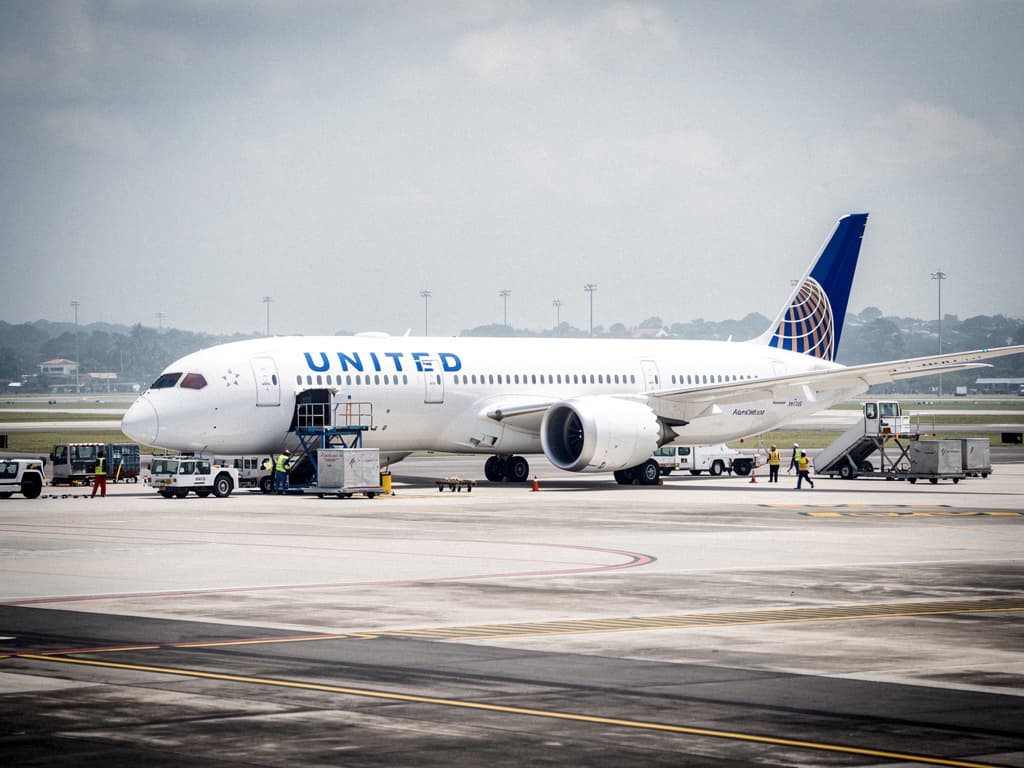
United Airlines flight UA-2005, a Boeing 737 operating the Chicago O’Hare–Minneapolis route, declared a Level 4 passenger threat — the highest classification in aviation’s unruly-passenger matrix — on Friday, May 30, 2026, after a Russian citizen allegedly charged the flight deck door approximately 20 minutes after departure. Pilots diverted immediately to Madison, Wisconsin, and United issued a systemwide broadcast alert to all airborne flights to secure cockpits in case the incident was part of a coordinated attack. Off-duty law enforcement officers on board subdued the suspect before landing.
The passenger was taken into custody upon arrival in Madison. Federal charges are expected given the Level 4 classification, which automatically triggers hijack protocols under international aviation security standards.
A routine Friday-evening hop turned into a full security emergency when the crew of United Airlines UA-2005 declared the highest possible threat level after a passenger allegedly rushed the cockpit door at cruising altitude. The flight had departed Chicago O’Hare at approximately 8:30 p.m. and climbed to around 30,000 feet before the situation escalated — forcing pilots to lock down the flight deck and divert to Madison, Wisconsin, rather than continue to Minneapolis.
What elevated this beyond a standard disruptive-passenger event was United’s decision to broadcast a systemwide alert to every other United aircraft in the air. That kind of network-wide communication is reserved for scenarios where a coordinated attack cannot be ruled out — a protocol that signals just how seriously the airline’s security team assessed the threat in real time.
The suspect had shown warning signs before wheels-up. Crew members reportedly had to instruct him to sit down during taxi, and his behavior deteriorated steadily once airborne — escalating from verbal threats toward seatmates and crew to physically charging the flight deck door. That sequence triggered an immediate cockpit lockdown and the Level 4 declaration.
Off-duty law enforcement officers happened to be on board and helped restrain the man before the aircraft touched down safely in Madison. He was taken into custody at the airport. The remaining passengers were left to navigate a disrupted Friday-night schedule with no direct path to Minneapolis.
What happened on UA-2005 — and why the response was extraordinary
The international unruly-passenger classification system, maintained under ICAO guidelines, defines four escalating threat levels. A Level 4 designation is reserved exclusively for any actual or attempted breach of the cockpit — the moment that classification is applied, hijack protocols are automatically initiated. The three lower levels cover verbal disruption, physical altercations, and life-threatening behavior respectively, but none of them trigger the same cascade of security responses.
Cockpit doors installed on commercial aircraft since the post-9/11 regulatory overhaul are engineered to be bullet- and bomb-resistant and can only be unlocked from inside the flight deck. Emergency access codes entered from the cabin can be overridden by pilots — meaning a determined crew can maintain an impenetrable barrier regardless of what happens on the other side. That engineering held on UA-2005.
The vulnerability that aviation security experts have flagged for years remains the brief window when the door must open for pilot restroom breaks. U.S. regulations now require secondary cockpit barriers on newly manufactured aircraft, but the mandate does not cover retrofits on existing fleets — and no U.S. carrier has announced voluntary installation on aircraft outside the new-build requirement. The Boeing 737 involved in Friday’s incident has not been confirmed as carrying a secondary barrier.
Industry sources confirm that United’s decision to broadcast a fleet-wide alert was consistent with post-9/11 protocols for any Level 4 event where coordination with other aircraft cannot be immediately ruled out. A prior United 737 cockpit-breach incident produced a similar operational response pattern — immediate isolation of the aircraft, law enforcement coordination, and cancellation of the affected sector.
| Level | Classification | Trigger behavior | Protocol response |
|---|---|---|---|
| Level 1 | Disruptive behavior | Verbal abuse, failure to follow crew orders, swearing | Crew warning, incident documentation |
| Level 2 | Physically abusive behavior | Punching, shoving, or physical contact with crew or passengers | Restraint consideration, law enforcement notification on landing |
| Level 3 | Life-threatening behavior | Weapon use or threat, strangling, behavior endangering lives | Physical restraint, diversion considered, law enforcement alerted |
| Level 4 | Cockpit breach attempt | Any actual or attempted breach of the flight deck | Hijack protocols initiated, cockpit lockdown, diversion mandatory |

Flight deals most people never see
Our AI monitors 150+ airlines for pricing anomalies that traditional search engines miss. Air Traveler Club members save $650 per trip per person on average: see how it works.
Each deal saves 40–80% vs. regular fares:

The security escalation that sets this incident apart
Most unruly-passenger events — even Level 3 incidents involving physical threats — are contained within the cabin and resolved without triggering network-wide alerts. Friday’s event crossed that threshold. The fleet-wide broadcast United issued is a rare operational step, one that treats the incident as a potential coordinated threat until proven otherwise. That distinction matters for understanding the airline’s response calculus.
Air Traveler Club’s coverage of a prior United diversion after a passenger attempted to open a cabin door illustrates how quickly these incidents escalate from isolated disruption to federal criminal matter — the FAA’s zero-tolerance policy routes the most serious cases directly to the FBI, and a Level 4 classification virtually guarantees that outcome.
The presence of off-duty law enforcement on board UA-2005 was fortunate — and not something airlines can plan for. It underscores a structural gap: on domestic narrowbody routes, armed federal air marshals are not guaranteed on every flight, and crew members bear the primary burden of managing threats until landing.
What the UA-2005 diversion means for affected passengers and what to watch next
Security diversions of this nature are awareness events for most travelers — the immediate operational disruption is real, but the incident itself is resolved. Passengers directly affected by the UA-2005 diversion to Madison should take specific steps, while the broader regulatory implications will unfold over months.
- Check your booking immediately: United’s app and “My Trips” portal will reflect any rebooking or cancellation status. Passengers diverted to Madison who need to reach Minneapolis should contact United Reservations directly — the airline’s standard disruption policy covers reaccommodation on the next available flight at no charge when the diversion is operationally driven.
- Award ticket holders: MileagePlus award tickets on diverted or cancelled flights are eligible for redeposit without fees when the disruption is airline-initiated. Confirm redeposit or reissue handling before accepting any replacement itinerary, as accepting a rebooked flight may waive redeposit rights.
- Same-day connections through Minneapolis: Passengers with onward connections from Minneapolis who were ticketed on UA-2005 should contact United proactively — misconnect protection applies, but acting before the connecting flight departs strengthens your position for same-day recovery.
- Regulatory watch: If the FAA or TSA issues formal guidance on secondary cockpit barriers or crew intervention protocols in response to this incident, it signals a policy shift that could affect operational procedures across the domestic narrowbody fleet within 12 months.
Watch for federal charging documents in the coming days — the specific charges filed will clarify whether prosecutors treat this as an attempted aircraft piracy case under federal statute, which carries significantly heavier penalties than standard interference charges.
FAQ
What is a Level 4 passenger threat, and what happens when one is declared?
A Level 4 threat is the highest classification in the international unruly-passenger matrix and applies to any actual or attempted breach of the cockpit. The moment it is declared, hijack protocols are automatically initiated — the cockpit enters full lockdown, the crew coordinates with air traffic control for an immediate diversion, and law enforcement is alerted for arrival. The airline may also issue network-wide alerts to other airborne flights if a coordinated attack cannot be ruled out.
Can a passenger actually break through a reinforced cockpit door?
Under normal circumstances, no. Post-9/11 cockpit doors are engineered to resist bullets and explosive decompression and can only be unlocked from inside the flight deck. Emergency access codes entered from the cabin can be overridden by pilots within seconds. The recognized vulnerability is the brief window when the door must open for pilot restroom access — which is precisely why regulators now require secondary barriers on newly built aircraft.
What charges does the suspect on UA-2005 likely face?
Federal law under 49 U.S.C. § 46504 covers interference with flight crew members and attendants, carrying penalties of up to 20 years in prison. If prosecutors determine the cockpit-breach attempt meets the threshold for attempted aircraft piracy, charges under 49 U.S.C. § 46502 could apply — a statute that carries even more severe penalties. The FBI typically takes jurisdiction in Level 4 cases given the federal nature of the offense.
Are passengers entitled to compensation for a security diversion?
U.S. Department of Transportation rules do not mandate cash compensation for security-related diversions the way they do for oversales or significant delays caused by the airline. However, United’s standard disruption policy covers reaccommodation on the next available flight. Passengers seeking refunds rather than rebooking should request them directly — United is generally required to offer a refund if the original itinerary cannot be completed as ticketed.
Read more