Summary
A United Airlines Boeing 757 operating flight 1403 from Los Angeles to Newark diverted to Las Vegas on Thursday after the crew reported an engine problem at 31,000 feet. All 176 passengers and seven crew deplaned safely at Harry Reid International Airport, but the incident strands 183 people and triggers an FAA investigation into the carrier’s latest midair emergency.
The diversion adds to a visible cluster of recent United unscheduled landings, including mechanical returns from Venice and Los Angeles. For affected travelers, United’s refund policy kicks in after a three-hour domestic delay — making immediate rebooking or cancellation the critical next step.
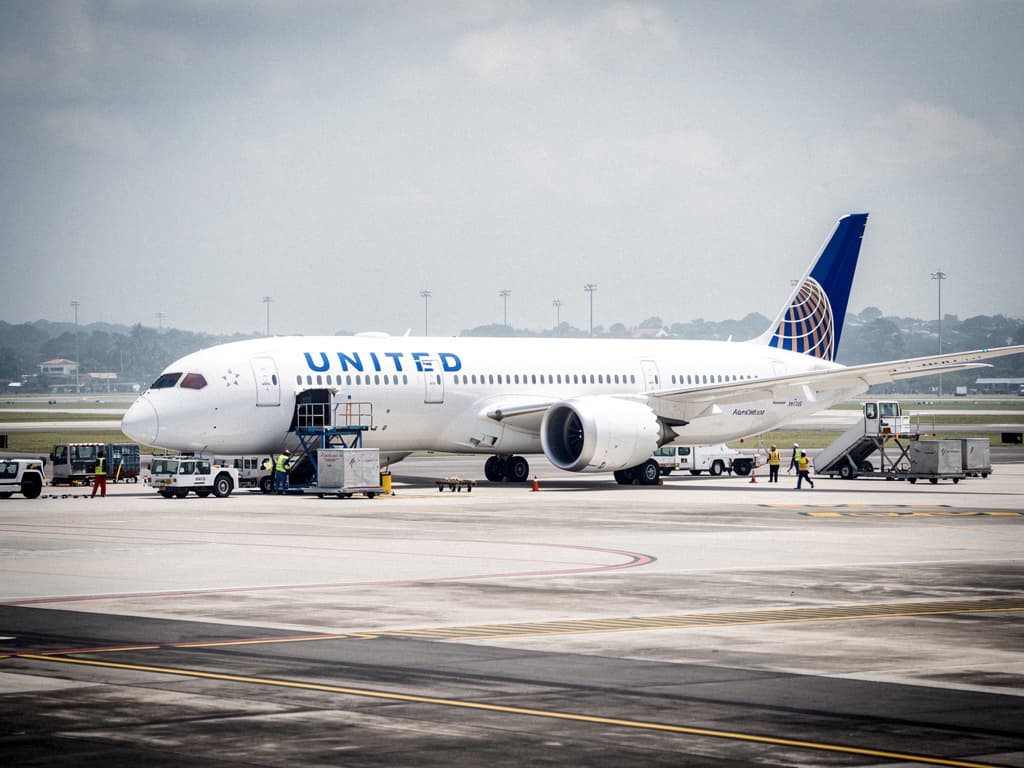
What began as a routine transcontinental crossing on one of the country’s busiest premium corridors turned into an emergency descent over the Nevada desert Thursday morning. United Airlines flight 1403, a Boeing 757 carrying 176 passengers and seven crew from Los Angeles to Newark, diverted to Harry Reid International Airport in Las Vegas around 7 a.m. local time after the crew reported a problem with one engine.
The aircraft landed without incident. No injuries were reported. But for the 183 people aboard — and for a carrier already navigating a string of unscheduled landings — the safe outcome masks a deeper operational question that regulators are now formally examining.
The Federal Aviation Administration confirmed the diversion and said it would investigate. Neither the FAA nor United has specified what triggered the engine anomaly. A passenger account on social media described the failure occurring at 31,000 feet, calling the experience “terrifying,” though authorities have not verified that detail.
United’s spokesperson said all passengers and crew deplaned and were awaiting an alternative flight to Newark. The disruption ripples across a route where schedule integrity drives premium booking decisions — the LAX–Newark corridor remains one of the most heavily traveled domestic transcontinental segments, often operated by 757s configured specifically for longer U.S. routes.
The operational pattern behind the diversion
The Las Vegas emergency is not an isolated event. In recent weeks, a United flight from Venice to London diverted with mechanical problems, and a Los Angeles departure returned to LAX shortly after takeoff for similar reasons. In both cases, passengers and crew disembarked safely — but the frequency of these events is drawing scrutiny.
Earlier this week, Delta Air Lines flight 437, carrying 147 passengers from Los Angeles to Boston, diverted to Detroit after a pilot medical emergency. While unrelated to United’s mechanical issues, it underscores the operational pressure across the transcontinental market.
For United, the cluster raises questions about maintenance procedures and fleet reliability. The FAA investigation will determine whether Thursday’s engine issue points to a systemic component problem or represents an isolated failure within normal operational parameters.
| Date | Flight | Route | Aircraft | Reported Issue | Outcome |
|---|---|---|---|---|---|
| Aug 27 | UA1403 | LAX–EWR | Boeing 757 | Engine problem at altitude | Diverted to LAS; passengers awaiting reaccommodation |
| Recent | Venice–London | VCE–LHR | Not specified | Mechanical problem | Diverted safely; no serious injuries |
| Recent | Los Angeles departure | LAX–LAX | Not specified | Mechanical problem | Returned to LAX; passengers safe |
| Aug 26 | DL437 | LAX–BOS | Not specified | Pilot medical emergency | Diverted to DTW; passengers safe |

Flight deals most people never see
Our AI monitors 150+ airlines for pricing anomalies that traditional search engines miss. Air Traveler Club members save $650 per trip per person on average: see how it works.
Each deal saves 40–80% vs. regular fares:

What the diversion means for premium transcontinental reliability
The LAX–Newark corridor is not a leisure route. It moves business travelers, premium economy flyers, and MileagePlus elites who book based on schedule integrity rather than hard product luxury. A single diversion can cascade — disrupting same-day meetings, paid upgrades, and onward premium connections that depend on predictable arrival times.
United’s recent diversion pattern shifts the conversation from isolated incident to broader reliability concern. The competitive differentiator among carriers on dense transcontinental networks is not just seat quality but how quickly each airline protects continuity after a disruption. Same-day rebooking speed, partner assistance availability, and cash refund optionality all factor into whether premium travelers absorb the hit or walk away.
Air Traveler Club’s analysis of United’s 787 Polaris grounding earlier this year examined similar operational readiness questions — and the compensation gaps that emerge when maintenance issues strand premium-cabin passengers. The current diversion cluster reinforces the same theme: fleet reliability directly shapes the premium travel experience, even when safety outcomes are positive.
Navigating rebooking and refund rights after the Las Vegas diversion
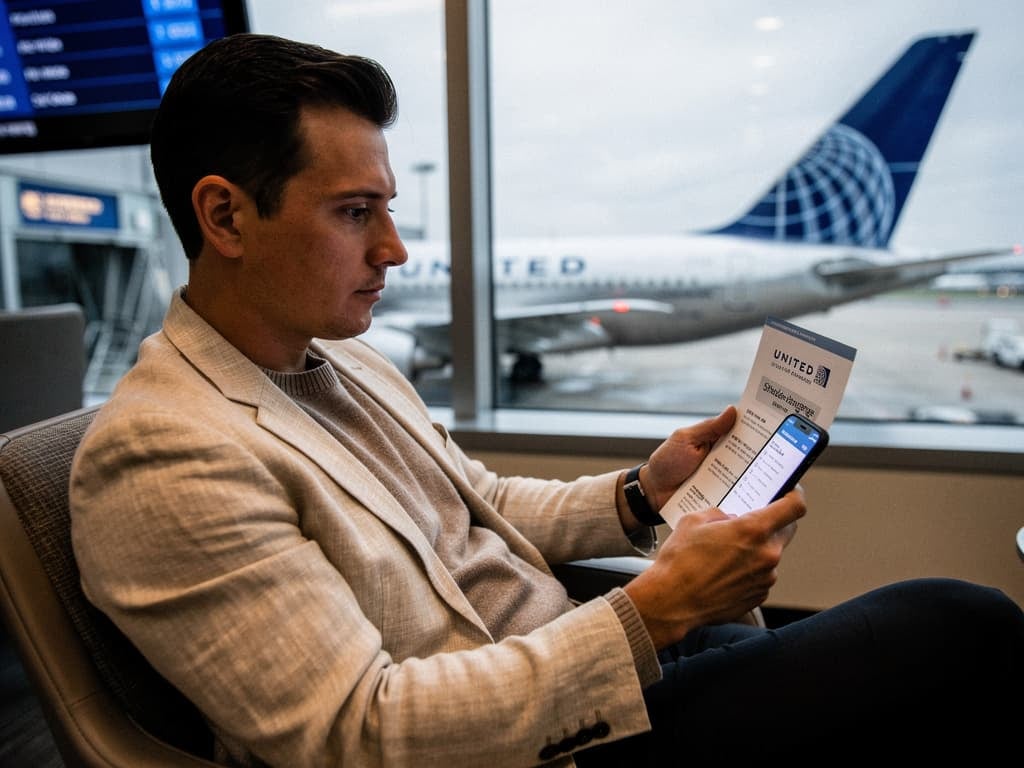
For the 176 passengers stranded in Las Vegas, the immediate priority is securing onward travel to Newark — or obtaining a refund if plans have changed. United’s disrupted-flight framework gives travelers two clear paths, and the choice between them depends on how time-sensitive the original itinerary was.
- Cancel and claim a refund if the delay exceeds three hours. United’s refund policy treats domestic delays of at least three hours as a qualifying disruption. Cancel through an airport agent or the United Customer Contact Center, then submit the refund request form. The Department of Transportation reinforces this right when passengers choose not to accept rebooking or credits.
- Accept rebooking if you need to reach Newark. United’s disrupted-flight page confirms that agents can rebook affected travelers. Ask about partner airline options if United’s own recovery flights are full — maintaining premium cabin placement may require flexibility on routing.
- Check premium credit card trip-delay coverage before filing. Each issuer sets its own delay threshold and documentation requirements. File only if your actual delay meets the card’s terms — premature claims create administrative friction without payout.
- Monitor United’s reaccommodation update. If the airline protects passengers on partner metal, it signals how much premium continuity United is willing to preserve. A same-day Newark arrival via another carrier preserves more itinerary value than a next-day United-operated recovery flight.
Watch for the FAA’s preliminary findings on the engine issue. If investigators identify a systemic component defect rather than an isolated failure, expect fleet-wide inspections or airworthiness directives that could affect 757 schedules on transcontinental routes in the weeks ahead.
FAQ
What caused United flight 1403 to divert to Las Vegas?
The crew reported a problem with one engine while cruising at 31,000 feet. The Federal Aviation Administration has not yet confirmed the specific mechanical issue, and its investigation remains ongoing. A passenger described the engine as having failed, but authorities have not verified that characterization.
Are passengers entitled to compensation beyond a refund?
Under U.S. regulations, passengers are entitled to a refund if they choose not to travel after a significant delay or cancellation. Additional compensation — such as meal vouchers, hotel accommodations, or cash payments — depends on United’s policies and the specific circumstances. Premium credit card trip-delay benefits may cover incidental expenses if the delay meets the issuer’s threshold.
Is this diversion connected to other recent United incidents?
No direct mechanical link has been established. However, United has experienced a cluster of unscheduled landings in recent weeks, including a Venice-to-London diversion and a Los Angeles departure that returned to LAX. The FAA investigation will determine whether Thursday’s engine issue shares any common cause with those events.
Read more