Summary
Qantas flight QF21, a Boeing 787-9 operating the Melbourne–Dallas Fort Worth route, diverted to Papeete, Tahiti on Friday, May 15, 2026 after a male passenger allegedly bit a flight attendant, threatened crew, and had to be physically restrained by fellow passengers approximately seven hours into the flight. The aircraft spent roughly one hour on the ground in Tahiti before continuing to Dallas, arriving three hours and 23 minutes late. Qantas has issued the passenger a permanent no-fly ban covering both Qantas and Jetstar.
The diversion was operationally sound — but it created real disruption for everyone aboard one of the world’s longest commercial routes. Affected passengers should verify rebooking and refund options immediately through Qantas’ official disruption channels.
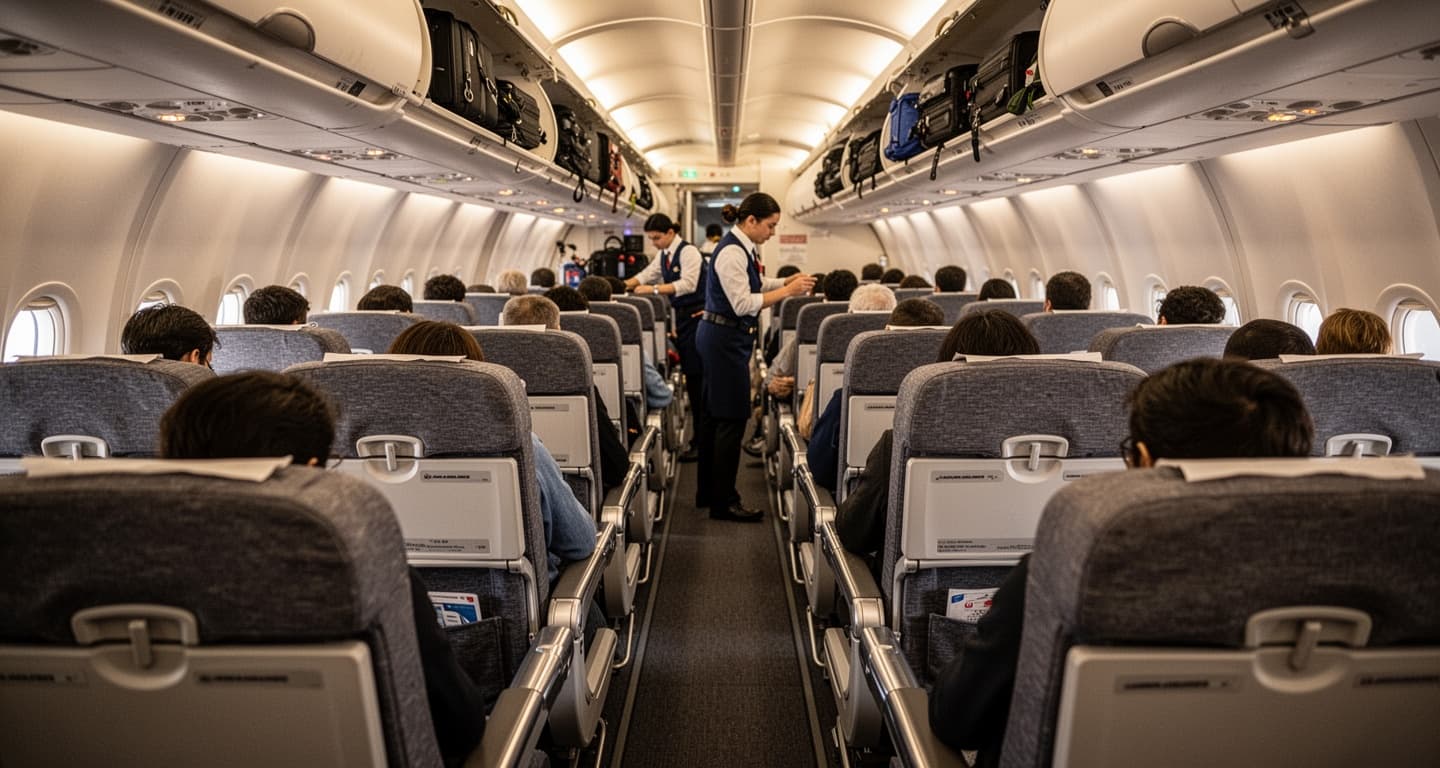
A single passenger turned one of the world’s most ambitious commercial flights into an unscheduled stop in French Polynesia. Qantas flight QF21 — the 16-hour Melbourne-to-Dallas sector operated by a Boeing 787-9 — diverted to Papeete’s Fa’a’ā International Airport on May 15, 2026 after a male passenger allegedly bit a flight attendant, cursed at crew, and became so violent that restraint required assistance from other passengers onboard.
Video circulating from inside the cabin shows the man slurring his words and appearing entirely out of control. An ACARS message to the cockpit confirmed both the biting incident and the fact that passengers had stepped in to help subdue him — a detail that underscores just how serious the situation had become.
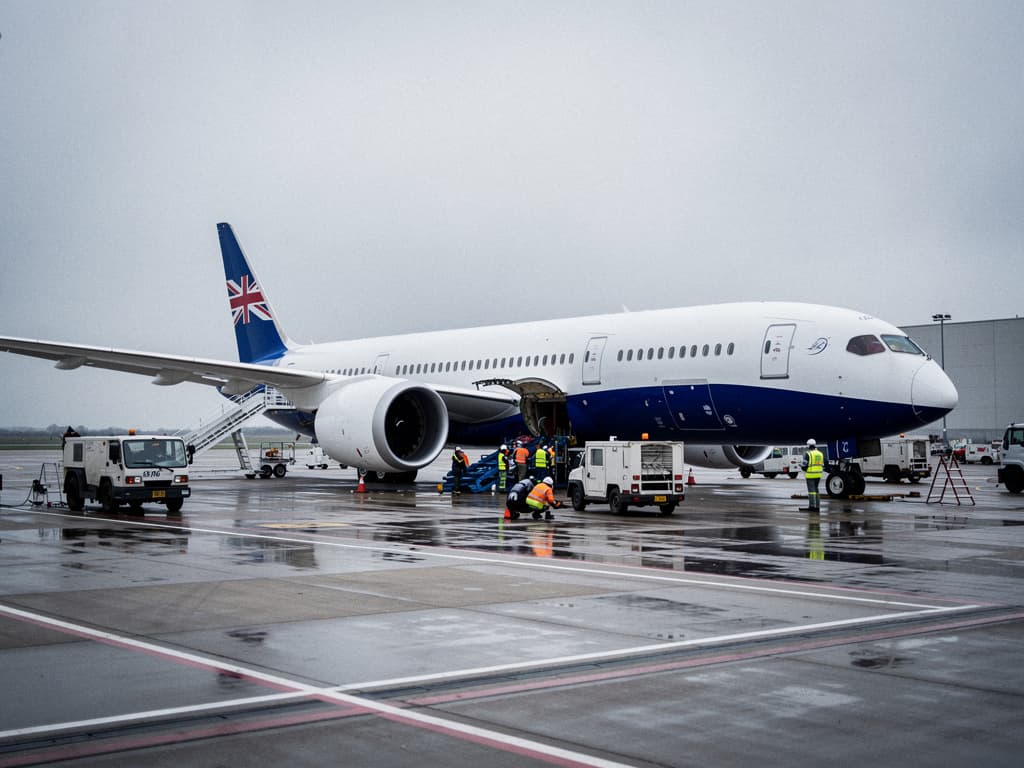
Seven hours into a transpacific crossing, the crew’s options were limited. The Pacific offers few viable diversion points, and Tahiti — while not a routine alternate — was the operationally logical choice. Local authorities met the aircraft on arrival and removed the passenger. The 787-9 was back in the air within approximately one hour.
QF21 ultimately reached Dallas-Fort Worth roughly three hours behind schedule. For the hundreds of passengers aboard — many of them in business class or premium economy on one of Qantas‘ flagship transpacific routes — that delay carried real downstream consequences: missed connections, disrupted hotel bookings, and the kind of itinerary unraveling that ultra-longhaul travel makes especially difficult to recover from quickly.
What happened aboard QF21
The sequence of events is documented in onboard video and confirmed through independent reporting. The passenger became disruptive well into the Pacific crossing — past the point where the crew could simply hold the situation and land quickly. Cabin crew attempted to manage the man, but the situation escalated to the point where physical restraint became necessary, with other passengers intervening to assist.
The ACARS system — the aircraft’s digital messaging link between cabin and cockpit — was used to relay the severity of the incident to the flight deck, including the biting allegation. That communication almost certainly triggered the diversion decision. Continuing a 16-hour flight with an unrestrained, violent passenger was not a viable option.
Independent video coverage of the incident, including footage reviewed by 7NEWS Australia, corroborates the chaotic nature of the scene. The 7NEWS report describes the alleged bite, the diversion, and the passenger’s removal by local police upon landing in Tahiti.
| Event | Detail | Status |
|---|---|---|
| Departure | QF21 departs Melbourne (MEL) for Dallas-Fort Worth (DFW) aboard Boeing 787-9 | Normal |
| ~7 hours in | Male passenger becomes violent; allegedly bites flight attendant; crew and passengers restrain him | Incident declared |
| Diversion declared | Flight deck diverts to Papeete, Tahiti (PPT); ACARS message confirms biting and passenger restraint | Diversion executed |
| Ground stop — Tahiti | Aircraft on ground approximately 1 hour; local authorities remove passenger | Resolved |
| Flight resumes | QF21 continues to Dallas-Fort Worth | Completed |
| Arrival — DFW | QF21 arrives Dallas approximately 3 hours 23 minutes behind schedule | Completed |
| Post-incident | Qantas issues permanent no-fly ban covering Qantas and Jetstar networks | Confirmed |

Flight deals most people never see
Our AI monitors 150+ airlines for pricing anomalies that traditional search engines miss. Air Traveler Club members save $650 per trip per person on average: see how it works.
Each deal saves 40–80% vs. regular fares:

Why this diversion was the right call — and what it costs
The operational math here is straightforward. A passenger who bites crew and requires physical restraint seven hours into a Pacific crossing is not a nuisance — he is a safety threat. The crew had no realistic option to isolate him and wait out the remaining nine-plus hours. Diverting to Tahiti, despite the fuel burn, crew duty-time implications, and downstream delay, was the correct decision.
What makes this incident notable beyond the viral video is the recovery. An hour on the ground in Tahiti for a widebody 787-9 is operationally efficient — Fa’a’ā International is not a primary widebody hub, and a longer ground stop would have compounded the delay significantly. The 2023 precedent of a Qantas 787 diverting to Newcastle during Sydney weather — where the airport lacked sufficient equipment to handle the aircraft — shows how quickly a longhaul diversion can become a multi-day logistics problem. Tahiti, at least, had the infrastructure to turn the aircraft.
Air Traveler Club’s full incident report on QF21 confirms that sedatives were administered to the passenger mid-flight but proved ineffective — a detail that adds important context to the crew’s decision to divert rather than attempt to manage the situation through to Dallas.
The permanent no-fly ban covering both Qantas and Jetstar is the minimum expected response. Whether civil recovery action follows — to recoup the substantial fuel and labor cost of an unplanned Pacific diversion — remains to be seen.
What the QF21 incident means for Pacific ultra-longhaul travel
This is an awareness story with a clear forward signal. The QF21 diversion is not a systemic safety failure — it is a single incident of passenger misconduct handled correctly by a professional crew. But it surfaces a structural reality about ultra-longhaul Pacific flying that premium travelers should understand.
Over the Pacific, there is no convenient off-ramp. The diversion options between Australia and the U.S. mainland are sparse, and Tahiti is among the better ones — which is itself a telling data point about how exposed these routes are when something goes wrong. Carriers operating 16-hour transpacific sectors have fewer tools than short-haul operators when a passenger becomes a threat mid-flight.
Watch for any Qantas policy update on onboard intervention protocols or post-diversion reaccommodation commitments over the next three to six months. If the airline publicly clarifies cabin-protection guarantees, hotel coverage, and rerouting rights after diversions, it signals that Pacific ultra-longhaul incidents are being treated as a recurring brand-risk issue rather than isolated events. That clarification — if it comes — would meaningfully change the disruption calculus for anyone booking QF21 or its sister routes.
FAQ
Is the passenger facing criminal charges?
Local authorities in Tahiti removed the passenger upon landing. French Polynesia operates under French law, and assaulting a crew member on an international flight carries serious criminal exposure. Specific charges had not been publicly confirmed as of the time of reporting, but the passenger’s removal by police and the documented biting allegation make a criminal proceeding likely.
Does a diversion entitle passengers to compensation?
Compensation rights depend on the cause of the diversion and the passenger’s ticket type. Because this diversion was caused by a third-party passenger — not an airline mechanical or operational failure — Qantas‘ obligations under its conditions of carriage may be more limited than in a standard schedule disruption. Passengers should review their specific fare rules and travel insurance policies before accepting any settlement offer.
What happens to award bookings when a flight diverts?
Award tickets are subject to the same rebooking and rerouting rules as revenue tickets under Qantas‘ conditions of carriage, but redeposit and change-fee policies vary by program and booking channel. Qantas Frequent Flyer members should contact the loyalty program directly — not just the general reservations line — to confirm whether points can be redeposited without penalty if the disruption makes the original itinerary unusable.
Read more