Summary
Korean Air is actively consulting with its labor union on allowing flight attendants to wear sneakers — a potential end to a 57-year heel mandate requiring female crew to wear 3–5cm heels on airport concourses. The move follows a formal “Sneakers!” campaign launched by cabin crew unions in March 2025 and sits within a broader uniform modernization effort that includes improved materials and a planned rollout by end-2026, complicated by the airline’s ongoing integration of Asiana Airlines following their December 2025 merger.
The change would not affect the passenger experience directly, but it signals a meaningful cultural shift at one of Asia’s most image-conscious carriers. Any new uniform design — sneakers included — is expected to extend to Asiana crew as well.
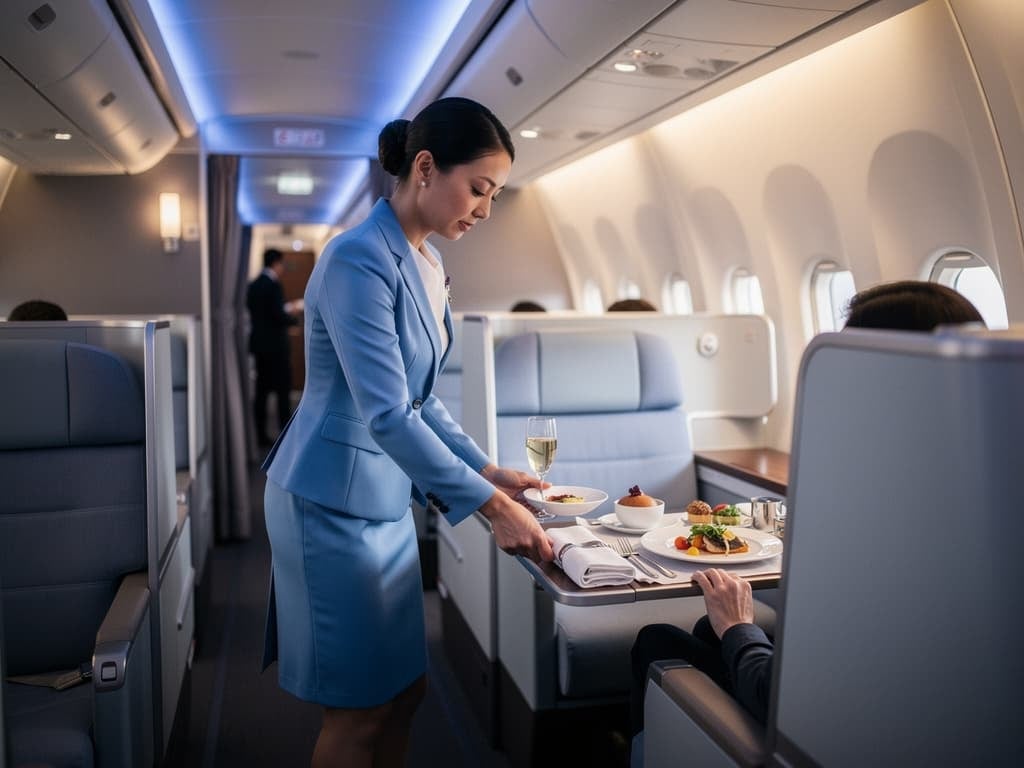
Few airlines in the world police their cabin crew’s appearance with the precision that Korean Air does. The Seoul-based carrier’s grooming standards are so exacting that some crew hopefuls have historically undergone cosmetic procedures to meet recruitment expectations — a detail that underscores just how significant the current sneaker consultation really is.
The airline confirmed it is carrying out internal consultations on allowing flight attendants to wear comfortable sneakers, responding to a sustained union campaign that began in earnest in March 2025. At present, female crew must wear heels between 3 and 5 centimeters while moving through airport concourses, switching to flat shoes only once aboard the aircraft.
This isn’t an isolated policy tweak. Korean Air has signaled a broader uniform refresh — improved materials for elasticity and breathability, with crew measurements beginning next month and a full rollout targeted for end-2026. A complete redesign of the airline’s signature celadon and beige uniform, introduced in 2005, has been deferred until after the Asiana merger integration stabilizes.
The timing matters. Korean Air only dropped the term “stewardess” in 2022, making the shift to gender-neutral language under public pressure. It launched eco-friendly uniforms in 2024. The sneaker consultation, then, is the third significant crew-facing modernization move in four years — a pattern, not a coincidence.
The details: what’s changing and what’s still under review
The union campaign that triggered this consultation was direct. Cabin crew at both Korean Air and Asiana Airlines launched a coordinated “Sneakers!” push in March 2025, citing safety and physical wellbeing as primary concerns — not aesthetics. The airline acknowledged the request but noted that merger integration timelines would affect how quickly any changes could be implemented, given that uniform policy will eventually need to align across both carriers’ combined crew base.
The regional context is important. Japan Airlines became the largest carrier in Asia to permit sneakers when it amended its grooming guidelines in November 2025, allowing frontline staff — including those wearing skirts — to wear company-issued plain black sneakers. That detail distinguished JAL’s policy from other carriers that only permit sneakers paired with trousers. Korean Air’s potential move would follow a path already cleared by JAL, and before that, by South Korean low-cost carrier Aero K, which launched in 2020 with sneakers as the default footwear in a gender-neutral uniform.
European carriers moved earlier still. Iberia was among the first full-service airlines to permit sneakers, followed by KLM Royal Dutch Airlines, Finnair, and SAS Scandinavian Airlines. Korean Air’s consultation, if it results in a policy change, would represent the most prominent adoption of the trend among Northeast Asia’s legacy carriers.
| Airline | Current ground footwear policy | Sneakers permitted | Policy change timeline |
|---|---|---|---|
| Korean Air | 3–5cm heels mandatory on concourses | Under consultation | Potential rollout end-2026 |
| Japan Airlines | Plain black sneakers permitted | Yes — including with skirts | Implemented November 2025 |
| ANA | Heels required (3cm minimum) | No | No announced change |
| Singapore Airlines | Heels/skirts mandatory on ground, flats onboard | No | No announced change |
| Cathay Pacific | Heels ground-only, relaxing post-COVID | Partial relaxation | Ongoing review |
| Aero K | Sneakers as default | Yes — from launch | Policy since 2020 |

Flight deals most people never see
Our AI monitors 150+ airlines for pricing anomalies that traditional search engines miss. Air Traveler Club members save $650 per trip per person on average: see how it works.
Each deal saves 40–80% vs. regular fares:

How Korean Air’s modernization fits the broader APAC premium picture
Footwear is invisible once the cabin door closes — which is precisely why this story matters more as a cultural signal than a service metric. The Air Traveler Club’s analysis of Korean Air’s 57-year heel mandate traces how the policy became a proxy for the airline’s broader approach to crew presentation: highly controlled, image-first, and slow to adapt. The sneaker consultation suggests that calculus is shifting.
For those flying Prestige Class on Korean Air’s Boeing 777 or 787 routes, the practical service experience is unlikely to change in the near term. Crew comfort improvements — better footwear, more breathable uniform materials — tend to translate into marginal but real gains in attentiveness over long-haul sectors, where fatigue accumulates across multiple cabin service cycles.
The competitive framing is worth examining directly. Japan Airlines implemented its sneaker policy citing measurable service improvement — crew were more mobile, less fatigued, and reported higher job satisfaction. Korean Air’s union made the same argument in its March 2025 campaign. Whether the airline accepts that logic, or treats the change as purely cosmetic compliance, will determine whether this modernization has any downstream effect on the passenger experience.
What the end-2026 uniform rollout timeline means for the merger
The sneaker decision is a secondary indicator of how smoothly the Korean Air–Asiana integration is proceeding. Korean Air has confirmed that improved uniform materials — better elasticity, breathability — are in development, with crew measurements beginning next month and a rollout targeted for end-2026. A full uniform redesign has been explicitly deferred until post-merger stabilization.
If the sneaker policy is confirmed alongside the materials upgrade by Q4 2026, it would suggest the integration is proceeding on schedule and that crew-facing policy alignment is being handled proactively rather than reactively. A delay beyond mid-2027 would indicate that merger complexity is consuming management bandwidth at the expense of crew welfare commitments — a dynamic worth monitoring given the union pressure that triggered this consultation in the first place.
Watch for Korean Air’s formal response to the union’s “Sneakers!” campaign in the coming months. An affirmative announcement before the end-2026 uniform rollout would confirm this as a deliberate modernization signal. Silence beyond that window suggests the merger is setting the pace.
Read more