Summary
A passenger on American Airlines Flight AA1779 from Baltimore/Washington to Miami on September 11, 2026, removed her clothing and acted indecently in view of others, prompting the crew to request police meet the aircraft after landing. The flight was not diverted — it continued to Miami International Airport where Miami-Dade Sheriff’s Office officers took her into custody.
The decision to maintain course rather than declare an emergency reflects a containment-first approach for non‑violent incidents. The Airbus A319 arrived late, and the investigation is ongoing.
A passenger on an American Airlines domestic flight reportedly stripped naked and engaged in indecent behavior during the journey, forcing the crew to alert law enforcement before the aircraft touched down at Miami International Airport on September 11. The incident, while shocking, is the latest in a cluster of onboard disturbances this month that is testing airline protocols.
On September 3, a different American flight — AA618 from Dallas to Newark — diverted to Baltimore after a passenger turned physically violent and had to be restrained with duct tape and zip ties. That 67‑year‑old Arizona man was arrested on disorderly conduct and assault charges, and both the FBI and FAA opened investigations.
The September 11 event landed differently. Flight AA1779, operated by an Airbus A319, was allowed to complete its planned route from Baltimore/Washington to Miami with police waiting at the gate. No emergency landing, no mid‑flight restraint — just a quiet handoff to the Miami‑Dade Sheriff’s Office at the North Terminal.
For premium‑cabin travelers, these twin cases illustrate how radically crew response can vary depending on whether the behavior is considered a safety‑of‑flight threat or a containable disturbance. Both flights reached their destinations, but only one cost the airline an unscheduled diversion and the passengers hours of delay.
The details
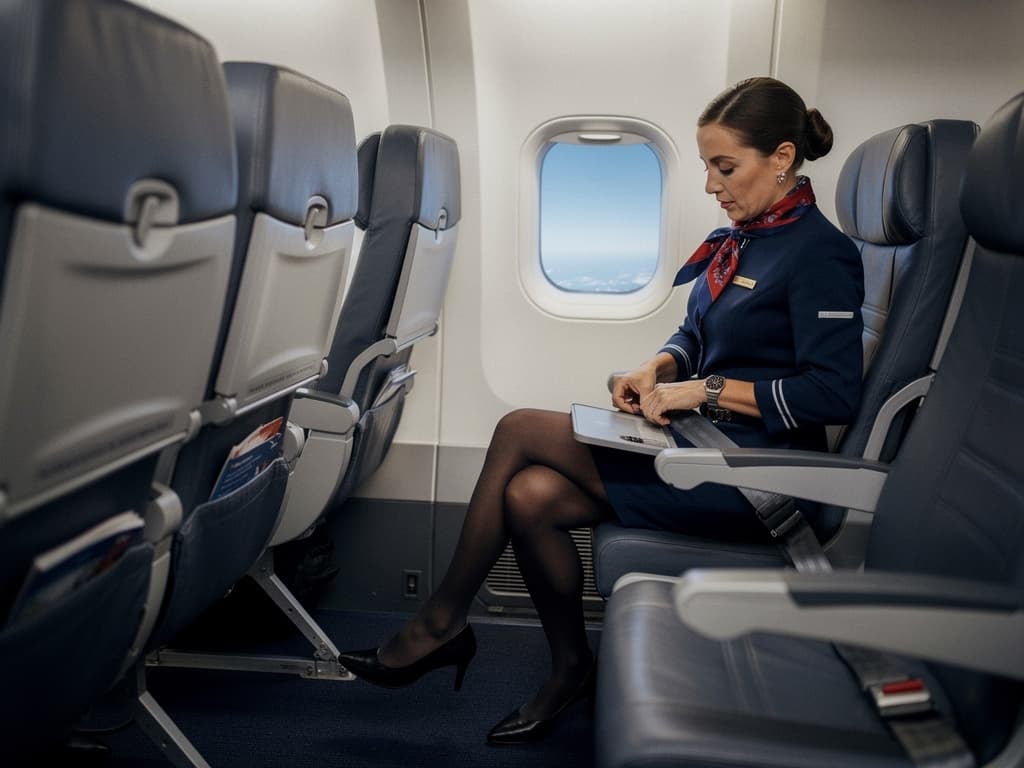
Flight AA1779 was already running behind schedule when the crew in the forward cabin alerted the cockpit that a woman in seat 9D had removed all her clothing and was touching herself indecently in view of other passengers. An ACARS message to operations described the situation bluntly and requested that law enforcement meet the aircraft upon arrival.
The captain assessed the risk as manageable and elected to continue to Miami. That decision is notable because it aligns with American’s long‑standing directive: diversion is reserved for scenarios where the aircraft cannot safely proceed to its destination.
A separate American incident two weeks earlier showed the other end of the spectrum. On September 3, Flight AA618 from Dallas‑Fort Worth to Newark was forced to land at Baltimore/Washington after a passenger became physically violent toward others. Crew and fellow passengers used duct tape and zip ties to restrain the man, and he was arrested on the ground. The FBI and FAA are both investigating that case, while the Miami incident remains solely with local law enforcement for now.
| Date | Flight | Route | Behavior | Crew response | Law enforcement |
|---|---|---|---|---|---|
| Sept 3, 2026 | AA618 | Dallas‑Fort Worth → Newark (diverted to BWI) | Physical assault on passengers | Duct‑tape/zip‑tie restraint; emergency diversion | Arrest by Maryland Transportation Authority Police; FBI/FAA investigations |
| Sept 11, 2026 | AA1779 | Baltimore/Washington → Miami (completed) | Indecent exposure, disrobing | No diversion; police met aircraft at gate | Miami‑Dade Sheriff’s Office investigating; passenger taken into custody |
Note: Only two confirmed incidents are compared; further data pending official disclosure.

Flight deals most people never see
Our AI monitors 150+ airlines for pricing anomalies that traditional search engines miss. Air Traveler Club members save $650 per trip per person on average: see how it works.
Each deal saves 40–80% vs. regular fares:

The value-add
The AA1779 captain’s decision not to divert is a clear signal that airlines are increasingly treating low‑violence disturbance as a law‑enforcement handoff problem, not an operational emergency. For the premium flyer, that means a higher probability that flights stay on schedule even when bizarre behavior erupts — provided the crew can keep the situation physically contained.
Air Traveler Club’s analysis of crew response to disruptive passengers explores the liability calculus flight attendants navigate in real time. The two American incidents show that when the threat is psychological rather than assaultive, the default is to let the aircraft finish its route. This preserves schedule integrity but also leaves fellow passengers sitting through an unnerving situation with no immediate resolution.
What the non‑diversion tells us about American Airlines’ response calculus
The captain’s decision to continue to Miami suggests the threat was assessed as severe enough for law enforcement but not an immediate safety‑of‑flight emergency. Watch for a Miami‑Dade Sheriff’s Office incident update — expected within days — if it appears, it means the case has moved from report stage to formal law‑enforcement handling. Watch for any FAA or American Airlines policy notice; if the carrier tightens crew restraint or reporting procedures, the incident could reshape how indecent behavior is managed onboard.
FAQ
What exactly happened on American Airlines Flight AA1779?
A female passenger in seat 9D reportedly removed all her clothes and engaged in indecent behavior in view of other passengers during the September 11, 2026, Baltimore/Washington to Miami flight.
Was the flight diverted?
No. The crew decided to continue to Miami International Airport and have law enforcement meet the aircraft at the gate.
Is the passenger facing charges?
The Miami‑Dade Sheriff’s Office is investigating. No formal charges have been confirmed as of September 13, 2026.
How does this compare to the September 3 American Airlines incident?
Flight AA618 on September 3 involved a physically violent passenger who was restrained with duct tape and zip ties; the captain diverted to Baltimore, and the passenger was arrested. The FBI and FAA opened investigations. AA1779 involved indecent exposure but no violence, so the plane continued to its destination.
Read more