Summary
American Airlines’ automated rebooking tools, AURA and Connect Assist, are changing itineraries without explicit passenger consent during operational disruptions, triggering involuntary denied boarding disputes. A viral complaint from a North Carolina passenger shows the breakdown: a Florida-to-North Carolina connection was canceled, and the next offered flight departed 11 p.m. the following day, forcing her to sleep in a food court.
Separately, a Charlotte technical issue and an FAA ground stop compounded delays. Federal rules may treat software-driven rebooking as carrier-controllable, not weather-related, shifting compensation liability.
A passenger attempting two separate trips through American’s network ended up stranded overnight twice. Her account has fueled wider scrutiny of how the airline’s automation decides who still can fly.
The first disruption came before sunrise. She and her group arrived at the airport at 3 a.m. for a 6 a.m. Alabama departure, only to learn the flight had been canceled and moved to an airport 45 minutes away. They eventually landed around 1 a.m., hours later than planned.
The second trip, from Florida to North Carolina, collapsed when the connecting flight was delayed, then canceled outright. The next available option was 11 p.m. the following day. She spent the night in a food court with only a phone and wallet, unable to reach her luggage or secure a sleeping pod.
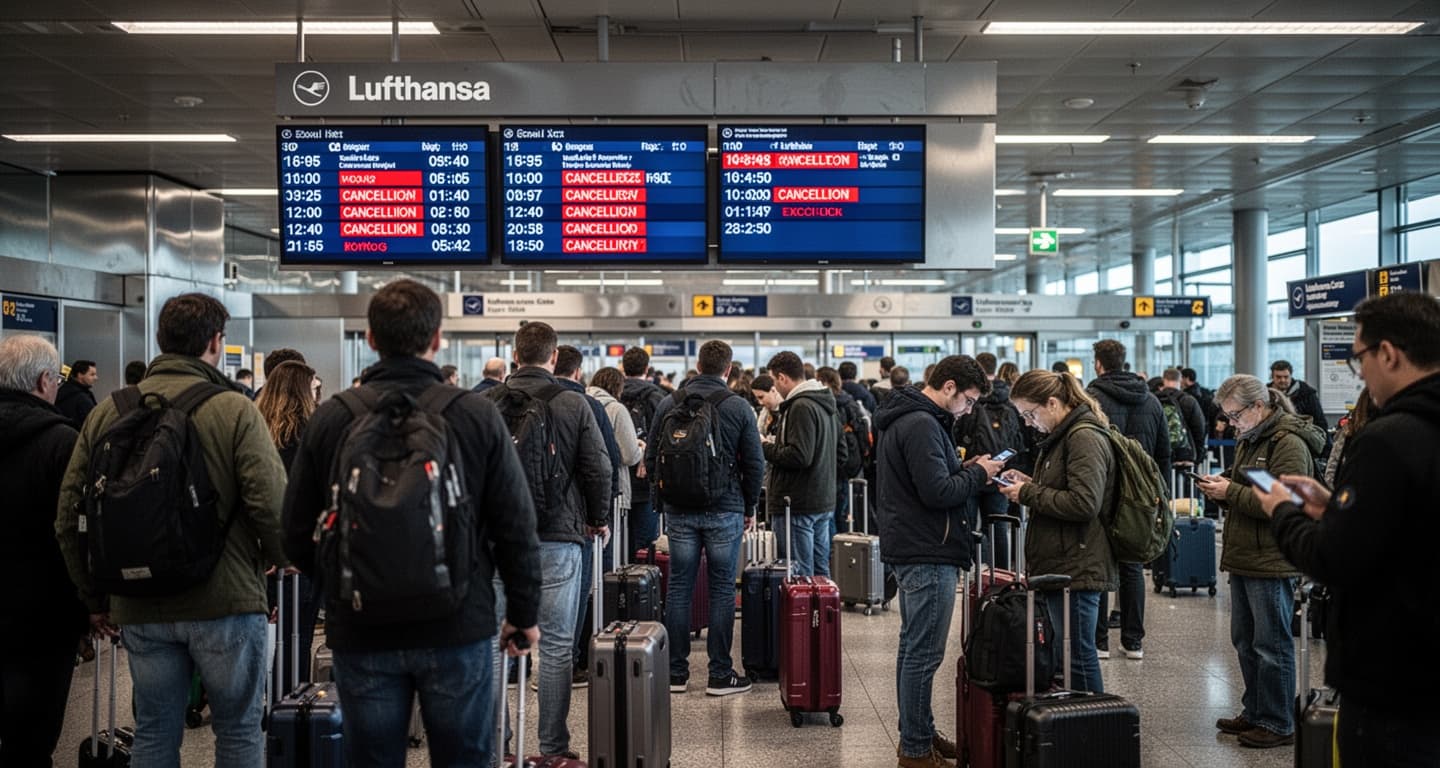
American’s operational problems extend beyond one passenger’s experience. Charlotte Douglas International Airport reported major delays tied to a technical issue. The Federal Aviation Administration later narrowed a nationwide ground stop to Charlotte while the carrier worked through a backlog. Those failures created conditions where automated rebooking tools made crucial decisions without clear passenger consent.
For travelers holding premium-cabin seats or elite status, the danger is that a software override can erase a protected itinerary. American’s own public tools point to the immediate recovery path.
The details
American’s flight status page and travel alerts page remain the official entry points when an itinerary changes. During the disruption window, live airport trackers showed continuing American delays and cancellations at Charlotte. The airline said the Charlotte technical issue was resolved and operations were returning to normal, but recovery remained uneven.
What separates this episode from a routine weather delay is the question of consent. In some instances, automated systems rebooked or canceled travelers even when those travelers could still have made their originally scheduled connections. When that leads to involuntary denied boarding, U.S. federal rules may compel compensation. American has reportedly sometimes resisted paying such claims.
The passenger’s first trip to Alabama shows how quickly a single cancellation cascades. A 6 a.m. departure became an evening flight from a different airport. The second disruption left her stranded with no immediate rebooking and no in-person customer service access.
| Date | Event | Impact | Status |
|---|---|---|---|
| August 2026 | 6 a.m. departure to Alabama canceled, moved to airport 45 minutes away | Group arrived at 1 a.m., hours late | Resolved via later flight |
| August 2026 | Florida–North Carolina connecting flight delayed then canceled | Next offered flight 11 p.m. following day; overnight in food court | Disputed; compensation unresolved |
| August 13, 2026 | Passenger complaint surfaces publicly; American’s Charlotte technical issue and FAA ground stop cited as disruption backdrop | Scrutiny of AURA/Connect Assist rebooking consent | Evolving |

Flight deals most people never see
Our AI monitors 150+ airlines for pricing anomalies that traditional search engines miss. Air Traveler Club members save $650 per trip per person on average: see how it works.
Each deal saves 40–80% vs. regular fares:

Why rebooking consent is the real battleground
Weather is an act of God. Software is not. If American’s AURA and Connect Assist systems alter a ticket without customer approval, the disruption may shift from weather-related cancellation to carrier-controlled action. That distinction changes what compensation is owed.
Air Traveler Club’s report on American Airlines business class seat reassignment documents a related system vulnerability: confirmed revenue bookings can be overridden without the passenger’s knowledge. The current dispute sits on the same fault line. Automation protects inventory, but it does not always preserve the customer’s original itinerary.
For premium travelers, the risk is not merely a delay. It is losing a carefully built connection chain or a paid seat assignment because an algorithm concluded the original plan no longer worked.
What to watch in the rebooking consent fight
DOT complaint totals and any airline-response filing will determine whether this moves from viral complaint to regulatory review. If investigators link automated itinerary changes to carrier-controlled decisions rather than weather, expect guidance on AURA and Connect Assist consent rules. Watch for an American policy update clarifying when automation may override a booking.
FAQ
What compensation is owed if American Airlines involuntarily denies boarding?
Under U.S. federal rules, involuntary denied boarding compensation is separate from weather-related cancellation welfare. If an automated rebooking changed a passenger’s itinerary without consent and that led to denied boarding, the passenger may be owed compensation. The amount depends on whether the disruption is treated as airline-controllable, not an act of God weather event.
Did American Airlines pause AURA or Connect Assist after these reports?
No public policy change has been confirmed as of August 13, 2026. American’s official travel-alerts and flight-status pages remain the primary public tools. Watch for any update clarifying when automation may alter a booking without customer approval.
How can I check if my American Airlines flight is affected right now?
Use American’s flight status page and travel alerts page. If your itinerary has changed, document the change and contact the airline through its official channels before accepting a new flight. Request written confirmation of the rebooking reason and any compensation offer.
Read more