Summary
On a Sunday in mid-July 2026, American Airlines gate agents at Philadelphia International Airport opened volunteer denied boarding compensation at $1,125 for a Washington National flight — a flat offer, not a bid, and nearly four times the typical starting amount for shuttle routes. The 75-minute block-time flight covers barely 20 minutes of airborne time, making the compensation one of the richest short-haul incentives ever recorded at a U.S. hub.
With no federal cap on voluntary offers, the figure signals acute operational pressure to avoid involuntary bumps. The announcement, made publicly at the gate, immediately drew a crowd — and underscored how quickly a routine oversale can turn into a lucrative moment for flexible flyers at PHL’s remote F gates.
A Philadelphia International Airport gate podium can become the most profitable corner of the terminal when an overbooked flight needs volunteers. That truth crystallized on a calm Sunday afternoon in mid-July, when an American Airlines agent addressing passengers for a Washington National Airport departure skipped the usual $200 opening bid and went straight to $1,125. No name-calling auction, no slow creep upward — just a flat, almost matter-of-fact figure that sent a ripple through the assembled crowd.
The flight itself is an oddity: blocked at roughly an hour and fifteen minutes, yet frequently airborne for less time than it takes to finish a cocktail. The July 12 service, delayed by air traffic control, was already behind schedule when the gate agent began looking for volunteers. What followed rewrites the calculus for anyone willing to trade a few hours for cash.
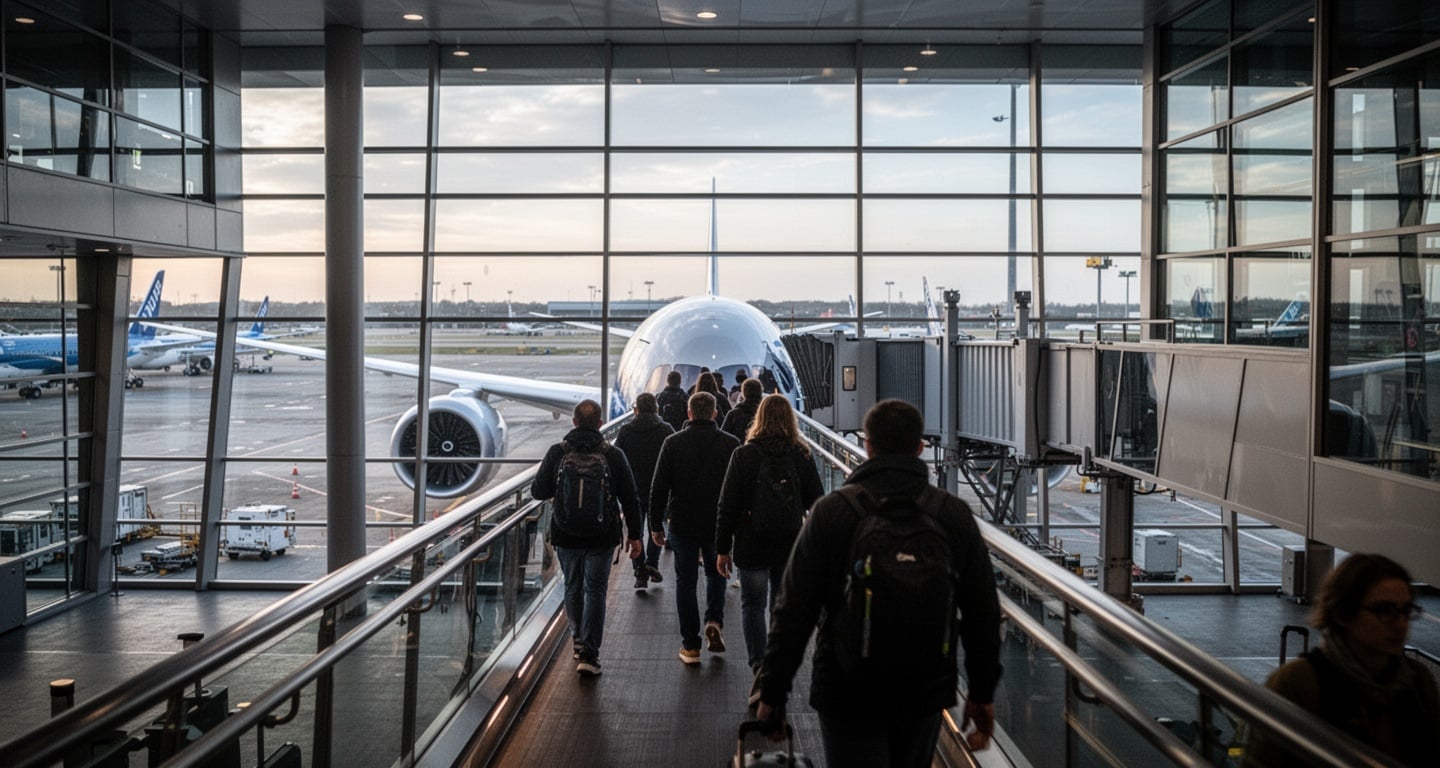
For a domestic shuttle that typically sees offers start at $200–$300, the $1,125 opening — confirmed by multiple passengers at the gate — represents a step change. It far exceeds the federal involuntary denied boarding caps of $775 for delays under two hours and $1,550 for longer waits, placing it in the realm of international long-haul compensation. The offer, made at the remote F-concourse gates where passengers board via buses and the sole food option is a Sbarro, instantly turned a dreary wait into a bidding-free windfall for any volunteer willing to flex.
American’s own Conditions of Carriage confirm that voluntary compensation is fully negotiable; gate agents hold the sole authority. The July 12 event suggests the carrier is willing to pay a premium to preserve operational integrity on a route where involuntary bumps would ripple through its East Coast network.
The anatomy of a $1,125 gate offer
The dynamics of denied boarding have shifted since American introduced a “pay what you bid” app feature in 2019, but the Philadelphia–Washington corridor has remained a low-bid territory until now. The Department of Transportation’s bumping rules place no ceiling on voluntary packages, giving airlines complete freedom to escalate. What made the July 12 offer remarkable was the absence of escalation: $1,125 arrived as the very first number, not a last-ditch plea.
Involuntary alternative under federal law is far less generous. A passenger bumped against their will for a delay of less than two hours receives 200% of their one-way fare, capped at $775; for delays exceeding two hours, the cap rises to $1,550. American’s voluntary $1,125, therefore, lands squarely between the two involuntary tiers — yet requires no surrender of rights and comes with immediate payment at the airport.
Philadelphia’s Terminal F, where the flight departed, adds a layer of operational friction. Many of its flights board from the tarmac via buses, and the concourse itself offers little more than a Sbarro. That isolation may contribute to the urgency gate agents feel when a flight is oversold; a lack of nearby amenities makes re-accommodation logistics more disruptive.
| Compensation Type | Amount | Conditions | Payment Timing |
|---|---|---|---|
| American voluntary offer (PHL-DCA, July 2026) | $1,125 (opening) | Gate agent negotiation; no cap | Immediate at airport |
| Typical voluntary starting offer (shuttle routes) | $200–$300 | Negotiable; rises if no volunteers | At airport |
| Involuntary denied boarding (delay <2 hrs) | 200% of one-way fare (cap $775) | Federal mandate; passenger did not volunteer | Same day or within 24 hours |
| Involuntary denied boarding (delay ≥2 hrs) | 400% of one-way fare (cap $1,550) | Federal mandate; passenger did not volunteer | Same day or within 24 hours |

Flight deals most people never see
Our AI monitors 150+ airlines for pricing anomalies that traditional search engines miss. Air Traveler Club members save $650 per trip per person on average: see how it works.
Each deal saves 40–80% vs. regular fares:

Why this oversale is a data point with consequences
The $1,125 figure isn’t just an anecdote — it’s a signal. Across the industry, Delta and United rarely announce flat gate offers above $500 on comparable East Coast shuttle routes. Delta’s app-based bidding system caps early offers near $400, and United’s gate agents typically start negotiations at lower thresholds. American’s opening bid thus resets the benchmark for what a carrier will pay to avoid an involuntary denied boarding on a high-frequency, high-visibility route.
The passenger experience behind the number matters, too. The same afternoon that produced the $1,125 gate call also revealed a PHL lounge landscape in flux — a Flagship Lounge that pours Bollinger on entry but refuses day passes, a Centurion set to double in size, and a Chase space with declining food quality. Against that backdrop, the remote F gates and unstaffed customer service desks at DCA paint a picture of a carrier investing in compensation but retreating from human touchpoints elsewhere.
What the $1,125 offer means for your next PHL-DCA flight
For anyone holding a flexible itinerary on this shuttle, the July 12 event rewrites the compensation arithmetic. In a corridor where a paid ticket rarely exceeds $400, a $1,125 volunteer payment effectively creates a net gain of more than $700 — and that was only the opening number.
- Negotiate for cash, not vouchers. Gate agents can offer cash, miles, or travel credits. On this route, cash offers are immediate and avoid devaluation risk. American’s conditions give you the right to insist on a check if you prefer.
- Volunteer early, not late. The first offer is no longer likely to be stingy. If the carrier opens at $1,125, subsequent increases could push past $1,500. Standing near the gate and raising your hand early puts you in the pool before the crowd gathers.
- Elite status opens rebooking priority but not volunteer selection. AAdvantage Platinum Pro and Executive Platinum members may be reaccommodated more quickly after volunteering, but the gate agent selects volunteers at their discretion, not by tier.
- Award tickets are eligible — with care. You can volunteer on a mileage ticket, but confirm the new flight’s award seat availability before accepting the bump and request fee-free redeposit to avoid losing miles.
- Connect to long-haul itineraries with a buffer. If you’re positioning to an Asia-Pacific or European flight via PHL, build at least a half-day cushion. A lucrative volunteer offer could conflict with a tight connection, but a well-timed bump might fund a later upgrade.
Watch for American’s third-quarter operational report. If PHL-DCA oversale frequency climbs, the carrier may institutionalize higher opening offers, turning this outlier into the new normal for East Coast shuttle volunteers.
FAQ
What is the maximum voluntary compensation American Airlines can offer?
There is no federal cap on voluntary denied boarding compensation. The gate agent decides the amount and form — cash, miles, or vouchers — entirely at American’s discretion. On July 12, the opening offer was $1,125, but passengers have reported subsequent offers climbing beyond that figure on the same flight.
Can I volunteer if I’m traveling on an award ticket?
Yes. Award ticket holders may volunteer for denied boarding, but you must confirm award seat availability on the new flight before accepting. Request that American waive any redeposit fees and protect your itinerary to avoid losing miles if the only available rebooking options require a different flight date.
Why were the F gates at PHL described as remote?
Philadelphia’s Terminal F is located at the far end of the airport, reachable via a long walk from the main concourses. Many flights from F board via buses rather than jet bridges, and the concourse has only a single Sbarro for food. This isolation can complicate re-accommodation when volunteers require a quick return to the terminal.
Read more