Summary
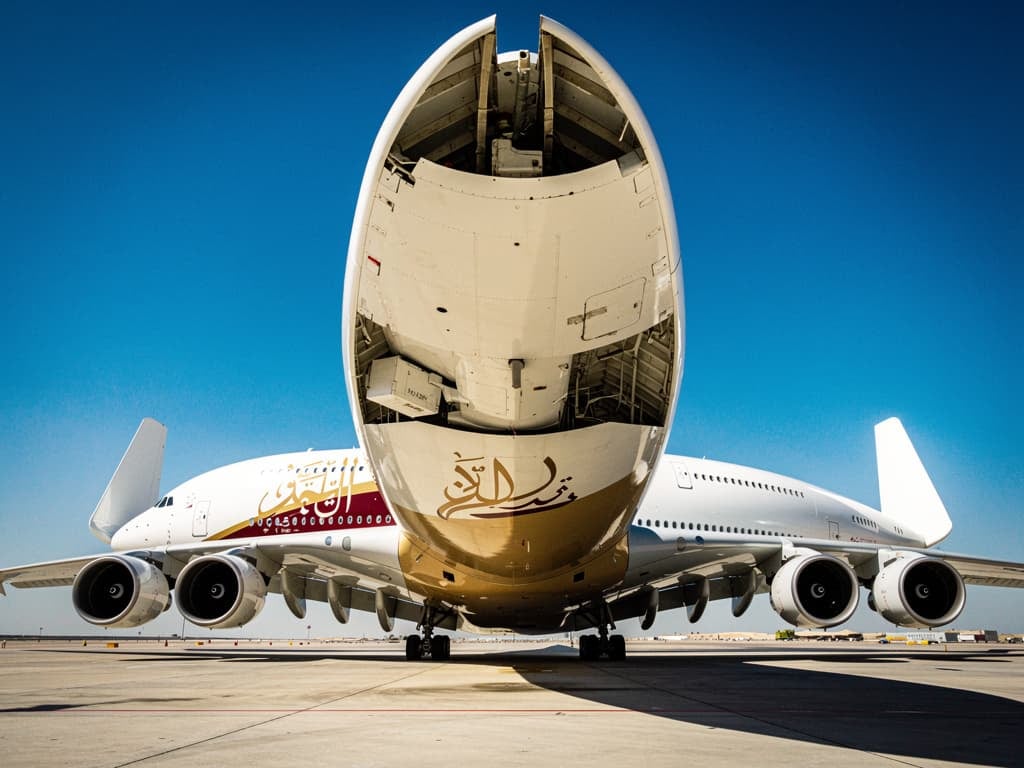
Emirates is retiring the densest commercial aircraft configuration ever flown — its 615-seat, two-class Airbus A380 — by converting all 15 of these aircraft into a three-class layout with 76 Business, 56 Premium Economy, and 437 Economy seats, totaling 569 per jet. The retrofit program, confirmed by the airline and running through November 2026, voluntarily removes 46 revenue seats per aircraft on routes including Dubai-Bangkok, Dubai-Prague, and Dubai-Guangzhou. The decision reflects a structural shift in Emirates’ yield strategy: revenue per square meter now outranks maximum seat count.
The first retrofitted aircraft entered service on Dubai-Amman in April; Prague follows in June, Guangzhou in October. Travelers booking these routes should verify cabin configuration before purchase, as Premium Economy availability is aircraft-specific and inventory on the new layout is tighter than the dense two-class version it replaces.
For two decades, Emirates operated the most densely packed commercial aircraft in passenger aviation — a two-class Airbus A380 carrying 615 seats, with 58 Business and 557 Economy. No other airline came close. That aircraft is now being systematically dismantled, cabin by cabin, across a 15-jet subfleet.
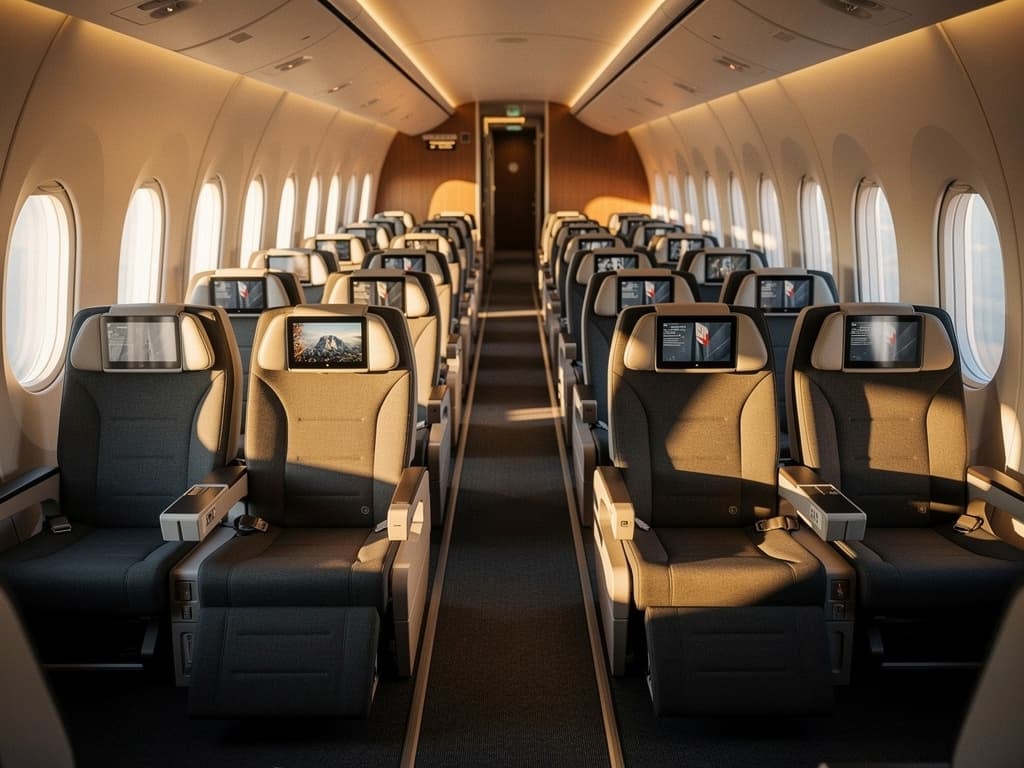
The airline confirmed it will retrofit every two-class A380 into a three-class configuration by November 2026, adding a dedicated Premium Economy cabin and reducing total capacity to 569 seats. Forty-six revenue seats per aircraft, gone — voluntarily, on long-haul widebodies, at a moment when most carriers are still hunting for ways to squeeze more passengers into the same tube.
This is not a fleet retirement or a capacity reduction driven by demand weakness. Emirates is buying more A380s, not fewer — the airline recently converted leased superjumbos to full ownership as part of a broader commitment to operating the type through at least 2040. The dense layout is being killed precisely because a better-yielding alternative now exists within the same airframe. Premium Economy, priced at two to three times the economy fare while occupying roughly 1.4 times the floor space, generates more revenue per square meter than packing the back of the aircraft with additional economy rows.
The routes affected — Bangkok, Bali, Mauritius, Kuala Lumpur, and secondary European cities — are leisure-heavy, price-sensitive markets where Emirates built its dense-pack model. That those same routes are now the testing ground for Premium Economy’s commercial viability says something significant about where the product has arrived.
The retrofit timeline and what it means for seat availability
The conversion sequence is deliberate. The first retrofitted aircraft operated Dubai-Amman (EK903/904) from April 14 through May 31 — a short, high-frequency route with a mix of corporate, expat, and leisure traffic. Prague takes over on June 1, a stronger leisure test with European summer demand. Dubai-Guangzhou follows in October, the long-haul Asia proving ground on a more demanding passenger mix. All 15 aircraft complete conversion by November 2026.
The Amman deployment was not a quiet experiment. It is a route with enough premium demand to validate the cabin economics, and the six-week run produced sufficient data to move confidently to Prague. The progression from a 3.5-hour regional hop to a European leisure route to a long-haul Asia sector is a structured rollout, not a gradual hedge.
Regulatory filings and the airline’s own retrofit announcement confirm the new configuration: 76 Business Class seats (up from 58 in the two-class layout), 56 Premium Economy seats (new), and 437 Economy seats (down from 557). The net effect is a meaningful upgrade in Business inventory on these routes — travelers who previously found only 58 Business seats on the dense A380 will now have access to 76, matching the standard three-class fleet.
| Configuration | First Class | Business Class | Premium Economy | Economy | Total seats |
|---|---|---|---|---|---|
| Two-class dense (retiring) | None | 58 | None | 557 | 615 |
| Three-class retrofit (new) | None | 76 | 56 | 437 | 569 |
| Standard three-class A380 | 14 | 76 | None | 427–429 | 489–517 |

Flight deals most people never see
Our AI monitors 150+ airlines for pricing anomalies that traditional search engines miss. Air Traveler Club members save $650 per trip per person on average: see how it works.
Each deal saves 40–80% vs. regular fares:

Why this signals a structural shift, not a product experiment
Emirates does not give up 46 seats per aircraft across 15 jets without running the revenue math carefully. The airline’s own framing — “optimize revenue per square meter rather than maximize seat count” — is unusually direct for a carrier that typically keeps yield strategy internal. That language appearing in the official announcement suggests confidence in the model, not a trial balloon.
The broader industry context reinforces the point. Singapore Airlines, Japan Airlines, and Virgin Atlantic are running comparable retrofits on Airbus A350 and Boeing 787 fleets. Delta and United are doing the same on their widebody operations. But Emirates’ move carries a different weight — this is the airline that built its commercial model around the densest layout in passenger aviation, on the largest commercial aircraft ever built. Abandoning that model, even on a 15-jet subfleet, is a statement about where leisure-route yield is heading.
Air Traveler Club’s analysis of the 615-seat A380’s final deployments documented how the two-class layout constrained Business inventory to just 58 seats — significantly below the 76 available on standard three-class A380s. The retrofit corrects that imbalance while adding an entirely new revenue tier. For travelers who previously avoided these routes due to limited Business availability, the new configuration opens meaningful inventory.
Premium Economy has also crossed a product threshold that makes the economics work. The cabin is no longer a reclined economy seat with extra legroom — it is a distinct product with its own service cadence, amenity kit, and cabin identity. On leisure routes where the gap between economy and business was previously unbridgeable for many travelers, Premium Economy now captures a segment that was either buying cheap economy or not flying at all.
How to book the retrofitted A380 before inventory tightens
The new three-class configuration changes the booking calculus on affected routes in concrete ways — more Business seats available, a new Premium Economy tier to evaluate, and tighter overall capacity than the 615-seat layout.
- Verify equipment before booking: Premium Economy is only available on selected A380s and 777-300ERs. Check the exact aircraft type on Emirates’ fleet page and confirm the cabin map on your specific flight before purchasing. Aircraft swaps close to departure can change the configuration.
- Business Class inventory improves on these routes: The retrofit adds 18 Business seats per aircraft (58 → 76), matching the standard three-class fleet. Travelers who previously found constrained Business availability on Bangkok, Mauritius, or Kuala Lumpur routes should recheck inventory on flights operating after the relevant aircraft enters service.
- Price the Business vs. Premium Economy gap on your specific route: On daytime sectors under eight hours, Premium Economy’s 40-inch pitch and full service may represent the better value. On overnight long-haul, the lie-flat bed in Business is the meaningful product threshold — the gap between the two cabins is large enough that the fare difference is often justified.
- Watch route assignments through November 2026: As each of the 15 aircraft completes conversion, the three-class layout will appear on additional routes. Dubai-Prague (June 1) and Dubai-Guangzhou (October) are confirmed next deployments. Further leisure-heavy and mixed-yield routes are likely to follow once the full subfleet is converted.
- Award travelers should monitor Skywards inventory: The additional 18 Business seats per aircraft on these routes may create incremental award availability. Check Emirates Skywards redemption space on affected routes after each aircraft enters the new configuration.
Watch for Emirates’ route announcements in Q4 2026 — if the airline moves the retrofitted three-class A380s onto additional long-haul Asia and secondary-Europe flying beyond the confirmed deployments, it confirms Premium Economy as a permanent revenue architecture rather than a subfleet experiment.
Read more