Summary
Emirates deploys its high-density 615-seat Airbus A380 on six routes through April 2026, including Dubai-Bangkok, Dubai-Manchester, and Dubai-Mauritius. The two-class configuration carries 58 business class seats in a 2-4-2 layout—significantly fewer than the carrier’s standard three-class A380s with 76 business seats—and eliminates First class entirely.
Last-minute aircraft swaps remain highly possible on these routes. The dense configuration tightens award space and premium inventory for Skywards members, particularly on leisure routes where demand peaks in April’s shoulder season.
Emirates has scheduled its 615-seat A380 variant on five routes for April 2026, with a sixth operating briefly from April 3-9.
The deployment affects Dubai-Bangkok Suvarnabhumi (EK374/375), Dubai-Birmingham (EK039/040), Dubai-Denpasar (EK368/369), Dubai-Manchester (EK019/020), and Dubai-Mauritius (EK703/704). Dubai-Kuala Lumpur (EK346/347) joins the roster for one week only.
This matters because the 615-seat configuration prioritizes capacity over premium space. With only 58 business class seats versus 76 on standard three-class A380s—and zero First class—award availability tightens considerably. The carrier operates 116 A380s total across eight configurations ranging from 468 to 615 seats, but this variant represents the highest-density option in the fleet.
What the dense configuration means for bookings
The 615-seat A380 eliminates the premium tier entirely. Standard Emirates A380s carry 14 First class suites, 76 business seats, and 427 economy seats in a three-class layout. This variant strips First and reduces business to 58 seats while expanding economy to 557 seats.
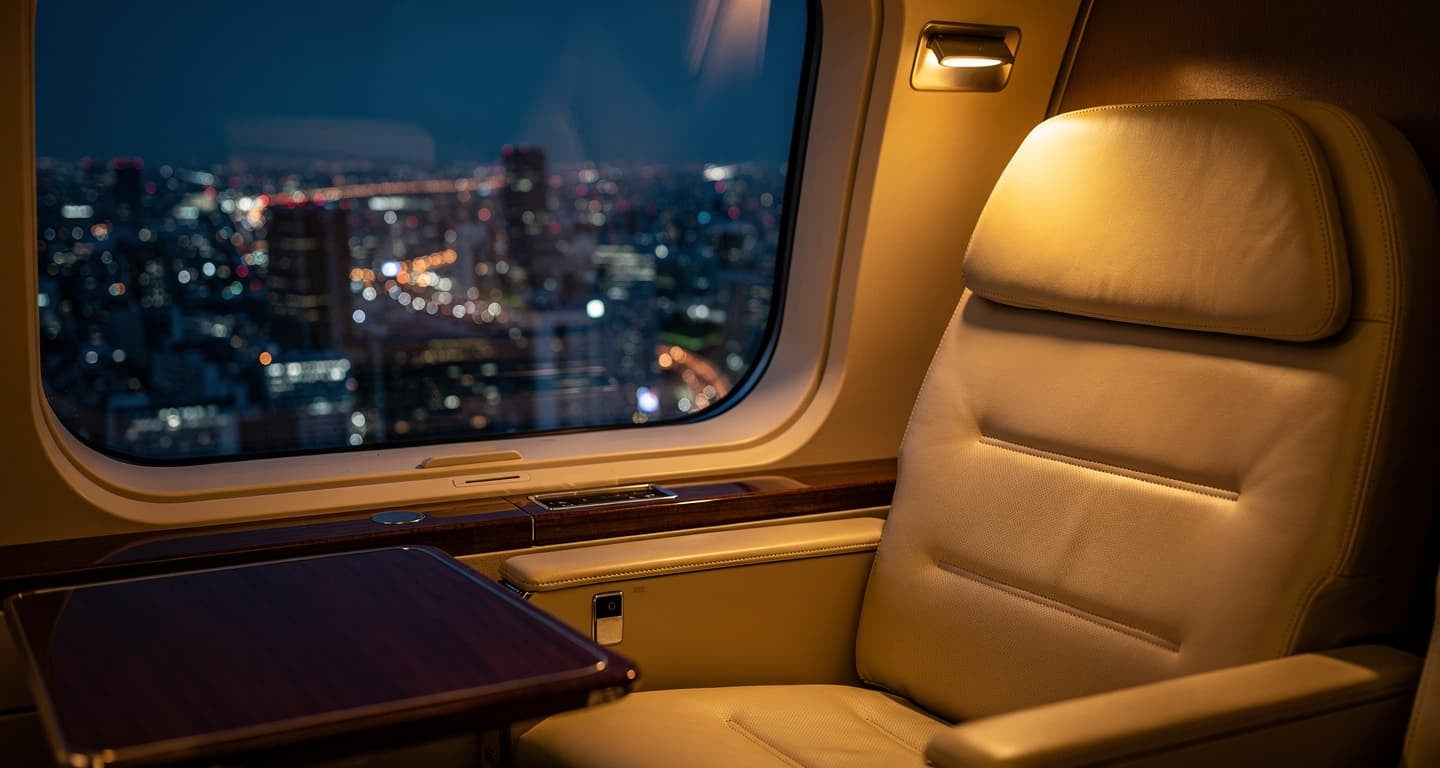
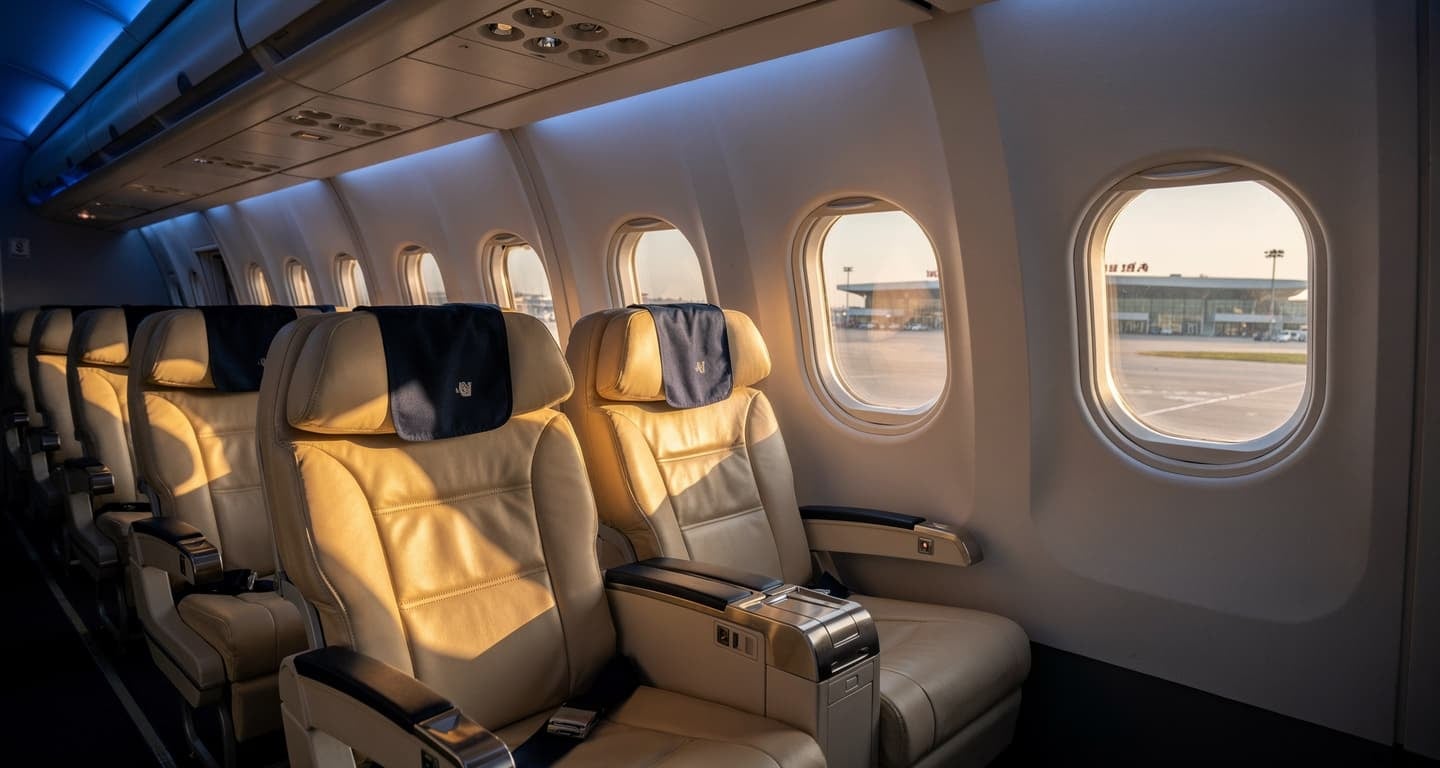
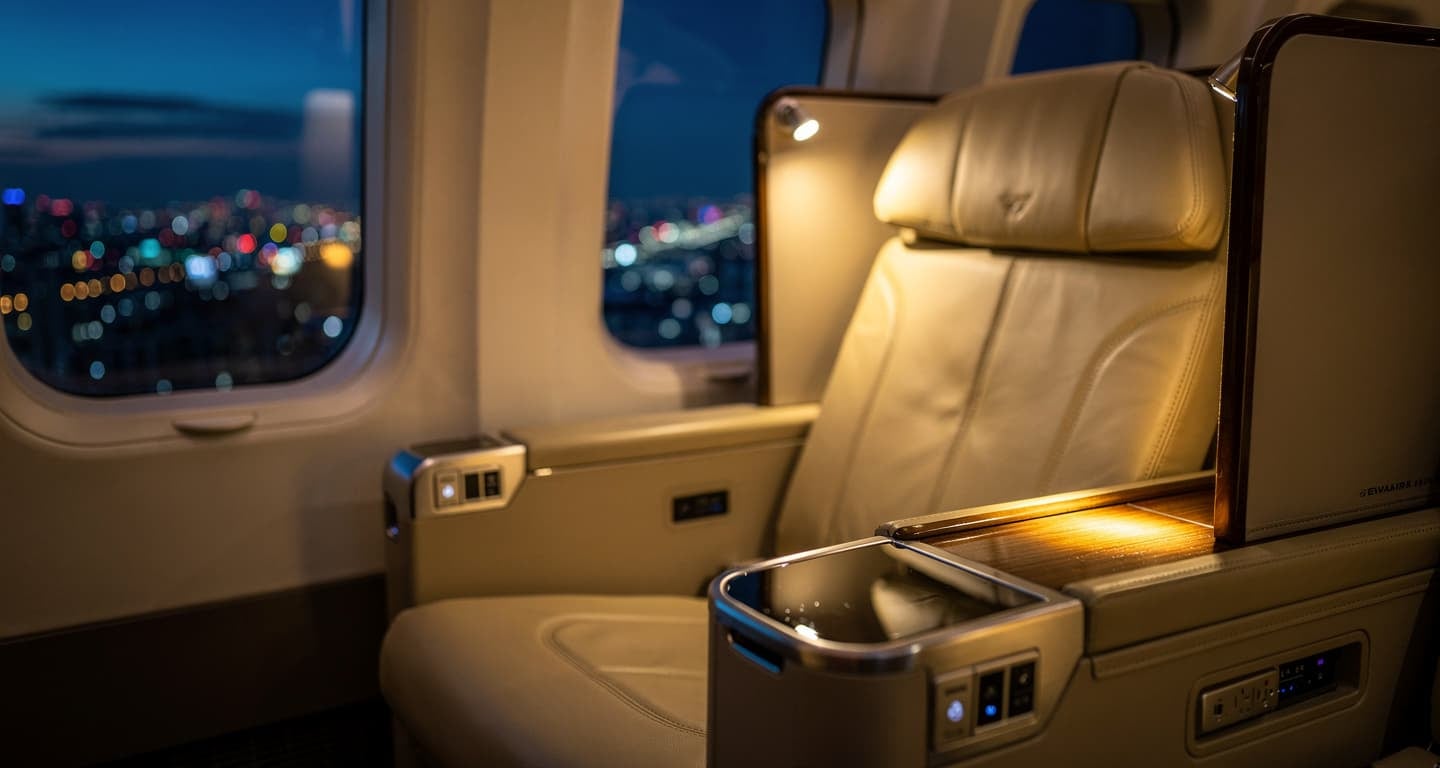
Business class retains the 2-4-2 layout found on many Emirates 777s—functional but lacking the direct aisle access of competitors’ 1-2-1 reverse herringbone products. The configuration dates to the carrier’s earlier gamechanger seats, not the newer 1-2-1 layouts rolling out on select 777 routes. For routes like Dubai-Bangkok and Dubai-Manchester, this positions Emirates behind Qatar Airways’ Qsuite and British Airways’ Club Suites, both offering superior privacy.
| Configuration | First class | Business class | Economy class | Total seats |
|---|---|---|---|---|
| Standard 3-class | 14 | 76 | 427 | 517 |
| High-density 2-class | 0 | 58 | 557 | 615 |
| Premium 3-class | 14 | 76 | 378 | 468 |
The carrier notes last-minute aircraft changes remain highly possible—a caveat that matters when 18 fewer business seats separate confirmed bookings from waitlist disappointment.

Flight deals most people never see
Our AI monitors 150+ airlines for pricing anomalies that traditional search engines miss. Air Traveler Club members save $650 per trip per person on average: see how it works.
Each deal saves 40–80% vs. regular fares:

How this deployment fits the broader fleet strategy
Emirates previously ran 615-seat A380s extensively in early 2026, including daily Munich service until March 28 and operations on 21 routes during the first half of the year. The April schedule represents a pullback to six routes, concentrating the high-density variant on leisure markets where economy load factors justify the configuration trade-offs.
The deployment pattern reveals strategic capacity management. Routes like Dubai-Mauritius and Dubai-Denpasar see strong economy demand in April’s shoulder season, while business class traffic remains steady but not peak. Swapping in the 615-seater adds 90 economy seats per flight while accepting reduced premium inventory—a calculation that works when economy yields hold and business class can absorb the constraint.
For context, Qatar Airways operates Airbus A350 with Qsuite on Dubai-Bangkok, offering 36 business seats in 1-2-1 configuration with door privacy. British Airways deploys A380 with Club Suites on Dubai-Manchester, matching Emirates on aircraft type but edging ahead on seat privacy. The 615-seat A380 competes on capacity and onboard lounge access (available on three-class variants only), not on business class product superiority.
Strategic guidance for April bookings
The 615-seat deployment creates a narrow booking window where premium seat scarcity meets shoulder-season pricing—act early or accept alternatives.
- Book 330+ days out if targeting business class awards on these routes; 58 seats fill faster than standard 76-seat configurations, especially on leisure routes like Mauritius where upgrade demand compounds the constraint.
- Monitor for aircraft swaps up to departure—Emirates explicitly flags last-minute changes as highly possible, meaning confirmed three-class A380 could become two-class or vice versa.
- Consider positioning through Perth for Australia-UAE connections; Perth departures save A$400-600 versus East Coast fares and maintain A380 product consistency with 4-hour domestic buffer.
- Evaluate Qatar or BA alternatives on Bangkok and Manchester routes if direct aisle access matters; Qsuite and Club Suites offer superior privacy at comparable pricing, though Emirates holds schedule frequency advantage.
- Check partner award space via United or Aeroplan if Skywards shows no availability—partner access sometimes reveals seats blocked from direct redemption.
Watch: May 1, 2026 schedules will reveal whether 615-seat operations extend into northern summer or revert to three-class configurations, signaling whether this represents temporary capacity management or sustained high-density deployment on leisure routes.

FAQ
How can I tell if my Emirates A380 flight is the 615-seat configuration?
Check the seatmap during booking on emirates.com. The 615-seat variant shows 58 business class seats in rows 6-17 (2-4-2 layout) and 557 economy seats. Standard three-class A380s display 14 First class suites on the upper deck and 76 business seats. Flight numbers EK374, EK039, EK368, EK019, and EK703 currently show the high-density configuration through April 30, 2026.
Does the 615-seat A380 have the onboard lounge and shower spa?
No. The onboard lounge and shower spa are exclusive to Emirates’ three-class A380 configurations with First class. The 615-seat variant eliminates First entirely and operates as a two-class aircraft with business and economy only. Business class passengers retain access to the business class bar area, but not the premium First class facilities.
Can I upgrade to First class on these flights using Skywards miles?
No First class exists on the 615-seat A380 configuration. Upgrades are limited to economy-to-business only. If you’ve confirmed a First class award on one of these routes, monitor for aircraft swaps—Emirates may substitute a three-class A380 or rebook you on an alternative flight with First class availability.
Which routes are most likely to see last-minute aircraft changes?
Emirates flags all six routes as subject to last-minute aircraft swaps. Historically, leisure routes like Dubai-Mauritius and Dubai-Denpasar see more frequent equipment changes due to seasonal demand fluctuations. Business routes like Dubai-Manchester typically maintain more stable configurations, but April shoulder season creates uncertainty. Check your booking 72 hours before departure for final aircraft confirmation.
Read more