Summary
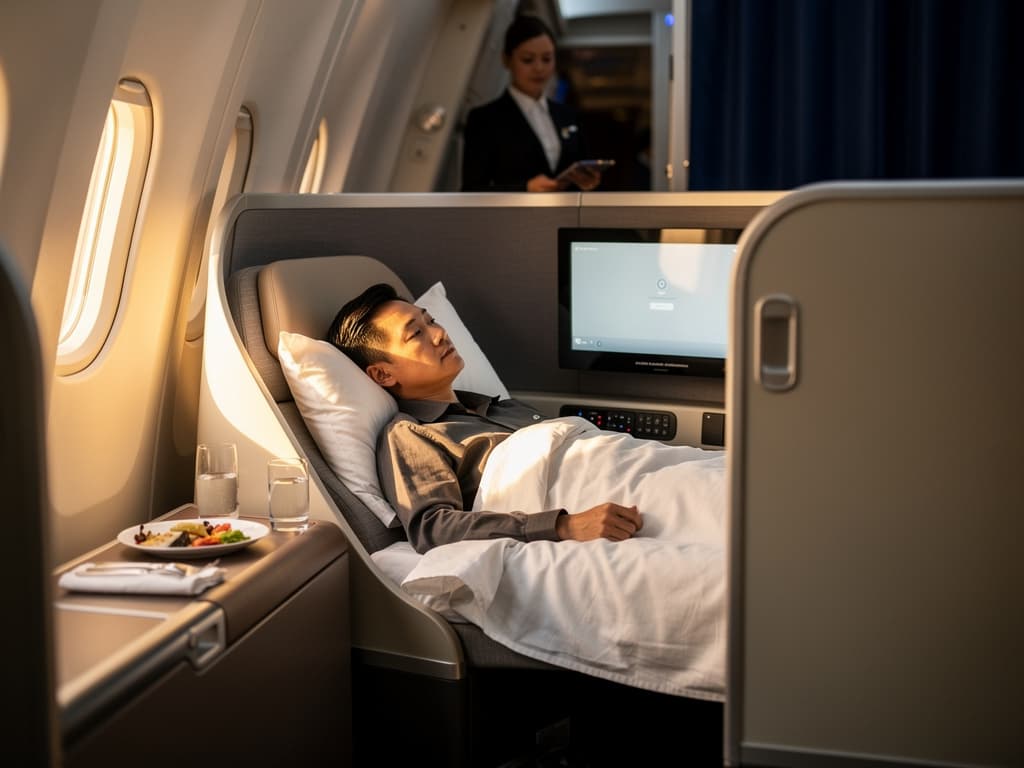
Airlines are marketing business class seats like consumer electronics, with hardware specs now the dominant differentiator. Air France’s La Première first class suite features dual 32-inch 4K screens; United Airlines’ Polaris Studio boasts a 27-inch 4K OLED — the largest U.S. seatback display — while Qatar Qsuite promotes a 79-inch bed. The shift sees passengers comparing screen inches, Bluetooth codecs, and USB wattage before booking.
As business class hardware approaches first-class levels, first class must pivot to spatial architecture as its sole remaining differentiator. Singapore Airlines is expected to unveil its next-generation suite later this year — a 32-inch business class screen would erase the measurable gap between premium cabins.
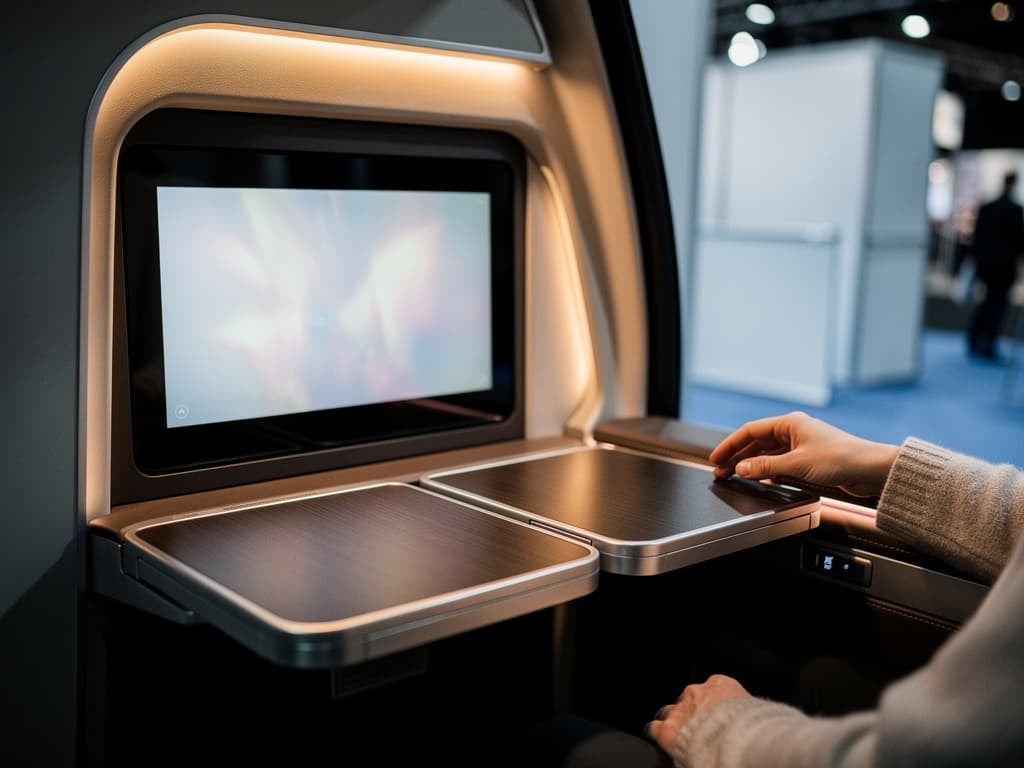
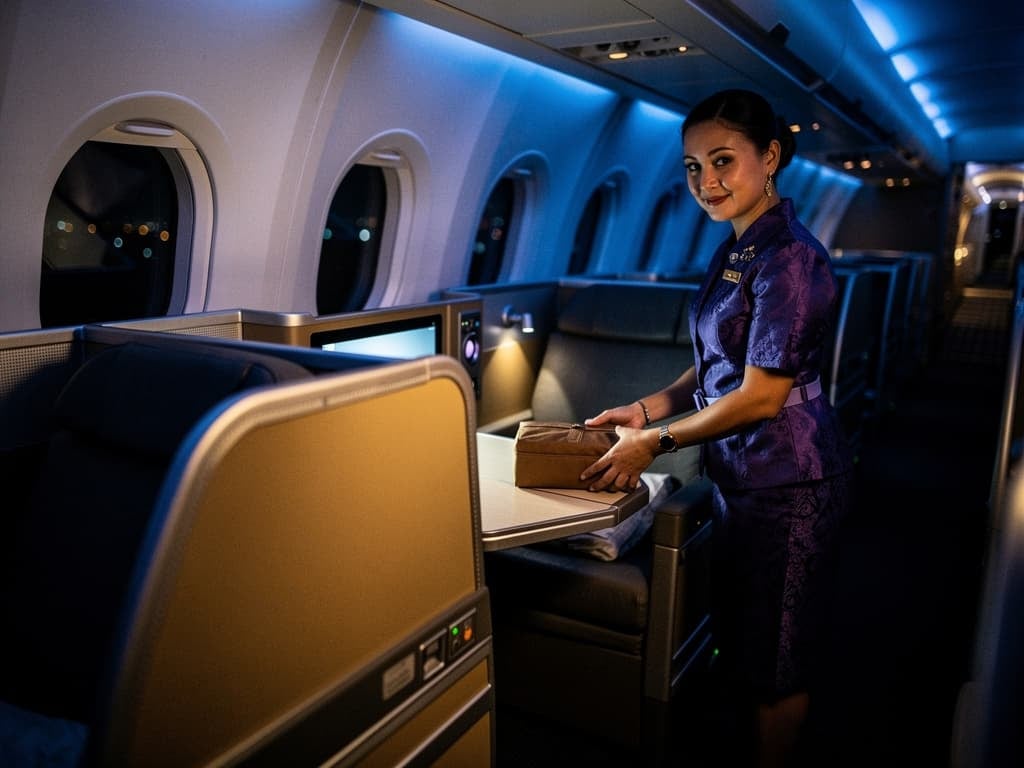
When Air France’s La Première suite won the 2026 iF Design Award, the jury praised its modular layout. What passengers actually notice are the numbers: two 32-inch 4K screens per suite, upgraded from a single 24‑inch display. Across the industry, premium cabins are now sold on specifications once reserved for home‑theater guides.
The shift from soft‑service marketing to spec‑sheet competition is reshaping airline strategies. Data from AwardFares shows that new spec‑led business‑class cabins consistently outperform legacy products on the same routes by premium load factor, especially across the Atlantic.
Measurable features — screen diagonals, bed lengths, USB wattage — now dominate booking decisions. The carriers most exposed are those still flying 2014 – 2019‑era business class products. They face a “fleet‑within‑a‑fleet” problem where two Boeing 777s bearing the same airline logo can deliver materially different premium experiences.
The details
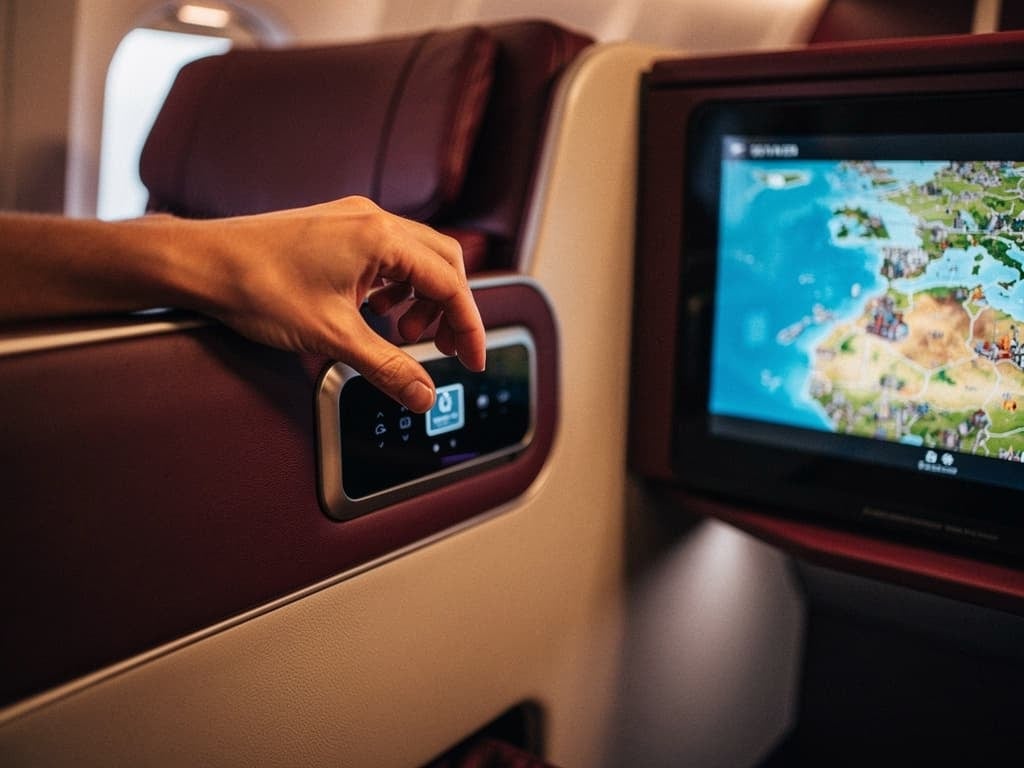
Air France’s jump from a single 24‑inch HD screen to dual 32‑inch 4K displays in La Première — recognized by the iF Design Award jury as a defining advance — was made possible by Panasonic Avionics’ Astrova platform. The system delivers 4K HDR10+, Bluetooth audio pairing, 67 W USB‑C charging, and onboard Spatial Audio. It is rolling out across Air France, Qatar Airways Airbus A350-1000, and Lufthansa’s A380 retrofit simultaneously. The technology allows passengers to use their own premium wireless headphones and compare audio quality between carriers — a detail that belongs in a consumer‑electronics store.
| Airline / Product | Screen size | Bed / seat spec | Key hardware |
|---|---|---|---|
| Air France La Première | Two 32‑inch 4K | 80‑inch bed, chaise longue | Dual screens, full‑height door, three windows, wireless charging |
| United Polaris Studio | 27‑inch 4K OLED | 78‑inch bed, direct aisle access | 15 W wireless charging, 67 W USB‑C, sliding door certified FA awaiting |
| Qatar Airways Qsuite | 21.5‑inch touchscreen | 79‑inch lie‑flat bed | Sliding door, social space, 4K screen |
| ANA The Room | 24‑inch screen | 38‑inch shoulder width | No door, exceptionally wide seat |
| American Airlines Flagship Suite | 17.5‑inch 4K | 78‑inch bed | 15 W USB, no sliding door |

Flight deals most people never see
Our AI monitors 150+ airlines for pricing anomalies that traditional search engines miss. Air Traveler Club members save $650 per trip per person on average: see how it works.
Each deal saves 40–80% vs. regular fares:

Why first class must now sell space, not specs
Air Traveler Club’s analysis of 2026 business class upgrades shows that full‑height doors and 4K screens have become baseline expectations, eroding the old hardware gap. When a business class suite already offers a privacy door and a 20‑inch screen, first class must pivot to spatial architecture: separate lounges, dedicated bed areas, and modular suites that can’t be condensed into a spec table. Air France’s dual‑screen layout is the clearest example — the second screen exists because the chaise longue faces away from the seat, a geometry unavailable in a business class footprint.
How to book the latest hardware
When hardware specs drive premium demand, the exact aircraft tail number matters as much as the airline brand. Here’s how to ensure you end up in the newest suite.
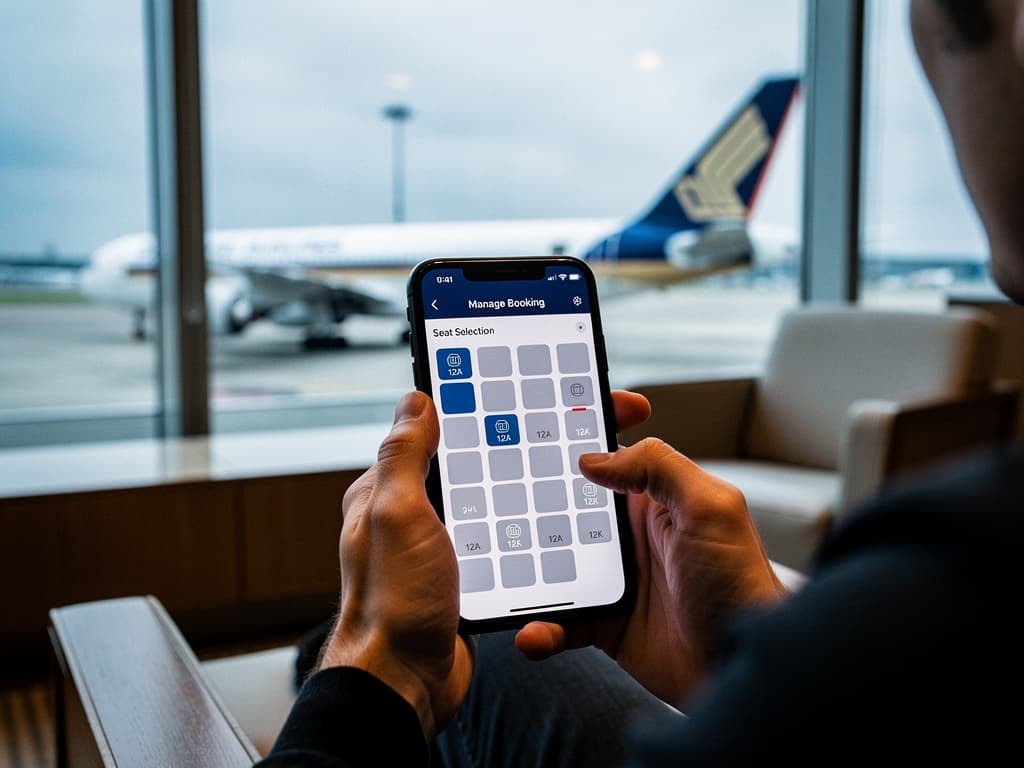
- Check the aircraft variant before booking. Air France’s 777-300ER with La Première operates only select routes — use seat‑map tools like ExpertFlyer to confirm the configuration.
- Prioritise recently retrofitted routes. Flights from JFK, LAX, NRT and CDG are most likely to feature the latest cabins; older equipment lingers on secondary rotations.
- Book Bluetooth and USB‑C. The Astrova platform’s 67 W charging and Bluetooth audio are tangible everyday benefits — when comparing options, these specs indicate a truly modern cabin.
- Monitor retrofit timelines. Carriers like Lufthansa plan to complete A380 Astrova retrofits by mid‑2027; booking too early on a non‑retrofitted frame may disappoint.
- Leverage award waitlists. Elite status holders on Star Alliance, Oneworld, and SkyTeam should place upgrade requests as soon as retrofitted aircraft appear on a route, using the 330‑day booking window.
Watch for Singapore Airlines’ rumored A350/777-9 suite announcement in Q4 2026. If the screen reaches 32 inches, the measurable gap between first and business class vanishes.
FAQ
Which airline offers the largest business class screen right now?
United Airlines’ Polaris Studio leads U.S. carriers with a 27‑inch 4K OLED. Globally, Air France’s La Première first class has dual 32‑inch 4K screens, but no business class product yet matches that.
How does first class differentiate when business class screens catch up?
Once hardware equalizes, first class will rely on spatial architecture — separate lounges, private bedrooms, and oversized suites that cannot be replicated in a business class footprint.
Will premium economy also get 4K screens?
Yes, the spec‑sheet trend is already moving down‑cabin. Premium‑economy screens have grown from 10–11 inches to 13–15 inches since 2018, with Bluetooth and wireless charging following a roughly five‑year lag behind business class.
Read more