Summary
Celebrity and royal air travel operates on a hidden service layer that reshapes aviation norms at the point of delivery. Mariah Carey once paid £70,000 to buy out an entire British Airways first-class cabin, while the Prince and Princess of Wales are prohibited from flying in the highest available cabin class on commercial flights — a protocol-driven restriction that overrides luxury for security.
The gap between standard first class and the demands of fame is widening. Heathrow’s Windsor Suite now sells that separation as a bookable product starting at £3,812 for up to three people.
The protocols surrounding celebrity and royal air travel reveal a parallel aviation ecosystem — one where entire first-class cabins disappear from inventory, private chefs board commercial aircraft, and cabin-crew instructions read more like diplomatic briefings than service manuals. These arrangements, disclosed across decades of memoirs, interviews, and regulatory filings, map a service tier that most premium passengers never see.
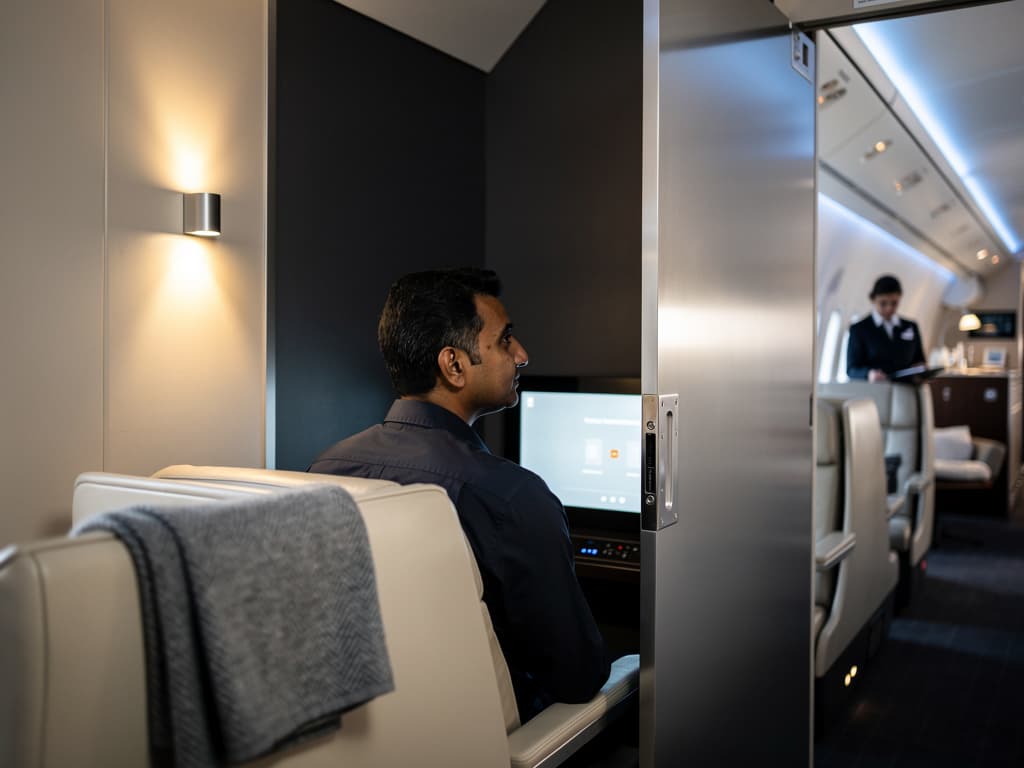
At the extreme end sits Mariah Carey, who paid £70,000 ($118,000) to reserve every seat in a British Airways first-class cabin solely to guarantee privacy. The booking effectively transformed a commercial flight into a de facto private jet experience — without the cost of chartering an entire aircraft.
Madonna took a different approach. During a 2010 delay on a New York–London Heathrow flight, she passed roughly an hour doing yoga in the aisle before a bus collected her party of about 15, leaving other passengers to wait another two hours. She has also brought a personal chef aboard a British Airways flight to prepare sushi, a practice framed around her strict dietary regimen.
For the British royal family, the operational layer is formalized. Queen Elizabeth II’s in-flight routine included a pre-departure martini, bowls of Velamints placed beside her before take-off and in her dressing room, and a standing instruction that crew should not wake her if she was asleep on landing. King Charles III requested that sustainable aviation fuel replace standard jet fuel on official flights — a directive Tim Fauchon, chief executive of the British Helicopter Association, characterized as leading by example.
The most counterintuitive protocol applies to the Prince and Princess of Wales: on commercial flights, they cannot occupy the highest cabin class offered. If first class is available, they must sit in business class or lower, with plain-clothes security personnel filling surrounding seats. Discretion trumps luxury.
The infrastructure behind the velvet rope
These anecdotes sit inside an established premium infrastructure, not a series of one-off stunts. Heathrow traces its VIP terminal concept back to a service that became commercially available in 2009. The current iteration — The Windsor by Heathrow — was refurbished and relaunched in 2025, operating 16 hours daily as a private luxury travel product rather than an invitation-only royal facility.
Access is sold as a paid VIP service tied to first- or business-class travel, open across airlines. Heathrow positions it as a standalone premium product for departing or arriving passengers — end-to-end isolation from the main terminal flow. The service starts at £3,812 for up to three people, covering private transfers, lounge use, and dedicated processing.
| Traveler | Demand | Carrier/Context | Estimated Cost |
|---|---|---|---|
| Mariah Carey | Full first-class cabin buyout | British Airways | £70,000 |
| Madonna | Private chef preparing sushi on board | British Airways | Undisclosed |
| Prince/Princess of Wales | Business-class maximum on commercial flights | Various (security protocol) | Standard fare |
| Queen Elizabeth II | Dedicated bedding liaison, silence during sleep | Royal/charter flights | State-funded |
| Windsor Suite access | Private terminal, butler, Michelin-starred menu | Heathrow (bookable) | From £3,812 |

Flight deals most people never see
Our AI monitors 150+ airlines for pricing anomalies that traditional search engines miss. Air Traveler Club members save $650 per trip per person on average: see how it works.
Each deal saves 40–80% vs. regular fares:

Privacy as a monetized product
The thread connecting Mariah Carey’s cabin buyout to the Windsor Suite’s relaunch is straightforward: airports and airlines are increasingly monetizing privacy as a standalone offering. What was once negotiated through handlers and back channels is becoming a bookable line item. Air Traveler Club’s analysis of HNWI private-jet lending risks documents how ultra-high-net-worth individuals are shifting toward formal aviation access programs precisely because informal arrangements carry reputational exposure.
The Windsor Suite’s evolution from a 2009 VIP service to a commercially marketed product signals that controlled, high-touch access is becoming a mainstream premium-airport revenue stream. Its main competitor is not another lounge — it is a private aviation experience or chauffeur-to-aircraft service. The pricing reflects that positioning.
What the royal protocols reveal about security-first travel
The Prince and Princess of Wales’s cabin-class restriction — business class maximum on commercial flights — is the most instructive detail for premium travelers accustomed to equating higher cabins with better treatment. Security protocol overrides comfort. Plain-clothes protection officers occupy surrounding seats, and the Windsor Suite handles ground-side separation.
- Security dictates cabin selection, not comfort. The first-class ban on commercial flights means even heirs to the throne sit in business class when protocol requires it — a reminder that cabin hierarchy bends to operational necessity.
- Ground-side separation matters more than in-flight product. The Windsor Suite provides the controlled environment; the aircraft seat is secondary. For travelers prioritizing privacy over seat specifications, airport infrastructure deserves as much scrutiny as cabin hard product.
- Sustainability requests are becoming contractual. King Charles III’s sustainable aviation fuel directive for official flights signals that environmental requirements are moving from preference to mandate in government and charter aviation contracts.
- Legacy protocols persist even as products commercialize. The Windsor Suite serves both royals and paying customers, but the operational layers — dedicated butlers, private lounges, separate processing — remain consistent across user categories.
Watch for whether Heathrow expands the private-terminal model further. If additional airports follow with comparable products, it confirms that paid VVIP handling is becoming a permanent premium-airport revenue category rather than a niche offering.
FAQ
Can anyone book the Windsor Suite at Heathrow?
Yes, but only passengers flying in first or business class on any airline. Bookings are made directly through Heathrow VIP, and the service is not available to economy or premium economy travelers. Pricing starts at £3,812 for up to three people.
Do airlines still allow passengers to buy out entire first-class cabins?
Airlines generally permit full-cabin reservations when inventory is available, though policies vary by carrier and route. Mariah Carey’s £70,000 British Airways buyout demonstrates the practice exists, but it is typically handled through dedicated account managers or concierge services rather than standard booking channels.
Why can’t the Prince and Princess of Wales fly first class on commercial flights?
The restriction is driven by security protocol, not cost. When traveling commercially, they must sit in business class or lower, with plain-clothes protection officers occupying surrounding seats. The arrangement prioritizes discretion and operational control over cabin luxury.
Read more