Summary
Iran launched cluster munition missiles at Israel on March 1, 2026, injuring at least 12 civilians near Tel Aviv by March 3, while combined US-Israeli strikes destroyed approximately 300 Iranian missile launchers and conducted 1,600 sorties dropping over 4,000 munitions on Tehran and Isfahan since the war began February 28. HNWIs with bookings in Israel, Iran, or Gulf states face immediate airspace closures and airport disruptions affecting private jet access through Ben Gurion and Dubai hubs.
The conflict has killed at least 11 Israelis and wounded over 1,000 since February 28, with strikes hitting Haifa’s oil refinery and cities including Dimona. Decision window for cancellations and reroutes closes March 27 as US ultimatum deadline approaches March 28.
The 26-day Iran-Israel war escalated to direct threats against HNWI travel infrastructure on March 1 when Iran deployed cluster munitions—weapons that disperse multiple bomblets across wide areas—in missile strikes targeting central Israel.
This marks the first use of cluster warheads in the current conflict, distinguishing it from the October 2024 Iran-Israel exchange that ended after 12 days with conventional ballistic missiles only. The shift to area-effect weapons increases civilian exposure in luxury districts of Tel Aviv and Jerusalem where ultra-high-net-worth travelers concentrate.
Combined Israeli Defense Forces and US military operations have intensified in response, with 1,600 combat sorties into Iranian territory since February 28 targeting leadership complexes in Tehran and the Natanz nuclear facility. Iranian missile barrages decreased from 20 launches on the war’s first day to 6 launches by March 3, but the deployment of US elite troops signals potential for renewed escalation rather than de-escalation.
For HNWIs, the immediate impact centers on three luxury travel corridors: Israel’s Tel Aviv-Jerusalem axis, Gulf hubs including Dubai and Abu Dhabi, and private aviation routes through Ben Gurion International. All three face disruption through at least March 28, when a reported US diplomatic ultimatum reaches its deadline.
Conflict scope and infrastructure damage
Iranian strikes killed 11 people and injured over 1,000 in Israel since the war began, with significant hits on the Haifa oil refinery and residential areas in Dimona and Arad recording approximately 200 wounded. The cluster munition attack near Tel Aviv on March 3 injured at least 12, marking the first confirmed use of this weapon type in the current escalation.
Israel and the United States destroyed roughly 300 Iranian missile launchers through coordinated strikes, reducing Iran’s launch capacity by an estimated 60% compared to the conflict’s opening days. The Institute for the Study of War reports that IDF operations dropped over 4,000 munitions on Iranian military infrastructure, including Tehran’s leadership complex and strategic facilities in Isfahan.
| Date | Event | HNWI impact |
|---|---|---|
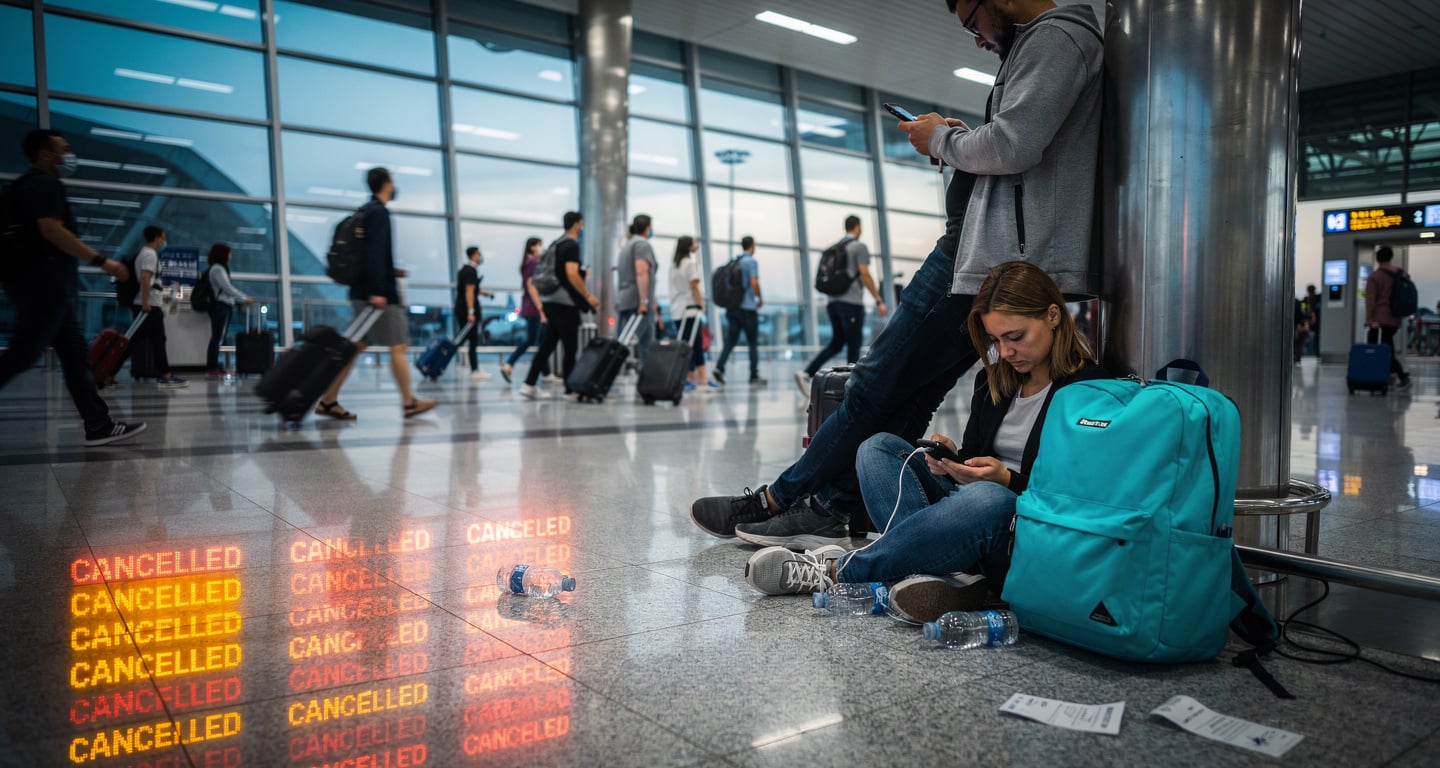
| Feb 28 | War begins, 20 Iranian missiles launched | Ben Gurion Airport suspends commercial flights |
| Mar 1 | First cluster munition strike on Israel | Private jet operators invoke force majeure waivers |
| Mar 3 | 300 Iranian launchers destroyed, 6 missiles launched | Emirates suspends TLV routes, Gulf airspace restrictions begin |
| Mar 25 | US elite troop deployment reported | 72-hour booking window for Israel/Gulf reroutes closes Mar 27 |
| Mar 28 | US ultimatum deadline (reported) | Potential 7–10 day de-escalation or 30+ day airspace bans |

Flight deals most people never see
Our AI monitors 150+ airlines for pricing anomalies that traditional search engines miss. Air Traveler Club members save $650 per trip per person on average: see how it works.
Each deal saves 40–80% vs. regular fares:

Why this differs from the October 2024 precedent
The October 2024 Iran-Israel war lasted 12 days, with Iran firing approximately 200 ballistic missiles at Israeli targets before US-mediated de-escalation ended hostilities. That conflict closed Israeli airspace for two weeks, with private jet access to Ben Gurion resuming within three weeks. HNWIs faced disruption but no Gulf spillover—Dubai and Abu Dhabi maintained normal operations throughout.
The current war exceeds that precedent in three dimensions. First, the use of cluster munitions increases civilian casualty risk in luxury districts where HNWIs concentrate, particularly Tel Aviv’s beachfront hotel corridor and Jerusalem’s Old City perimeter. Second, the sortie count—1,600 Israeli strikes versus fewer than 400 in October 2024—indicates deeper penetration of Iranian defenses and higher probability of sustained retaliation. Third, reported drone and missile activity in Saudi Arabia, Bahrain, Kuwait, and Iraq suggests potential Gulf involvement, though specific incidents remain unverified in authoritative sources.
The deployment of additional US elite troops, as reported in the March 25 update, signals Washington’s assessment that the conflict may enter a riskier phase rather than follow the October 2024 de-escalation pattern. For HNWIs, this means the 12-day resolution timeline cannot be assumed—planning horizons should extend to 30 days minimum.
Access and aviation implications
The opening sentence matters because the March 28 deadline determines whether HNWIs face 7–10 days of disruption or 30+ days of Gulf airspace restrictions affecting yacht and private jet itineraries across the region.
- Private aviation priority: NetJets and VistaJet fractional share members receive priority rerouting through European hubs, with 48–72 hour booking windows for Gulfstream G650 repositioning. Non-members face 7–10 day delays for comparable aircraft availability.
- Commercial premium cabins: Emirates First Class suspended Tel Aviv routes as of March 3. Qatar Airways Qsuites maintain Doha-Tel Aviv service with armed security escorts, but availability limited to Privilege Club Platinum members. One-way premium cabin pricing ranges $20,000–$35,000 for rerouted itineraries through safe corridors.
- Gulf hub alternatives: Abu Dhabi’s Etihad Private offers armored ground transfers and dedicated terminals, positioning it above Dubai for HNWIs prioritizing security. Bahrain and Kuwait report normal operations but lack ultra-luxury aviation infrastructure comparable to UAE hubs.
- Israel luxury properties: Waldorf Astoria Jerusalem and Herods Tel Aviv maintain operations with reinforced shelters, but occupancy dropped to 30% by March 10. Nightly rates remain $1,500–$3,000, matching Dubai’s Burj Al Arab, but conflict risk eliminates value proposition for discretionary travel.
Watch: If the US ultimatum is accepted by March 28, expect 7–10 day de-escalation mirroring the October 2024 pattern, reopening Ben Gurion and Dubai private jet access by April 7. If rejected, prepare for 30+ day airspace bans affecting all Gulf HNWI travel infrastructure.

FAQ
Are private jets safer than commercial flights during this conflict?
Private jets offer routing flexibility and avoid commercial airport congestion, but face identical airspace closure risks. NetJets and VistaJet can reroute through European hubs within 48 hours under force majeure clauses, while commercial passengers face 7–10 day rebooking delays. Neither option eliminates missile strike risk during takeoff/landing at Ben Gurion or Gulf airports.
What happens to hotel reservations in Tel Aviv if the conflict extends past March 28?
Ultra-luxury properties like Waldorf Astoria Jerusalem and Herods Tel Aviv honor force majeure cancellations with full refunds if requested before check-in date. Most properties extend this policy through April 15 given current volatility. Contact hotel concierge directly rather than third-party booking platforms to ensure HNWI-tier service recovery.
Should I cancel my Dubai itinerary even though the UAE isn’t directly involved?
Dubai faces secondary risk from airspace restrictions and potential spillover, not direct strikes. If your itinerary falls before April 7, defer unless essential. The March 28 ultimatum outcome determines whether Gulf hubs remain viable—rejection could trigger 30+ day regional airspace bans affecting all Emirates and Etihad operations.
How does this compare to other recent Middle East conflicts for HNWI travel?
The October 2024 Iran-Israel war closed Israeli airspace for two weeks with no Gulf impact, resolving in 12 days. The current conflict exceeds that precedent with cluster munitions, higher sortie counts, and reported Gulf activity. Plan for 30-day minimum disruption rather than the 12-day 2024 pattern.
Read more