Summary
Aviation Turbine Fuel prices in India rise 8.3% for domestic carriers and 114.5% for international operations effective April 1, 2026, following government intervention that capped the domestic hike at 25% amid a global oil surge triggered by the West Asia conflict. Delhi’s ATF jumped from ₹96,638 per kiloliter to ₹1,04,927, while international routes and foreign carriers face the full ₹2.07 lakh rate—double the February baseline.
The capped increase buys domestic premium travelers one to two months before fuel surcharges materialize, but international business and first class fares face immediate pressure. Civil Aviation Minister Ram Mohan Naidu is urging states like Delhi to cut the 25% VAT on ATF to cushion the blow, with deliberations ongoing through mid-April.
India’s aviation sector enters a fuel cost crisis as ATF prices—accounting for 40 to 45 percent of flight operating expenses—spike in response to global oil markets that doubled from below $100 per barrel on February 27 to nearly $119 following the escalation of the West Asia conflict on February 28.
The government’s 25% cap on domestic ATF hikes prevents the full 100%+ surge from hitting Air India, IndiGo, and Vistara operations within India, but international routes operated by these carriers—and all foreign airlines serving Indian airports—absorb the uncapped ₹2.07 lakh per kiloliter rate.
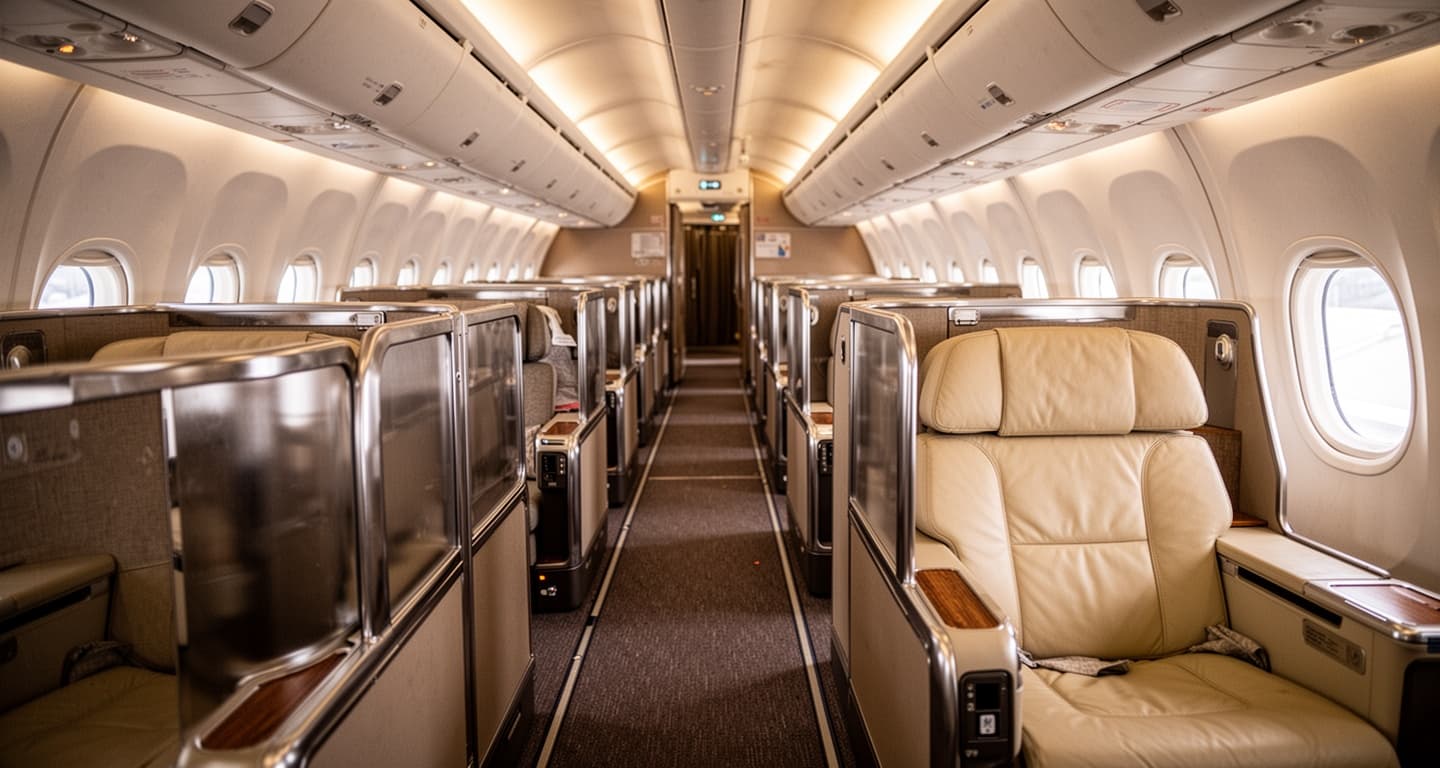
Premium cabin travelers face the sharpest exposure. Business and first class seats on India-US and India-Europe routes typically carry higher fuel allocations per passenger due to lower density configurations, and with ATF comprising nearly half of operating costs, the math points to surcharges in the $400-600 range for long-haul business class within weeks.
The Ministry of Civil Aviation is pursuing a three-pronged strategy: appealing to state governments to reduce VAT on ATF, engaging the Petroleum Ministry on pricing mechanisms, and monitoring airline cost pass-through to prevent excessive fare inflation. Delhi, home to the world’s ninth-busiest airport, currently levies a 25% VAT on ATF—among the highest in India.
The fuel shock hits premium routes hardest
The divergence between capped domestic rates and uncapped international pricing creates a two-tier cost structure. Domestic carriers pay ₹1.04 lakh per kiloliter for flights within India, while the same airline operating Delhi-London or Mumbai-New York pays ₹2.07 lakh—a 97% premium that flows directly into ticket pricing.
Premium cabins absorb disproportionate fuel costs. A business class seat on a Boeing 787 consumes roughly 2.5 times the fuel allocation of an economy seat when accounting for space, weight, and service requirements. On a 14-hour India-US flight, that translates to an additional $450-550 in fuel costs per business class passenger at the new ₹2.07 lakh rate, compared to $200-250 before the hike.
| Route type | ATF rate per kiloliter | Increase from Feb 2026 | Estimated J-class surcharge |
|---|---|---|---|
| Domestic (Delhi-Mumbai) | ₹1,04,927 | 8.3% | ₹800-1,200 ($10-15) |
| India-Middle East (6 hours) | ₹2,07,000 | 114.5% | ₹18,000-24,000 ($220-290) |
| India-Europe (9 hours) | ₹2,07,000 | 114.5% | ₹28,000-36,000 ($340-440) |
| India-US (14 hours) | ₹2,07,000 | 114.5% | ₹37,000-45,000 ($450-550) |

Flight deals most people never see
Our AI monitors 150+ airlines for pricing anomalies that traditional search engines miss. Air Traveler Club members save $650 per trip per person on average: see how it works.
Each deal saves 40–80% vs. regular fares:

Why the government capped domestic but not international ATF
The 25% cap on domestic ATF pricing reflects a political calculation—India’s domestic aviation market serves 150 million annual passengers, many on price-sensitive leisure and business routes where a 100%+ fuel hike would trigger demand destruction. International routes, by contrast, serve a smaller premium segment with less elastic demand and face global competitive pricing that already incorporates higher fuel costs.
The cap also protects domestic carriers from immediate cash flow shocks. IndiGo and Air India operate 1,800+ daily domestic flights with thin margins; an uncapped ATF doubling would force immediate capacity cuts or emergency financing. International operations, which represent 15-20% of total flights for Indian carriers, can absorb higher costs through premium cabin pricing and cargo revenue.
Civil Aviation Minister Ram Mohan Naidu’s push for VAT reductions targets the 25% levy in Delhi and similar rates in Maharashtra and Karnataka. If Delhi cuts VAT to 18%—the level in states like Gujarat—it would reduce effective ATF costs by 10-12%, partially offsetting the April 1 hike. The ministry’s deliberations with the Petroleum Ministry focus on hedging mechanisms and pricing formula adjustments, but no concrete proposals have emerged.
Strategic booking guidance for India premium travel
The capped domestic ATF hike and uncapped international rate create a narrow window for premium travelers to lock favorable pricing before surcharges materialize across booking channels.
- Book long-haul business class awards immediately. Flying Returns and partner programs like United MileagePlus haven’t adjusted India-US business class pricing yet—still 70,000-85,000 miles one-way. Dynamic pricing adjustments typically lag fuel cost changes by 2-3 weeks, so April 15 is the likely inflection point.
- Prioritize domestic premium over international. The 8.3% domestic ATF increase translates to modest ₹800-1,500 surcharges on business class, while international faces $450-600 adds. If you fly both, shift international trips to Q3 2026 when VAT cuts or oil price stabilization may reduce costs.
- Monitor Delhi VAT decision by April 15. If the state government cuts VAT from 25% to 18%, effective ATF costs drop 10-12% for all Delhi-originating flights. That’s the difference between a ₹1,200 surcharge and ₹800 on Delhi-Mumbai business class.
- Consider Gulf carrier alternatives for long-haul. Emirates and Qatar Airways operate fuel hedging programs that smooth cost volatility—their India-US business class fares may remain more stable than Air India‘s unhedged international pricing through Q2 2026.
- Use split ticketing for Southeast Asia connections. The uncapped international ATF rate hits India-Bangkok and India-Singapore routes hard. Booking Delhi-Bangkok on a domestic carrier to a hub city, then connecting on a low-cost carrier like AirAsia, can save ₹8,000-12,000 on business class by avoiding the international ATF rate on the first segment.
Watch: The Petroleum Ministry’s mid-April deliberations will reveal whether India adopts fuel hedging mechanisms for carriers or maintains the monthly revision system tied to global benchmarks—a shift to hedging would stabilize premium fares through 2026.

FAQ
Will existing business class bookings for April travel face fuel surcharges?
Tickets issued before April 1, 2026, are protected from immediate surcharges under IATA fare construction rules. However, airlines can add surcharges to tickets issued after April 1, even for travel booked earlier. Check your ticket issue date in your booking confirmation—if it shows an April 1 or later issue date, surcharges may apply.
How do I know if my award ticket will be repriced due to ATF increases?
Award tickets already issued are locked at the original mileage cost. Unissued awards—those booked but not yet ticketed—may be subject to repricing if the airline implements dynamic pricing adjustments, typically 2-3 weeks after fuel cost changes. Contact your loyalty program to ticket immediately if you have pending awards for India travel.
Which Indian carriers offer the best fuel surcharge protection for elite members?
Air India‘s Maharaja Club Gold and Platinum tiers historically waive fuel surcharges on upgrade certificates and companion tickets during cost volatility periods. Vistara‘s Club Vistara Gold offers similar waivers but only on domestic upgrades. Confirm current policies with your program before April 15, when surcharge structures typically reset.
Are there alternative routes to avoid the international ATF rate for India-Europe travel?
Connecting through Gulf hubs like Dubai or Doha on Emirates or Qatar Airways may offer more stable pricing due to their fuel hedging programs, though total travel time increases by 2-4 hours. Another option: fly domestic within India to a hub city, then connect on a Southeast Asian carrier to Europe via Bangkok or Singapore—this splits the journey into lower-cost segments.
Read more