Summary
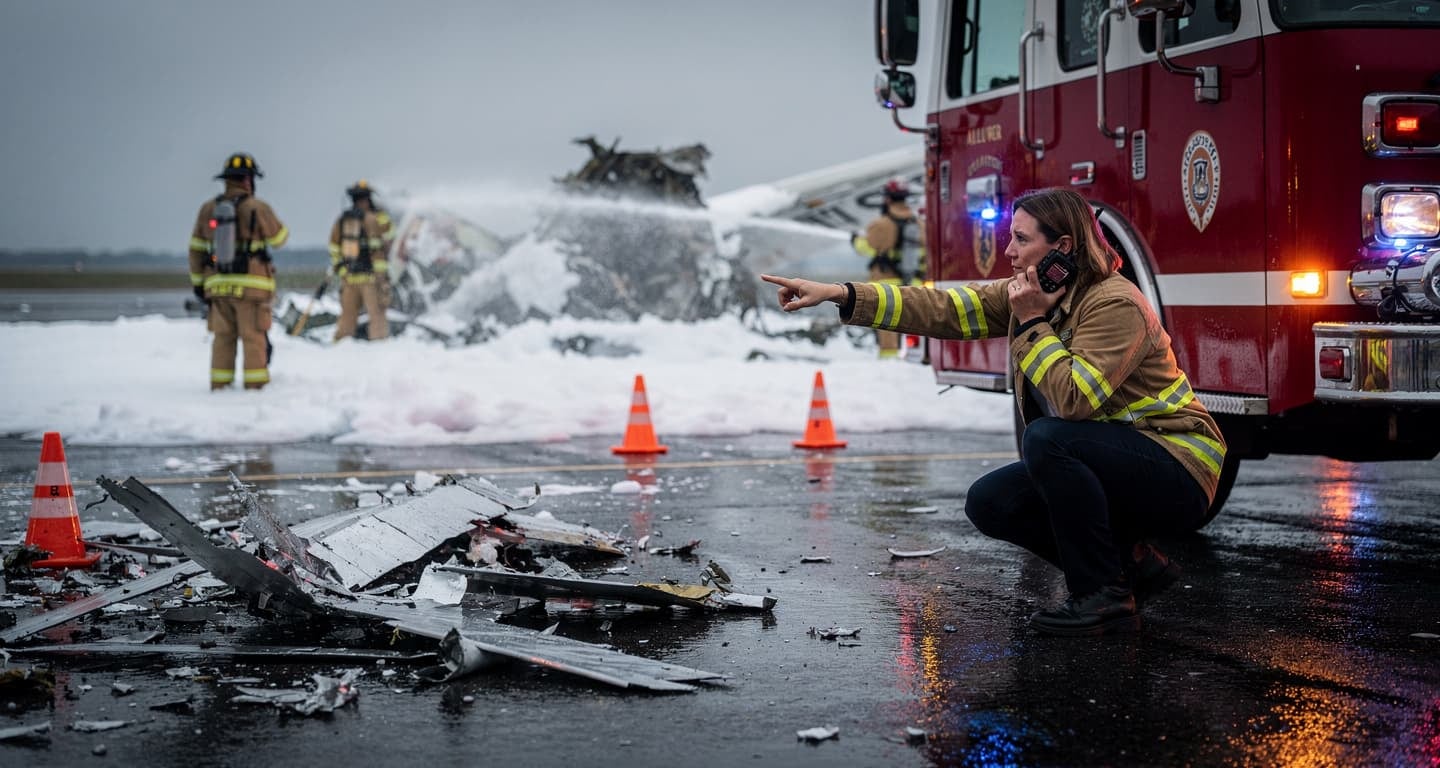
The Federal Aviation Administration opened a 10-day hiring window on April 17, 2026, targeting gamers for air traffic controller positions as the agency confronts a 3,500-controller shortage that has driven system pressure to critical levels and contributed to elevated delay rates across US airspace. The campaign seeks 8,000 applications by April 27 but may close early once that threshold is reached, funneling candidates into the standard federal hiring pipeline with no separate track for gaming experience.
Applicants must be US citizens under 31, pass the Air Traffic Skills Assessment, and complete training at the FAA Academy in Oklahoma City — a 12-18 month process before certification. The controller workforce has fallen 6% over the past decade while operations increased, per a January 2026 Government Accountability Office review.
The Federal Aviation Administration is betting that the reflexes honed in Call of Duty and League of Legends can translate into managing live aircraft separation over Dallas-Fort Worth and Atlanta Hartsfield-Jackson.
The agency’s new hiring campaign, unveiled by US Transportation Secretary Sean Duffy, uses gaming vernacular — “Level up your career” — to attract younger applicants whose experience with fast-paced multiplayer environments may map onto the multitasking demands of air traffic control.
The pitch targets skills gamers already possess: spatial awareness under pressure, rapid decision-making with incomplete information, and the ability to track multiple moving elements simultaneously. But the FAA is not creating a shortcut. Every applicant, gamer or otherwise, faces the same eligibility standards, the same Air Traffic Skills Assessment, and the same grueling training pipeline that has historically washed out more candidates than it certifies.
The hiring window runs April 17-27, 2026, though the FAA reserves the right to close it early if it hits 8,000 applications. That cap reflects the agency’s capacity to process candidates, not a lack of need — the controller shortage stands at roughly 3,500 positions, a deficit that has kept system pressure elevated and contributed to the delay cascades that premium cabin passengers on transcon routes know too well.
The details
The FAA currently employs nearly 11,000 certified professional controllers and has more than 4,000 people in the training pipeline, but those numbers have not kept pace with operational demand. A Government Accountability Office review published in January 2026 found the controller workforce has contracted approximately 6% over the past decade even as the number of operations relying on the air traffic system increased.
The gamer recruitment strategy is not new. The FAA ran a similar “Level Up” video campaign in 2021, comparing air traffic control to Call of Duty and emphasizing situational awareness and multitasking. That effort did not resolve the staffing shortfall, and the deficit has persisted into 2026 with no structural changes to the training model or academy capacity.
Candidates must meet strict eligibility requirements: US citizenship, age under 31 before the closing date, English proficiency sufficient for radio communications, passage of the Air Traffic Skills Assessment, medical and security clearances, completion of training at the FAA Academy in Oklahoma City, and facility-specific training before certification. No prior air traffic control experience is required for the public hiring track, which opens the door to career-changers and recent graduates alongside the gaming demographic the campaign explicitly courts.
| Requirement | Specification | Timeline |
|---|---|---|
| Citizenship | US citizen | At application |
| Age limit | Under 31 by April 27, 2026 | At application |
| Skills assessment | Pass Air Traffic Skills Assessment (ATSA) | Post-application |
| Academy training | FAA Academy, Oklahoma City | 3-5 months |
| Facility training | On-site at assigned facility | 12-18 months |
| Certification | Full controller certification | 18-24 months total |

Flight deals most people never see
Our AI monitors 150+ airlines for pricing anomalies that traditional search engines miss. Air Traveler Club members save $650 per trip per person on average: see how it works.
Each deal saves 40–80% vs. regular fares:

The value-add
The gaming angle is marketing, not policy. The FAA is not lowering standards or creating a parallel track — it is simply repackaging the same federal hiring process with language designed to resonate with a demographic that has historically overlooked government aviation careers. The agency’s bet is that gamers possess transferable cognitive skills, but those skills have never been validated in the high-stakes environment of live traffic management, where a single error can cascade into airspace-wide delays or worse.
The 2021 campaign produced no measurable staffing relief, and the 2026 version faces the same structural bottleneck: the FAA Academy in Oklahoma City can only process a finite number of trainees per year, and facility-specific training adds another 12-18 months before a new hire can work traffic independently. Even if the agency receives 8,000 applications and selects the top candidates, the earliest those controllers could begin reducing the shortage is late 2027.
For premium cabin travelers, the implications are straightforward. The controller deficit has contributed to the delay environment that makes transcon business class less reliable than international long-haul, where staffing levels at European and Asian hubs remain more stable. Until the FAA closes the 3,500-position gap, premium travelers should expect continued pressure on domestic schedules, particularly during peak travel windows when the system operates near capacity.
Strategic guidance
The hiring window closes in 10 days, but the staffing relief it promises will not materialize until late 2027 at the earliest — here is how to navigate the interim.
- Build schedule buffers: Add 90-120 minutes between connections on domestic premium itineraries through Q2 2027, particularly on routes touching congested hubs like Newark, Chicago O’Hare, and San Francisco.
- Prioritize elite status: Lounge access and rebooking priority become more valuable when controller shortages drive irregular operations — focus mileage runs on programs with strong domestic footprints like United MileagePlus and Delta SkyMiles.
- Monitor certification data: The FAA typically releases quarterly workforce reports — watch for Q3 2026 data showing new controller deployments to gauge whether the gamer campaign is producing measurable staffing gains.
- Consider international alternatives: For time-sensitive travel, premium cabins on international carriers operating through fully-staffed hubs may offer better reliability than domestic transcon business class until US controller levels stabilize.
FAQ
Will the gamer hiring campaign actually reduce flight delays?
Not in 2026. Even if the FAA receives 8,000 qualified applications and selects top candidates, the training pipeline requires 18-24 months before new controllers can work traffic independently. Measurable delay reduction would not appear until late 2027 at the earliest, and only if certification rates exceed historical norms.
Can gamers with no aviation background really become air traffic controllers?
Yes, but gaming experience alone is insufficient. The FAA requires passage of the Air Traffic Skills Assessment, medical and security clearances, and successful completion of both academy and facility training. Gaming skills like multitasking and spatial awareness may help during training, but they have not been validated as predictors of controller performance in live traffic environments.
How does the US controller shortage compare to other countries?
The US faces a 3,500-controller deficit with a workforce that has contracted 6% over the past decade, while European air navigation service providers under Eurocontrol maintain fuller staffing levels and achieve on-time performance rates near 95% compared to the US average of 75-80%. Canada’s privatized Nav Canada model also demonstrates higher staffing efficiency, though direct comparisons are complicated by differences in airspace complexity and traffic volume.
Read more