Summary
On September 12, 2001, while every U.S. civilian aircraft was grounded after the 9/11 attacks, the FAA cleared a single medical flight — a fighter-escorted jet carrying inland taipan antivenom from the San Diego Zoo to Miami — saving a 62-year-old snake handler who had been bitten the previous afternoon and was bleeding internally.
The mission, authorized only for daylight hours, reveals that the shutdown was not absolute for life-critical emergencies. The antivenom reached the hospital by 5:15 p.m., administered roughly 45 minutes after the aircraft touched down.
Twenty-five years after the attacks that silenced every U.S. civilian aircraft, the story of a desperate cross-country antivenom run illuminates a little-known dimension of the FAA’s historic airspace closure. The rescue demonstrates that emergency aviation channels could still function under strict conditions, even as the skies fell utterly quiet.
The flight involved Miami-Dade Fire Rescue’s specialized Venom One unit, the San Diego Zoo’s antivenom repository, Baptist Hospital, and a contracted jet with two fighter escorts. The patient, Lawrence Van Sertima, had been bitten by an inland taipan — a snake whose venom causes rapid, catastrophic internal bleeding. With no commercial flights available, he was taken by road to the Miami hospital, where his condition deteriorated into bleeding from the eyes, ears, and mouth.
Captain Al Cruz, who founded Venom One, administered all five vials of antivenom on hand, but they weren’t specific to taipan envenomation. Only two U.S. supplies of the correct antivenom existed: one in New York City and one at the San Diego Zoo. Cruz spent more than six hours working the phones, and hospital officials escalated the request to the FAA after midnight.
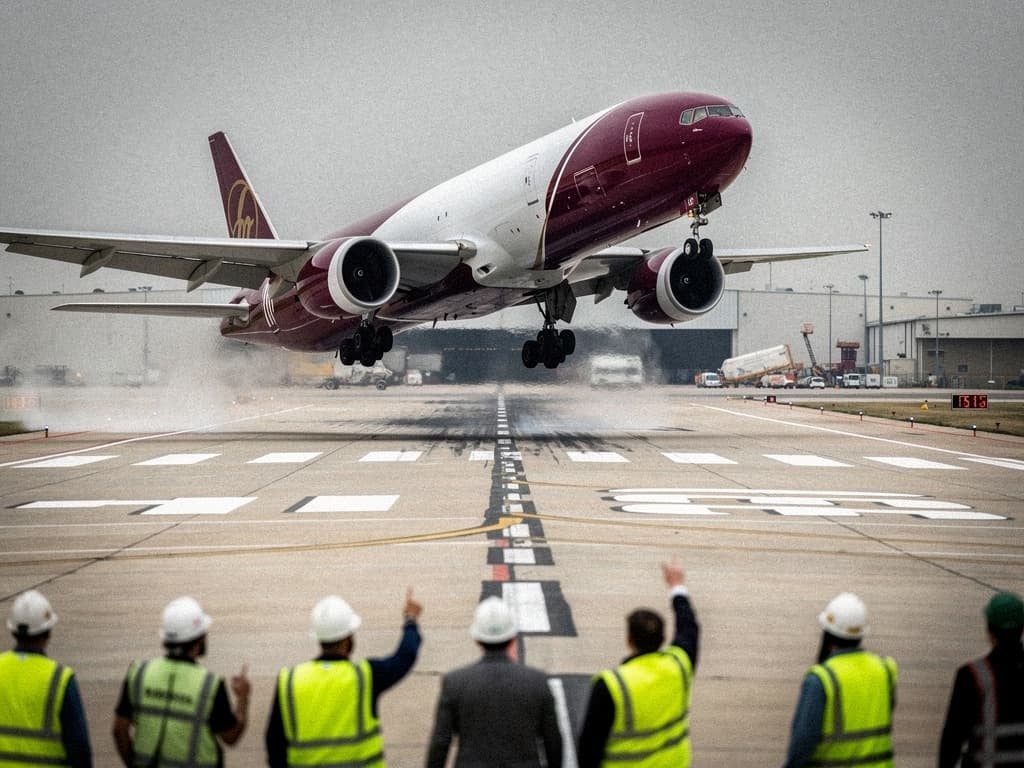
The FAA approved the flight on the condition it operate in daylight. At first light on September 12, the aircraft left Fort Lauderdale for San Diego, refueled, collected the antivenom in a small red cooler from zoo and harbor police, and returned to Miami by 4:30 p.m. A medical helicopter rushed the antivenom to the hospital, where doctors administered it within 45 minutes. Van Sertima recovered.
The details
Archival FAA NOTAMs from September 11, 2001, explicitly listed medevac, rescue, firefighting, law-enforcement, and emergency-evacuation flights as authorized operations in restricted airspace. The antivenom mission fit squarely within that framework, though its cross-country, fighter-escorted nature made it exceptional.
The air ambulance coordinator for Baptist Health South Florida, Johnny Delgado, reached an FAA official he knew through the Association of Air Medical Services after midnight and stressed that the patient would die without the antivenom. A written daylight-only authorization was faxed to him. The flight crew later described an eerily empty sky — almost no other aircraft or radio traffic — as they crossed the country.
| Date/Time | Event | Significance |
|---|---|---|
| Sept. 11, afternoon | Snake handler bitten by inland taipan; transported by road to Baptist Hospital, Miami | Civilian flights grounded; road transport only option |
| Sept. 11, evening | Captain Al Cruz administers five vials of non-specific antivenom; patient deteriorates | Only taipan-specific antivenom can halt internal bleeding |
| Sept. 11, night | Cruz and hospital staff locate antivenom at San Diego Zoo; FAA request escalated | Only two U.S. supplies exist; New York supply unreachable |
| Sept. 12, after midnight | FAA approves daylight-only medical flight; written authorization faxed to air ambulance coordinator | Emergency exception granted under strict condition |
| Sept. 12, first light | Contracted jet departs Fort Lauderdale for San Diego, escorted by two fighter jets | Only civilian aircraft in U.S. airspace at the time |
| Sept. 12, ~4:30 p.m. | Aircraft lands at Kendall-Tamiami Executive Airport; antivenom transferred to medical helicopter | Antivenom administered within 45 minutes; patient recovers |

Flight deals most people never see
Our AI monitors 150+ airlines for pricing anomalies that traditional search engines miss. Air Traveler Club members save $650 per trip per person on average: see how it works.
Each deal saves 40–80% vs. regular fares:

Why the antivenom flight still matters
The rescue was not a one-off fluke but a real-world test of the FAA’s emergency airspace doctrine. The same NOTAM categories that allowed the flight — medevac, rescue, emergency evacuation — remain embedded in today’s air traffic control protocols. For aviation historians and regulators, the case demonstrates that pre-established emergency channels can function under extreme stress, avoiding the need for ad hoc, high-level political approvals.
The flight also highlights the critical role of specialized units like Venom One and the quiet coordination between zoos, hospitals, and air ambulance networks. On the 25th anniversary, the story is being preserved as a human-scale example of how life-critical missions pierced the silence of a shut-down sky.
The emergency exception framework that still governs U.S. airspace
The antivenom flight was not an anomaly but an application of existing FAA emergency categories. Today, those same medevac and rescue exceptions remain in force, ensuring that life-critical missions can proceed even during national security events. For aviation historians and regulators, this case underscores the importance of maintaining clear, pre-established emergency protocols rather than relying on ad hoc approvals. The 9/11 shutdown, while unprecedented, did not erase the FAA’s ability to distinguish between routine traffic and missions that could not wait.
FAQ
Was this the only civilian flight allowed after 9/11?
No. Other medical and emergency flights operated under the same NOTAM exceptions, but this antivenom run is one of the most dramatic and well-documented. The FAA’s ground stop explicitly permitted medevac, rescue, firefighting, and law-enforcement flights.
How did the FAA authorize the flight?
The FAA’s 9/11 NOTAMs already listed medevac as an authorized category. The specific flight was cleared by an FAA official after a direct request from Baptist Hospital’s air ambulance coordinator, with a written daylight-only condition faxed to the coordinator.
What other exceptions existed during the shutdown?
Rescue, firefighting, law enforcement, and emergency evacuation flights were all permitted, as documented in the FAA’s 9/11 records. Military aircraft and certain government operations also continued.
Read more