Summary
Business and first-class passengers arriving at Bangkok’s Suvarnabhumi Airport are being directed to standard immigration queues as of April 3, 2026, eliminating priority lane access that was officially confirmed as available by Airports of Thailand just eight months ago. Multiple travelers report no signage, no staff direction, and no explanation for the policy reversal at immigration zones serving 60+ daily long-haul premium cabin arrivals.
This marks the second fast track elimination in nine months. Private VIP services remain available at ฿2,349–฿3,949 per arrival, but the loss of complimentary business-class immigration benefits represents a significant competitive disadvantage versus Singapore, Hong Kong, and Tokyo hubs.
A business-class passenger arriving at Bangkok’s Suvarnabhumi Airport on April 3 was directed to the standard immigration queue alongside economy passengers, contradicting eight months of official airport policy confirming priority lane access for premium cabin travelers.
The traveler reported that all business-class passengers on the flight were turned away from priority lanes, with “a lot of people clearly unhappy about it.”
No airport signage indicated the policy change. No airline issued advance notice. No immigration staff provided explanation.
This affects every premium cabin arrival at BKK — Thai Airways operates 12 daily long-haul business-class services, Singapore Airlines runs 8, and Cathay Pacific operates 6, plus dozens of other carriers serving the airport’s 65 million annual passengers. The loss of fast track access eliminates a core benefit that airlines market when selling business-class tickets and that frequent flyers factor into routing decisions.
The details
Suvarnabhumi Airport’s immigration fast track has collapsed twice in nine months. In August 2025, Airports of Thailand closed the dedicated Fast Track lane entirely, citing “congestion in the fast-track lane areas.” After media pressure, AOT reversed course within days, announcing that business and first-class passengers could use Priority lanes at immigration zones 1 and 3.
But ground reports contradicted the official policy immediately. A traveler arriving August 27, 2025 — just days after AOT’s announcement — reported being directed to general queues despite holding a business-class ticket. The April 3, 2026 report suggests either a formal policy reversal or the final collapse of inconsistent enforcement that has persisted for eight months.
The Priority Lane system at BKK is already inferior to regional competitors. Singapore Changi offers dedicated fast-track lanes exclusively for premium cabin passengers. Jakarta’s Soekarno-Hatta provides priority immigration for business-class holders. Bangkok’s Priority Lane, when available, shares space with elderly passengers, disabled travelers, and diplomatic passport holders — a lower-tier benefit than the dedicated premium corridors at competing hubs.
| Access method | Eligibility | Cost | Current status |
|---|---|---|---|
| Priority Lane (official) | Business/first class boarding pass | Included with ticket | Unavailable as of April 3, 2026 |
| Private VIP Fast Track | Any ticket class | ฿2,349–฿3,949 ($65–$110 USD) | Available via third-party vendors |
| APEC Business Travel Card | Pre-approved business travelers | Application required | Available at dedicated APEC lane |
| Thailand Privilege Card | Long-term visa holders | ฿900,000+ membership | Available at Priority Lane |
| Standard immigration | All passengers | Included with ticket | 20–45 minute wait times reported |

Flight deals most people never see
Our AI monitors 150+ airlines for pricing anomalies that traditional search engines miss. Air Traveler Club members save $650 per trip per person on average: see how it works.
Each deal saves 40–80% vs. regular fares:

The value-add
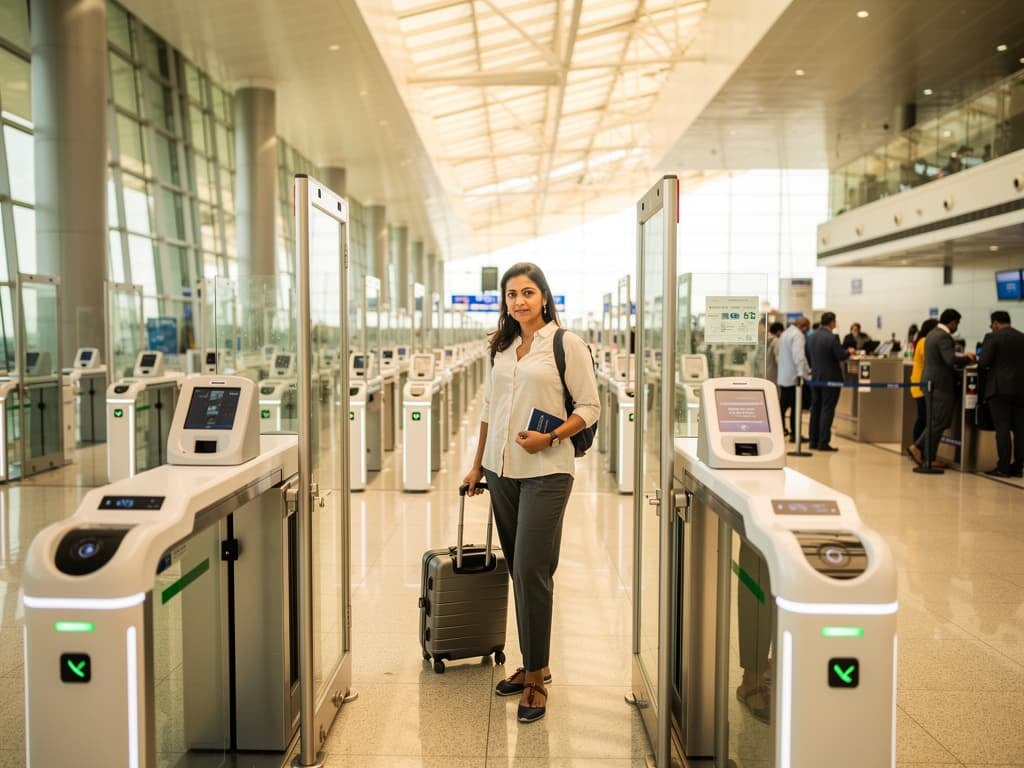
This is not a temporary glitch — it reflects Thailand’s broader struggle to modernize airport operations. Unlike Singapore, which deployed self-service e-gates for all passengers in 2015, or Jakarta, which offers automated passport control, Bangkok remains dependent on manual immigration processing. Air Traveler Club’s analysis of automated clearance systems shows how Australian and New Zealand passport holders clear Singapore immigration in under 45 seconds using automated lanes, a capability Bangkok has failed to implement despite handling similar passenger volumes.
Airports of Thailand’s August 2025 reversal of the fast track closure was a tactical retreat, not a policy commitment. The April 2026 enforcement collapse suggests AOT has decided the operational cost of maintaining separate premium lanes exceeds the political cost of eliminating them.
Strategic guidance
The fast track elimination removes a key competitive advantage for routing premium award tickets through Bangkok versus Singapore or Hong Kong.
- Rebook existing BKK arrivals if you’re traveling in the next 30 days and fast track was a deciding factor. Contact your airline’s elite desk for fee waivers on changes to Singapore or Hong Kong routings.
- Shift future award searches to Singapore Changi for Southeast Asia connections. Singapore Airlines maintains consistent business-class immigration benefits, and Changi’s automated clearance processes 80% of passengers in under 2 minutes.
- Consider private VIP services only if your connection time is under 90 minutes. At ฿2,349–฿3,949 per arrival, the cost approaches 15–20% of a discounted business-class ticket on regional routes, making it economically viable only for tight connections.
- Monitor airline responses over the next 14 days. If Thai Airways, Singapore Airlines, or Cathay Pacific issue statements defending or accepting the change, it signals permanent policy. If they remain silent, it suggests they’re negotiating with AOT behind the scenes.
- Leverage elite status at alternative hubs if you hold Star Alliance Gold or Oneworld Emerald. Singapore and Hong Kong both offer dedicated immigration lanes for top-tier frequent flyers, independent of cabin class.
Watch: An official statement from Airports of Thailand or the Thai Immigration Bureau clarifying whether Priority Lane access is permanently eliminated. If AOT issues a formal policy document within 7–14 days, it will signal whether this is a deliberate cost-cutting measure or operational confusion.
FAQ
Can I still use Priority Lane if I have elite status with an airline?
As of April 3, 2026, no travelers have reported successful Priority Lane access based on elite status alone. Airports of Thailand has not issued guidance on whether Star Alliance Gold or Oneworld Emerald members retain access. Contact your airline’s elite desk for current policy before arrival.
Are private VIP Fast Track services worth the cost?
Private VIP services at ฿2,349–฿3,949 ($65–$110 USD) make economic sense only if your connection time is under 90 minutes or if standard immigration wait times exceed 45 minutes. For leisure travelers with flexible schedules, the cost approaches 15–20% of a discounted regional business-class ticket, making it a poor value proposition.
Will airlines refund the premium I paid for business class if fast track is eliminated?
No airline has announced a refund policy for the loss of fast track benefits. However, if you purchased your ticket with fast track explicitly marketed as a benefit, contact your airline’s customer service department and reference the policy change. Some carriers may offer rebooking to alternative hubs or partial compensation on a case-by-case basis.
Which Southeast Asian hubs still offer reliable business-class immigration fast track?
Singapore Changi, Hong Kong International, Tokyo Narita, and Tokyo Haneda all maintain dedicated business-class immigration lanes with consistent enforcement. Jakarta’s Soekarno-Hatta offers priority immigration for premium cabin passengers. Kuala Lumpur’s KLIA provides fast track for business-class travelers on most airlines, though enforcement varies by terminal.
Read more