Summary
Magnifica Air, the US premium airline startup unveiled in October 2025, is targeting a Q3 2027 launch with a fleet of six aircraft — four Airbus ACJ220-300s and two ACJ321neos — configured for as few as 45 and 54 seats respectively, with enclosed private suites and lounge-style interiors designed by Comlux. Co-founder and CEO Wade Black describes the concept as filling a pricing gap between domestic first class (around $1,000) and on-demand private jet charter ($20,000–$25,000), targeting routes including New York, Miami, Los Angeles, Dallas, Houston, and the Bay Area, with seasonal Caribbean and Napa Valley service.
No public fares or booking windows have been announced, and the carrier has not yet received FAA operating certification. The first confirmed aircraft deliveries and a published route map will be the critical signals that Magnifica is moving from concept to operational airline.
A new US premium airline is taking shape — and its founder is making the case that a significant pricing gap in American aviation has gone unaddressed for decades. Magnifica Air CEO Wade Black confirmed this week that the carrier has signed agreements for eight aircraft and is building toward a Q3 2027 commercial launch, with initial operations anchored on high-demand leisure corridors between New York, Miami, Los Angeles, and Texas.
The pitch is precise: price at two to three times a domestic first-class ticket, deliver a cabin experience closer to a top-tier business jet, and operate from private TSA-approved terminals to eliminate the friction of commercial airports. Black, whose family has operated aviation businesses in Texas since the 1940s through SevenBar Flying Service, frames the concept as category creation rather than competition with existing carriers.
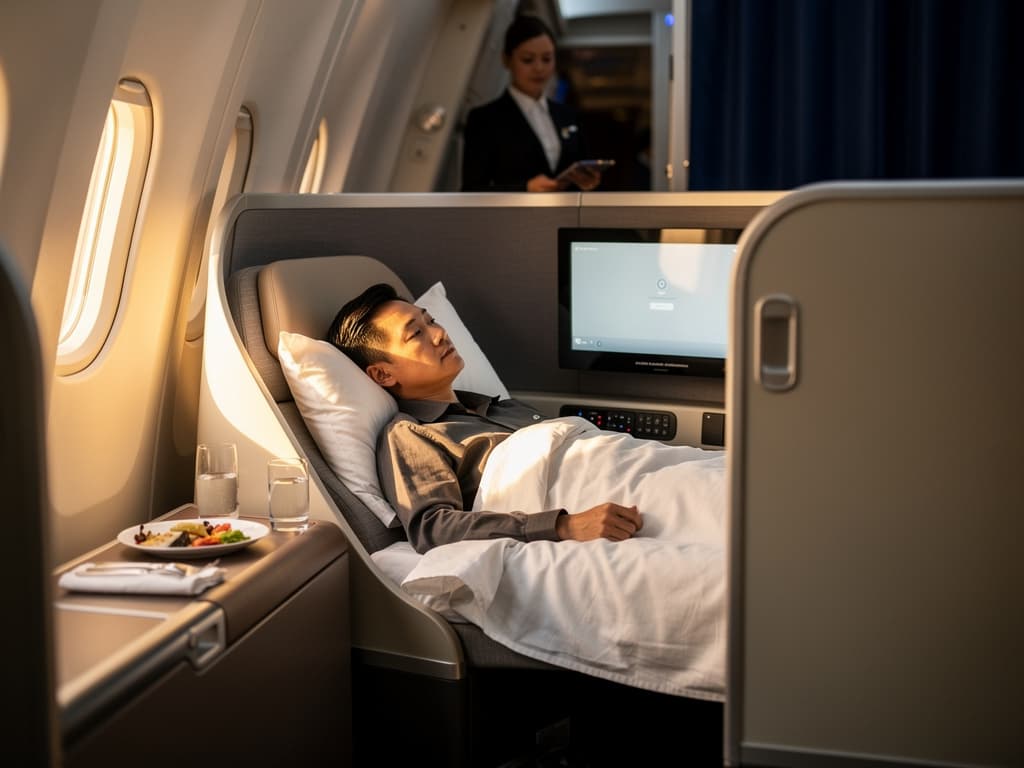
What makes the proposition structurally interesting is the aircraft choice. The ACJ220-300 and ACJ321neo — executive derivatives of Airbus‘s most efficient narrowbody platforms — offer cabin cross-sections wide enough to accommodate enclosed suites and lounge areas that simply cannot fit inside the Embraer E135s and E145s operated by semi-private competitors like JSX. That physical advantage is central to Magnifica’s differentiation argument.
The timing is deliberate. In Q4 2025, Delta Air Lines reported for the first time in its 100-year history that revenue from premium cabin passengers exceeded economy cabin revenue — a data point Black cites as validation that demand for elevated air travel has reached structural, not cyclical, scale.
The details: fleet, routes, and the Seven Club
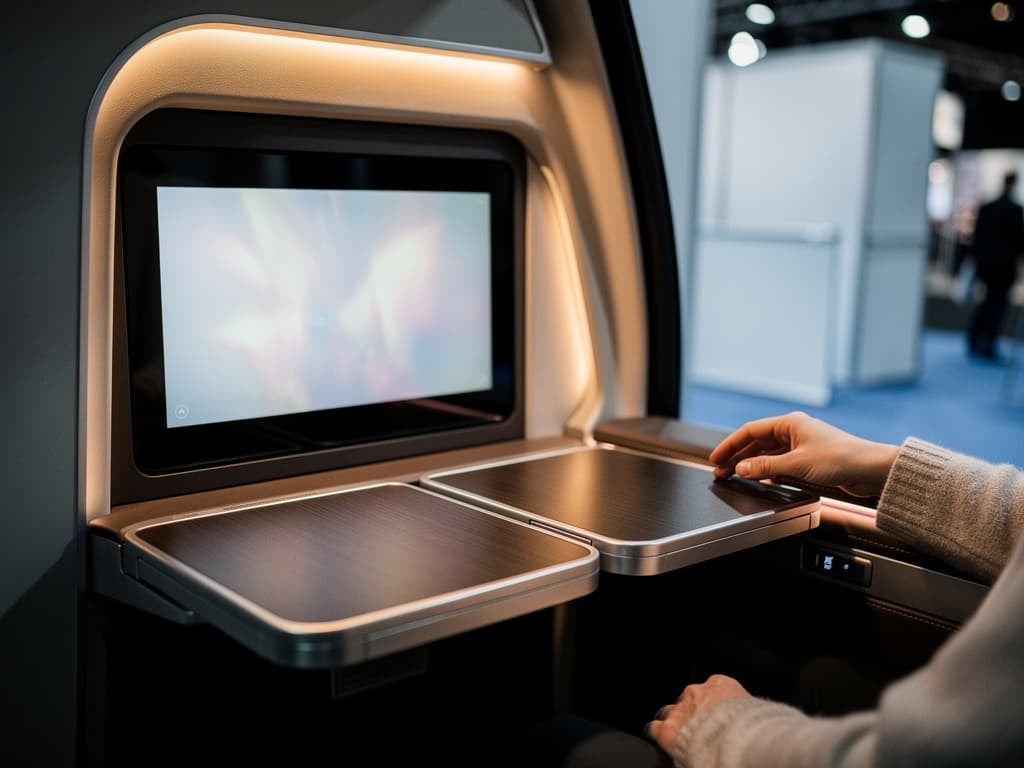
Magnifica has signed aircraft agreements for eight jets at launch — four ACJ220-300s and two ACJ321neos — with a longer-term fleet target of 25 to 40 aircraft over several years post-launch. The cabin configurations, designed and completed by Comlux, will seat approximately 45 passengers on the A220 variant and 54 passengers on the A321neo, with the larger aircraft expected to feature the more elaborate suite and lounge product. Details on Magnifica’s planned cabin concept and initial route map confirm the carrier’s ambition to operate as a scheduled airline rather than a charter operator, meaning individual seat sales rather than whole-aircraft bookings.
Ground experience is as central to the concept as the cabin. Magnifica plans to operate from private TSA-approved terminals at secondary airports — Teterboro, New Jersey being the cited New York gateway — offering 30-minute pre-departure check-in, high-end dining, and concierge baggage handling. That model mirrors the semi-private ground experience offered by JSX and Aero, but applied to a larger-aircraft, longer-range operation.
The “Seven Club” membership program — named after the Black family’s original SevenBar aviation business — will sit at the center of the commercial model. Members will receive guaranteed fixed pricing on select routes and access to curated lifestyle experiences, with Black describing the brand positioning as analogous to early Soho House: exclusivity built around community, not just product. Public fare structures have not yet been disclosed.
| Metric | Magnifica Air (planned) | JSX (current) | Delta domestic first class (current) |
|---|---|---|---|
| Aircraft type | ACJ220-300 / ACJ321neo | Embraer E135/E145, ATR42 | Boeing 737 / Airbus A220 / Boeing 757 |
| Cabin density | 45–54 seats (suites + lounge) | ~30 seats, open cabin | 12–20 seats, recliner-style |
| Privacy level | Enclosed private suites (planned) | Open low-density cabin | No door, recliner seat |
| Ground experience | Private TSA terminal, 30-min check-in | Private FBO-style boarding | Standard commercial terminal |
| Approximate price point | ~$2,000–$3,000 (estimated) | ~$300–$600 one-way | ~$500–$1,500 one-way |
| Launch status | Q3 2027 target, pre-certification | Operating | Operating |

Flight deals most people never see
Our AI monitors 150+ airlines for pricing anomalies that traditional search engines miss. Air Traveler Club members save $650 per trip per person on average: see how it works.
Each deal saves 40–80% vs. regular fares:

The value-add: why this concept is structurally different from previous attempts
Semi-private aviation has tried to bridge the commercial-to-private gap before, and the results have been mixed. What distinguishes Magnifica’s architecture from earlier attempts is the aircraft scale. JSX and Aero built their models around 30-seat regional jets — efficient for short hops and private-terminal access, but fundamentally constrained by fuselage width. You cannot build an enclosed suite in an E135. Magnifica’s use of the ACJ220-300 and ACJ321neo removes that physical ceiling entirely.
Air Traveler Club’s analysis of Air Canada’s Signature Plus Suites on the Boeing 787-10 illustrates how enclosed suite architecture is reshaping premium cabin expectations even within traditional scheduled carriers — context that makes Magnifica’s positioning more legible. The market is moving toward privacy as a baseline expectation, not a differentiator.
Black’s pricing framework — roughly one-tenth of charter, two to three times first class — also maps onto a real and underserved segment. On-demand charter economics are punishing: repositioning fees, minimum-hour requirements, and peak-day surcharges routinely push all-in costs well above the headline hourly rate. A scheduled, fixed-price product at $2,000–$3,000 per segment would occupy territory that currently has no reliable commercial option.
What to watch before Magnifica Air becomes a booking decision
This is a developing concept, not a bookable product — and the distance between a compelling pitch and a certificated scheduled airline is significant. Several milestones will determine whether Magnifica transitions from branding exercise to operational carrier.
- FAA Part 121 certification: Magnifica must obtain a scheduled airline operating certificate before it can sell individual seats to the public. This process typically takes 12–24 months and involves fleet, crew, and operational approvals. No certification timeline has been publicly confirmed.
- First aircraft delivery: The ACJ220-300 and ACJ321neo cabin completions by Comlux are a separate process from aircraft delivery. Watch for confirmed delivery dates as the first hard signal that the fleet plan is on schedule.
- Published fare structure: The Seven Club membership model and fixed-price fare commitments will reveal whether Magnifica is priced as a genuine alternative to first class or positioned as a niche ultra-premium product with limited seat availability.
- First route announcement: New York–Miami is the cited anchor market. A confirmed route with published schedules would be the clearest signal that Q3 2027 is a real target rather than an aspirational date.
- Teterboro terminal agreement: Operating from private terminals requires facility agreements and TSA coordination. A confirmed terminal partnership at Teterboro or a comparable secondary airport would validate the ground-experience component of the model.
Watch the Magnifica Air website for launch updates. If FAA certification and first aircraft delivery align by mid-2027, the Q3 2027 launch timeline becomes credible — and fare announcements would follow quickly enough to allow meaningful comparison against existing premium options.
FAQ
What aircraft will Magnifica Air fly, and how does the cabin compare to a private jet?
Magnifica Air plans to operate Airbus ACJ220-300 and ACJ321neo aircraft — executive derivatives of Airbus’s narrowbody family — configured for 45 and 54 seats respectively. The wider fuselage of these aircraft, compared to the regional jets used by semi-private competitors, allows for enclosed private suites and lounge areas. Whether the finished product matches top-tier business jet interiors will depend on the final Comlux cabin completion, which has not yet been publicly revealed in detail.
How much will Magnifica Air tickets cost?
No public fares have been announced. CEO Wade Black has described the target price as roughly two to three times a domestic first-class ticket — implying approximately $2,000–$3,000 per segment — and about one-tenth of a typical private jet charter fare. The Seven Club membership program will offer guaranteed fixed pricing on some routes, but commercial terms have not been disclosed.
Which routes will Magnifica Air serve at launch?
Planned initial markets include New York, Miami, Los Angeles, Dallas, Houston, and the Bay Area, with seasonal service to Napa Valley and the Caribbean. New York–Miami, operating from Teterboro rather than JFK or LaGuardia, appears to be the anchor corridor. No confirmed schedule or route map has been published as of May 2026.
Is Magnifica Air a charter operator or a scheduled airline?
Magnifica Air intends to operate as a scheduled carrier under FAA Part 121 certification, meaning passengers would book individual seats rather than chartering whole aircraft. This distinguishes it from on-demand charter operators, though it has not yet received its operating certificate. The Seven Club membership program adds a subscription layer on top of the scheduled-airline model.
Read more