Summary
A power bank fire in the business-class cabin of KLM flight KL735 forced the Boeing 777-200ER to return to Amsterdam on 17 September 2026, six hours after departing for Curaçao. The crew extinguished the blaze, but one passenger sustained minor injuries and scorch marks damaged a seat and window blind. Passengers were rebooked and arrived a day late.
The incident disrupted a transatlantic itinerary when a single lithium-ion device overheated, even though the fire was quickly contained. The device’s owner, according to passengers on board, was Camiel Eurlings, KLM’s former president and CEO.
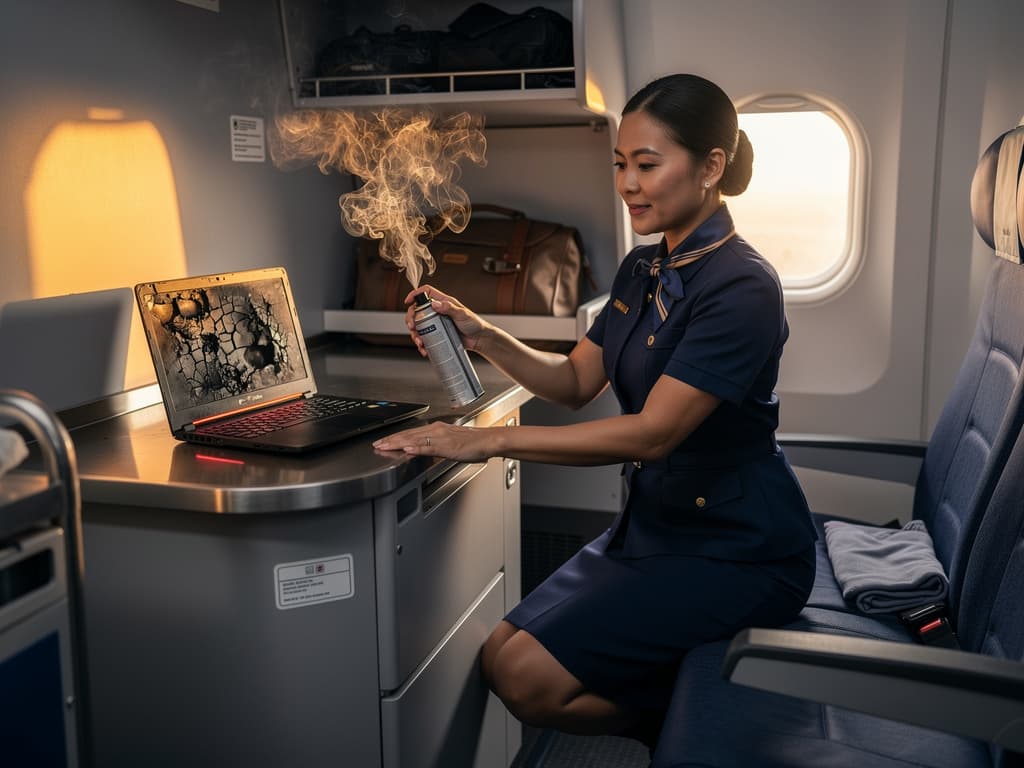
Midway between Amsterdam and Curaçao, over a stretch of the Atlantic with nowhere to divert quickly, a power bank inside a business-class seat pocket overheated and burst into flames. The aircraft, carrying over 300 passengers, had already been airborne for roughly six hours. Within minutes, smoke filled part of the forward cabin and crew members used extinguishers to douse the fire.
The flames were out before the aircraft turned back, but the flight deck’s decision to return to Schiphol rather than continue to the Caribbean or divert to a nearer airport turned a contained cabin event into an overnight ordeal.
For passengers in the forward cabin, the disruption was immediate and personal. The device that ignited belonged to Camiel Eurlings, who led the airline from 2013 to 2014. Passengers later told Dutch media that the former chief executive was “very upset” and called his own handling of the charger “stupid.”
The airline confirmed one person was treated for minor injuries but declined to identify anyone, citing privacy policy. All passengers were rebooked on a later flight and reached Curaçao the following day.
The incident has reignited a simmering debate over how airlines should manage portable batteries on long-haul flights. KLM’s own rules prohibit both using and charging power banks on board, a policy that is under investigation as the airline probes whether the device was actively being charged when it failed.
The details
Flight KL735 departed Amsterdam Airport Schiphol on the morning of 17 September 2026 bound for Curaçao. Approximately 1,800 nautical miles from the nearest diversion airport, in the middle of the North Atlantic, a power bank inside the business-class cabin began overheating. The crew extinguished the fire within moments, but the captain elected to return to Schiphol as a precautionary measure.
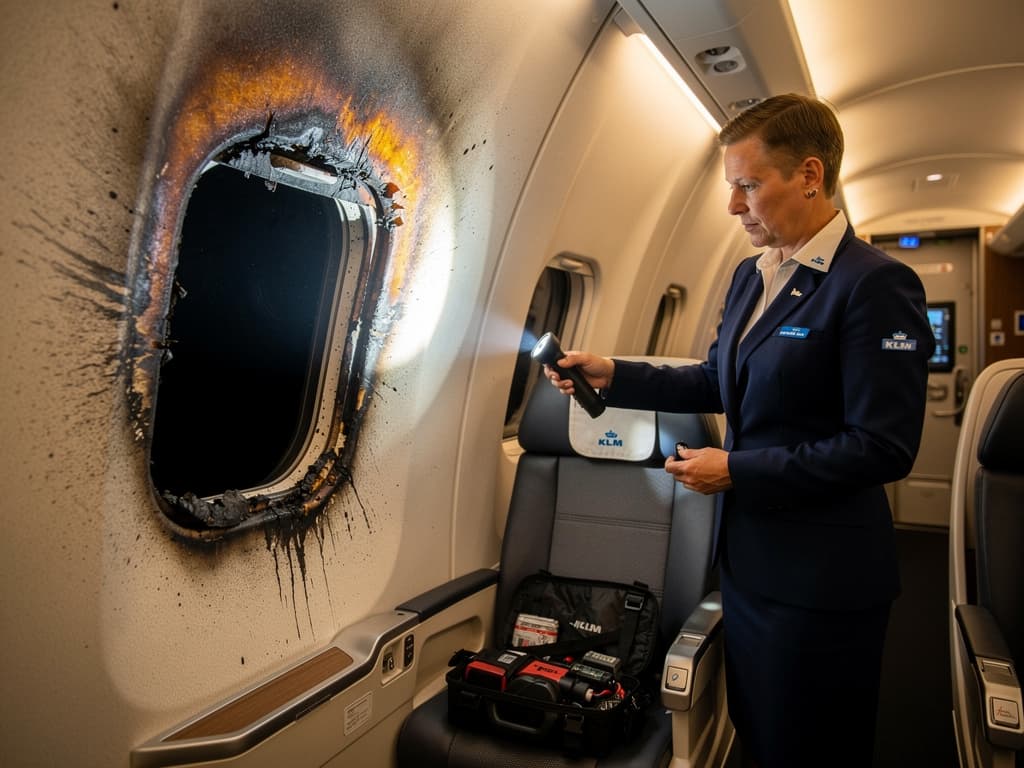
KLM’s initial statement confirmed that one person suffered minor injuries consistent with burns. The fire left scorch marks on a business-class seat and the adjacent window blind — visible damage that underscored the intensity of the thermal event despite its brief duration.
Passenger accounts, corroborated by multiple media reports, identified the device’s owner as Camiel Eurlings. The former president and CEO had been seated in the forward cabin at the time of the fire. KLM has not publicly named the passenger, and the airline’s investigation will examine whether the power bank was being charged, which would violate its onboard rules.
| Time / Phase | Event | Impact |
|---|---|---|
| ~6 hours after departure | Power bank ignites in business-class seat pocket. | Smoke and flames; crew extinguishes fire; minor injury. |
| Minutes later | Flight deck decides to return to Amsterdam. | Avoids continuing 4+ hours to Curaçao or diverting to alternate. |
| Late afternoon / evening | Aircraft lands at Schiphol; passengers deplane. | Overnight delay; rebooking onto next day’s flight. |
| 18 September 2026 | Passengers reboard a replacement flight. | Arrive Curaçao approximately 24 hours late. |

Flight deals most people never see
Our AI monitors 150+ airlines for pricing anomalies that traditional search engines miss. Air Traveler Club members save $650 per trip per person on average: see how it works.
Each deal saves 40–80% vs. regular fares:

The value-add
The KLM diversion crystallizes what cabin safety specialists have long warned: a single lithium-ion battery can thoroughly disrupt a premium long-haul itinerary, even after the fire is out. Business-class travelers, who rely heavily on personal devices and expect continuous power, are now facing a subtle shift in how airlines treat portable chargers — not as forbidden items, but as monitored hazards.
The European Union Aviation Safety Agency (EASA) has repeatedly cautioned that lithium batteries pose a thermal runaway risk in pressurized cabins. KLM’s policy prohibiting charging reflects a growing consensus that the most dangerous moment is when a power bank is actively drawing current. The investigation will clarify whether this incident stemmed from a passenger violation or a product defect — but either outcome will shape how carriers brief premium-cabin passengers on long-haul sectors.
What this diversion decision means for future battery policies
KLM’s investigation is almost certainly looking at whether the power bank was being charged, which would violate its published prohibition. A finding that charging caused the fire could accelerate industry efforts to enforce similar bans on long-haul flights, where overwater diversion options are scarce. Watch for a preliminary report from the Dutch Safety Board — if it recommends operational or design changes for lithium-ion devices in cabins, carriers may issue updated guidance before year-end.
FAQ
Why did the KLM flight turn back instead of landing at a closer airport?
The crew had extinguished the fire and the aircraft was not in immediate danger, but the flight deck judged a return to Amsterdam the safest option. No alternative airfield within range offered the same maintenance, passenger handling, and crew-resourcing capabilities, making a return to Schiphol the least risky choice for a precautionary landing.
Will KLM change its power bank policy after this incident?
KLM has opened an investigation and will likely review its enforcement of the existing prohibition on using or charging power banks. A formal policy change — such as requiring power banks to be placed in overhead bins or banning them from seat pockets — could follow if the investigation finds a procedural gap, but no announcement has been made.
What should I do if I have a KLM flight booked soon?
No operational changes affect current schedules. However, passengers should note that KLM strictly prohibits using or charging power banks on board. Pack chargers in carry-on luggage and avoid connecting them to any in-seat power source. If you experience a disruption like this one, use the airline’s manage-booking tool to confirm rebooking and compensation eligibility.
Read more