Summary
Etihad Airways and Cathay Pacific both signaled major fleet expansions at the IATA Annual General Meeting in Rio de Janeiro on June 7, 2026. Etihad CEO Antonoaldo Neves confirmed the airline is ordering widebody aircraft “in the double digits” for delivery between 2028 and 2032, securing earlier slots from carriers dropping positions. Cathay Pacific CEO Robert Lam said the airline is weighing widebody, narrowbody and freighter orders — including new commitments and option exercises — calling the next decade “a golden opportunity” for the group’s expansion.
Neither airline has named specific aircraft types yet, leaving the premium cabin implications unresolved until formal announcements follow. Cathay’s existing backlog already includes nearly 40 Airbus A350s and 35 Boeing 777-9s, with more orders now signaled on top.
Two of the world’s most premium-focused carriers are moving aggressively to lock in long-haul capacity — and the timing is deliberate. At the IATA AGM in Rio de Janeiro, running June 6–8, 2026, both Etihad Airways and Cathay Pacific used the industry’s most-watched gathering to signal fleet commitments that will define their networks through the early 2030s.
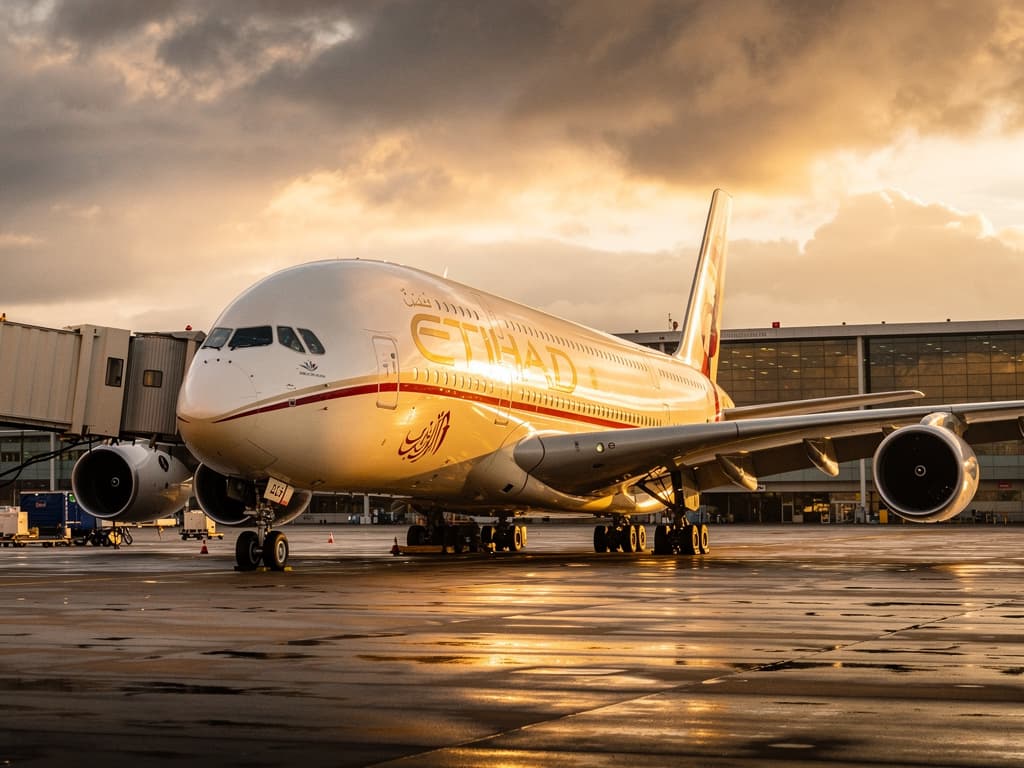
Etihad’s play is opportunistic. CEO Antonoaldo Neves told reporters the airline is acquiring delivery slots being surrendered by other carriers — a direct consequence of the Middle East conflict that has pushed rivals to cut capacity. While competitors retreat, Etihad is absorbing their positions. The airline expects its schedule from mid-June onward to run roughly 8% larger than the same period last year.
Cathay’s posture is more structural. CEO Robert Lam framed the coming decade as a “golden opportunity” for the Cathay Group, pointing to orders spanning widebody, narrowbody and freighter categories. That breadth — covering both passenger and cargo — signals a network reset rather than a targeted route fill.
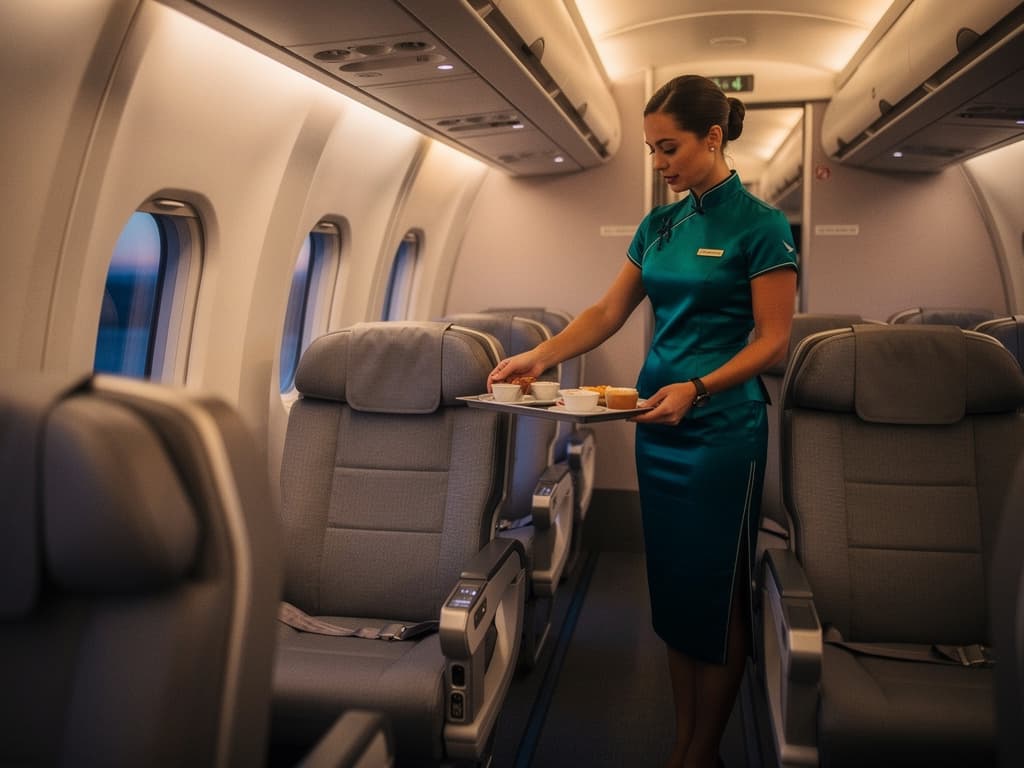
For those flying business class on long-haul routes through Abu Dhabi or Hong Kong, the practical consequence is more premium capacity arriving in the late 2020s. The question is which aircraft, which routes, and which cabin products will carry it.
The details: what each airline confirmed
Neves was specific about delivery timing but not aircraft type. The Etihad order covers widebody jets for delivery between 2028 and 2032, with the airline securing positions from carriers that have deferred or canceled commitments. “We’re ordering planes right now to be delivered between 2028 and 2032 and we’re getting position of airlines that are giving up,” Neves confirmed. Regulatory filings and industry data have not yet identified the specific aircraft mix, but industry sources confirm the double-digit widebody count and the accelerated slot strategy.
Cathay’s situation is more layered. The airline already carries a substantial backlog — nearly 40 Airbus A350s and 35 Boeing 777-9s — before any new orders are placed. Lam’s comments at the IATA meeting suggest additional commitments are coming on top of that pipeline, potentially including both option exercises from prior purchase agreements and entirely new orders across fleet categories.
Cathay has followed this pattern before. The airline has historically used long-haul widebody replacement cycles to reset premium cabin products rather than making incremental changes — a dynamic that fleet renewal reporting has tracked across multiple planning cycles. Premium cabin upgrades typically arrive only after aircraft commitments convert into deliveries and retrofit schedules, not at announcement time.
| Airline | Order signal | Aircraft types confirmed | Delivery window | Current backlog |
|---|---|---|---|---|
| Etihad Airways | Double-digit widebody order, acquiring deferred slots | Not yet named | 2028–2032 | Not publicly disclosed |
| Cathay Pacific | Widebody, narrowbody and freighter orders under consideration | A350 (options), 777-9 (options), new types TBC | Not yet specified | ~40 A350s, 35 777-9s |
| Cathay Pacific (existing) | Confirmed backlog pre-IATA announcement | Airbus A350, Boeing 777-9 | Ongoing deliveries | ~75 aircraft total |

Flight deals most people never see
Our AI monitors 150+ airlines for pricing anomalies that traditional search engines miss. Air Traveler Club members save $650 per trip per person on average: see how it works.
Each deal saves 40–80% vs. regular fares:

Why the timing of these orders matters more than the numbers
This is a capacity story as much as a fleet story. Etihad is using a window of competitor weakness — carriers pulling back from Middle East routes — to accelerate its own long-haul footprint. Securing delivery slots from airlines that are giving up positions is a structurally different move than placing a standard order: it compresses the timeline and locks in manufacturing priority that would otherwise take years to negotiate.
Cathay’s expansion logic runs on a different axis. Hong Kong’s role as a premium Asia hub has faced sustained pressure, and Lam’s “golden opportunity” framing signals that the airline sees the next decade as a reset moment — not a recovery. A multi-category order spanning widebody, narrowbody and freighter suggests Cathay is building network depth, not just replacing aging jets.
The competitive pressure this creates is real. In the Gulf, Etihad’s growth increases the contest for premium long-haul share against Emirates and Qatar Airways on Europe, Asia and transatlantic routes. In Asia, Cathay’s expansion competes most directly with Singapore Airlines and the ANA/JAL pairing on premium regional and long-haul flying. Air Traveler Club’s analysis of Asia-Pacific fleet expansion trends shows how regional carriers are simultaneously adding capacity — meaning premium travelers will have more options across the board as the decade progresses.
The net effect for those booking long-haul business class: more inventory is coming, but not yet. The 2028–2032 delivery window is the operative timeline.
What the 2028–2032 delivery window means for premium bookings now
Neither Etihad nor Cathay has announced specific aircraft types, route assignments or cabin configurations — which means the premium travel implications remain forward-looking rather than immediately actionable. NTSB-style preliminary findings don’t apply here, but the same principle holds: the signal matters, the specifics are still pending.
Watch for formal order announcements in the months following the IATA AGM. If Etihad specifies a mix heavy on A350-1000s or 787-9s, that points to a premium-density long-haul strategy with modern flat-bed cabins entering service from 2028 onward. If Cathay confirms new widebody orders beyond its existing backlog, expect Hong Kong’s premium hub position to strengthen materially through the early 2030s.
In the near term — through the end of 2027 — premium seat availability on both carriers will reflect current fleet configurations. The expansion being discussed in Rio will not change what’s bookable today. Monitor both airlines’ official booking channels and schedule releases for the first concrete signs of new aircraft entering scheduled service, which is when seat-map and cabin-product changes will actually matter for purchase decisions.
FAQ
When will Etihad’s new widebody aircraft actually enter service?
Etihad CEO Antonoaldo Neves confirmed a delivery window of 2028 to 2032 for the double-digit widebody order. Specific aircraft types and route assignments have not been announced. The first new deliveries under this order are not expected before 2028.
Does Cathay Pacific’s order signal include new aircraft types beyond the A350 and 777-9?
Cathay CEO Robert Lam said the airline is weighing widebody, narrowbody and freighter orders — covering both option exercises from prior purchases and entirely new orders. The existing backlog already includes nearly 40 A350s and 35 777-9s. Whether additional aircraft types are included will be confirmed in formal announcements expected after the IATA AGM.
How does Etihad’s expansion strategy differ from Emirates and Qatar Airways?
Etihad is specifically acquiring delivery slots being surrendered by other carriers — a tactic that accelerates its timeline without waiting for standard manufacturing queue positions. Emirates and Qatar Airways have their own separate order pipelines. Etihad’s approach is opportunistic, capitalizing on competitor pullbacks driven by the Middle East conflict, while its schedule is already running approximately 8% larger year-over-year from mid-June 2026.
Read more