Summary
Emirates Group announced a 20-week salary bonus for its 130,919 employees on May 7, 2026, following a record fiscal year in which the group posted a pre-tax profit of $6.6 billion — up 7% year-on-year — and revenue of $41 billion. The payout exceeds the initial 13-week performance target and marks the fourth consecutive year of major profit-sharing at the Dubai-based conglomerate, which includes the airline and ground services arm dnata.
The results arrived despite severe operational disruptions in March 2026 caused by regional military conflict. Emirates has since resumed services to 137 destinations across 72 countries.
Few airlines reward their people quite like Emirates does in a strong year — and FY2025-26 was a very strong year. The group’s 20-week bonus announcement, made May 7, 2026, lands against a backdrop of record profits, record revenue, and record cash reserves, achieved despite one of the most operationally disruptive months in the carrier’s history.
Sheikh Ahmed bin Saeed Al Maktoum, Chairman and Chief Executive of Emirates Airline and Group, addressed staff directly in a letter acknowledging the chaos of March 2026, when military activity involving the US, Israel, and Iran temporarily grounded UAE commercial operations. “March 2026 will fade into memory, but we will never forget your bravery and incredible resilience,” he wrote.
The airline’s pre-tax profit margin climbed from 16.5% to 17.4% — a meaningful expansion for a carrier operating at this scale. Cash assets rose 12% to $16.2 billion, giving the group a financial cushion that rivals in the region cannot match.
For the second consecutive year, Emirates holds the title of the world’s most profitable airline.
The numbers behind the bonus
The group’s financial results for FY2025-26 represent a clean sweep of records across every major metric. Industry filings confirm group revenue reached Dh 150.5 billion (US $41 billion), a 3% increase year-on-year, while the pre-tax profit of Dh 24.4 billion ($6.6 billion) surpassed the prior year’s figure by 7%. The airline division alone contributed $6.2 billion in pre-tax profit.
Workforce expansion kept pace with financial growth. The group hired more than 9,700 people in the UAE during the year — selecting them from a shortlist of 390,000 candidates drawn from 3.5 million applications. Total headcount now stands at 130,919, an 8% increase over the prior year.
The 20-week bonus exceeds the 13-week internal performance threshold that triggers payouts, a detail that underscores just how far above target the year landed — even accounting for the March disruption.
| Metric | FY2025-26 | FY2024-25 | Year-on-year change |
|---|---|---|---|
| Group pre-tax profit | $6.6 billion (Dh 24.4B) | ~$6.2 billion | +7% |
| Group revenue | $41 billion (Dh 150.5B) | ~$39.8 billion | +3% |
| Cash assets | $16.2 billion (Dh 59.6B) | ~$14.5 billion | +12% |
| Airline profit margin | 17.4% | 16.5% | +0.9 pts |
| Employee bonus (weeks) | 20 weeks | 22 weeks | –2 weeks |
| Total workforce | 130,919 | ~121,000 | +8% |

Flight deals most people never see
Our AI monitors 150+ airlines for pricing anomalies that traditional search engines miss. Air Traveler Club members save $650 per trip per person on average: see how it works.
Each deal saves 40–80% vs. regular fares:

What record profits signal for the premium cabin pipeline
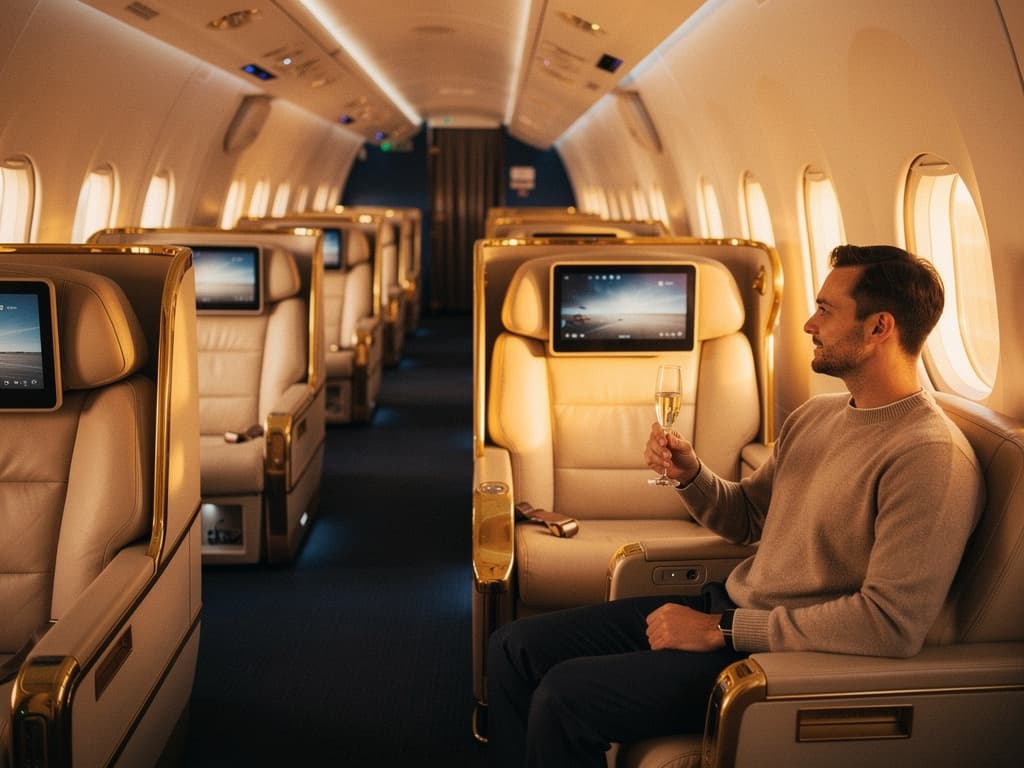
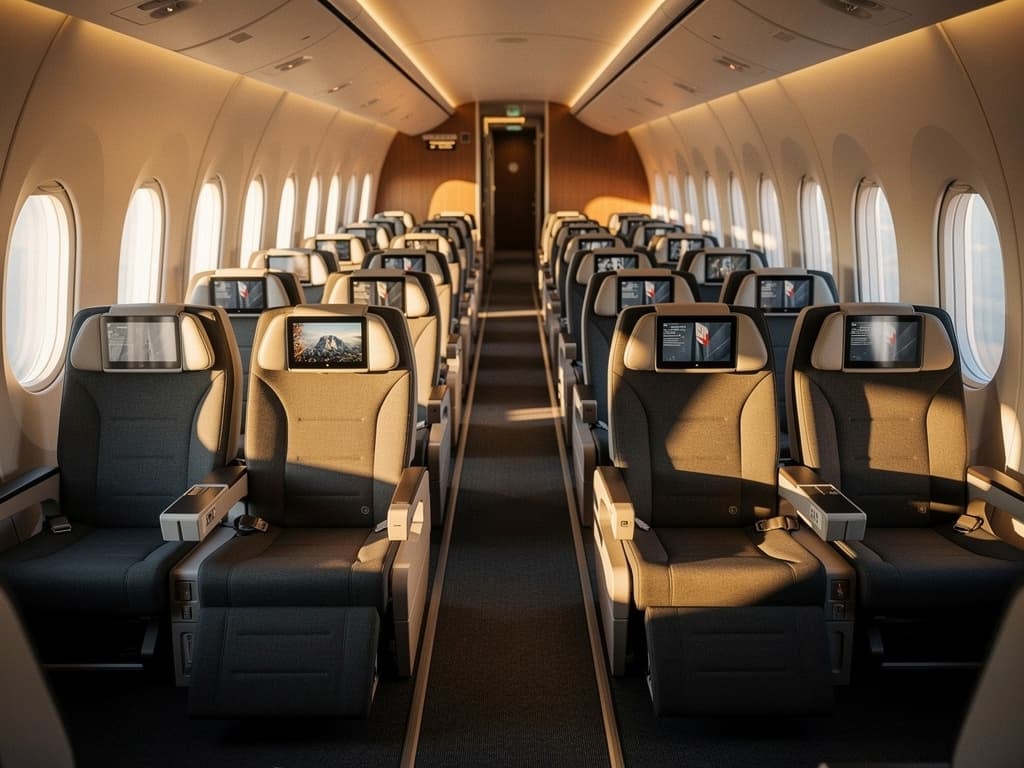
The financial story here extends well beyond the bonus headline. A $16.2 billion cash reserve — the largest in the group’s history — gives Emirates the balance sheet to accelerate fleet investment at a pace that cash-constrained competitors cannot replicate. The airline’s ongoing A380 retrofit program, which added premium economy to 14 aircraft in FY2025-26 and expanded lounge facilities at DXB Concourse A, is funded directly from this operating surplus.
Air Traveler Club’s analysis of Emirates’ A380 acquisition strategy details how the carrier converted 29 leased superjumbos to full ownership during this same fiscal year — a capital commitment that only makes sense if you’re confident in long-term premium demand on high-density routes.
On the competitive front, Qatar Airways added a $200 YQ surcharge on select routes in 2026. Emirates has held its surcharge structure steady — a meaningful distinction for frequent flyers on DXB-routed itineraries. Business class cash fares on DXB-LHR remain in the ~$4,500 one-way range, unchanged from the prior year. Skywards dynamic award pricing for long-haul business class continues to average 80,000–120,000 miles one-way, with no devaluation announced alongside the results.
What the profit cycle means for Skywards strategy in 2026
For those holding Skywards miles or planning long-haul business class redemptions, the FY2025-26 results carry a specific implication: Emirates is not under financial pressure to devalue its award program or introduce new surcharges to shore up margins. That’s a meaningful distinction from carriers that have historically used loyalty program restructuring as a revenue lever during lean periods.
- Award space timing: Business class inventory on high-demand routes like DXB-JFK and DXB-LHR opens most reliably at the 330-day mark; the expanded fleet from A350 deliveries expected in Q4 2026 should widen that window further.
- Partner redemptions: United MileagePlus members can redeem on Emirates metal — a useful hedge if Skywards partner award space is constrained on specific dates.
- Surcharge comparison: With Qatar Airways adding $200 YQ in 2026, Emirates‘ stable surcharge structure makes it the lower total-cost option for cash-plus-miles redemptions on comparable Gulf-routed itineraries.
- Fleet signal: Monitor the Emirates Newsroom for A350 delivery confirmations — each new airframe on US/Europe routes adds business class seats that flow into award inventory within weeks of service launch.
Watch: If Emirates accelerates A350 deliveries beyond the current schedule into Q3 2026, expect a corresponding increase in business class award availability on DXB-JFK and DXB-LAX before the northern hemisphere summer peak ends.
Read more