Summary
American Airlines will end complimentary main cabin to business class upgrades on nine premium domestic routes starting August 25, 2026, requiring AAdvantage elites to first purchase or upgrade into premium economy before becoming eligible for a lie-flat seat. The policy strips away the most valued elite perk on transcontinental and Hawaii flights operated by wide-body aircraft and the new Airbus A321XLR.
Already-confirmed upgrades will be honored, and systemwide instruments remain untouched. The change affects routes from New York, Boston, Dallas/Fort Worth, Phoenix, and Chicago to Los Angeles, San Francisco, and Hawaii — with American signaling more routes could follow.
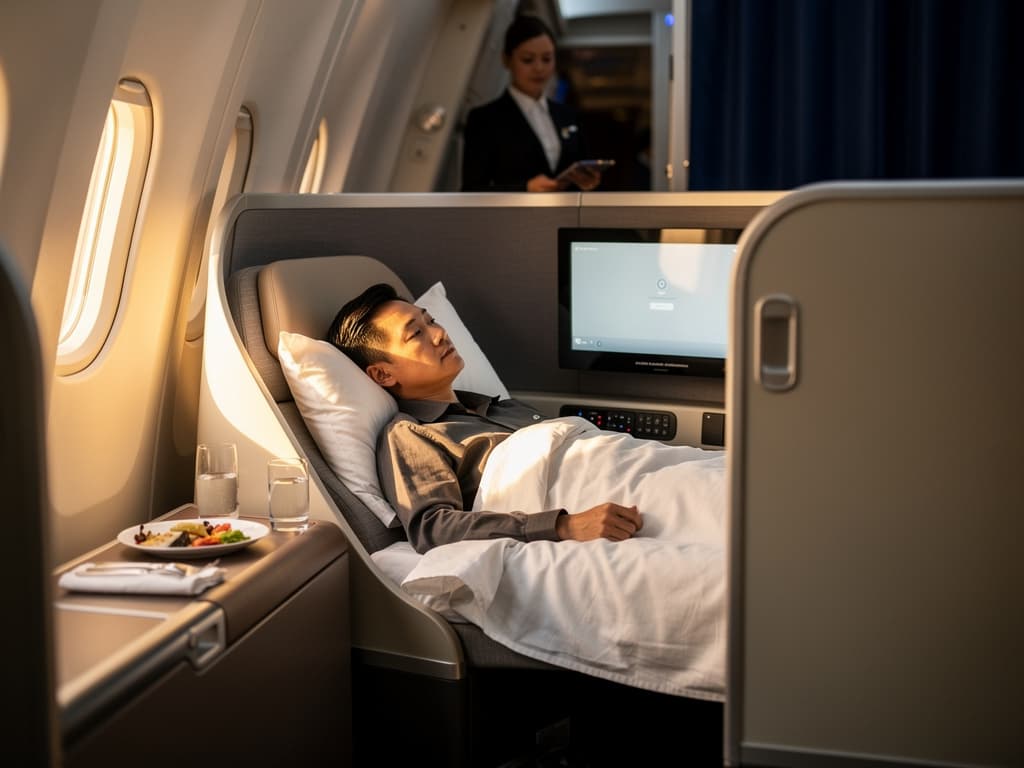
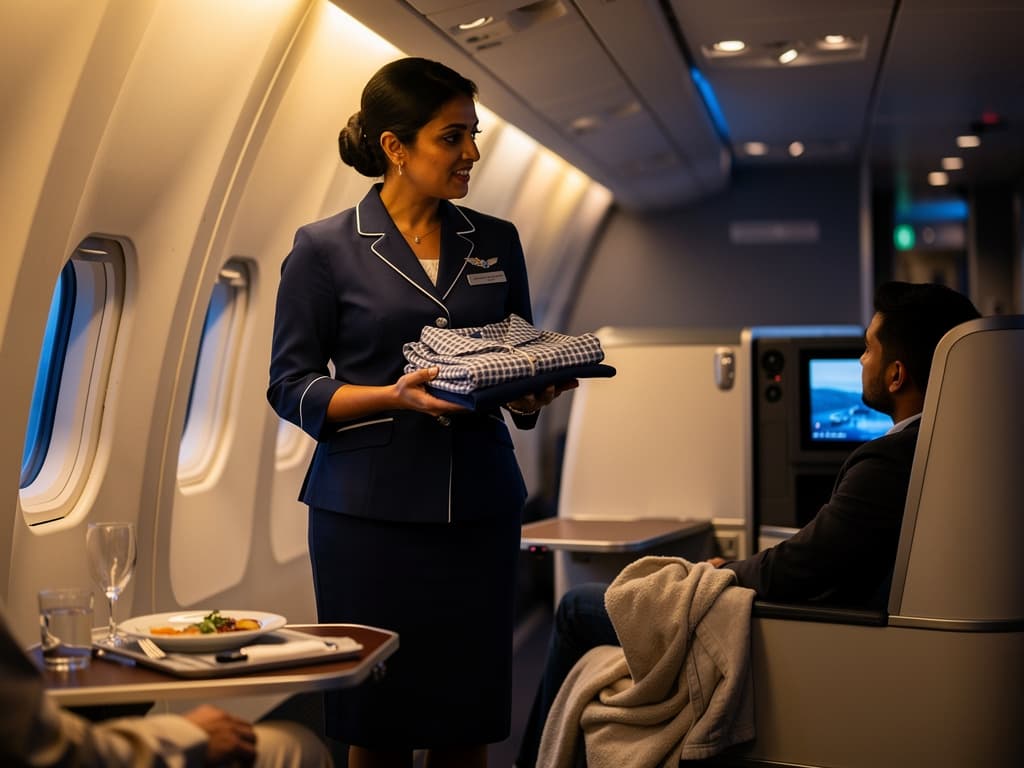
The upgrade that defined elite status for a generation of American Airlines loyalists vanishes in less than three weeks. For years, an AAdvantage member could book a main cabin seat on a premium transcontinental flight and — with enough status and a bit of luck — stretch out in a lie-flat Flagship Business seat by the time the boarding door closed. That direct path from coach to business class ends on August 25, 2026.
American confirmed the policy shift in its latest program update, framing it as a streamlining measure as the carrier expands premium economy across its fleet. The practical effect is more stark: the complimentary upgrade ladder now stops one rung short of business class on any domestic route where premium economy is sold as a separate cabin. To reach the front of the plane for free, elites must first occupy a premium economy seat — whether purchased outright or secured through a paid cash or miles upgrade.
The change hits nine routes immediately, covering the carrier’s entire domestic wide-body network and the new Airbus A321XLR with its Flagship Suites. Affected city pairs include New York JFK to Los Angeles and San Francisco, Boston to Los Angeles, Dallas/Fort Worth to Honolulu, Kona, and Maui, Phoenix to Honolulu, and Chicago O’Hare to Honolulu and Maui. These are precisely the routes where upgrade-chasing elites concentrated their loyalty — long segments where a lie-flat seat transforms the experience.
How the new upgrade ladder works
The mechanics of complimentary upgrades remain intact — elite members are still automatically added to the upgrade list after booking, and clearance follows the standard tier-based priority order. What changes is the destination cabin. On the nine affected routes, a main cabin booking now clears only into premium economy, not business class. The airline’s official program update page confirms the one-cabin limit explicitly.
Upgrade windows stay unchanged: 120 hours for ConciergeKey, 100 hours for Executive Platinum, 72 hours for Platinum Pro, 48 hours for Platinum, and 24 hours for Gold. Systemwide upgrades remain separate from this policy and can still move a passenger from economy directly to business class. Domestic first-class upgrades on two-cabin aircraft — the vast majority of American’s domestic network — continue unaffected.
A detail buried in the fine print deserves attention. Some premium economy cabins on American’s wide-body aircraft include middle seats, and an elite member cleared into the cabin could be assigned one. The flyer who once expected a flat bed at the front of the plane may instead find themselves in a middle seat a few rows back, a downgrade in comfort that undercuts the upgrade’s perceived value.
| Policy element | Before August 25 | After August 25 |
|---|---|---|
| Main Cabin to Business on premium transcon/Hawaii | Complimentary upgrade eligible | Upgrade stops at Premium Economy |
| Premium Economy to Business on affected routes | Complimentary upgrade eligible | Complimentary upgrade eligible |
| Systemwide upgrades | Economy to Business eligible | Unchanged — Economy to Business eligible |
| Two-cabin domestic first class upgrades | Complimentary upgrade eligible | Unchanged |
| Already-confirmed upgrades on/after Aug 25 | N/A | Honored unless itinerary changed |

Flight deals most people never see
Our AI monitors 150+ airlines for pricing anomalies that traditional search engines miss. Air Traveler Club members save $650 per trip per person on average: see how it works.
Each deal saves 40–80% vs. regular fares:

Why this devaluation cuts deeper than most
American has adjusted elite benefits before, but this change strikes at the core transaction of airline loyalty: fly enough to earn status, and the airline rewards you with a better seat when one is available. On premium transcontinental and Hawaii routes, that better seat meant a lie-flat bed — the difference between arriving rested and arriving functional. By inserting premium economy as a mandatory intermediate step, American has converted what was once an earned benefit into a two-stage process where the first stage requires payment.
The competitive context sharpens the sting. Delta Air Lines currently offers a more straightforward path to complimentary lie-flat upgrades on comparable domestic routes, while United Airlines uses its PlusPoints instrument-based system rather than American’s tier-only auto-clear model. For elite flyers who built status specifically on these nine routes, the value proposition of AAdvantage loyalty has shifted overnight — and not in their favor. Air Traveler Club’s analysis of American’s elite relationship dynamics suggests the carrier has been recalibrating how it values its most frequent flyers, and this policy fits that pattern.
Booking strategy for the nine affected routes
For AAdvantage elites who want a lie-flat seat on premium transcontinental or Hawaii flights after August 25, the calculus has changed from status-dependent luck to a fare-strategy decision. The new upgrade ladder demands a premium economy ticket as the entry price for a complimentary business class shot.
- Price premium economy buy-ups immediately. If you hold a main cabin booking on one of the nine routes, check the cost to upgrade to premium economy with cash or miles now — paid buy-ups are the only path to preserving business class upgrade eligibility under the new policy.
- Systemwide upgrades gain relative value. These instruments remain the sole mechanism for jumping directly from economy to business class on affected routes. If you hold systemwide upgrades, prioritize them for premium transcontinental and Hawaii flights where the complimentary path has narrowed.
- Compare paid business class fares across carriers. With American’s complimentary upgrade path now requiring a premium economy purchase, the all-in cost of a confirmed lie-flat seat may be competitive with buying premium economy plus hoping for an upgrade — especially on Delta or United, where the upgrade path remains more direct.
- Reevaluate loyalty calculus before year-end. Elite members who chase status primarily for premium transcontinental upgrades should assess whether American’s new structure still delivers sufficient value compared to competitor programs, particularly if Delta and United maintain their current policies.
Watch for American adding international premium economy routes to the same policy — expected later in 2026. If it happens, the monetized upgrade model extends beyond domestic flying and reshapes the value of elite status on long-haul international segments as well.
FAQ
Will already-confirmed business class upgrades be honored after August 25?
Yes. American Airlines has confirmed that any complimentary upgrade already cleared for travel on or after August 25, 2026, will be honored as long as the itinerary is not changed. Check your reservation in the American app or website to verify upgrade status.
Do systemwide upgrades still work on the nine affected routes?
Systemwide upgrades remain completely unaffected by this policy change. They can still move a passenger from economy directly to business class on premium transcontinental and Hawaii routes, bypassing the new premium economy requirement that applies to complimentary elite upgrades.
Which elite tiers are affected by the upgrade policy change?
All AAdvantage elite tiers — Gold, Platinum, Platinum Pro, Executive Platinum, and ConciergeKey — are subject to the new one-cabin upgrade limit on routes with a separate premium economy cabin. The upgrade priority order and clearance windows by tier remain unchanged; only the destination cabin changes for main cabin bookings.
Read more