Summary
A family was removed from confirmed business-class seats on an American Airlines flight between Miami and Milan in August 2026 to accommodate deadheading pilots, exposing a critical vulnerability in premium award redemptions. The passengers had booked with AAdvantage miles, and the carrier’s refusal to publicly release its downgrade priority policy has ignited a debate over whether loyalty members bear disproportionate operational risk on transatlantic routes.
The U.S. Department of Transportation mandates a refund of the fare difference for involuntary downgrades, yet American’s dynamic award pricing provides no fixed cash value — leaving the compensation path for displaced mileage customers dangerously ambiguous.
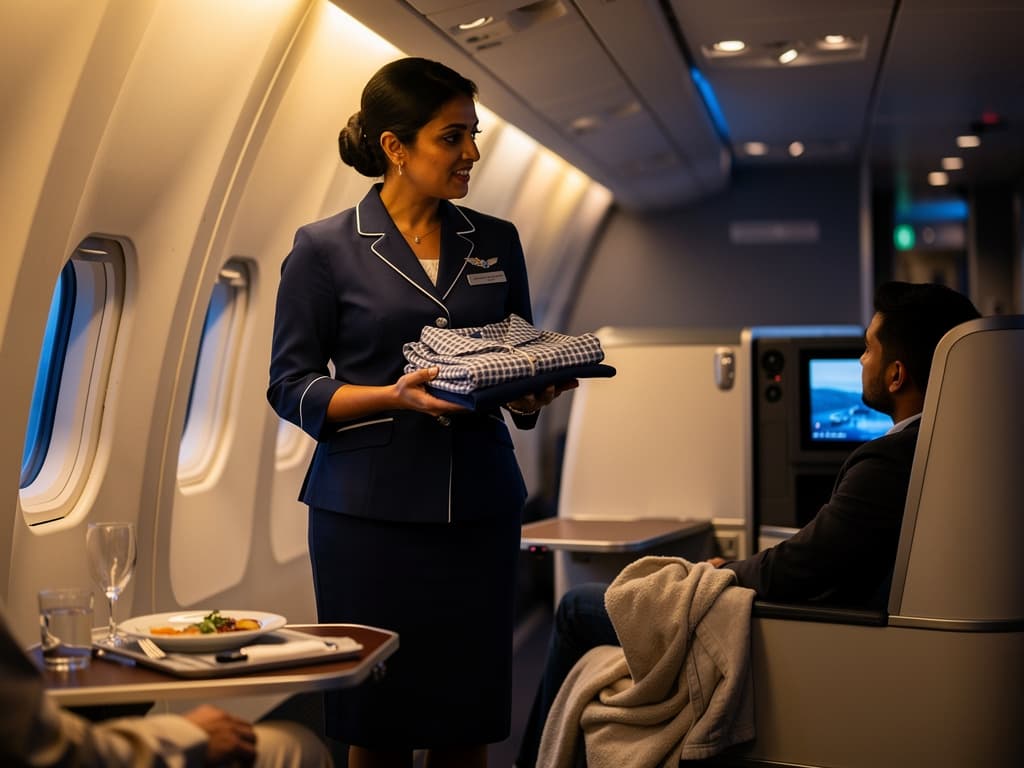
A confirmed transatlantic business-class seat is supposed to be a contract. But when a Boeing 787-9 operating American Airlines Flight 206 from Miami to Milan needed space for repositioning pilots in August 2026, that contract broke — selectively. A family that had redeemed miles for their premium cabin seats found themselves reassigned, while the crew took their places under a labor agreement requiring deadheading pilots on certain long-haul segments to occupy the highest available cabin.
The incident, which surfaced through passenger accounts filed with the airline and subsequently with the Department of Transportation, crystallizes a fault line running through the loyalty ecosystem. Pilot collective bargaining agreements can override a confirmed award booking when premium-cabin capacity is constrained. Cash tickets carry clearer rebooking and refund protocols. Award tickets, priced in miles under American’s dynamic model, fall into an operational gray zone where the carrier’s obligations are neither fully disclosed nor easily calculated.
For the tens of thousands of AAdvantage members holding transatlantic business-class redemptions, the question is no longer theoretical. It is whether their confirmed seat is genuinely secure, or merely provisional until all operational contingencies — including crew positioning — have been satisfied.
The mechanics of a mileage downgrade
U.S. DOT guidance is explicit on one point: a passenger involuntarily downgraded who continues to travel is entitled to a refund of the fare difference. For a cash ticket, the math is straightforward — the carrier subtracts the economy fare paid from the business-class fare paid and returns the delta. For an award booking, however, American no longer publishes a fixed redemption chart. The miles required for a given seat fluctuate with demand, meaning there is no static cash equivalent against which to calculate a refund.
American’s internal guidance confirms that award tickets are handled distinctly in disruption scenarios. When a schedule change affects an award holder, reaccommodation occurs against award inventory — not paid-seat inventory — and the remedy is either a full miles refund plus taxes and fees returned, or rebooking onto another award seat. What remains conspicuously absent is a published protocol for involuntary operational downgrades, such as those driven by crew positioning, where the passenger is moved to a lower cabin on the same flight rather than rebooked entirely.
The family at the center of this incident was offered a $600 travel voucher. Whether that amount satisfies the DOT’s fare-difference refund requirement for a transatlantic business-class award — where one-way redemptions routinely price between 57,500 and 120,000 miles — is precisely the ambiguity that consumer advocates argue demands regulatory scrutiny.
| Carrier | Award downgrade remedy | Cash-equivalent calculation | Policy transparency |
|---|---|---|---|
| American Airlines | Voucher or miles refund; no fixed formula published | Dynamic pricing — no static chart | Not publicly disclosed for operational downgrades |
| Delta Air Lines | Separate award downgrade logic; redeposit fees may apply | Published award charts for some partners | Partially disclosed via agency policy documents |
| United Airlines | Mileage difference refund based on saver-level economy rate | Uses lowest published award rate for cabin flown | Publicly stated in contract of carriage |

Flight deals most people never see
Our AI monitors 150+ airlines for pricing anomalies that traditional search engines miss. Air Traveler Club members save $650 per trip per person on average: see how it works.
Each deal saves 40–80% vs. regular fares:

Why co-brand cardholders are most exposed
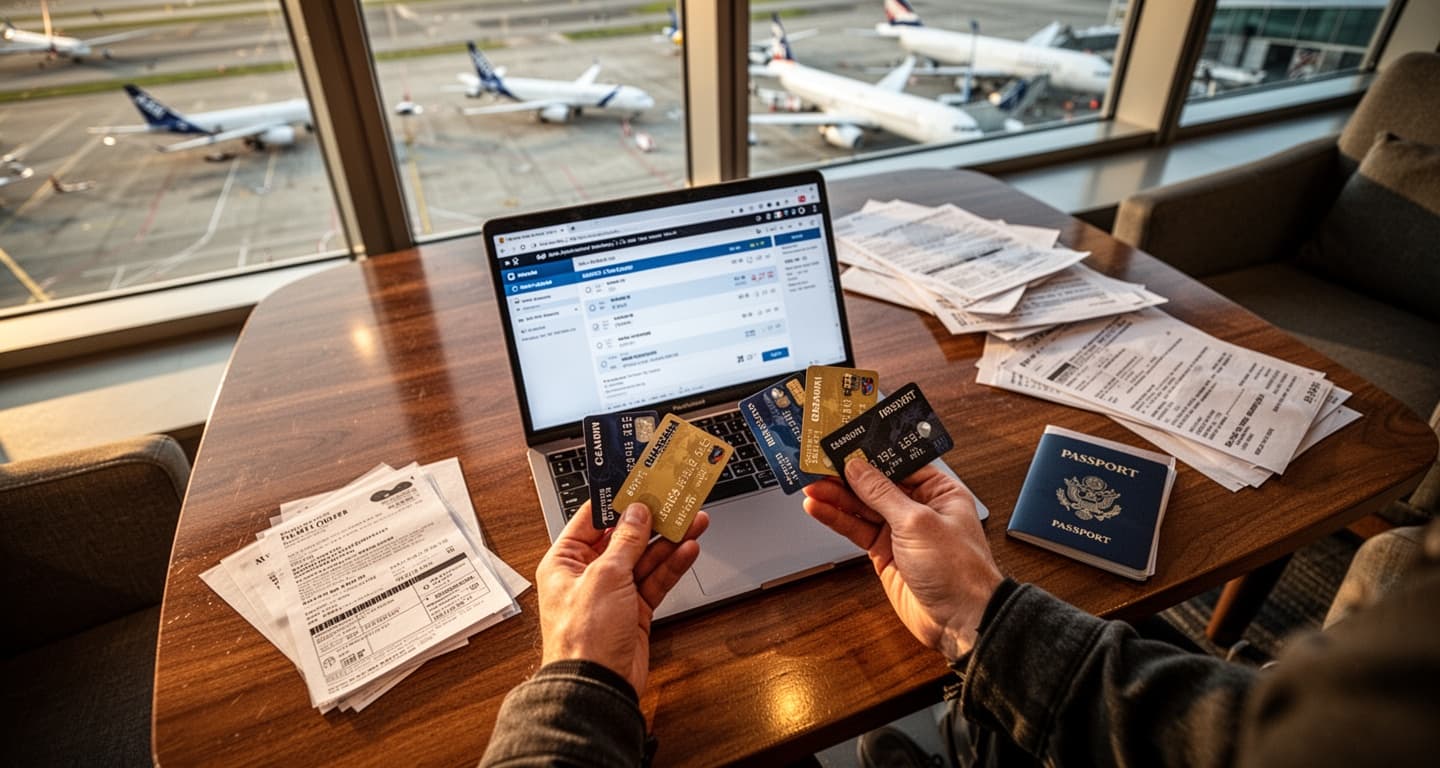
The structural irony is that the travelers most likely to hold large mileage balances — and thus most likely to redeem for premium transatlantic awards — are precisely those who generate the highest revenue for American through its co-brand partnership with Citi. Card spending funnels billions of dollars annually into the AAdvantage program, yet when operational pressure mounts, those same cardholders appear to sit at the bottom of the involuntary downgrade priority list.
American’s own sales guidance distinguishes award tickets in its upgrade and downgrade workflows, confirming that mileage bookings are treated differently at an operational level. The carrier has declined to make its downgrade priority public even after a DOT complaint was filed — a silence that speaks volumes in an industry where United Airlines publishes its contract of carriage provisions for award downgrades openly. Air Traveler Club’s analysis of American’s pattern of reassigning confirmed premium seats reveals that this is not an isolated system glitch but a recurring vulnerability on international routes.
For the loyalty member who has spent years accumulating miles through credit-card spend, the value proposition weakens considerably if a confirmed business-class seat can be unilaterally reassigned — and the compensation arrives as an arbitrary voucher rather than a calculable refund.
How to protect your premium award booking
The absence of a published downgrade policy doesn’t mean award travelers are powerless. Understanding where the leverage points sit — and acting before a downgrade occurs — shifts the calculus in your favor.
- Document everything at booking. Screenshot the confirmation showing cabin class, route, date, and miles deducted. American’s dynamic pricing means the miles you paid are the only record of the fare’s value — there is no reference chart to consult later.
- Know the DOT trigger language. If downgraded, state in writing that you are requesting a refund of the fare difference under 14 CFR Part 259 and DOT’s refund guidance. This signals regulatory awareness and elevates the complaint beyond routine customer service.
- Check in early and arrive at the gate before boarding begins. Operational downgrades often process during the final hour before departure. Physical presence at the gate makes reassignment logistically harder — a pattern confirmed by previous incidents where passengers reclaimed seats simply by being visible when the system flagged them.
- Consider carrier policy when choosing redemptions. United publishes its award downgrade compensation methodology; American does not. For a transatlantic business-class redemption representing a year or more of accumulated miles, that transparency differential matters.
Watch for any Citi response to this incident. As American’s largest co-brand partner, the bank has a commercial interest in ensuring that cardholders who earn miles through spending are not systematically deprioritized when operational pressures hit premium cabins.
FAQ
Does U.S. law require airlines to refund miles when a passenger is involuntarily downgraded?
The DOT requires a refund of the fare difference for involuntary downgrades, but the regulation was written with cash fares in mind. For mileage bookings, the obligation exists in principle but lacks a prescribed calculation method, leaving carriers to determine what constitutes adequate compensation — a gap that consumer advocates argue needs regulatory closure.
Are award passengers specifically targeted for downgrades when pilots need seats?
No carrier has publicly stated that award passengers are prioritized for downgrade during crew positioning events. However, American’s internal operational guidance confirms that award tickets are handled under separate workflows from cash fares, and the carrier has declined to release its downgrade priority list, making independent verification impossible without regulatory intervention.
Can I prevent my award seat from being reassigned to crew?
There is no guaranteed protection, but arriving at the gate early and checking in as soon as the window opens reduces the window during which an automated reassignment can occur. Previous incidents on American international routes show that physically present passengers have successfully contested last-minute seat reassignments that were triggered by system desynchronization rather than deliberate policy.
Read more