Summary
Air Canada‘s mainline flight attendant union, CUPE, has formally accused the airline of breaching its collective agreement by transitioning 52 aircraft to leisure subsidiary Air Canada Rouge — two beyond the contractually mandated cap of 50 aircraft. The union is demanding immediate compliance, full make-whole remedies, and disclosure of all documents Air Canada is relying upon to justify the move. Simultaneously, a separate grievance is escalating over Rouge’s new Boeing 737 MAX deliveries featuring Premium Economy seating, seatback entertainment, and free Wi-Fi — product upgrades the union says dangerously blur the line between Rouge and mainline.
Air Canada has characterized the fleet breach as temporary, but the union has rejected that framing outright. With a prior strike and contract rejection already on the books from 2025, this dispute carries real escalation risk.
A labor fight that was already simmering at Air Canada has broken into open confrontation. The airline’s mainline flight attendants, represented by CUPE, are accusing Air Canada of unilaterally breaching a hard contractual limit on the size of its cheaper leisure subsidiary — and they are not accepting the airline’s explanation.
The flashpoint: Air Canada announced last week that 52 aircraft would be transitioned to Air Canada Rouge operations. The collective agreement is explicit. Article 2.04.05 caps Rouge at 50 aircraft. Article 2.04.07 requires union consent before that number can be exceeded — consent the union says was never sought and never granted.
This is not a minor procedural dispute. Air Canada Rouge was created in 2013 specifically to undercut leisure-route competitors like Air Transat and Sunwing by operating with lower costs and lower crew pay scales. Mainline flight attendants negotiated the 50-aircraft ceiling precisely because they understood what unchecked Rouge expansion would mean for their jobs. That ceiling has never been breached — until now.
The timing matters. This scope violation lands while a separate grievance is already active over Rouge’s new Boeing 737 MAX deliveries — aircraft featuring Premium Economy seating, seatback IFE, and Bell-sponsored Wi-Fi that the union argues make Rouge indistinguishable from mainline. Two simultaneous grievances against the same subsidiary signal a union that believes the airline is executing a coordinated strategy, not making isolated operational decisions.
The scope breach in detail
CUPE’s internal memo to members, issued on Friday, left no ambiguity about the union’s position. “The Company has not sought, and the Union has not granted, consent to exceed 50 Rouge aircraft post bargaining,” the memo states. “No scope changes were agreed in bargaining to permit exceeding the cap.” The union is demanding immediate compliance, full make-whole remedies for adverse impacts, damages, and complete document disclosure from Air Canada management.
Air Canada’s response — that the 52-aircraft transition is temporary — has done little to defuse the situation. The union’s position is that the contract language contains no carve-out for temporary arrangements. A breach is a breach, regardless of duration.
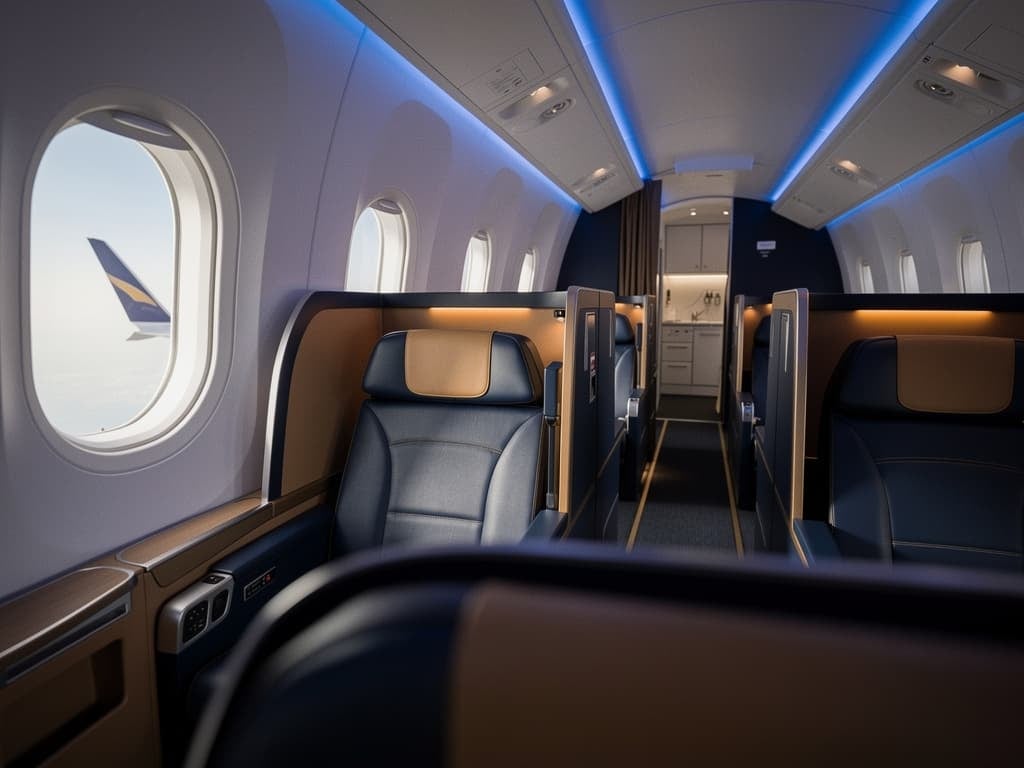
The product grievance running in parallel adds a second front. Air Canada Rouge recently took delivery of its first Boeing 737 MAX configured with Premium Economy at the front, full seatback entertainment throughout, and fast, free Wi-Fi sponsored by Bell. The airline has also introduced complimentary wine, beer, and premium snacks on all North American and Caribbean Rouge flights. The union’s concern is structural: Rouge was contractually designed to offer “clear and defined differences in service, configuration, and branding” from mainline. Those differences are now, by the union’s own assessment, becoming “harder to distinguish.”
Labor precedent reinforces the concern. In 2025, Air Canada flight attendants held a controversial wage vote following a strike, and subsequently rejected a proposed contract — a sequence that demonstrates this workforce is willing to escalate when it believes management is overreaching. The current dual-grievance posture fits that same pattern.
| Date | Event | Impact | Status |
|---|---|---|---|
| 2013 | Air Canada Rouge launched as leisure subsidiary | Lower crew pay scales; mainline scope protections negotiated | Historical baseline |
| September 2025 | Flight attendant strike and contract rejection | Service disruption; tentative agreement rejected by membership | Resolved — labor tensions ongoing |
| March 2026 | First Rouge Boeing 737 MAX delivery with Premium Economy and Wi-Fi | Grievance filed over product blurring between Rouge and mainline | Active grievance |
| May 2026 | Air Canada announces 52 aircraft transitioning to Rouge | Contractual 50-aircraft cap breached; union demands immediate compliance | Active grievance — escalating |
| May 23, 2026 | CUPE issues formal rebuke to members | Demands compliance, make-whole remedies, and document disclosure | Pending management response |

Flight deals most people never see
Our AI monitors 150+ airlines for pricing anomalies that traditional search engines miss. Air Traveler Club members save $650 per trip per person on average: see how it works.
Each deal saves 40–80% vs. regular fares:

What this fight is really about
Strip away the contract language and this dispute is about brand architecture — specifically, how much Air Canada can upgrade Rouge before the subsidiary stops serving its original strategic purpose. Rouge was built to be visibly inferior to mainline: lower pay, fewer amenities, a clearly cheaper product. That inferiority was the justification for the lower cost structure. The moment Rouge starts offering Premium Economy seating, free Wi-Fi, and complimentary wine, the “clear and defined differences” the union’s contract demands begin to dissolve.
For those flying leisure routes between Canada and the Caribbean or sun destinations, the product drift is actually a short-term benefit — better onboard experience at Rouge fares. But the union’s concern is that Air Canada is using Rouge as a vehicle to normalize a lower-cost premium product, then expand it, without renegotiating the labor terms that govern it.
Air Traveler Club’s analysis of Aeroplan’s recent award chart restructuring provides useful context here: Air Canada has shown a consistent willingness to reshape its product and loyalty economics when it believes the competitive environment demands it. The Rouge expansion fits that same strategic logic — the airline is optimizing for leisure-route margin, and labor agreements are the friction it is testing.
The competitive frame matters too. Air Transat and Sunwing — the carriers Rouge was created to fight — have not stood still. If Rouge can offer a near-mainline product at leisure fares, it becomes a genuine competitive weapon. The union understands this, which is why it is fighting on both the fleet-size and product-quality fronts simultaneously.
What the Rouge dispute timeline means for Air Canada bookings
This is an awareness story with a specific forward signal worth tracking. No schedules have changed, no flights have been cancelled, and Air Canada has not publicly responded to the union’s formal demands. But the dispute sits inside a labor relationship that has already produced a strike and a contract rejection within the past 12 months.
Watch for two developments: first, whether Air Canada issues a formal management response to CUPE’s demand for document disclosure — that response will indicate whether the airline intends to negotiate or litigate the scope question. Second, watch for any fleet-allocation announcement that makes the 52-aircraft Rouge transition permanent rather than temporary. A permanent announcement would signal that Air Canada is prepared to absorb a grievance rather than reverse course, which historically precedes arbitration and, in this labor environment, potential job action.
If CUPE files for arbitration on either the fleet-cap breach or the product-blurring grievance, expect a ruling timeline of three to six months — well within the summer and fall travel seasons. Travelers with Rouge bookings in that window should monitor Air Canada’s official communications and maintain flexible fare conditions where possible.
FAQ
What is the 50-aircraft cap on Air Canada Rouge, and why does it exist?
The cap is written into the collective agreement between Air Canada and CUPE, the union representing mainline flight attendants. Article 2.04.05 limits Rouge to a maximum of 50 aircraft, and Article 2.04.07 requires union consent before that number can be exceeded. The provision exists because Rouge flight attendants are employed at lower pay scales and with fewer benefits than mainline crew — unchecked Rouge expansion would effectively allow Air Canada to replace higher-cost mainline flying with cheaper Rouge operations.
Does this dispute affect Aeroplan elite benefits on Rouge flights?
No changes to Aeroplan elite recognition on Rouge flights have been announced as part of this dispute. Elite benefits — including eUpgrade eligibility and lounge access — are governed by Aeroplan program terms, not by the CUPE collective agreement. However, if the product-blurring grievance results in a rollback of Rouge’s new Premium Economy configuration, the onboard experience for elite members on those routes could change. Verify your specific fare and status benefits in your Aeroplan account before travel.
Could this labor dispute lead to flight disruptions on Air Canada Rouge routes?
Not immediately. The dispute is currently in the grievance phase, which means both sides are working through contractual dispute-resolution mechanisms. Operational disruption would require an escalation to job action — a strike or work-to-rule campaign — which would involve additional legal steps and notice requirements under Canadian labor law. The 2025 precedent shows this workforce is willing to strike, but that outcome is not imminent based on current public information.
Read more