Summary
A widening gap between Canadian trade politics and federal aviation law means Air Canada’s Signature Class cabin continues to pour Jack Daniel’s Tennessee Whiskey on international flights, even as provincial liquor boards in Ontario and elsewhere keep American spirits off retail shelves. The airline confirmed the bourbon remains available exclusively in its premium cabin, citing the expectations of a global customer base.
The split exposes a jurisdictional loophole under the federal Customs Act that shields airline provisioning from provincial bans. With Porter Airlines charting a zero-American-alcohol course, Canadian premium travellers now face a stark onboard branding choice.
When a now-deleted social media post showed a pour of Jack Daniel’s in business class on a flight out of Montréal this week, it ignited a debate that goes far deeper than a single whiskey brand. The flashpoint is the collision between a domestic “buy Canadian” campaign and the reality of running an international network carrier that shuttles border-hopping premium passengers.
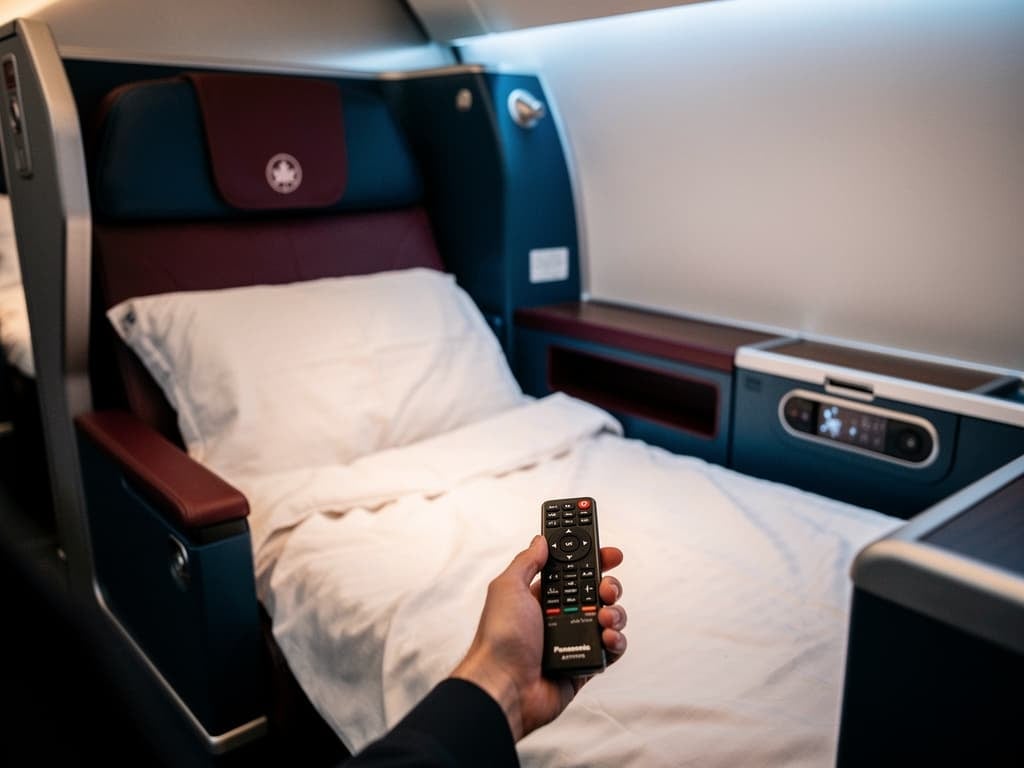
Air Canada confirmed to TIKET2.0 that it continues to stock U.S. bourbon in Business (Signature) Class only, a decision that puts its beverage trolley on a different legal footing than the Liquor Control Board of Ontario (LCBO) — and a different branding page than fast-growing rival Porter Airlines. The core insight is that two sharply different definitions of Canadian loyalty are now operating simultaneously in the premium cabin.
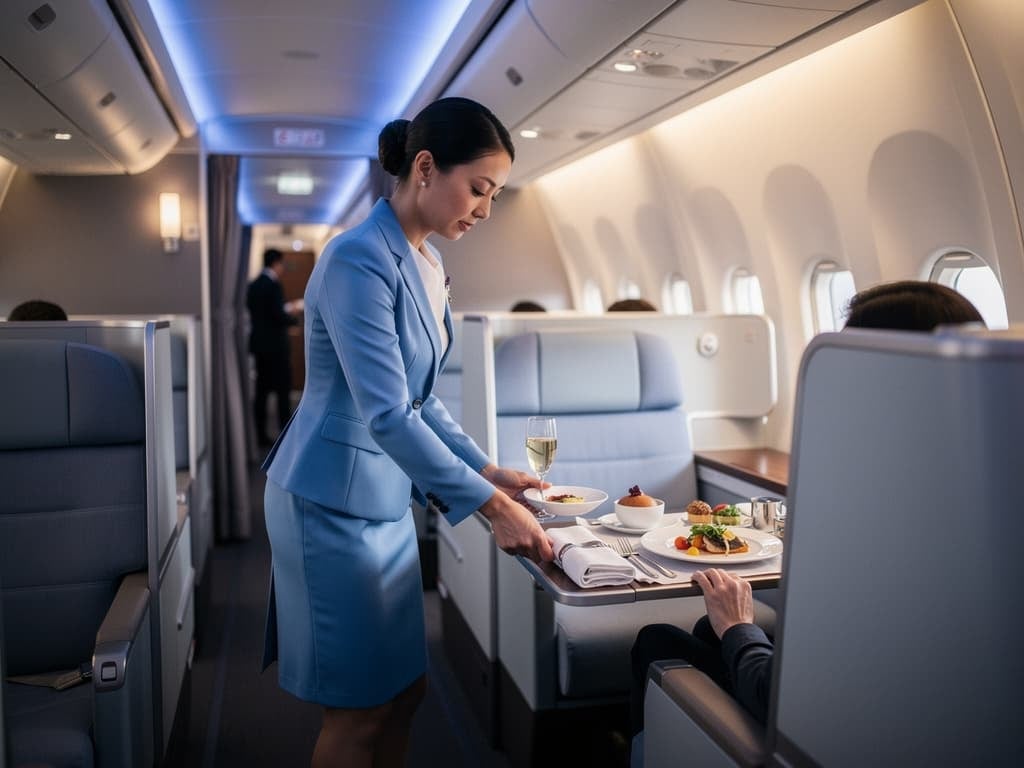
For business-class travelers, the stakes are concrete. On any Air Canada widebody or transborder flight, the familiar red-label bottle remains an option alongside a growing list of Canadian spirits. On Porter, the choice is made for you. The policy divergence is now a visible test of how far trade-politics sentiment penetrates private-sector service decisions on routes touching Canadian and U.S. airports.
The federal loophole keeping bourbon on board
Air Canada’s ability to serve U.S. whiskey while Ontario Premier Doug Ford keeps LCBO shelves clear rests on a specific federal structure. Charles-Étienne Beaudry, a teaching professor of political science at the University of Ottawa, explained that the airline does not buy alcohol from any provincial liquor store. Instead, it sources directly from global distributors such as Diageo, moving product into customs-bonded warehouses on airport grounds — all governed by the federal Customs Act.
A CBSA memorandum on the commercial importation of intoxicating liquors confirms that imported spirits destined for international flights can be supplied through these bonded warehouses. The Excise Act, 2001 explicitly covers alcohol imported for supply to an international air carrier and kept in such facilities. Provincial retail bans simply do not reach this federally regulated supply chain.
Most provinces pulled American liquor from government-run shelves in 2025 after the first round of U.S. tariffs on Canadian goods. Prime Minister Mark Carney recently asked provinces to restock when a trade agreement appeared near, but Ontario has held the line. The LCBO notes that wholesale customers — bars, restaurants, grocery stores — cannot place new orders for U.S. products, though they may sell existing inventory. Air Canada operates in an entirely separate channel.
The practical result is a split-screen reality for a business-class passenger flying out of Toronto Pearson: you cannot buy a bottle of Jack Daniel’s at the terminal’s retail store, but you can order it at 35,000 feet once the seatbelt sign goes off.
| Airline | U.S. alcohol served? | Premium cabin/service | Featured Canadian brands |
|---|---|---|---|
| Air Canada | Yes — U.S. bourbon in Signature Class only | Full meal-and-bar proposition on international/transborder routes | Dillon’s Vodka, Open Coast Gin, Canadian maple syrup |
| Porter Airlines | No American alcohol served | Complimentary beer and wine; all-premium boutique experience | Jackson Triggs wine, Tumbler & Rocks cocktails |
| WestJet (context) | Not confirmed for this story | Premium cabin on widebody and select routes | Data pending verification |
Flight deals most people never see
Our AI monitors 150+ airlines for pricing anomalies that traditional search engines miss. Air Traveler Club members save $650 per trip per person on average: see how it works.
Each deal saves 40–80% vs. regular fares:

The split in Canada’s premium-cabin experience
Air Canada confirmed that at least one Canadian wine appears on every international flight and that it has deliberately shifted more of its onboard drinks toward Canadian spirits and producers. But the airline drew a deliberate line at removing internationally recognized products that matter to its global customer base — with U.S. bourbon named explicitly as a Signature Class staple. This framing repositions American whiskey not as a political statement but as a baseline premium-cabin expectation.
The strategic signal is clear. Air Canada is an international network carrier competing with global airlines on hub-busting routes through Toronto and Vancouver. It cannot afford a beverage list that reads as parochial to a connecting passenger booked JFK–YYZ–LHR. Porter, by contrast, is building a different brand — a consciously national premium proposition that champions Canadian producers as a differentiator rather than a liability. Both strategies are rational; they simply serve different business models.
How to choose your premium carrier as the trade debate continues
The onboard alcohol split gives Canada-U.S. business-class travellers a simple but meaningful choice that goes beyond seat maps and schedule convenience. It is now a values-alignment signal as much as a service preference.
- Book Air Canada Signature Class for global connectivity and a familiar premium bar. If U.S. bourbon matters to your experience — or if you are connecting onward to Asia or Europe — Air Canada remains the full-service network play. Check the current business-class menu before booking, as onboard product ranges can shift between seasons.
- Choose Porter for a deliberate buy-Canadian premium cabin. Porter’s no-American-alcohol policy is a differentiator, not a gap. Its all-premium Embraer E195-E2 cabin offers complimentary Canadian beer and wine alongside Tumbler & Rocks cocktails from Alberta — a cohesive national brand story.
- Expect the jurisdictional split to hold through year-end. Federal customs rules governing bonded airport warehouses are not subject to provincial liquor-board decisions. Even if the LCBO restocks U.S. spirits later in 2026, airline provisioning will remain a separate channel.
- Monitor Air Canada’s beverage menu for any trade-driven update. If the airline quietly removes or replaces its U.S. bourbon offering, it will signal that political pressure has crossed the federal-provincial jurisdictional line — and that no carrier is immune from the optics.
Watch for an updated Air Canada beverage list or a formal trade statement from the airline. If one appears, it means the carrier is responding directly to the political climate on U.S. alcohol.
FAQ
Does Air Canada serve American alcohol in all cabins?
No. Air Canada confirmed that U.S. bourbon is available only in Business (Signature) Class. Economy and premium economy cabins do not receive the same alcohol selection, and the airline has deliberately increased the presence of Canadian spirits across its onboard service.
Can I request a specific Canadian spirit instead of U.S. bourbon in Signature Class?
Air Canada’s business-class bar typically offers a range of spirits, and Canadian options such as Dillon’s Vodka and Open Coast Gin are part of the onboard refresh. Flight attendants can accommodate preferences based on available stock, but the airline has not announced a substitution policy tied to passenger requests for Canadian alternatives.
Will other Canadian carriers follow Porter’s no-U.S.-alcohol policy?
There is no indication that WestJet, Air Transat, or Flair have adopted a similar policy. Porter’s approach is a deliberate brand choice linked to its Canadian identity. Any shift by other carriers would require a formal announcement, which has not occurred as of late August 2026.
Read more