Summary
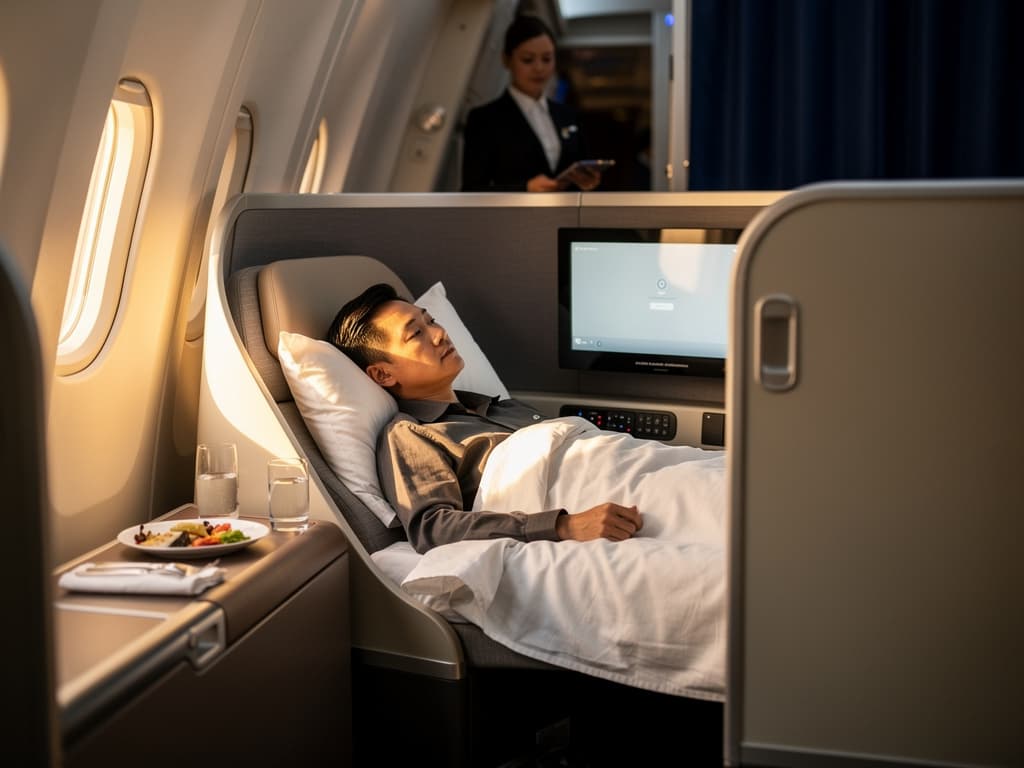
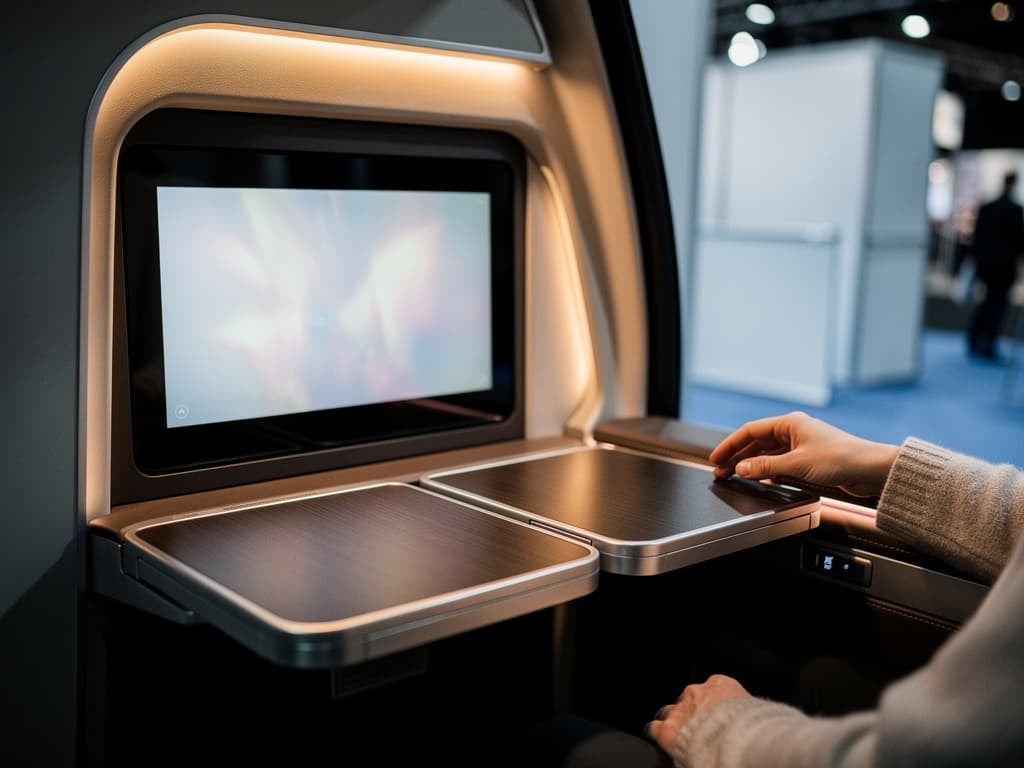
RAVE Aerospace and Safran Seats have revealed a premium cabin concept that replaces the seatback screen with a 17.5-foot wraparound micro‑LED display. The Origin demonstrator, unveiled at the 2026 Aircraft Interiors Expo, can transform a first‑class suite into a virtual café, a sports stadium, or a tranquil wellness space, complete with headset‑free audio and seat‑pressure bladders.
No airline has committed to the concept, and industry estimates put first service entry at five to ten years away. The next concrete signal will be any letter of intent or certification milestone announced at AIX 2027.
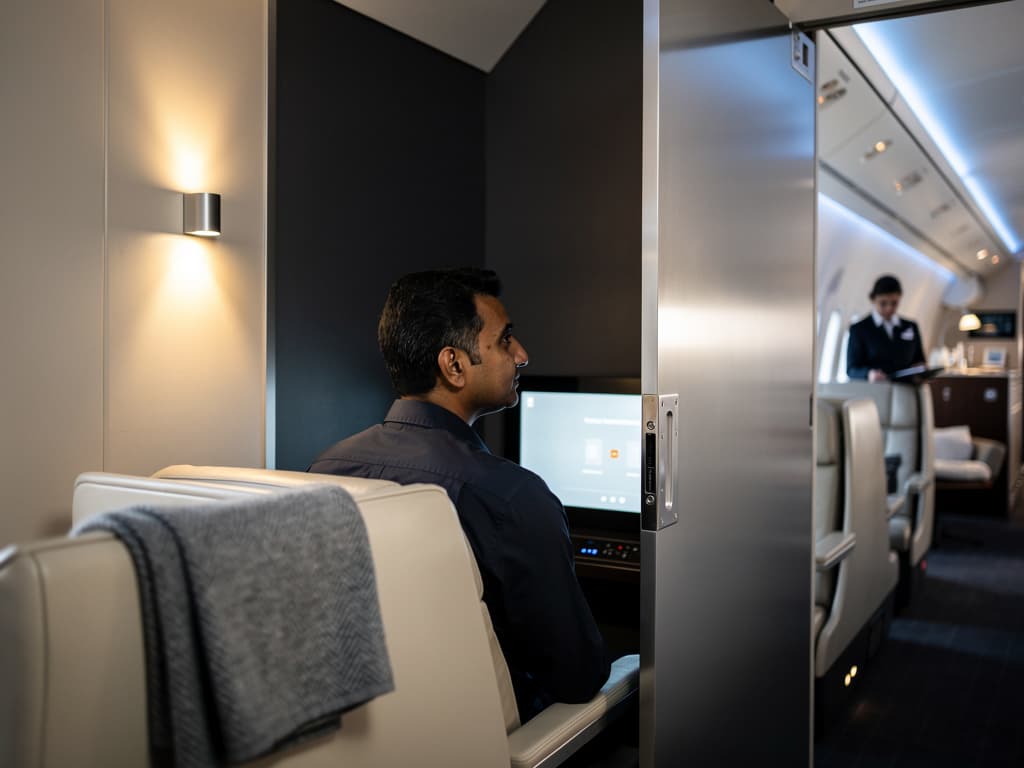
Forget the oversized seatback OLED. The next leap in premium‑cabin IFE turns the entire suite into a digital stage. At AIX 2026 in Hamburg, RAVE Aerospace and Safran Seats showed Origin — a semi‑enclosed first‑class suite whose U‑shaped micro‑LED wall hands the passenger control of what the environment looks and feels like.
The suite’s bendable display panels cover the equivalent of 17.5 feet of screen real estate, curving above the head and around the seat. Unlike earlier curved‑screen concepts, Origin layers in Safran’s Euphony headset‑free audio, which produces “deep sound” vibration through the seat, plus passenger‑adjustable pressure bladders, automated climate control, and adaptive lighting.
For the airline passenger flying a 16‑hour transpacific sector in 2032, the difference is existential: the cabin doesn’t just contain content — it becomes the content. RAVE’s Immersive Display Concept can re‑theme the suite by flight phase or time of day, throw a friend into a shared virtual stadium for a match, or recreate a café scene timed to the arrival of a cocktail.
Inside the Origin suite
The demonstrator relies on micro‑LED, not OLED, to achieve its wraparound shape without loss of brightness or contrast. Safran Seats confirmed the partnership on April 13, explaining that the climate, cushion and lighting systems are fully integrated into the IFE control loop. RAVE has already filed multiple patents around the seat‑IFE marriage.
The Origin isn’t a product — it’s a vision with no order book. Certification hurdles for a structural micro‑LED enclosure will consume years, and weight‑and‑power‑budget data hasn’t yet been released. Still, the concept stakes out a clear position: the premium cabin is moving from “largest screen” to “total immersion.”
| Concept / Partnership | Display technology | Key features | Development stage |
|---|---|---|---|
| Origin (RAVE Aerospace + Safran Seats) | U‑shaped micro‑LED wraparound (~17.5 ft equivalent) | Euphony headset‑free audio, seat pressure bladders, adaptive climate/lighting | Concept demonstrator (AIX 2026), no airline orders |
| MAYA (Collins Aerospace + Panasonic Avionics) | 45‑inch curved ultra‑wide OLED | Astrova Curve IFE, mature OLED picture quality | Shown AIX 2024; Astrova Curve expected as first‑class product |
| Airbus First Class Experience | Wraparound screens (specifications TBC) | Direct OEM integration, potential fleet‑wide scalability | Teased 2025, now in development phase |

Flight deals most people never see
Our AI monitors 150+ airlines for pricing anomalies that traditional search engines miss. Air Traveler Club members save $650 per trip per person on average: see how it works.
Each deal saves 40–80% vs. regular fares:

What the immersive screen race means for premium cabin competition
Origin pushes past earlier efforts by pairing sensory hardware with a fully re‑themed visual envelope. MAYA delivered a big curved OLED; Origin delivers a room. That shift may force carriers’ hands sooner than expected. This trend, tracked in Air Traveler Club’s analysis of eight major business‑class overhauls, already shows Euphony audio and large OLEDs entering service today. But a wraparound micro‑LED suite requires an entirely different certification pathway, and no airline will order one until the weight and reliability data prove out.
For now, the technology widens the gap between carriers that invest in flagship luxury and those that don’t. When a Singapore Airlines or ANA considers its next first‑class cabin for the A350‑1000, a concept like Origin — with its shared virtual guest feature — could reshape the competitive dynamic. But the clock is long. The 5‑to‑10‑year timeline gives established products such as Lufthansa’s Allegris and Qatar’s Qsuite Next Gen ample runway to build brand loyalty before the immersive suites arrive.
How to position your premium travel for the immersive IFE era
The Origin concept has no booking window, but its emergence sharpens the value‑equation for long‑haul premium tickets today. Savvy travelers can lock in the best of the current generation while keeping an eye on the next one.
- Monitor AIX 2027 for airline commitments. If a launch carrier signs a letter of intent, an immersive suite could enter service within five years — well within the planning horizon of a major trip. No announcements mean the 10‑year timeline firms up.
- Book existing luxury suites on A350 and 777 aircraft now. Singapore Airlines’ A350 first class, ANA’s “The Room” on the 777, and Lufthansa’s Allegris offer the highest‑spec cabins flying today, including some with Euphony audio. Inventory is tightest at the 330‑day window.
- Use elite status to secure upgrade waitlists. Star Alliance, Oneworld, and SkyTeam status holders should place upgrade requests as soon as bookings open. Peak‑season award space on suites‑equipped routes evaporates fast.
- Track airline retrofit schedules. Many carriers are refreshing first‑class cabins through 2027‑2028. A booking now on a route slated for a new product by late 2027 could yield a vastly better seat — but only if you confirm the aircraft tail assignment closer to departure.
FAQ
When will Origin‑style suites actually appear on a flight?
Industry estimates range from five to ten years after concept demonstration, assuming a carrier signs a letter of intent by 2027 and the necessary weight‑saving and power‑management certifications can be secured. No airline has made a commitment yet.
Which airlines are most likely to adopt the wraparound screen concept?
Asia‑Pacific and Middle Eastern carriers that already compete on premium luxury — such as Singapore Airlines, ANA, JAL, and Qatar Airways — are the most natural launch candidates for an immersive first‑class product, given their high premium‑cabin investment and long‑haul network focus.
How does Origin differ from Panasonic’s Astrova Curve in the MAYA concept?
MAYA uses a 45‑inch curved OLED screen; Origin deploys a U‑shaped micro‑LED array equivalent to 17.5 feet that wraps around the passenger. Origin also adds Safran’s Euphony headset‑free audio and seat‑pressure bladders, moving beyond display size to full sensory immersion.
What premium cabin should I book today if I want the most advanced experience?
Current‑generation leaders include Singapore Airlines’ A350 first class, ANA “The Room” on the 777, Lufthansa’s Allegris suites, and Qatar Airways’ Qsuite Next Gen. Many of these cabins already feature large 4K OLED screens, sliding doors, and emerging audio technology.
Read more