Summary
Japan Airlines operates the only Boeing 787 fleet with 8-abreast economy seating on Australia routes, delivering 18.8-inch seat width versus the industry-standard 17.2 inches on competing 3-3-3 configurations. The Tokyo-Narita to Melbourne overnight service on the 787-8 costs JPY 109,530 ($971) one-way in Semi-Flex Economy, positioning JAL’s 2-4-2 layout as a measurable comfort upgrade over standard economy products on the same aircraft type.
The catch: Qantas Frequent Flyer members earn only 1,200 points and 15 status credits on JAL’s O-class fares—penalized partner earning—though the route remains bookable at 43,500 Qantas points plus taxes. Award space availability and cash fare pricing fluctuate significantly during Australian school holiday periods.
Japan Airlines has maintained its unique 2-4-2 economy configuration on Boeing 787 operations since 2013, resisting the industry consolidation toward nine-abreast layouts that now define competitor products. The Tokyo-Narita to Melbourne route showcases this strategic differentiation, with the carrier’s 787-8 delivering 18.8 inches of seat width and 33-inch pitch across 156 economy seats—specifications that approach typical premium economy dimensions without the cabin upgrade cost.
This matters for overnight routing. The NRT-MEL flight operates as a red-eye service, departing Tokyo in the evening and arriving Melbourne the following morning. Seat width becomes critical for sleep quality on the 9.5-hour sector, and JAL’s extra 1.6 inches per passenger translates to measurably reduced shoulder contact in middle seats and improved recline comfort in window positions.
The Semi-Flex Economy fare (O class) at JPY 109,530 represents the entry tier for this product, excluding lounge access but including the full hard product specification. Economy Flex fares unlock JAL Sakura Lounge access at Tokyo-Narita Terminal 2—the same facility available to Qantas Gold and Oneworld Sapphire status holders—though pricing for this tier remains unpublished on JAL’s booking platform.
The route serves premium leisure travelers connecting through Tokyo and corporate traffic between Australia and Japan. JAL deploys the 787-8 year-round, switching to higher-capacity 787-9s and Boeing 777s during peak periods including December, January, July, and August. All three aircraft types maintain the 2-4-2 economy configuration, ensuring product consistency regardless of seasonal equipment swaps.
The cabin specifications and service delivery
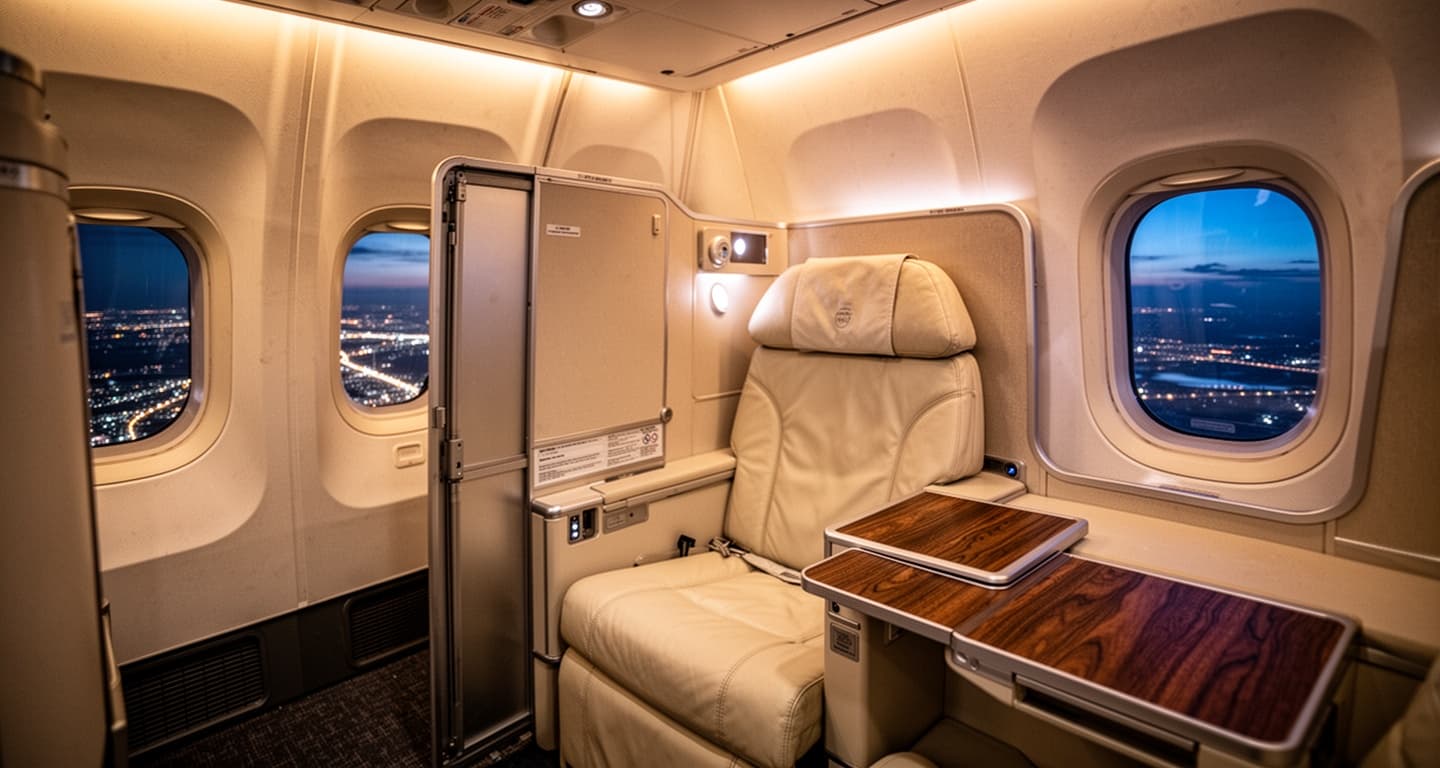
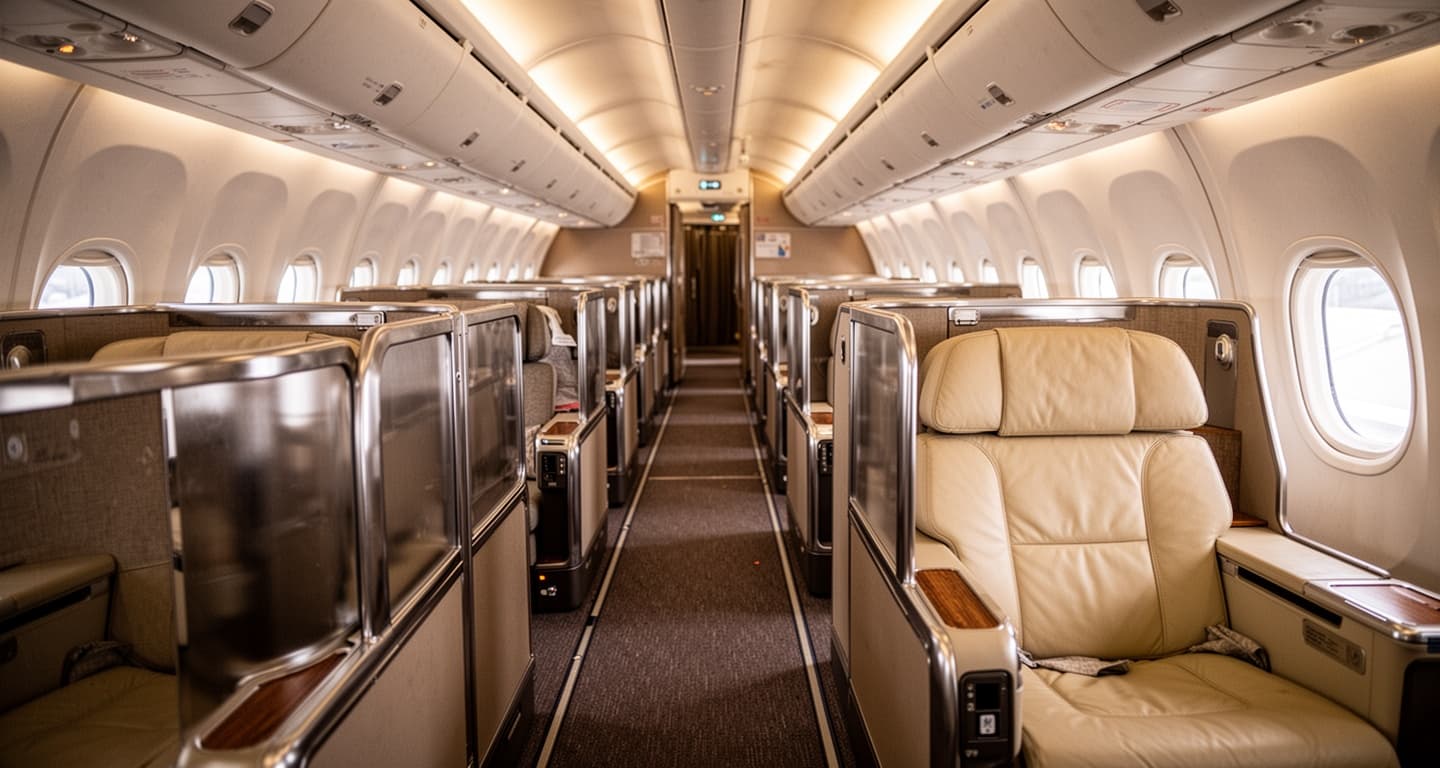
The 787-8 on this route carries 30 business class seats and 156 economy seats in a two-class configuration. Economy occupies rows 11 through 38, split into two cabins with lavatories positioned behind the wing. The 2-4-2 layout eliminates the traditional middle seat in window pairs, creating a product advantage for couples and solo travelers willing to pay for window or aisle positions.
Seat features include adjustable headrests, coat hooks, and split seat pockets for storage. The 10.6-inch HD touchscreen delivers responsive performance, though the entertainment library remains limited compared to carriers like Singapore Airlines or Emirates. Navigation requires cycling through 72 menu pages—a cumbersome interface that undermines the otherwise strong hard product.
WiFi operates on a tiered pricing model: one hour free, with paid options including a 24-hour pass useful for connecting JAL flights within the same day. Connection speeds support browsing and light video streaming, meeting baseline expectations for long-haul connectivity in 2026.
Baggage allowance reaches 46kg (two pieces at 23kg each), exceeding most economy products on Asia-Pacific routes. Online check-in enables seat selection and displays child seat mapping—a transparency feature that allows passengers to avoid rows with infants when booking.
| Specification | JAL 787-8 | Industry standard 787 | Advantage |
|---|---|---|---|
| Seat configuration | 2-4-2 (8 abreast) | 3-3-3 (9 abreast) | +1.6 inches width |
| Seat width | 18.8 inches | 17.2 inches | +9% wider |
| Seat pitch | 33 inches | 31-32 inches | +1-2 inches legroom |
| Baggage allowance | 46kg (2×23kg) | 23-30kg typical | +53-100% capacity |
| IFE screen size | 10.6 inches HD | 9-11 inches typical | Competitive |
| WiFi availability | Free 1hr + paid tiers | Varies by carrier | Standard offering |
The meal service operates on a two-course structure for overnight flights. Dinner begins with a pre-meal beverage service featuring JAL’s exclusive “Sky Time” peach and grape drink, accompanied by packaged snacks and warm towels. Main course options include Western and Japanese selections—the seafood pasta with creamy shrimp and scallop sauce arrives hot with generous portions and multiple accompaniments.
Häagen-Dazs chocolate ice cream serves as dessert, elevating the service above standard economy offerings. A pre-arrival meal operates 90 minutes before touchdown, though crew protocol allows sleeping passengers to remain undisturbed—a notable service detail that contrasts with carriers that wake passengers for meal distribution.

Flight deals most people never see
Our AI monitors 150+ airlines for pricing anomalies that traditional search engines miss. Air Traveler Club members save $650 per trip per person on average: see how it works.
Each deal saves 40–80% vs. regular fares:

The Oneworld redemption and earning structure
JAL’s position within the Oneworld alliance creates both opportunities and penalties for Qantas Frequent Flyer members. The NRT-MEL route books at 43,500 Qantas points plus taxes in economy class—a standard redemption rate for Asia-Pacific sectors in the 3,001-3,600 mile distance band. Award space availability follows typical patterns: tight during Australian school holidays (December-January, April, July), accessible during shoulder periods (February-May, September-November).
Cash fare earning presents complications. Despite booking a Semi-Flex ticket at $971, the O-class fare earns only 1,200 Qantas points and 15 status credits—categorized as Discount Economy on Qantas partner earning tables. This represents a significant penalty compared to equivalent Qantas-operated flights, where a flexible economy fare would earn 100% of flown miles (approximately 5,000 points) and 50 status credits.
The earning disparity reflects Qantas’ strategy to discourage partner airline bookings in favor of its own metal. For travelers prioritizing status credit accumulation, this creates a decision point: pay potentially higher fares on Qantas A330 service for full earning, or accept reduced credits for JAL’s superior hard product at lower pricing.
Air Traveler Club’s analysis of JAL’s 8-abreast economy configuration confirms the 5cm seat width advantage translates to measurable sleep quality improvement on overnight sectors, particularly for passengers in middle seats or traveling as couples. The comfort differential becomes more pronounced on flights exceeding eight hours, where the cumulative effect of reduced shoulder contact and improved recline space justifies the points earning penalty for many travelers.
Strategic guidance for booking this route
The 2-4-2 configuration justifies booking JAL over competing options when cash fares fall within $100-200 of alternative routings—the comfort differential on overnight sectors delivers measurable value for that premium.
- Prioritize Semi-Flex (O-class) for cost-conscious bookings: Full hard product access without lounge inclusion keeps pricing competitive at approximately $971 one-way, though Qantas earning penalties apply.
- Upgrade to Economy Flex when lounge access matters: Sakura Lounge entry at Tokyo-Narita adds $50-80 in value per visit, justifying the fare increment for travelers with layovers or early arrivals.
- Book 60-90 days advance for peak periods: December-January and July-August inventory tightens significantly; secure preferred dates 8-12 weeks out to avoid sold-out flights or premium pricing.
- Use Qantas points for award bookings during peak seasons: 43,500 points plus taxes delivers better value than inflated cash fares during Australian school holidays, though award space requires similar advance booking.
- Select window or aisle seats in 2-4-2 configuration: Avoid middle seats in the center four-seat section—the width advantage diminishes when seated between two passengers on overnight routing.
Watch for JAL’s fleet deployment announcements on NRT-MEL through 2026-2027: if 787-9 becomes the primary aircraft year-round, it signals demand strength and potential yield pressure on Semi-Flex fares. Any introduction of Premium Economy on this route would compress the economy-to-PE value proposition and likely trigger Semi-Flex fare increases.
FAQ
Does JAL’s 2-4-2 economy configuration apply to all Australia routes?
Japan Airlines operates the 2-4-2 layout on all Boeing 787 aircraft serving Sydney and Melbourne from Tokyo-Narita. The configuration remains consistent across 787-8, 787-9, and seasonal 777 deployments on these routes, ensuring product uniformity regardless of aircraft swap during peak periods.
How does Qantas partner earning compare to flying Qantas metal on this route?
JAL O-class Semi-Flex fares earn only 1,200 Qantas points and 15 status credits despite the $971 ticket price. Equivalent flexible economy on Qantas metal would earn approximately 5,000 points and 50 status credits for the same distance. The 70% earning reduction reflects Qantas’ penalty structure for partner airline bookings.
Can I access JAL lounges with Oneworld status on Semi-Flex economy tickets?
Yes—Oneworld Sapphire (Qantas Gold equivalent) and Emerald status holders access JAL Sakura Lounge at Tokyo-Narita Terminal 2 regardless of ticket class. Semi-Flex economy passengers without status do not receive lounge access; upgrade to Economy Flex fare for lounge inclusion without elite status.
What’s the best booking window for award space on this route?
Qantas points redemptions at 43,500 one-way require 60-90 days advance booking during peak periods (December-January, July-August). Award space fills within 60 days of departure for holiday travel. Off-peak periods (February-May, September-November) show better availability with 30-45 day booking windows.
Read more