Summary
American Airlines will reinstall seatback entertainment screens on more than 800 narrowbody aircraft, with 4K displays, Bluetooth audio and USB‑C fast charging arriving first on new Airbus and Boeing deliveries from 2028.
The retrofit spans the entire narrowbody fleet through the early 2030s, but its mere existence confirms that in‑flight hardware is once again a differentiator for premium traffic—and that passengers will need to pay close attention to aircraft type when booked on U.S. domestic and near‑international routes.
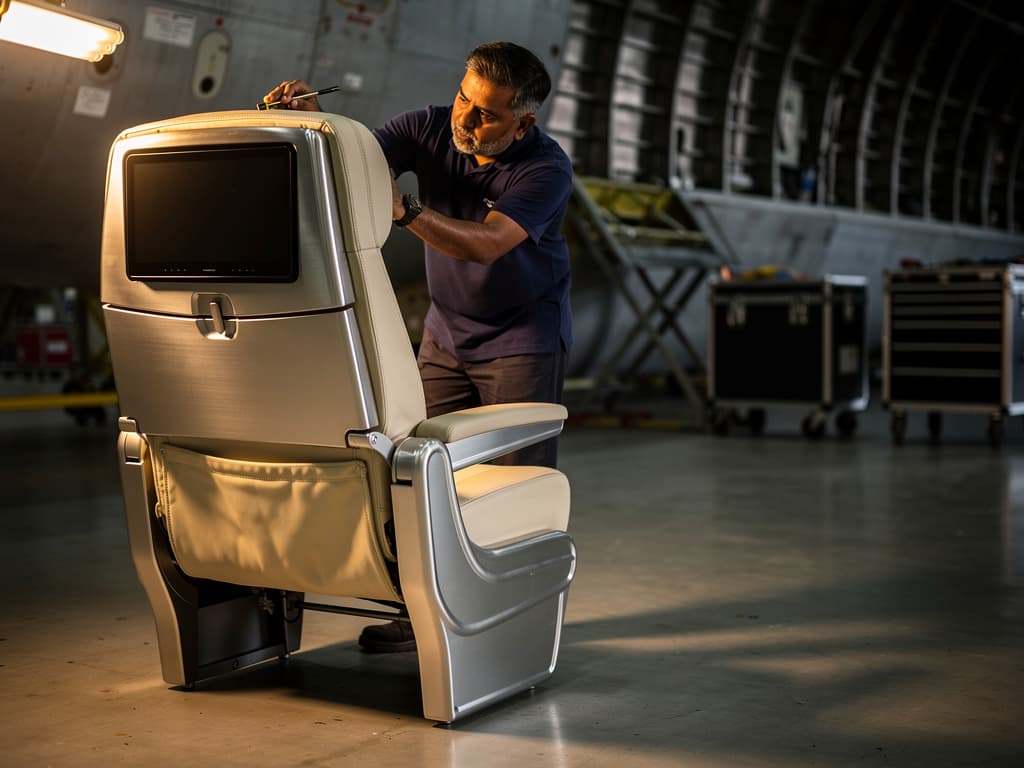
The seatback screen, a fixture many had written off, is making a full‑throttle return. American Airlines confirmed on August 26, 2026 that it will equip every narrowbody jet with modern entertainment systems, abandoning a decade‑old cost‑saving policy that stripped screens from most of its domestic fleet. The announcement means all three legacy U.S. carriers now treat seatback hardware as essential, and it signals that the battle for premium revenue has moved from fare wars to the cabin wall.
The retrofit targets over 800 Boeing 737s and Airbus A321s. When the first new‑build aircraft arrive in 2028, everyone on board—from basic economy to first class—will find a 4K screen, wireless headphone pairing, and a USB‑C port that charges modern devices at full speed. Existing jets will follow through the early 2030s, meaning availability will be patchy for years.
American is also raising the proportion of premium seats on its narrowbody fleet from roughly 25% to 40%. That move, paired with a separate plan to install Starlink high‑speed Wi‑Fi on more than 500 narrowbody jets starting in 2027, transforms the domestic mainline experience into something closer to what travelers expect on long‑haul international flights. Meanwhile, Delta Air Lines never removed its screens and has been layering on personalisation with Delta Sync since 2023. United Airlines began its fleetwide screen rollout in 2022 and now flies Boeing 787‑9s with 13‑inch OLED displays in economy.
Even Alaska Airlines has entered the race, adding its first‑ever seatback screens to the Dreamliners it introduced in late 2025 for long‑haul international routes out of Seattle. The competitive landscape, in other words, has flipped from screen‑less to screen‑rich in barely a few years.
The details behind the about‑face
American Airlines confirmed the programme through its newsroom, stating that the systems will include 4K displays, Bluetooth audio for personal headphones, and USB‑C fast charging at every passenger seat. Full fleet installation is expected to conclude by the early 2030s, with the initial wave of screens arriving on new Airbus A321 and Boeing 737 deliveries beginning in 2028.
Industry experts point to several forces behind the reversal.
| Airline | Screen technology | Key features | Fleet status |
|---|---|---|---|
| American Airlines | 4K wireless‑fed displays | Bluetooth, USB‑C, personalised content | Rollout begins 2028 on new narrowbodies; fleetwide retrofit complete by early 2030s. |
| Delta Air Lines | 4K HDR QLED | Bluetooth, Delta Sync personalisation, cross‑flight content continuity | Already widespread on domestic fleets; expansion continues. |
| United Airlines | 13‑inch OLED (787‑9 economy) | Bluetooth, power, part of Good Leads the Way cabin refresh | Fleetwide deployment since 2022; all new narrowbody deliveries equipped. |
“These systems are expensive to purchase, expensive to install, and have ongoing costs including repair and programming updates,” said Mike Taylor, senior managing director at JD Power. Yet his firm’s airline satisfaction survey shows that seatback screens add between 60 and 90 points on a 1,000‑point scale—a difference he describes as significant.
Gary Leff, an airline expert and travel advisor, noted that the cost equation has shifted because modern screens receive content wirelessly from an onboard server. That eliminates the need to run cabling to every seat, cutting installation expense and weight. The screens also create a revenue opportunity: carriers can serve personalised advertisements to a known seat occupant, further offsetting the investment.
The move marks the end of a cycle that began when airlines assumed 80% of passengers would stream on their own devices. In reality, connection difficulties, inconsistent Wi‑Fi quality, and variable bandwidth created a gap between the seatback and personal‑device experience that carriers now seek to close.

Flight deals most people never see
Our AI monitors 150+ airlines for pricing anomalies that traditional search engines miss. Air Traveler Club members save $650 per trip per person on average: see how it works.
Each deal saves 40–80% vs. regular fares:

Why this reshapes the U.S. premium conversation
For years, domestic premium competition revolved around lie‑flat seats, lounge access, and elite perks. Seatback screens were, at best, a footnote after the industry bet on passengers bringing their own devices. American’s full fleet commitment shows that equation has flipped. When Delta kept its screens and United started a fleetwide re‑screening, American felt pressure to match—not just to close a satisfaction gap but to remain visible to premium travellers who increasingly book based on hard product.
The integration with Starlink Wi‑Fi will be a second‑order effect worth watching. If American can stream high‑bandwidth content directly to the seatback while also offering free, fast connectivity to personal devices, it sets a new dual‑screen model that neither Delta nor United currently replicates. United’s own premium seat expansion with the upcoming A321neo fleet shows that the capacity side of the same equation is moving in parallel—narrowbody jets are becoming strategic assets for loyalty and revenue, not just people‑movers.
Air Traveler Club’s premium cabin booking framework highlights how subtle differences in hard product, like a 13‑inch screen versus a 4K wireless display, influence upgrade choices and award redemption decisions, especially on transcon and trunk routes.
Booking and aircraft‑type strategy for the screen‑hungry
For travellers who consider a reliable seatback screen non‑negotiable on flights longer than two hours, the news means aircraft choice will remain a variable for several years. Here’s how to navigate the transition:
- Check the aircraft type, not just the route. New American A321neo and 737 MAX deliveries from 2028 onward will have the screens; older 737‑800s and A319s may not see them until the early 2030s. Seat maps and airline apps are your friend.
- Delta remains the safest bet for now. Its fleet already has high screen density and the personalised Delta Sync experience, so if you want consistency today, it’s the carrier to book.
- United’s 787‑9 operates on some domestic routes and always offers the 13‑inch OLED screen. When available, it’s a strong alternative, but not every United narrowbody has been retrofitted yet.
- The premium seat expansion could mean more upgrade inventory. American’s plan to push premium seating from 25% to 40% on narrowbodies should make it easier to claim an extra‑legroom or first‑class seat, especially on hub‑to‑hub corridors.
- Keep an eye on Starlink Wi‑Fi. Even on retrofitted aircraft, the combination of seatback screen and high‑speed connectivity will redefine long domestic segments. If your priority is streaming flexibility, the Starlink‑equipped jets start appearing in 2027.
FAQ
When will I actually be able to fly on an American Airlines plane with the new screens?
The first flights with the installed systems will operate on new aircraft delivered in 2028. Existing narrowbody jets will be retrofitted gradually, with the full fleet not expected to be complete until the early 2030s. Look for seat maps showing the new configuration when booking.
Will every seat on American’s narrowbody fleet get a screen, including basic economy?
Yes. American has confirmed that the retrofit covers every seat on the aircraft, so basic economy passengers will also have access to the 4K display, Bluetooth, and USB‑C charging—though content options may vary by cabin.
How does American’s new system compare with Delta’s Delta Sync?
Both offer 4K resolution and Bluetooth. Delta Sync adds cross‑flight personalisation—the ability to pause a movie on one flight and resume on another—while American’s system will likely incorporate personalised advertising and tie into its Starlink Wi‑Fi network for a wider streaming option. The core viewing experience is very similar.
Read more