Summary
Advanced Aviation Team launched Ambassador, a jet card program offering super-light and super-midsize aircraft access through invitation-only membership. The program targets family offices and security-sensitive clients requiring crew continuity and vetted operations, with membership limited by design and accessible only through direct introduction—no public enrollment exists.
Hourly rates remain undisclosed, though the program promises transparent pricing without fractional ownership commitments. AAT already operates custom jet card programs, suggesting Ambassador is a branded membership tier within existing infrastructure rather than an entirely new product category.
Private aviation advisory firm Advanced Aviation Team introduced Ambassador on March 24, 2026, positioning the jet card program as a relationship-based alternative to transactional charter booking for ultra-high-net-worth clients prioritizing discretion.
The program offers access to aircraft 20 years of age or newer with guaranteed high-speed streaming WiFi, but specific hourly rates, aircraft models, and minimum purchase requirements are not publicly disclosed. Membership is offered on a “selective, limited basis” with inquiries accepted through direct introduction only—no open application process exists.
Founded by Gregg Brunson-Pitts, a veteran of high-stakes government and political travel operations, AAT has operated for over a decade supporting political campaigns, multinational corporations, and family offices requiring security-vetted logistics. Ambassador extends this specialization into a structured membership model emphasizing crew familiarity and anticipatory service over transactional efficiency.
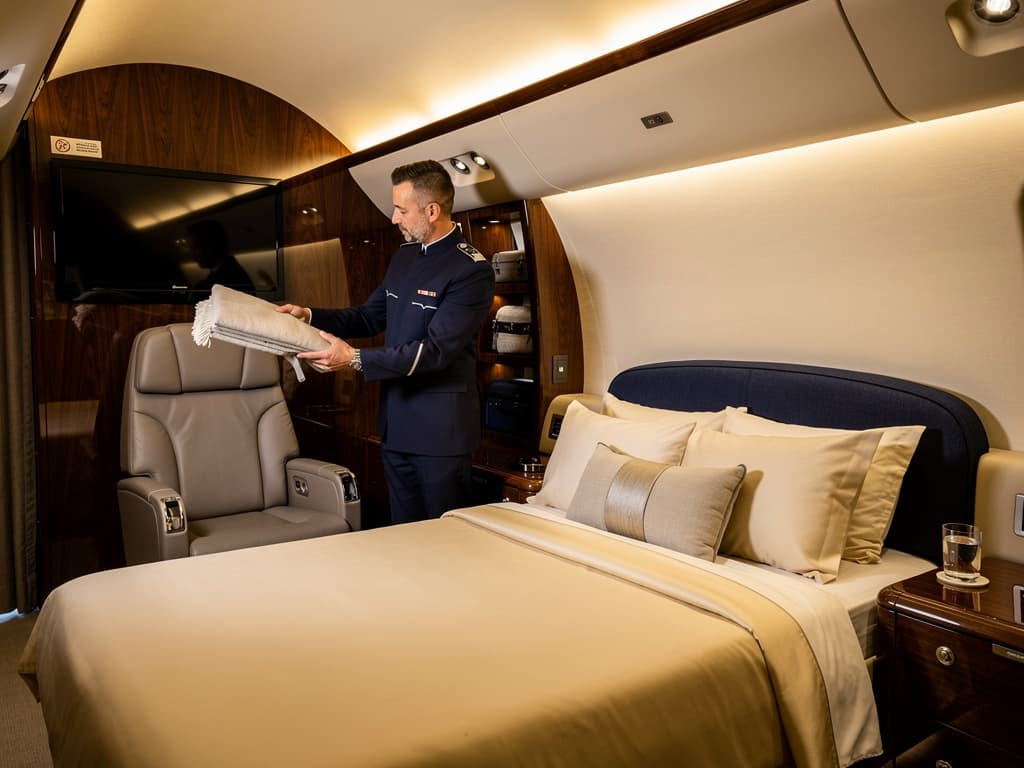
The program targets clients who require consistent crew relationships and vetted aircraft—a meaningful shift from hourly charter booking toward membership-based relationship aviation. Each member receives a dedicated team managing itinerary details, cabin amenities, and personal preferences.
How the program structures access and service delivery
Ambassador provides access to super-light and super-midsize aircraft categories, positioning between light jet charter and heavy jet fractional ownership. The program does not specify aircraft models in public materials, though the fleet age requirement ensures modern avionics and cabin technology. High-speed streaming WiFi is included on every flight—a standard feature in premium jet card programs but not universal across charter brokers.
Service differentiation centers on crew continuity. Unlike transactional charter booking where crew assignments vary by availability, Ambassador members work with dedicated teams that understand preferences and anticipate needs. This mirrors the fractional ownership model pioneered by NetJets and Flexjet, where consistent crew relationships justify premium pricing over spot-market charter rates.
AAT’s existing infrastructure includes custom jet card programs with “fixed and transparent pricing” and a points-based booking system, according to the firm’s website. Ambassador appears to be a branded membership tier within this framework rather than an entirely new product category—a strategic repositioning of existing capabilities under an exclusivity-focused brand.
| Program type | Entry cost | Crew consistency | Access mechanism |
|---|---|---|---|
| Premium jet cards (Magellan Jets) | $9,375/hour minimum | Variable by availability | Open enrollment |
| Ambassador by AAT | Undisclosed hourly rate | Dedicated team per member | Direct introduction only |
| Fractional ownership (NetJets) | $500K–$2M+ share purchase | Guaranteed crew familiarity | Ownership commitment |
| Advisory brokers (VistaJet) | $5K–$8K/hour range | Curated but not guaranteed | Membership with booking fees |

Flight deals most people never see
Our AI monitors 150+ airlines for pricing anomalies that traditional search engines miss. Air Traveler Club members save $650 per trip per person on average: see how it works.
Each deal saves 40–80% vs. regular fares:

Where Ambassador sits in the private aviation hierarchy
Ambassador positions itself above traditional jet card programs but below fractional ownership in both commitment level and service intensity. Premium jet card providers like Magellan Jets and AB Jets offer hourly access starting at $9,375/hour with no membership exclusivity—open enrollment and transactional booking. Fractional programs require $500,000–$2 million+ upfront commitments but guarantee aircraft access and dedicated crews.
Ambassador occupies the middle ground: structured membership without ownership commitment, crew continuity without fractional share purchase. The “super-light and super-midsize” aircraft tier aligns with mid-market fractional positioning—faster than light jets, more economical than heavy jets. Pricing remains undisclosed, but the “transparent hourly” model and selective membership suggest positioning at $8,000–$12,000/hour range, competitive with premium jet card providers but justified by dedicated crew familiarity and security-vetted operations unavailable in open-enrollment programs.
The invitation-only access mechanism differentiates Ambassador from competitors. NetJets offers broader aircraft selection and global infrastructure; VistaJet offers lower entry costs. Ambassador’s advantage: founder-led security expertise and political/family office specialization—vetted crew continuity and discretion-first operations unavailable in transactional programs. This is genuine luxury innovation in service model, not luxury branding on standard product.
Strategic considerations for private aviation clients
The invitation-only structure signals Ambassador targets clients who value relationship continuity over transactional flexibility—a meaningful filter for evaluating fit.
- Pricing disclosure timeline: Request hourly rates and minimum purchase requirements directly through AdvancedAviationTeam.com. If rates exceed $12,000/hour, positioning is ultra-luxury tier above traditional jet cards; below $10,000/hour indicates competitive pricing justified by service model.
- Crew vetting standards: Clarify security clearance levels and background check protocols for dedicated teams. AAT’s government and political travel background suggests higher vetting standards than commercial charter brokers.
- Aircraft availability guarantees: Confirm peak-period access (holidays, major events) and lead time requirements. Jet card programs often face capacity constraints during high-demand windows—dedicated membership should mitigate this.
- Comparison to fractional ownership: For clients flying 50+ hours annually, fractional share purchase may offer better economics and guaranteed aircraft access. Ambassador makes sense for 25–50 hour annual usage where ownership commitment isn’t justified.
- Membership expansion trajectory: Monitor whether AAT scales Ambassador beyond current “limited” capacity within 12 months. Rapid scaling would contradict exclusivity narrative and suggest membership is rebranding of existing jet card clients.
Watch: AAT’s public disclosure of Ambassador hourly rates within 60 days will reveal whether this is genuine ultra-luxury positioning or competitive pricing with service differentiation—a critical signal for evaluating value proposition against established jet card and fractional alternatives.
Read more