Summary
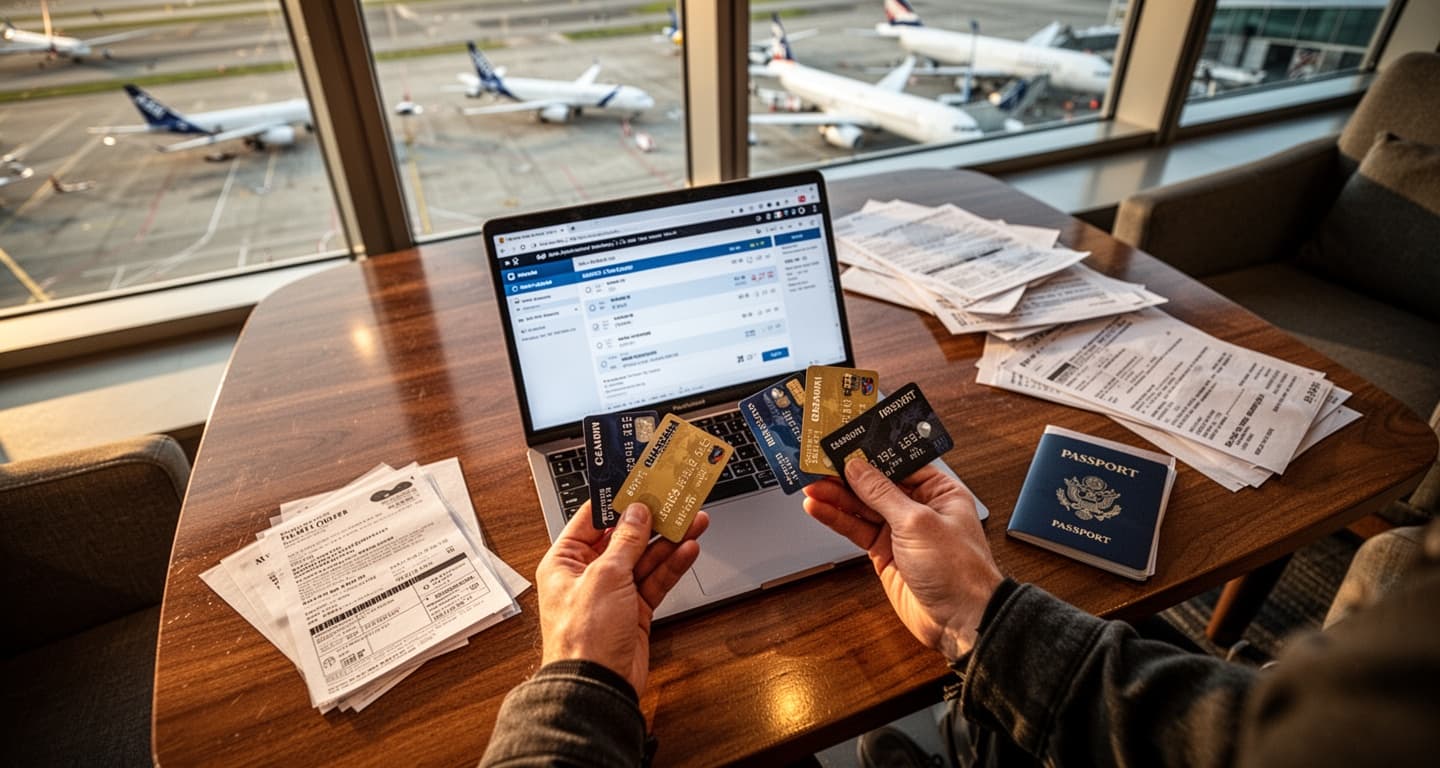
Scandinavian Airlines is launching the SAS EuroBonus Executive Business Card for Sweden, Denmark, and Norway — a Mastercard World Elite product built on Nordiska’s embedded-finance infrastructure that earns 25 EuroBonus points per 100 SEK/DKK/NOK spent, delivers 20,000 Level Points annually, and bundles SAS Lounge access with Priority Pass membership. The waitlist is open now ahead of a fall 2026 rollout, with Sweden going first.
No annual fee has been published yet, which makes final value assessment impossible. Waitlist registration is the only action available until SAS confirms pricing and approval criteria.
SAS is entering the business credit card market directly — not through a bank co-brand arrangement, but as the controlling party in a loyalty-led payments stack. The SAS EuroBonus Executive Business Card, developed with fintech partner Nordiska and expense-management platform Cardlay, positions SAS among the first global carriers to operate a business card under its own loyalty umbrella using embedded-finance infrastructure.
The card targets executives, business owners, and finance managers at Scandinavian small and medium-sized enterprises. Its headline numbers are competitive: 25 EuroBonus points per 100 SEK, DKK, or NOK spent — which SAS describes as the highest earn rate available on any EuroBonus card — plus 20,000 Level Points credited annually regardless of flying activity.
That second figure is the one worth watching. Level Points drive elite tier progression inside EuroBonus, and a guaranteed 20,000 per year from card membership alone could meaningfully shorten the path to Silver or Gold for road warriors whose flying patterns are inconsistent. SAS Lounge access and Priority Pass membership covering more than 1,800 lounges worldwide round out the core travel benefits.
Availability is restricted to residents of Sweden, Denmark, and Norway. The waitlist is live at SAS’s EuroBonus Business card page, with a phased rollout beginning in Sweden before expanding to Denmark and Norway.
What the card actually delivers
The product issues on the Mastercard World Elite network — the highest tier Mastercard offers — and comes with a metal card designed for frequent travelers. Beyond points earn and lounge access, the benefit stack includes premium travel insurance covering medical assistance and car rental, an eSIM, NordVPN, and a dedicated admin portal for managing company cards, setting spend rules, and integrating receipts directly into ERP systems.
A Scandic Hotels partnership adds a status match to Scandic Friends at a minimum of Level 4, unlocking early check-in when available, up to 25% extra Scandic points on stays, and discounts on hotel rooms and meeting rooms. For Scandinavian business travelers who split time between SAS flights and Scandic properties, that cross-brand integration has genuine practical value.
The platform powering the card — Nordiska’s Cards-as-a-Service infrastructure — handles issuance and credit, while Cardlay delivers the app experience and expense management. SAS’s Chief Commercial Officer Paul Verhagen described the goal plainly: “a single product that replaces what previously required several cards and platforms.”
| Benefit | Detail | Availability |
|---|---|---|
| EuroBonus earn rate | 25 points per 100 SEK / DKK / NOK spent | From card launch, fall 2026 |
| Annual Level Points | 20,000 per year | Credited annually |
| Lounge access | SAS Lounge + Priority Pass (1,800+ lounges) | From card launch |
| Travel insurance | Medical assistance, car rental coverage | From card launch |
| Hotel partnership | Scandic Friends status match, min. Level 4 | From card launch |
| Digital tools | Admin portal, ERP integration, eSIM, NordVPN | From card launch |
| Card network | Mastercard World Elite | Sweden first, then DK/NO |

Flight deals most people never see
Our AI monitors 150+ airlines for pricing anomalies that traditional search engines miss. Air Traveler Club members save $650 per trip per person on average: see how it works.
Each deal saves 40–80% vs. regular fares:

Why this card is a strategic bet, not just a product launch
SAS is not simply adding a card to its loyalty portfolio. The architecture here — SAS controlling the customer experience through Nordiska’s embedded-finance stack rather than licensing its brand to a bank — signals an intent to make EuroBonus a payments ecosystem. Every krona of SME spend that flows through this card generates loyalty data, deepens program engagement, and makes EuroBonus harder to leave.
The competitive framing matters too. Existing premium business cards in Scandinavia offer lounge access and points earn, but none integrate airline status progression, hotel cross-benefits, and corporate expense management into a single product. Air Traveler Club’s analysis of Scandinavian departure pricing advantages illustrates why SAS is right to treat its home markets as a premium loyalty stronghold — Scandinavian business travelers already demonstrate sophisticated awareness of fare and status optimization, making them an ideal audience for a card that rewards both.
The earn rate of 25 points per 100 SEK/DKK/NOK is positioned as the highest available on any EuroBonus card. In European markets where interchange fee caps constrain earn rates, that figure is genuinely competitive — though its real value depends on how SAS prices EuroBonus redemptions for the routes these cardholders actually fly.
How to evaluate this card before the fee is published
The missing annual fee is the single most important unknown — and it should anchor every evaluation decision until SAS publishes it. That said, the benefit structure is clear enough to frame a pre-launch assessment now.
- Join the waitlist immediately if you are based in Sweden, Denmark, or Norway and spend meaningfully on business expenses. Waitlist position may influence early access, and there is no cost to registering at SAS’s EuroBonus Business page.
- Calculate your Level Points gap before the card launches. If you are currently 15,000–25,000 Level Points short of your target tier at year-end, the card’s annual grant could eliminate the need for a status run entirely — a significant time and cost saving.
- Assess your lounge access baseline before assuming the Priority Pass benefit adds value. If you already hold Priority Pass through another card, the incremental lounge benefit is reduced; the SAS Lounge access becomes the differentiating element.
- Model the earn rate against your actual spend currency. At 25 points per 100 SEK (approximately $10.82), the earn rate translates to roughly 2.3 EuroBonus points per dollar equivalent — competitive for a European-market card, but only valuable if EuroBonus redemptions align with your travel patterns.
- Watch for the fee announcement as the primary go/no-go trigger. A fee above 3,000–4,000 SEK annually would require meaningful spend and lounge use to justify against competing Scandinavian business cards.
Watch whether SAS confirms the 20,000 Level Points as a permanent feature or a launch-period incentive. That distinction determines the card’s long-term elite value — and SAS’s answer will signal how aggressively it intends to compete for SME loyalty spend beyond the initial rollout.
FAQ
Who is eligible to apply for the SAS EuroBonus Executive Business Card?
The card is restricted to residents of Sweden, Denmark, and Norway. It is designed for executives, business owners, and finance managers at small and medium-sized enterprises. Applications are issued on the Mastercard network and are not available to residents outside the three Scandinavian markets at launch.
Do the 20,000 annual Level Points count toward EuroBonus elite tier qualification?
SAS’s launch materials indicate the Level Points are credited annually and are intended to support elite tier progression within EuroBonus. They function the same way as flight-earned Level Points for tier qualification purposes, though the exact tier thresholds and crediting timeline will be confirmed when full card terms are published ahead of the fall 2026 launch.
What is the annual fee for the SAS EuroBonus Executive Business Card?
SAS has not published an annual fee as of the May 2026 launch announcement. The fee is expected to be disclosed when the card moves from waitlist to full availability in fall 2026. Prospective applicants should treat the fee as the critical variable in any value assessment.
Does the Priority Pass membership include guest access?
SAS’s launch materials confirm Priority Pass membership covering more than 1,800 lounges worldwide, but guest policies have not been specified. Full terms — including whether guests can be brought in and at what cost — are expected when the card formally launches in fall 2026.
Read more