Summary
Airfares on Gulf-to-Tamil Nadu routes have nearly doubled ahead of the April 23, 2026 Tamil Nadu Assembly elections, with Singapore-Tiruchy tickets hitting Rs 30,000 one-way — up from Rs 15,000 just days ago — and Dubai-Tiruchy fares climbing from Rs 12,000–15,000 to Rs 30,000. Kuala Lumpur round-trip fares have risen to Rs 55,000 from Rs 46,000, with full occupancy reported across all sectors as lakhs of expatriate Tamils fly home from Gulf states, Singapore, Malaysia, and as far as Australia to cast their votes.
Tamils based in Kuwait face the sharpest disruption, with limited flight availability compounding the surge due to the ongoing regional conflict. Return fares are expected to spike again in the 48–72 hours following polling as the same passenger wave heads back.
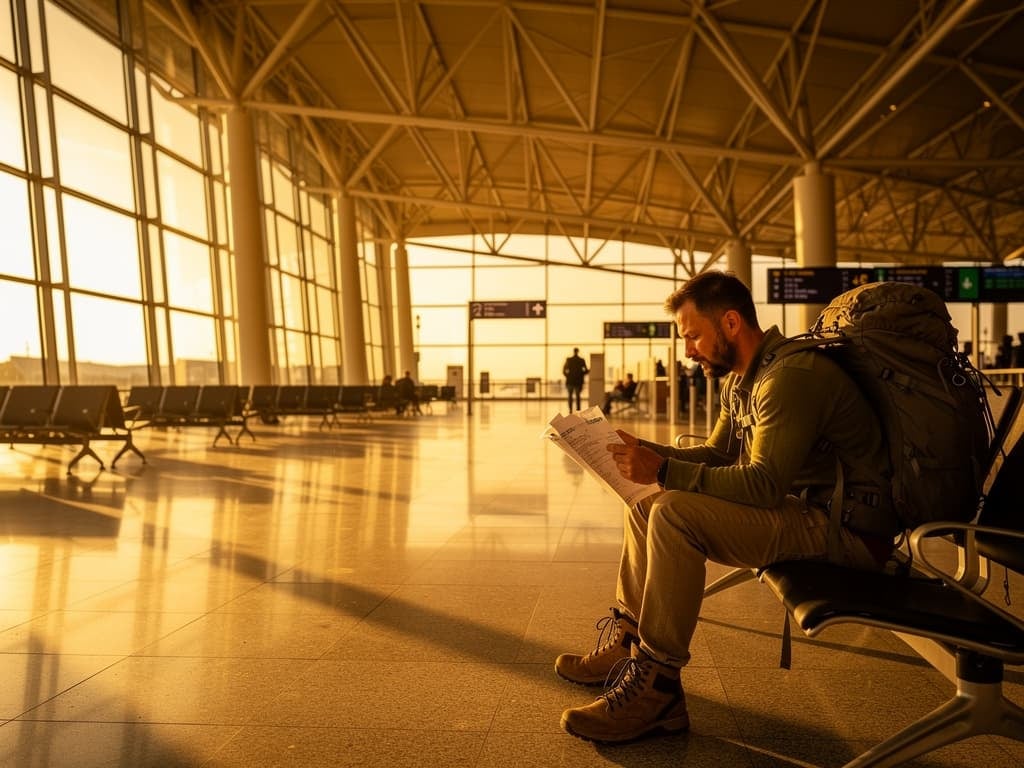
Election day has turned Tamil Nadu’s air corridors into one of the most congested — and expensive — travel windows of the year. On April 23, 2026, as polling booths opened across Tiruchy, Thanjavur, Tiruvarur, Nagapattinam, Pudukottai, Ariyalur, and Perambalur, the skies above were filled with returning expatriates who had paid double — sometimes more — to exercise their franchise.
The surge is structural, not incidental. Lakhs of Tamils are employed across Gulf destinations — Dubai, Sharjah, Abu Dhabi, Muscat, Kuwait — as well as Singapore, Malaysia, and Sri Lanka. Airlines including Air India Express, IndiGo, Scoot, and SriLankan Airlines operate approximately 12 daily services connecting these diaspora hubs to Tamil Nadu’s regional airports, a capacity ceiling that demand has now blown past.
Travel agents in Tiruchy confirm the scale. Fares on the Singapore sector reached Rs 30,000 one-way — double the Rs 15,000 baseline from a week prior. Dubai-Tiruchy followed the same trajectory, jumping from Rs 12,000–15,000 to Rs 30,000. Kuala Lumpur round-trips climbed to Rs 55,000 from Rs 46,000, with agents reporting full occupancy for several consecutive days. Domestic connections from Chennai to Tiruchy and Madurai have also tightened considerably.
The pattern extends beyond Tamil Nadu. A comparable surge hit Kerala’s election cycle, where UAE-based voters faced fares reaching Rs 2–3 lakh on Dubai-Kochi and Dubai-Thiruvananthapuram routes as demand collided with capacity cuts driven by regional conflict disruptions.
The details: What’s driving the surge and where it’s worst
The timing mechanics are straightforward. Since Friday and Saturday — the day after polling — fall on a weekend across most Gulf countries, many expatriate Tamils applied for one or two days of leave around April 23, effectively creating a four-to-five day travel window concentrated into a narrow departure band. Airlines did not add meaningful capacity ahead of the surge, leaving existing inventory to absorb demand that travel agents describe as significantly higher than previous election cycles.
Kuwait presents the most acute access problem. The ongoing regional conflict has constrained flight availability from Kuwait City to Tamil Nadu, leaving voters there with limited options regardless of what they’re willing to pay. No additional services have been confirmed on that sector.
Domestic feeder routes are not immune. Chennai’s status as the primary hub for onward connections to Tiruchy, Madurai, and other central Tamil Nadu cities means that economy-class fares on those short sectors have also climbed — compressing the cost advantage of routing through the state capital rather than flying direct to Tiruchy.
Industry sources confirm the demand profile is broader than Gulf alone. Travel agents in Tiruchy report families arriving from Australia, with at least some making the journey specifically to vote — a signal that civic participation is driving travel decisions that pure economics would not otherwise justify.
| Route | Pre-surge fare | Election-period fare | Change | Availability |
|---|---|---|---|---|
| Singapore – Tiruchy (one-way) | Rs 15,000 | Rs 30,000 | +100% | Severely constrained |
| Dubai – Tiruchy (one-way) | Rs 12,000–15,000 | Rs 30,000 | +100–150% | Severely constrained |
| Kuala Lumpur – Tiruchy (round-trip) | Rs 46,000 | Rs 55,000 | +20% | Full occupancy reported |
| Kuwait – Tamil Nadu (any routing) | Rs 12,000–18,000 (est.) | Limited seats available | N/A | Critically limited (conflict) |
| Dubai – Kerala (comparable surge, April 2026) | Rs 15,000–20,000 | Rs 2–3 lakh | Up to 10x | Near-zero at peak |

Flight deals most people never see
Our AI monitors 150+ airlines for pricing anomalies that traditional search engines miss. Air Traveler Club members save $650 per trip per person on average: see how it works.
Each deal saves 40–80% vs. regular fares:

The value-add: Why this surge follows a predictable pattern — and what it means for the return wave
Election-driven airfare surges on South India diaspora routes are not anomalies — they are a recurring, foreseeable market event that airlines have consistently failed to get ahead of with capacity additions. The Kerala election cycle earlier in 2026 demonstrated the extreme end of this dynamic: UAE-based voters paid up to Rs 2–3 lakh for routes that normally price at Rs 15,000–20,000, a surge that made economy tickets functionally equivalent in cost to business class on longer-haul routes.
Tamil Nadu’s surge is less extreme in absolute terms — Singapore and Dubai fares doubled rather than increasing tenfold — but the structural driver is identical: a fixed-capacity network absorbing a concentrated, time-sensitive demand spike with no meaningful supply response.
The return surge is the underappreciated risk. Travelers who flew in for election day will need to return within a narrow window — most likely April 24–27 — creating a second demand peak on outbound Tiruchy and Chennai sectors. Anyone with flexible return dates should consider pushing departures to late April or early May, when fares historically normalize within one to two weeks of the election event.
Air Traveler Club’s analysis of rising airfare trends across Asia provides useful context for understanding why Gulf-India routes remain structurally vulnerable to these spikes — capacity on these corridors has not kept pace with diaspora growth, and geopolitical disruptions have further compressed available seats in 2026.
How to manage bookings and minimize cost exposure through the return surge
The immediate priority is the return journey — fares on outbound Tamil Nadu sectors will spike again as the same passenger wave departs, and acting before April 25 locks in better pricing than waiting.
- Check rebooking flexibility now: IndiGo flexible fares allow date changes with applicable fees via the app or contact center (1800 209 0909). Air India changes and refunds are processed through airindia.com or 0124-2641407; award ticket redeposit fees run approximately Rs 3,300.
- Route via Chennai if Tiruchy is sold out: Chennai Kempegowda — sorry, Chennai International (MAA) carries significantly more premium inventory and higher-frequency connections from Singapore, Dubai, and Kuala Lumpur. Connecting domestically via IndiGo or Air India Express adds time but opens more seat options.
- Kuwait-based travelers need alternative routing confirmed today: Direct Kuwait-Tamil Nadu capacity remains critically constrained. Routing via Doha on Qatar Airways or via Dubai on Emirates to Chennai is the most reliable workaround — both carriers operate multiple daily frequencies on those sectors.
- Target late April for return departures: Fares on Gulf and Singapore sectors are expected to normalize by April 28–May 5 based on the Kerala election precedent. Travelers with flexibility should push returns past the April 24–26 peak window.
- Watch for supplementary services: If DGCA approves additional flights on Tiruchy and Chennai sectors post-election, seat availability will improve rapidly. Monitor airline apps and booking platforms daily from April 24 onward.
Watch: If airlines announce extra services on Gulf-Chennai/Tiruchy sectors before April 26, that signals faster-than-expected normalization — book return flights immediately when those seats open, as they will fill within hours.
FAQ
Why are Tamil Nadu election fares so much lower than Kerala’s Rs 2–3 lakh surge?
Tamil Nadu’s surge — fares doubling to Rs 30,000 on Singapore and Dubai sectors — reflects high demand but not the extreme capacity collapse seen on Kerala routes. Kerala’s April 2026 surge was amplified by charter “vote flights” being cancelled and Gulf carrier capacity cuts from the regional conflict reducing available seats to near-zero. Tamil Nadu’s ~12 daily services across multiple carriers provided a higher baseline capacity, limiting — but not preventing — the price spike.
Are there any refund protections for travelers who couldn’t fly due to the Kuwait capacity shortage?
No specific 2026 election-related refund policies have been confirmed by Air India Express, IndiGo, Scoot, or SriLankan Airlines for the Tamil Nadu surge period. Standard refund and rebooking rules apply: IndiGo processes refunds per fare class rules via its app or 1800 209 0909; Air India handles changes through airindia.com or 0124-2641407. Travelers holding flexible or refundable fares are in the strongest position. Those on non-refundable tickets should request a date change rather than a cancellation to preserve fare value.
When is the next major election-driven airfare surge expected on Gulf-India routes?
Tamil Nadu’s 2026 Assembly elections represent the current peak event. Post-election, the next significant demand concentration on Gulf-South India routes will depend on the national election calendar and any state by-elections. Based on the one-to-two week normalization pattern observed after the Kerala polls, Gulf-Tamil Nadu fares should return to baseline by early May 2026 — barring further conflict-related capacity reductions on Kuwait and Gulf carrier routes.
Read more