Summary
A Lufthansa Airbus A350-900 bound for Beijing returned to Munich after a cabin pressurization malfunction forced the crew to halt their climb at 17,000 feet and spend roughly two hours troubleshooting. Flight LH722, operated by aircraft D-AIXN, landed safely back at Munich Airport 2 hours and 15 minutes after departure with no injuries reported.
The safe outcome underscores the effectiveness of standard emergency protocols, yet the prolonged decision timeline raises questions about the fault’s complexity. Passengers were returned to the terminal for rebooking, and the aircraft’s return to service remains unconfirmed.
Lufthansa flight LH722, a scheduled 10-hour nonstop from Munich to Beijing, was forced to return to Munich Airport on August 1, 2026, after the flight crew encountered a cabin pressurization issue shortly after departure. The Airbus A350-900, registered as D-AIXN, had just lifted off from Runway 26L and turned east when the malfunction emerged, prompting an immediate altitude restriction.
The crew halted the climb at 17,000 feet and entered a holding pattern that extended into Czech airspace before turning back toward Germany. For approximately two hours, the pilots worked through checklists and assessed the system’s behavior, remaining within range of Munich the entire time. The aircraft ultimately touched down safely on Runway 08R 2 hours and 15 minutes after departure.
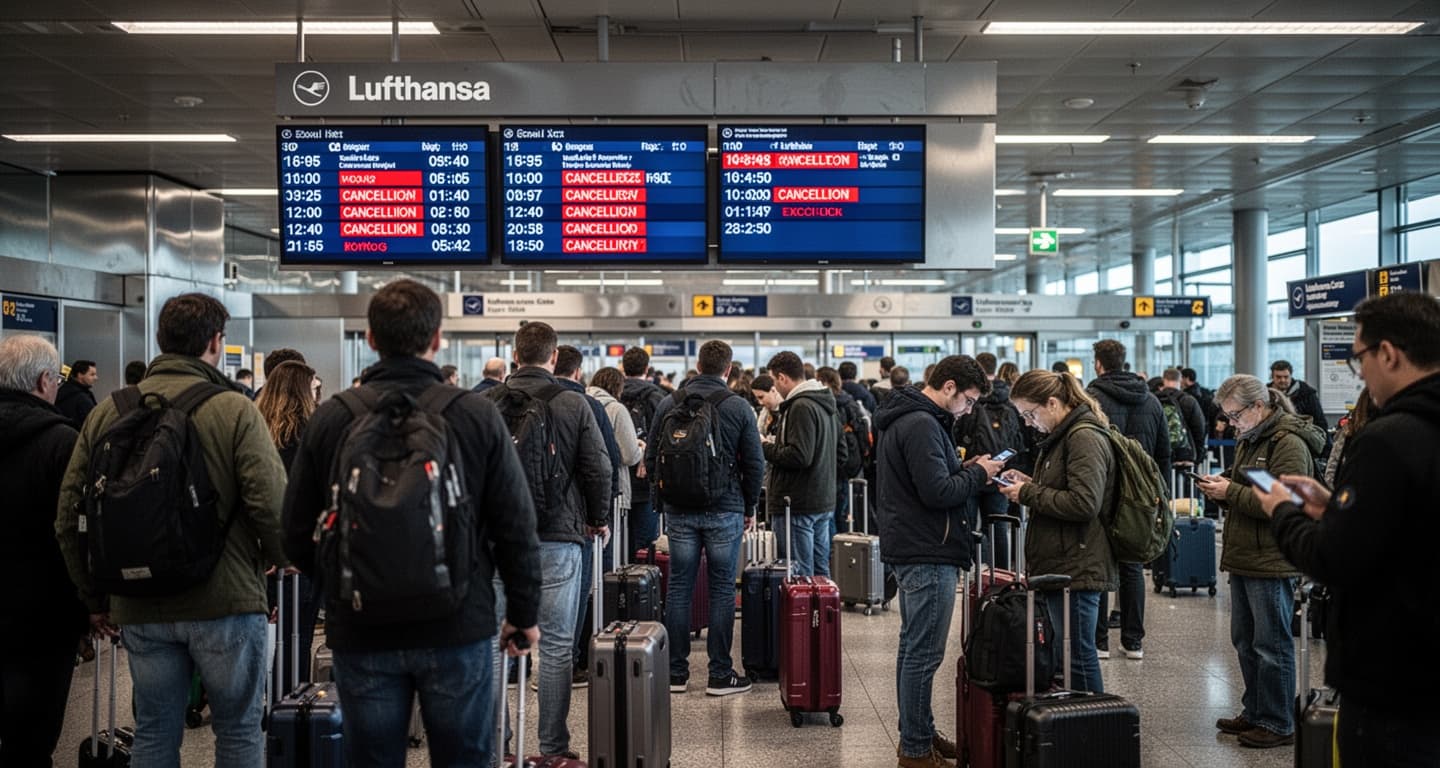
No injuries were reported among the passengers or crew. Affected travelers were deplaned and returned to the terminal for rebooking and assistance. The incident immediately disrupted one of Lufthansa’s key long-haul premium corridors, with Beijing-bound passengers facing reaccommodation challenges on a route where same-day alternatives are limited.
The details
The pressurization fault triggered standard emergency protocols that require crews to descend or remain at a safe altitude while diagnosing the problem. In this case, the flight never climbed above 17,000 feet — well below the normal cruising altitude of 35,000–40,000 feet for a transcontinental A350 mission. The aircraft crossed into Czech airspace before the crew elected to return to German airspace, a decision that kept Munich within easy reach if a rapid descent became necessary.
Historical data shows that Lufthansa A350s have experienced similar turnbacks in recent years, though each incident appears isolated. In August 2024, an A350-900 returned to Munich after a hydraulic display irregularity on a Tokyo-bound flight and was cleared for service the next day. A 2021 incident involved a Munich–Chicago A350 that turned around over Scotland after suspected tire damage; that aircraft later landed in Frankfurt after fuel burn and visual inspections. No airworthiness directive has been issued specifically targeting Lufthansa A350 pressurization systems.
| Event | Time / Phase | Details |
|---|---|---|
| Takeoff | Departure from Runway 26L, Munich | Flight LH722 begins scheduled service to Beijing. |
| Climb halt | Shortly after departure | Crew stops ascent at 17,000 feet due to cabin pressurization malfunction. |
| Holding & troubleshooting | ~2 hours | Aircraft enters Czech airspace, then turns back toward Germany; pilots run checklists. |
| Return decision | After assessment | Crew elects to abort the Beijing flight and return to Munich. |
| Landing | ~2h 15m after takeoff | Safe touchdown on Runway 08R; no injuries. |

Flight deals most people never see
Our AI monitors 150+ airlines for pricing anomalies that traditional search engines miss. Air Traveler Club members save $650 per trip per person on average: see how it works.
Each deal saves 40–80% vs. regular fares:

The value-add
This turnback, while procedurally textbook, exposes the razor-thin margin for error on premium long-haul routes where rebooking alternatives are scarce. The Munich–Beijing corridor relies heavily on Lufthansa’s own metal and its Star Alliance partners; when an A350 is pulled from service, same-day reaccommodation in business class becomes a scramble. Unlike the 2024 Tokyo diversion — where the aircraft was cleared within 24 hours — the two-hour troubleshooting timeline here suggests a more stubborn fault, potentially extending the aircraft’s downtime.
For context, a China Eastern A350-900 sustained major structural damage in a bizarre taxiing incident at Shanghai in May 2026, grounding that aircraft indefinitely. While the Lufthansa event is far less severe, it underscores how even non-catastrophic technical issues on modern widebodies can ripple through schedules. The China Eastern A350’s extended grounding offers a cautionary parallel: what begins as a single-aircraft event can strain an airline’s long-haul fleet if inspections uncover deeper problems.
What the two-hour hold means for future operations
The crew’s extended troubleshooting — two hours at low altitude — is unusual for a pressurization fault and points to an intermittent or complex malfunction that resisted immediate resolution. NTSB and BFU protocols treat such events seriously, and if the aircraft undergoes an overweight landing inspection, it could be out of service longer than a typical quick-turn fix. Preliminary findings from any BFU review are likely within 30 days; if investigators identify a systemic component issue rather than an isolated sensor glitch, expect a broader fleet inspection directive by Q4 2026.
FAQ
What caused the pressurization issue on LH722?
The exact cause remains unconfirmed. The crew’s prolonged troubleshooting suggests a complex or intermittent fault in the cabin pressurization system. Lufthansa has not yet released a technical statement.
Was the aircraft overweight when it landed?
It is possible. After a two-hour flight with full fuel intended for a 10-hour journey, the A350 likely landed above its maximum landing weight. If so, a mandatory overweight landing inspection would be required before the aircraft returns to service.
What compensation are passengers entitled to?
Under EU261 regulations, passengers on flights departing from an EU airport are entitled to assistance (meals, accommodation if needed) and rebooking at the earliest opportunity. Compensation of €600 may apply unless the airline can prove the disruption was caused by extraordinary circumstances beyond its control.
Read more