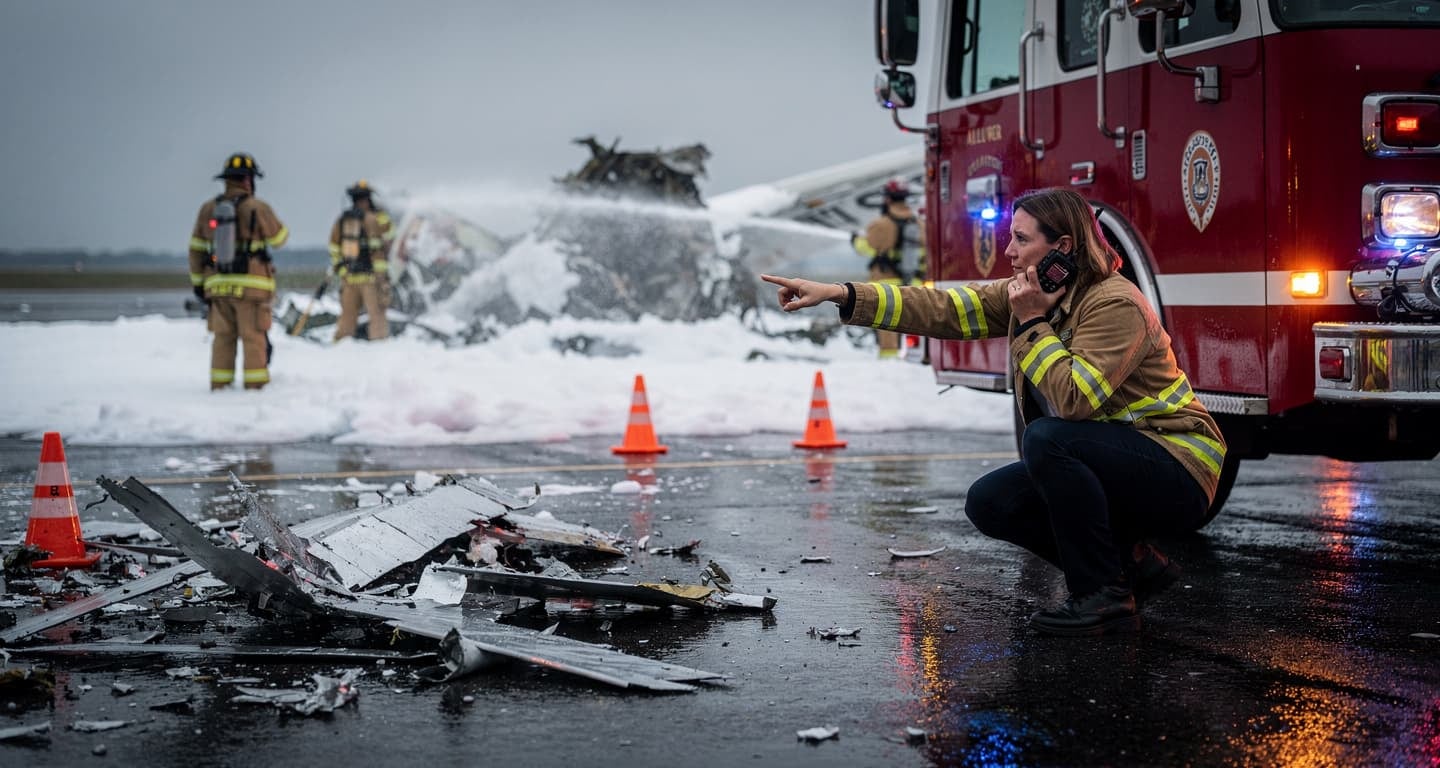
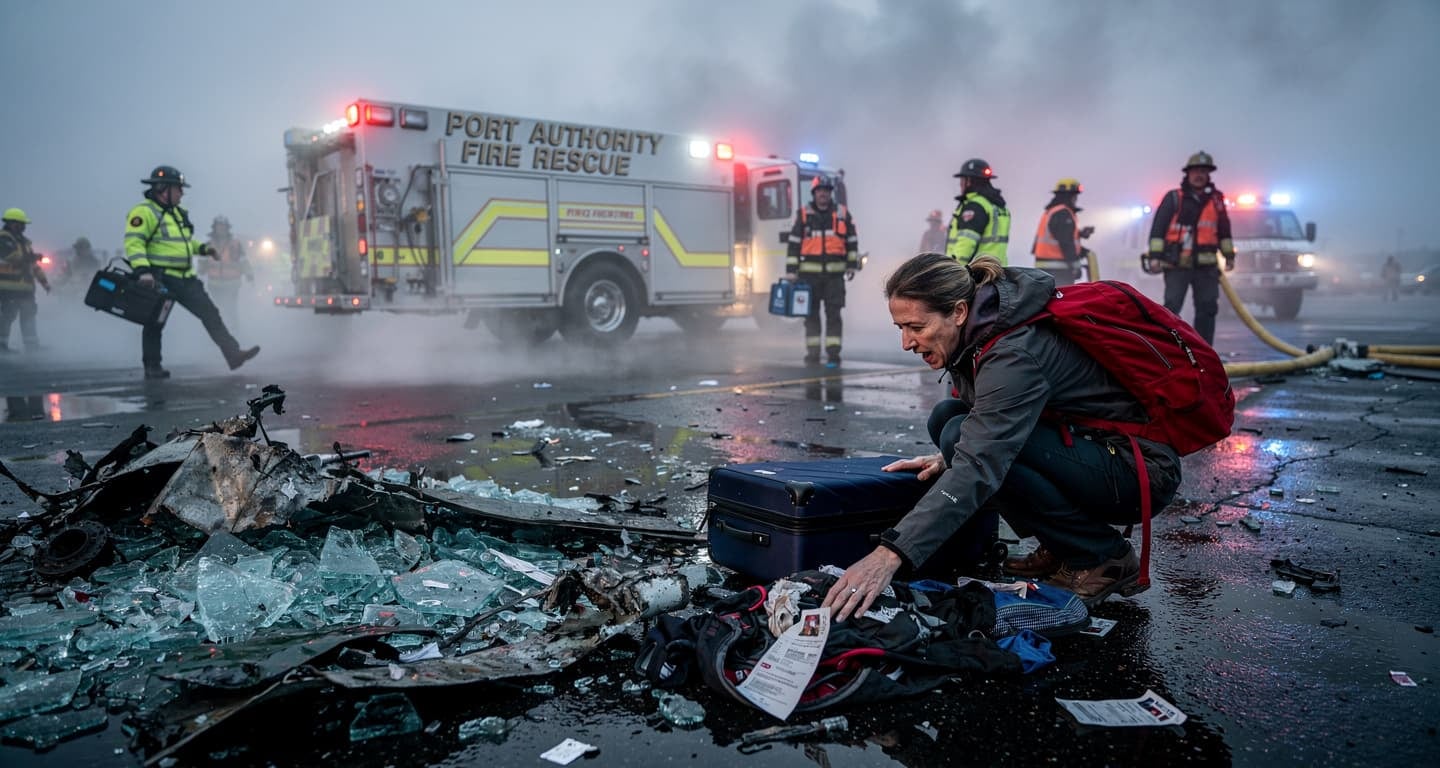
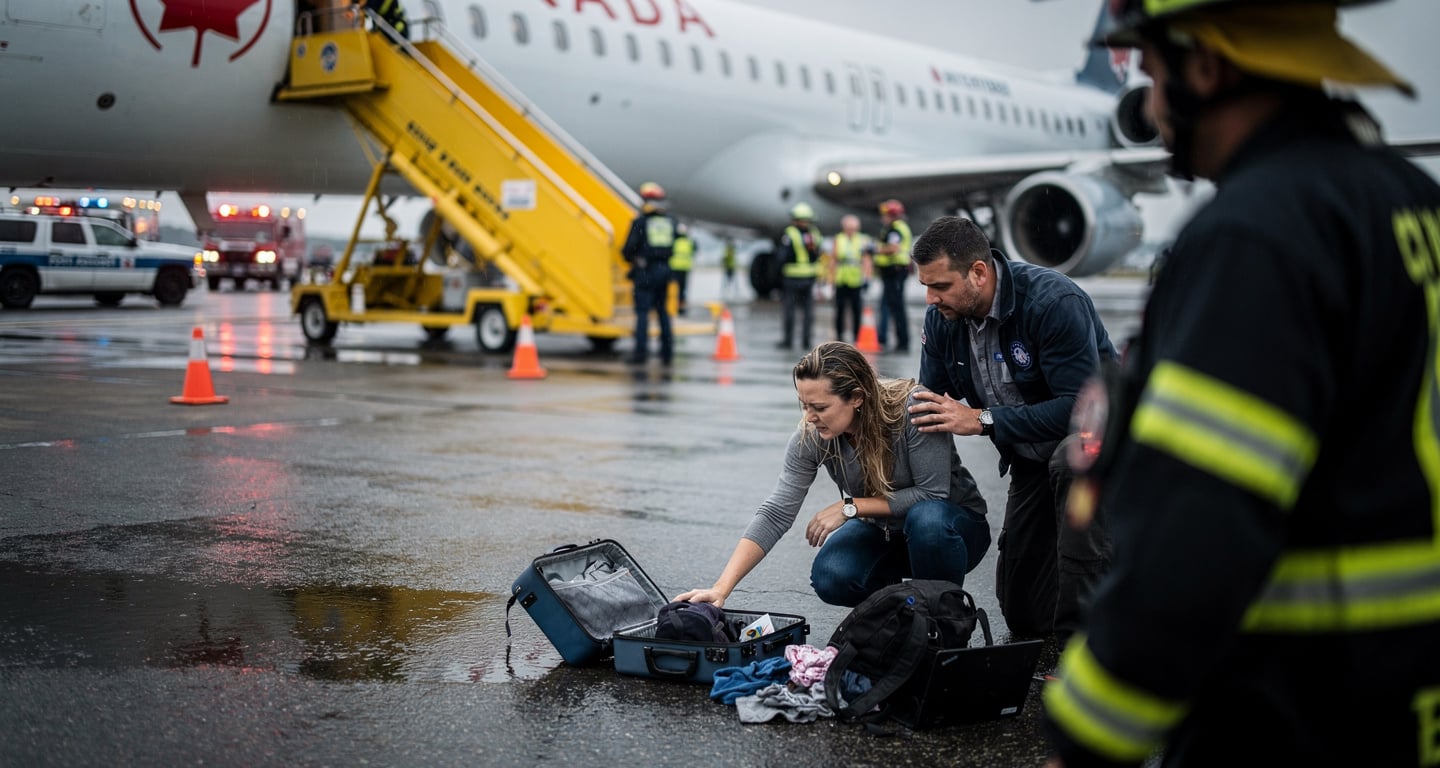
A fatal head-on collision between Air Canada Express Flight 8646 and a Port Authority fire truck on LaGuardia Airport’s runway 4 at 11:47 p.m. on March 22, 2026 killed both pilots and injured 43 people, triggering immediate runway closure and cancellation of approximately 50% of LaGuardia flights. The crash occurred when air traffic control cleared the fire truck to cross the runway while the CRJ-900 from Montreal was on final approach, prompting NTSB and FAA investigations into the ATC error.
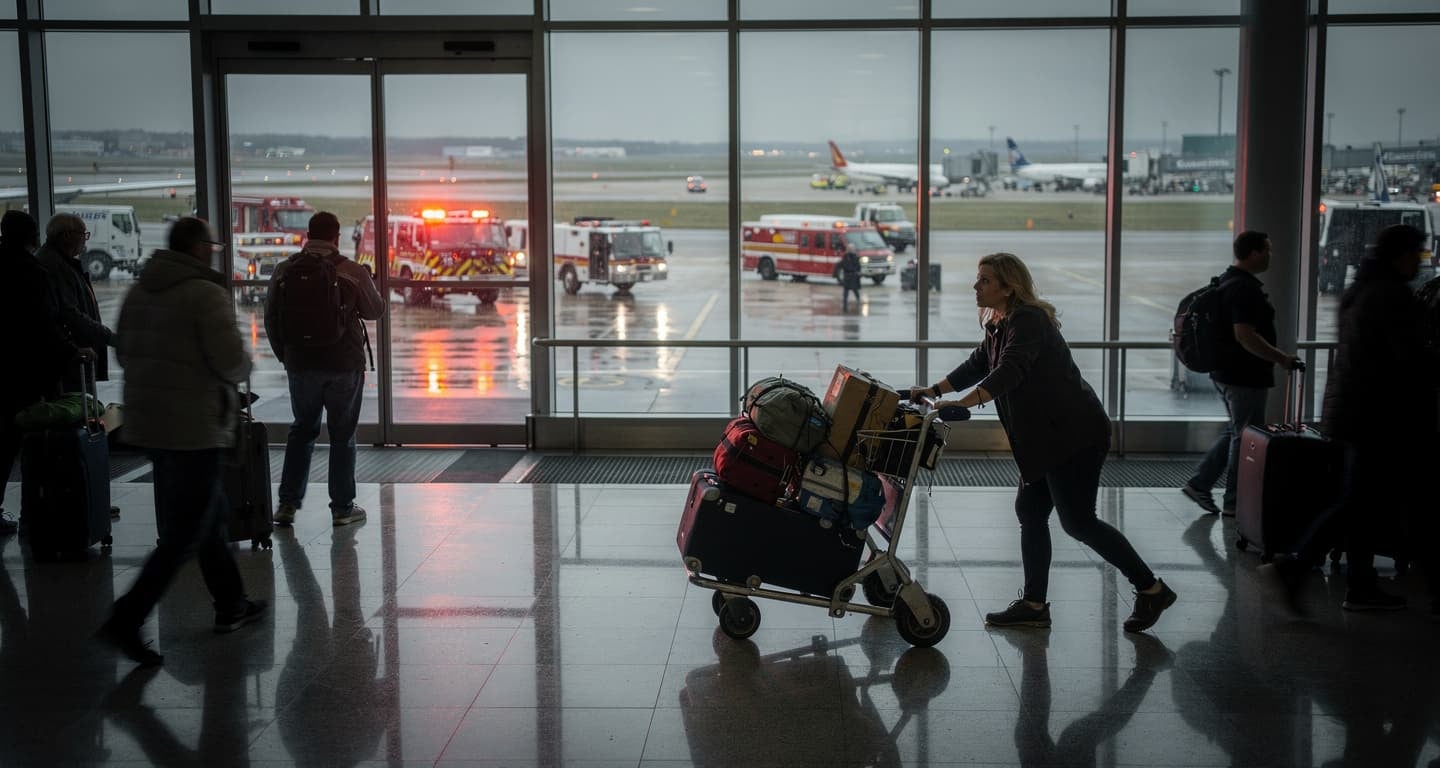
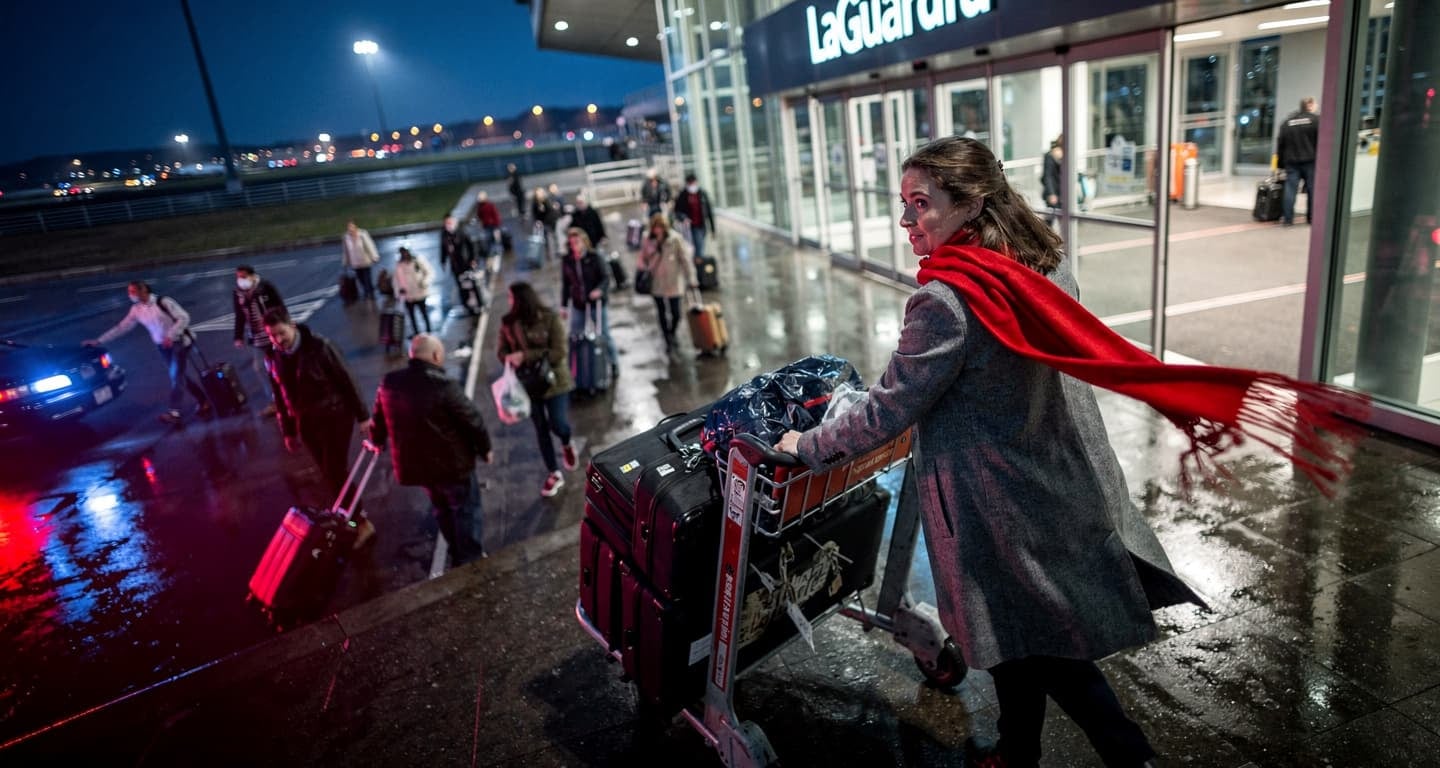
The airport reopened with reduced operations on March 23–24, but travelers with LaGuardia bookings face ongoing cancellations and rebooking chaos. Anyone with a LaGuardia departure or arrival in the next 48–72 hours should immediately check flight status and prepare to reroute through JFK or Newark.
Air Canada Express Flight 8646, operated by Jazz Aviation on a CRJ-900 regional jet, collided with a fire truck crossing runway 4 during its landing approach from Montreal late Saturday night. The impact killed both pilots instantly and sent 32 passengers and crew to hospitals, though all hospitalized individuals were released by March 24.
Air traffic control cleared the Port Authority fire truck to cross the active runway while the aircraft was on short final approach — a catastrophic error now under federal investigation.
LaGuardia closed immediately after the crash to allow NTSB investigators and emergency crews to secure the wreckage. The airport reopened the following day, but with one runway out of service and heightened safety protocols in place, carriers canceled roughly half of all scheduled flights. American Airlines and Delta Air Lines, which operate over 900 weekly flights combined at LaGuardia, bore the brunt of the disruptions.
Canadian Prime Minister Mark Carney confirmed Canada is working with US authorities on the investigation.
What the investigation will examine
The NTSB is leading the probe with FAA and Transport Canada participation. Investigators will analyze cockpit voice recordings, ATC communications, and runway surveillance footage to determine why the fire truck received clearance to cross an active runway during an aircraft’s final approach — a violation of standard separation protocols.
A similar runway incursion at Boston Logan in February 2023 involved a private jet colliding with a snowplow due to controller miscommunication, though that incident resulted in no fatalities. The NTSB’s Boston report led to enhanced ATC training protocols nationwide, and this LaGuardia crash will likely trigger additional scrutiny of controller workload and communication procedures at high-density airports.
The preliminary report is expected within 10–14 days, with a full investigation taking 12–24 months.
| Airline | Weekly flights (pre-crash) | Cancellations (March 23–24) | Primary affected routes |
|---|---|---|---|
| American Airlines | 500+ | ~250 | Charlotte, Dallas, Chicago |
| Delta Air Lines | 400+ | ~200 | Atlanta, Detroit, Minneapolis |
| Air Canada Express | 70+ | ~35 | Montreal, Toronto |
| JetBlue Airways | 100+ | ~50 | Boston, Fort Lauderdale |

Flight deals most people never see
Our AI monitors 150+ airlines for pricing anomalies that traditional search engines miss. Air Traveler Club members save $650 per trip per person on average: see how it works.
Each deal saves 40–80% vs. regular fares:

How federal oversight works at LaGuardia
The FAA certifies LaGuardia under Part 139 airport operating standards and conducts annual audits of its Aircraft Rescue and Firefighting (ARFF) operations and air traffic control procedures. Air Canada operates under a bilateral safety agreement between the FAA and Transport Canada, meaning both agencies share oversight of cross-border flights.
The NTSB investigates all civil aviation accidents in the US under 49 USC §1131, with authority to issue safety recommendations that the FAA must address. In runway incursion cases, investigators examine controller training records, shift schedules, and communication protocols to identify systemic failures.
The current investigation status: the NTSB has secured the crash site and begun interviewing controllers and emergency personnel. A preliminary report detailing the sequence of events will be released within 30 days, followed by a full report in 12–24 months that includes probable cause and safety recommendations. This process has historically led to concrete changes — the 2023 Boston Logan incident resulted in mandatory controller refresher training on runway crossing procedures at all major US airports.
What travelers should do now
LaGuardia operations remain unstable through at least March 26 — here is the priority order for protecting your trip.
- Check flight status every 6 hours using your airline’s app or FlightAware. Cancellations are rolling as the airport adjusts capacity around the closed runway.
- Reroute to JFK or Newark immediately if your flight is canceled. Call your airline’s rebooking line rather than using the app — phone agents have more flexibility to find same-day alternatives. American: 1-800-433-7300. Delta: 1-800-221-1212. JetBlue: 1-800-538-2583.
- Request a full refund if rebooking doesn’t work. US DOT rules mandate refunds for canceled flights within 7 business days. Do not accept vouchers unless you choose them voluntarily.
- Avoid booking new LaGuardia flights before March 27. The airport’s reduced capacity means higher cancellation risk even after the runway reopens fully. JFK and Newark have absorbed most of the diverted traffic and offer more reliable schedules.
- Monitor travel insurance coverage. Most policies exclude “acts of God” but may cover trip interruption if you’re stranded due to the cancellation. Check your policy’s “delay coverage” clause.
Watch: The NTSB’s preliminary report in 10–14 days will reveal whether ATC staffing shortages or procedural gaps contributed to the crash — if confirmed, expect temporary slowdowns at LaGuardia as the FAA implements corrective measures.

FAQ
Will airlines waive change fees for LaGuardia disruptions?
Most major carriers — American, Delta, JetBlue, and Air Canada — are waiving change fees and fare differences for LaGuardia bookings through March 26, 2026. Check your airline’s travel advisory page for specific rebooking policies. If your flight is canceled, you are entitled to a full refund under US DOT rules, regardless of ticket type.
How long will LaGuardia runway 4 remain closed?
The NTSB has not announced a reopening timeline for runway 4. Wreckage removal and investigation work typically take 3–7 days for incidents of this scale. LaGuardia’s other runways remain operational, but reduced capacity means ongoing cancellations and delays through at least March 26.
Can I claim compensation for a canceled LaGuardia flight?
US airlines are not required to pay compensation for cancellations caused by safety incidents or ATC issues — these fall under “extraordinary circumstances.” However, you are entitled to a full refund of your ticket price within 7 business days if your flight is canceled. If you’re stranded overnight, ask your airline about hotel vouchers, though they are not legally required to provide them in this situation.
Should I avoid LaGuardia for future bookings?
LaGuardia will return to normal operations once the investigation concludes and runway 4 reopens, likely within 7–10 days. The airport itself is not unsafe — this was an ATC error, not an infrastructure failure. However, if you’re booking travel in the next two weeks, JFK and Newark offer more schedule reliability while LaGuardia adjusts capacity.
Read more