Summary
India’s Ministry of Civil Aviation capped domestic Aviation Turbine Fuel price increases at 25% on April 1, 2026, preventing a potential industry-wide crisis as global benchmarks surged over 100% amid the West Asia conflict. The intervention holds ATF—which accounts for 40% of airline operational costs—at ₹1,04,927 per kiloliter in Delhi, directly stabilizing business class fares on domestic routes like Delhi-Mumbai and international sectors including Delhi-Dubai that would otherwise have spiked 20-30%.
The cap mirrors India’s 2022 fuel shock response during the Ukraine crisis, when monthly ATF hikes were limited to 2% for six months. Premium cabin travelers booking within the next 30 days lock in fares before the May 1 pricing review, which will signal whether relief extends through peak summer travel or reverts to full pass-through pricing.
India’s aviation sector narrowly avoided a fare crisis last week when the government intervened to cap domestic ATF price increases at 25%, even as global fuel benchmarks exploded past 100% amid escalating conflict in West Asia. The move directly addresses the single largest cost driver for airlines—fuel accounts for 40% of operational expenses—and prevents business class fares from spiking into unaffordable territory for corporate and frequent travelers.
Joint Secretary Asangba Chuba Ao confirmed the ministry is coordinating with airlines and fuel suppliers to maintain sector stability while passenger demand remains strong on domestic routes.
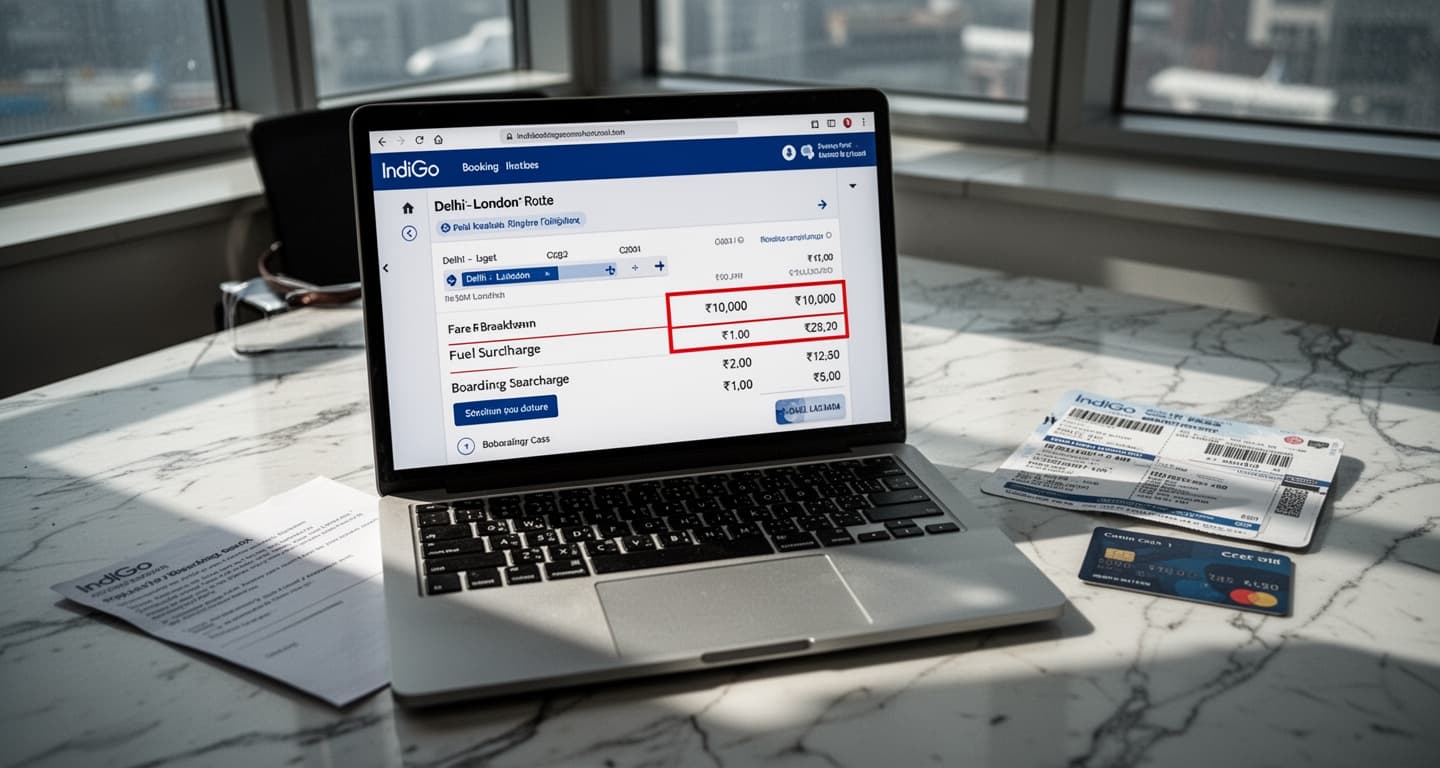
The intervention affects every premium cabin traveler flying Indian carriers. Air India business class on Delhi-Mumbai, IndiGo Business product on Bangalore-Delhi, and Vistara Premium Economy on international sectors all benefit from the capped fuel costs. Without the April 1 ceiling, airlines would have passed through the full global fuel surge—potentially adding ₹10,000-15,000 to domestic business class roundtrips and $200-300 to international premium fares.
The stakes are immediate. Premium travelers who book before the May 1 ATF pricing review secure current fare levels. If the government extends the cap, summer travel remains affordable. If it reverts to market pricing, business class tickets could jump 20% within weeks.
How the fuel cap stabilizes premium fares
Delhi’s domestic ATF rate rose from ₹96,638 per kiloliter in February to ₹1,04,927 on April 1—an 8.3% increase that would have reached 100%+ without government intervention. The ministry’s coordination with stakeholders prevented what officials described as a “potential industry-wide crisis” for domestic carriers.
International routes face different math. Foreign carriers and Indian airlines operating abroad pay the uncapped ₹2,07,000 per kiloliter rate—double the February baseline. This creates a pricing advantage for domestic Indian carriers on routes like Delhi-Dubai and Mumbai-Singapore, where Air India and IndiGo now undercut Gulf carriers by $100-150 per business class ticket.
| Route | Cabin | Pre-cap fare estimate | Current fare range |
|---|---|---|---|
| Delhi-Mumbai | Business | ₹60,000-70,000 | ₹50,000-55,000 |
| Delhi-Dubai | Business | $2,000-2,200 | $1,500-1,800 |
| Mumbai-Singapore | Business | $1,900-2,100 | $1,600-1,850 |
| Bangalore-Delhi | IndiGo Business | ₹28,000-32,000 | ₹24,000-27,000 |
The government’s approach repeats its 2022 playbook during the Ukraine crisis, when monthly ATF increases were capped at 2% for six months. That intervention held Delhi-Mumbai business class fares at ₹25,000-35,000 one-way, preventing a potential 30% surge. Premium travelers benefited without airlines requiring long-term subsidies—fares stabilized once global fuel prices eased.

Flight deals most people never see
Our AI monitors 150+ airlines for pricing anomalies that traditional search engines miss. Air Traveler Club members save $650 per trip per person on average: see how it works.
Each deal saves 40–80% vs. regular fares:

Why this matters for award bookings and elite status
Fuel cost stability directly impacts award space availability and elite requalification expenses. When airlines face uncapped fuel surges, they reduce premium award inventory to maximize revenue from paid tickets. The April 1 cap preserves business class award space on domestic routes, where Air India Flying Returns members typically redeem 20,000-40,000 points one-way for Delhi-Mumbai.
Air Traveler Club’s analysis of fuel-driven pricing patterns shows carriers under cost pressure prioritize paid premium cabins over award seats. India’s intervention prevents that squeeze for the next 30 days minimum.
Elite status runners face better math too. Air India Flying Returns Gold requires 25,000 tier points annually, typically achieved through 15-20 business class domestic segments. With fares held at ₹50,000 versus a potential ₹65,000 per Delhi-Mumbai roundtrip, requalification costs drop by ₹150,000-200,000 for frequent flyers.
Strategic guidance for premium travelers
The May 1 ATF pricing announcement determines whether summer premium travel remains affordable or spikes 20% within weeks—book business class now to lock current rates before the review.
- Book Delhi-Dubai and Mumbai-Singapore business class immediately on Air India or IndiGo to capture the $100-150 pricing advantage over Gulf carriers facing uncapped international ATF rates.
- Search award space on airindia.com/flyingreturns or united.com for Star Alliance redemptions before inventory tightens—domestic business class awards at 20,000-40,000 points one-way represent peak value if fares spike post-May 1.
- Prioritize domestic premium segments for elite requalification while the cap holds—each Delhi-Mumbai business class roundtrip saves ₹10,000-15,000 versus potential uncapped pricing, reducing annual status costs by ₹150,000-200,000 for frequent flyers.
- Avoid speculative international bookings beyond June 2026 until the government clarifies whether ATF caps extend to foreign operations—current intervention benefits domestic routes only.
- Monitor competing Gulf carrier pricing as Emirates and Qatar Airways absorb full international ATF increases—if their business class fares rise another 10-15%, Indian carriers gain sustained competitive advantage on Middle East routes.
Watch for the May 1 ATF pricing revision. If the cap extends below global benchmarks by 20%+, it confirms sustained relief through peak summer travel. A reversion to full pass-through pricing adds $150-250 per business class ticket and forces strategic shifts to award bookings or alternative carriers.
FAQ
Does the ATF cap apply to international flights operated by Indian carriers?
No. The April 1 cap applies only to domestic ATF pricing at ₹1,04,927 per kiloliter. Indian carriers operating international routes pay the uncapped ₹2,07,000 rate, though this still creates a pricing advantage versus foreign carriers on routes like Delhi-Dubai where Air India undercuts Gulf competitors by $100-150 per business class ticket.
Will business class award space become harder to find if the cap expires?
Yes. When fuel costs spike without caps, airlines reduce premium award inventory to maximize revenue from paid tickets. The current cap preserves business class award availability on domestic routes at 20,000-40,000 points one-way. If the May 1 review removes the ceiling, expect tighter award space within 2-4 weeks as airlines adjust inventory management.
How does this compare to the 2022 Ukraine crisis fuel intervention?
The 2022 response capped monthly ATF increases at 2% for six months, holding Delhi-Mumbai business class fares at ₹25,000-35,000 versus a potential 30% surge. The current 25% ceiling on April 1 follows the same pattern—short-term stabilization without long-term subsidies. Both interventions ended once global fuel prices normalized, typically within 6-9 months.
Should I book now or wait for potential fare decreases?
Book now. The ATF cap prevents fare increases but doesn’t signal imminent decreases—airlines maintain current pricing to recover margins compressed by earlier fuel spikes. The May 1 review determines whether relief extends or expires. Waiting risks 20% fare jumps if the cap lifts, while booking now locks current rates with standard cancellation flexibility on most premium fares.
Read more