Summary
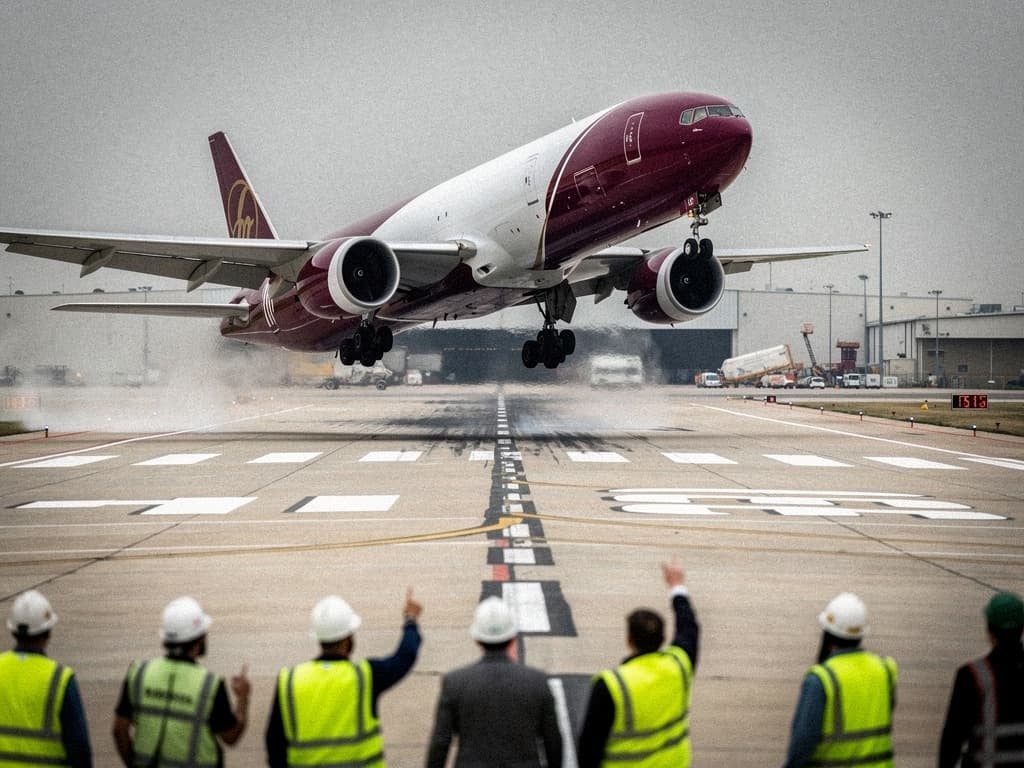
Icelandair filed a police report against one of its own captains after the pilot performed an unauthorized low-altitude flyover of Vestmannaeyjar during flight FI-521 from Frankfurt to Keflavik on April 11, 2026—the captain’s final flight before retirement. Residents reported houses shaking as the Boeing 757 passed at an estimated 328 feet above the island, well below standard approach altitudes, with Chief Flight Officer Linda Gunnarsdóttir confirming the maneuver occurred without airline knowledge or permission.
The airline prohibits low-level flyovers over populated areas with passengers aboard. Exact altitude remains unconfirmed due to terrain blocking flight tracking data, but the incident has triggered both internal investigation and regulatory review.
A retiring Icelandair captain turned his final commercial flight into a police matter when he diverted a passenger-carrying Boeing 757 for an unauthorized low-altitude pass over his hometown. The April 11 incident on flight FI-521—operating from Frankfurt to Keflavik with passengers in both economy and Saga Premium business class—has exposed the airline’s zero-tolerance stance on unsanctioned farewell gestures, even for veteran pilots.
The flyover occurred as the aircraft approached Keflavik International Airport, with the captain deviating from the standard approach path to pass over Vestmannaeyjar, a small island off Iceland’s southern coast. Residents immediately reported the disturbance, describing houses shaking from the proximity of the twin-engine jet.
Flight tracking data from Flightradar24 showed the aircraft at 1,375 feet near the town before losing coverage due to surrounding cliffs, leaving the exact minimum altitude unverified. Local reports estimate the pass occurred at approximately 328 feet—roughly the height of a 30-story building—though terrain interference prevented precise measurement.
The captain, believed to be from Vestmannaeyjar, apparently intended the maneuver as a tribute to his roots. But Icelandair made clear no such tribute had been authorized.
Airline confirms police referral
Chief Flight Officer Linda Gunnarsdóttir told Icelandic media the flyover “was not done with any permission from us and it was done completely without our knowledge.” She added that Icelandair is treating the matter with full seriousness, confirming reports that the airline has referred the incident to police.
The airline’s policy explicitly prohibits low-level flyovers over built-up residential areas, particularly with passengers aboard who did not consent to non-standard maneuvers. Unlike coordinated farewell traditions—such as water cannon salutes on the tarmac or pre-announced cabin gestures—this deviation occurred without passenger notification and outside controlled airspace procedures.
| Event detail | Specification | Status |
|---|---|---|
| Flight number | FI-521 (FRA-KEF) | Operated as scheduled |
| Aircraft | Boeing 757-200 (TF-ISR) | Returned to service |
| Incident date | April 11, 2026 | Under investigation |
| Reported altitude | ~328 feet (estimated) | Unverified due to terrain |
| Location | Vestmannaeyjar island | Populated residential area |
| Passenger impact | No injuries or delays | Standard arrival KEF |
| Police referral | Filed by Icelandair | Pending review |
The incident aircraft, registered TF-ISR, features Icelandair’s Saga Premium cabin with 12-16 lie-flat seats in a 1-2-1 configuration. The airline has not grounded the aircraft, and flight operations continue normally on the Frankfurt-Keflavik route, which operates daily with 757-200 equipment.

Flight deals most people never see
Our AI monitors 150+ airlines for pricing anomalies that traditional search engines miss. Air Traveler Club members save $650 per trip per person on average: see how it works.
Each deal saves 40–80% vs. regular fares:

Context: when farewell gestures cross the line
Retiring pilot traditions vary widely across carriers, with some airlines tolerating coordinated gestures while others maintain strict prohibitions. In March 2024, a retiring Lufthansa captain performed a “wing tip wave” maneuver during takeoff from Los Angeles on an Airbus A380, tipping the aircraft to one side as if waving goodbye. That incident sparked debate but resulted in no police action, partly because flight attendants announced the maneuver to passengers beforehand.
Lufthansa has historically permitted such gestures as part of its retirement culture, provided they occur during controlled phases of flight and with passenger awareness. Water cannon salutes on the tarmac represent another common—and airline-approved—farewell tradition that poses no safety risk.
The Icelandair incident differs fundamentally: the flyover occurred at low altitude over a populated area during an active approach phase, without passenger notification or air traffic coordination. Air Traveler Club’s analysis of in-flight safety violations shows airlines increasingly prioritize regulatory compliance over sentimental gestures, particularly when passenger safety protocols are bypassed.
The Icelandic Transport Authority (Samgongustofa) will likely issue findings by late April. If altitude violations are confirmed and fines imposed, expect heightened scrutiny of Icelandair’s 757 fleet operations, though widespread schedule disruptions remain unlikely given the isolated nature of the incident.
What this means for premium transatlantic bookings
The incident underscores operational discipline gaps that premium travelers should weigh when comparing North Atlantic carriers, particularly on routes where Icelandair competes against alliance-backed alternatives.
- Immediate booking considerations: Frankfurt-Keflavik remains operationally stable with no schedule changes, but passengers prioritizing safety assurance may prefer Lufthansa or SAS alternatives with established alliance oversight and more robust pilot protocol enforcement.
- Saga Premium positioning: The 757’s 1-2-1 lie-flat cabin offers competitive hard product against Lufthansa’s older business class on this route, but the incident erodes the trust premium that justifies Icelandair’s pricing versus low-cost alternatives like Play.
- Award space implications: Saga Club redemptions remain unaffected, though the airline’s non-alliance status limits partner rebook options if passengers seek alternative routing during the investigation period.
- Regulatory watch: Monitor for Samgongustofa rulings by April 30, 2026—fines or license actions could trigger temporary 757 fleet inspections, potentially delaying 10-15% of premium transatlantic rotations and forcing Saga passengers onto Lufthansa codeshares.
Watch for enhanced pre-flight briefings on Icelandair operations as the airline reinforces standard operating procedures across its pilot workforce.
FAQ
Will this incident affect Icelandair’s safety rating or certifications?
The airline’s IOSA certification remains valid, and no immediate regulatory action has been announced. The Icelandic Transport Authority’s investigation will determine whether operational violations occurred, but isolated pilot deviations typically result in individual sanctions rather than carrier-wide certificate suspensions. Icelandair maintains full operating authority on all transatlantic routes.
Can passengers request compensation for the unauthorized maneuver?
EU261 compensation applies only to delays exceeding three hours or cancellations, not to in-flight operational deviations that don’t affect schedule performance. Passengers who experienced distress may file individual complaints with Icelandair customer relations, but no automatic compensation mechanism exists for this incident type under European aviation consumer protection rules.
How does this compare to other airline retirement traditions?
Coordinated farewell gestures like water cannon salutes or pre-announced wing waves occur with airline approval and passenger notification. This incident differs because it involved an unauthorized route deviation at low altitude over a populated area without passenger consent or air traffic coordination—crossing from tradition into potential regulatory violation territory.
Should I avoid booking Icelandair’s 757 fleet after this incident?
The aircraft involved (TF-ISR) remains in service with no mechanical issues identified. The incident reflects individual pilot judgment rather than fleet-wide safety concerns. Premium travelers prioritizing maximum operational discipline may prefer alliance carriers with more layered oversight, but Icelandair’s overall safety record remains strong across its 757 and 737 MAX operations.
Read more