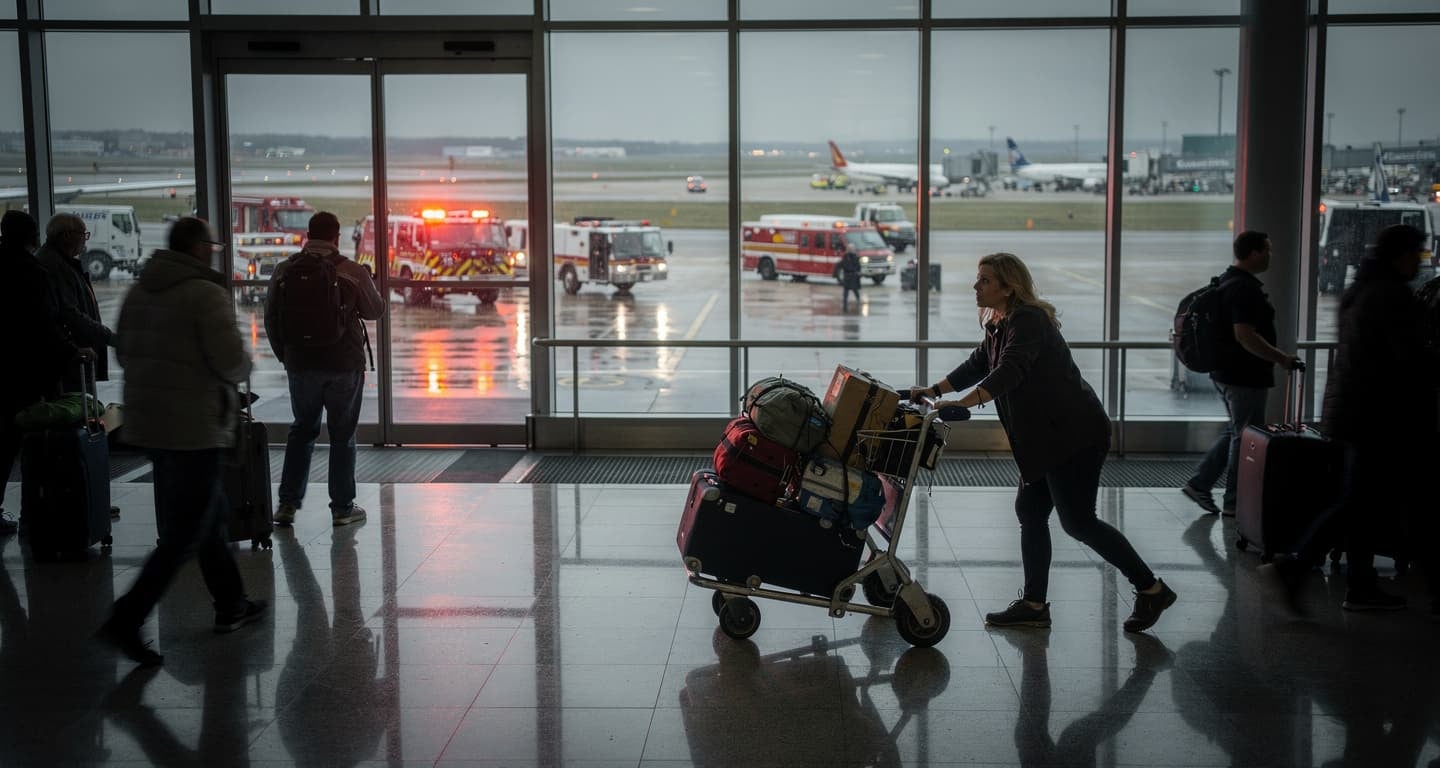
A fatal runway collision at LaGuardia Airport late Sunday killed two Air Canada crew members and injured 41 passengers after a Bombardier CRJ-900 struck a Port Authority fire truck on Runway 4. The airport remains closed until at least 2 p.m. ET Monday, March 23, grounding all departures and arrivals — roughly 1,000 daily flights across Delta, American, United, and regional carriers.
The fire truck had been cleared to cross the runway by a single controller handling both ground and tower duties, despite the aircraft’s landing clearance. NTSB investigators are on-scene examining whether situational awareness failure contributed to the collision.
Two pilots died and dozens were injured when an Air Canada Express regional jet collided with an airport fire truck during landing rollout at LaGuardia late Sunday night. The crash forced a full shutdown of New York’s third-busiest airport, stranding thousands of travelers and triggering cascading delays across the Northeast corridor.
The Jazz Aviation CRJ-900 — operating as Air Canada Express from Montreal with 76 people aboard — struck the Port Authority vehicle near taxiway Delta at 11:37 p.m. ET while traveling approximately 30 mph after touchdown. Both the pilot and co-pilot were killed on impact. 41 passengers and crew were transported to area hospitals, though 32 had been released by Monday morning. Two firefighters aboard the truck sustained broken limbs but are in stable condition.
The Federal Aviation Administration confirmed the airport will remain closed until at least 2 p.m. Monday, with no timeline yet provided for Runway 4’s reopening. The National Transportation Safety Board deployed a “go team” overnight and will send additional investigators Monday to examine cockpit voice recordings, air traffic control communications, and the fire truck’s positioning.
How the collision unfolded on an active runway
The fire truck had been responding to a separate emergency involving United Airlines flight 2384 when it was cleared by a single controller — handling both ground and tower frequencies — to cross Runway 4. That clearance was issued despite the CRJ-900 having already received landing authorization on the same runway. The aircraft was in its final rollout phase, decelerating through 30 mph, when it struck the truck near taxiway Echo.
Preliminary air traffic control recordings suggest the controller may have lost situational awareness while managing dual responsibilities, a staffing configuration that occurs during overnight shifts at LaGuardia. The Port Authority has not yet explained why the fire truck was positioned on an active runway rather than using a parallel taxiway to reach the United aircraft.
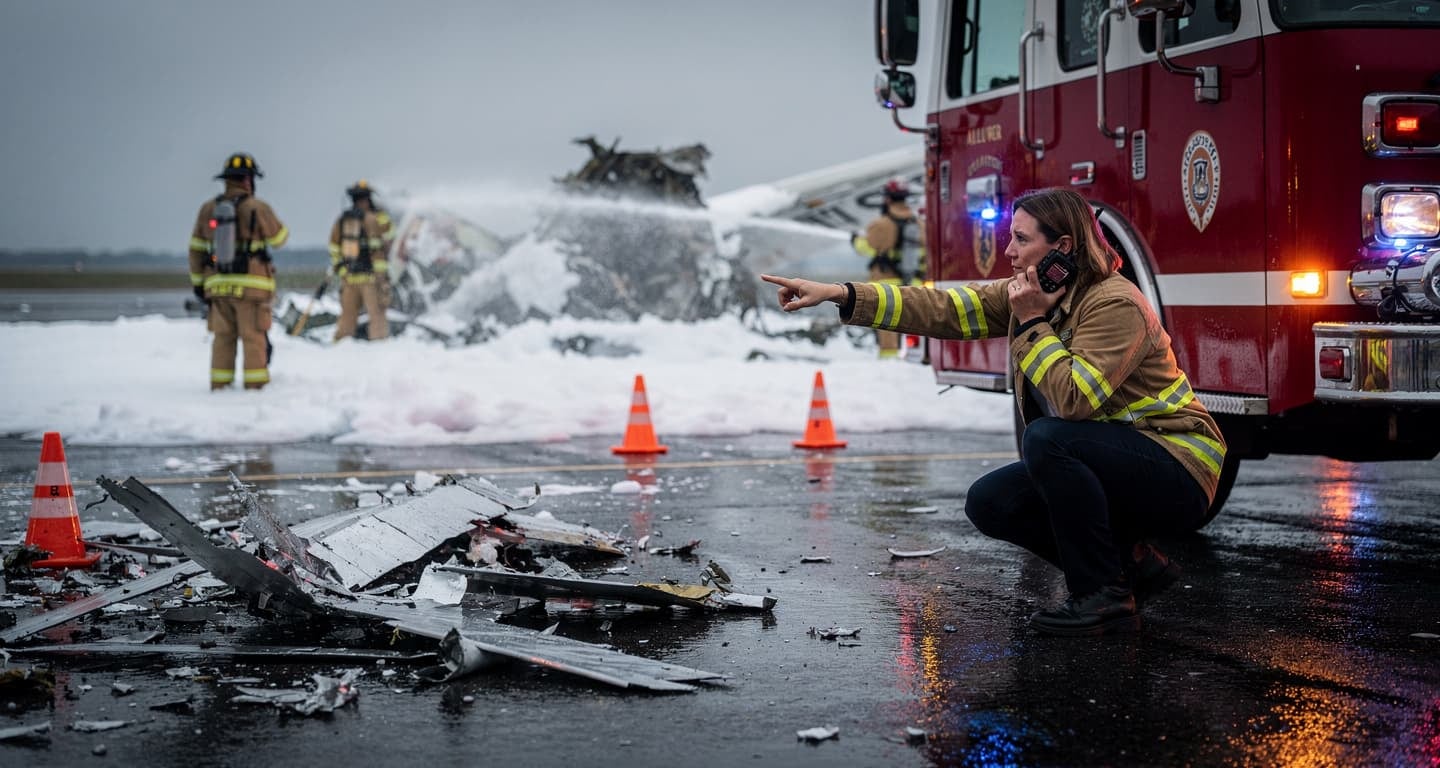
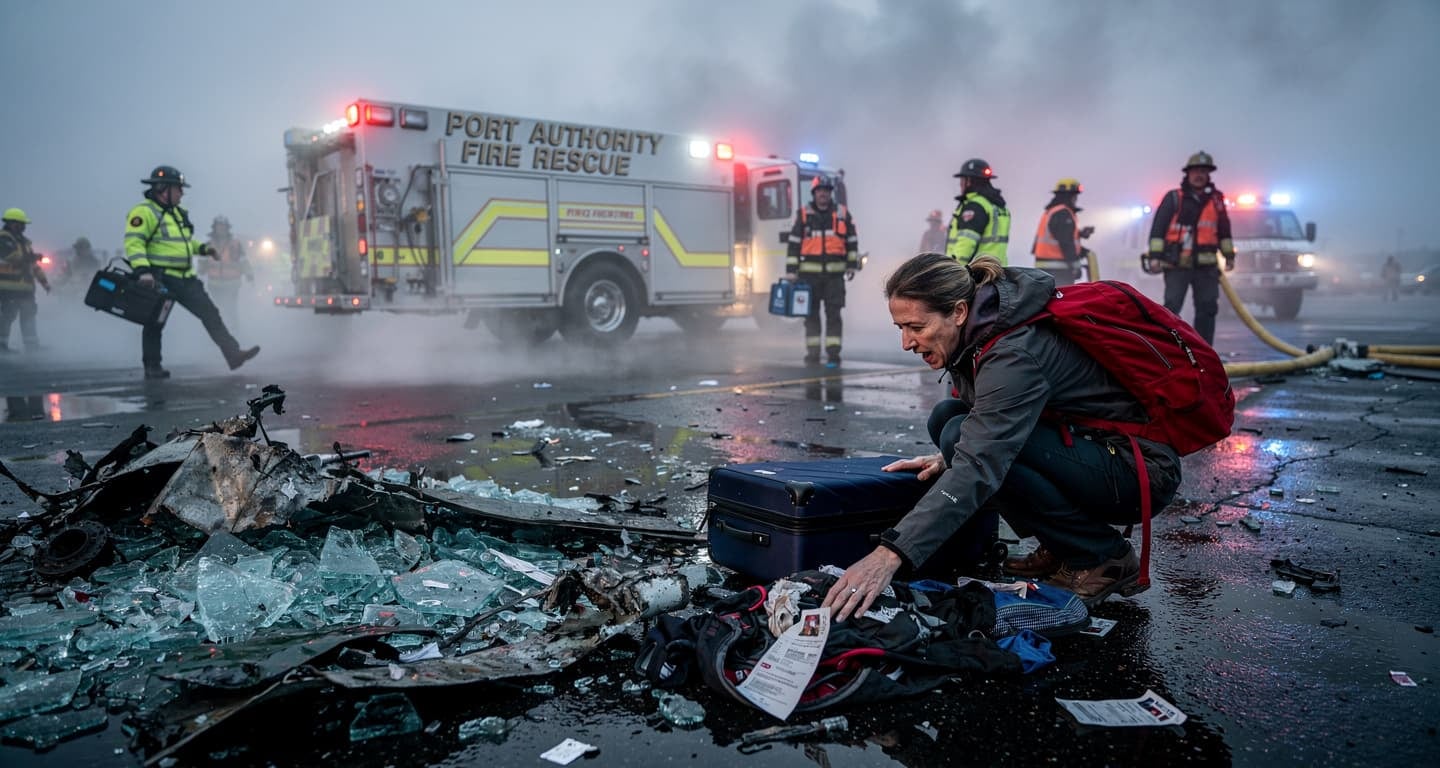
Images from the scene show visible damage to the CRJ-900’s forward underside, with the aircraft stopped on the runway surrounded by emergency vehicles. The fire truck sustained catastrophic front-end damage. All 76 occupants of the aircraft were evacuated via emergency slides, with injuries ranging from minor to serious — primarily impact trauma and slide-related fractures.
| Time (ET) | Event | Impact |
|---|---|---|
| 11:37 p.m. Sun | CRJ-900 strikes fire truck on Runway 4 | 2 crew killed, 41 injured |
| 11:45 p.m. Sun | FAA issues ground stop | All departures/arrivals halted |
| 12:30 a.m. Mon | NTSB go team deployed | Investigation begins on-scene |
| 2:00 p.m. Mon | Earliest reopening target | ~1,000 flights affected |
The FAA’s live incident updates confirm Runway 4 remains closed pending structural inspection and debris removal. LaGuardia operates four runways, but Runway 4 handles the majority of arrivals during overnight hours when this collision occurred.

Flight deals most people never see
Our AI monitors 150+ airlines for pricing anomalies that traditional search engines miss. Air Traveler Club members save $650 per trip per person on average: see how it works.
Each deal saves 40–80% vs. regular fares:

Recurring incursion risks at a constrained airport
This is the third runway collision at LaGuardia in four years. In November 2022, a LATAM Airlines Airbus struck a fire truck during takeoff, injuring three firefighters but causing no passenger fatalities. That incident also involved a vehicle responding to an emergency drill. In October 2025, two CRJ regional jets collided on taxiway Alpha with no injuries.
LaGuardia’s compact footprint — just 680 acres compared to JFK’s 5,200 — creates operational pressure during peak periods. The airport handles roughly 30 movements per hour during daytime operations, with taxiways crossing active runways at multiple points. The FAA installed ASDE-X ground radar in 2018 to detect incursions, but the system relies on controllers monitoring alerts — a safeguard that failed Sunday night when a single controller managed both ground and tower frequencies.
The NTSB’s investigation will focus on controller workload, fire truck dispatch protocols, and whether ASDE-X alerts were triggered but ignored. Preliminary findings typically emerge within 10 days, though final reports take 12–18 months.
What to do if your flight is affected
LaGuardia’s closure creates immediate rebooking pressure at JFK and Newark, where load factors will spike above 95% through Tuesday as airlines absorb displaced passengers.
- Check airline apps first — Delta, American, and United are sending automatic rebooking notifications to affected passengers. Accept the first offer if it works, as alternatives disappear within hours.
- Request refunds for cancellations — US Department of Transportation rules require full refunds when airlines cancel flights, regardless of ticket type. File via airline websites or call customer service lines.
- Monitor FAA updates — The agency posts reopening timelines at fly.faa.gov/adv/adv_otherdis.jsp. Runway 4 must pass structural inspection before operations resume.
- Consider Amtrak for short hops — Northeast Regional trains run hourly between NYC and Boston/DC with same-day availability. Fares start at $49, competitive with last-minute flights.
- File claims for EU/Canadian rights — If your Air Canada flight originated in Canada, you may qualify for up to CAD $1,000 compensation under APPR rules if delays exceed 3 hours. File at otc-cta.gc.ca.
Watch: FAA’s Monday afternoon briefing will reveal whether Runway 4 reopens by evening or remains closed through Tuesday — a 24-hour extension would cascade delays across the entire Northeast hub network.

Will Air Canada compensate passengers for the LaGuardia closure?
US DOT rules require refunds for airline-initiated cancellations but do not mandate compensation for delays. Canadian passengers departing from Montreal may qualify for up to CAD $1,000 under APPR if delays exceed 3 hours and the airline is found at fault — though runway collisions typically fall under safety exceptions.
How long do LaGuardia runway closures typically last after incidents?
The November 2022 LATAM fire truck collision cleared Runway 13 within 18 hours. The October 2025 taxiway collision resolved in 12 hours. This incident involves fatalities and NTSB evidence collection, which extends timelines — expect 24–48 hours minimum before full operations resume.
Should I avoid booking LaGuardia flights this week?
Wait for FAA all-clear before booking LGA. The airport will reopen, but residual delays persist 48–72 hours as airlines reposition aircraft and crews. JFK and Newark offer more schedule stability through Wednesday. Monitor fly.faa.gov for real-time status updates.
What happens to my checked bags if my LGA flight was diverted?
Airlines automatically reroute checked bags to your final destination when flights divert. Expect 6–12 hour delays for bag delivery. File a Property Irregularity Report at your arrival airport’s baggage office if bags don’t appear within 24 hours — airlines must compensate for essentials under DOT rules.
Read more