Summary
Berjaya Air has taken delivery of the world’s first ATR 72-600 in the ATR HighLine all-business-class configuration, landing in Kuala Lumpur with a 26-seat, 1-by-1 cabin that gives every passenger direct aisle access and window views. The aircraft received dual certification from EASA and Malaysian aviation authorities in May 2026, clearing it for commercial operations. First scheduled service launches imminently on a new Subang–Koh Samui route, with the network expanding across Malaysia, Thailand, Vietnam, and Indonesia.
A second factory-new aircraft in the same configuration arrives in Q3 2026. Seat inventory on launch routes will be tight — 26 seats per flight leaves almost no margin at peak resort periods.
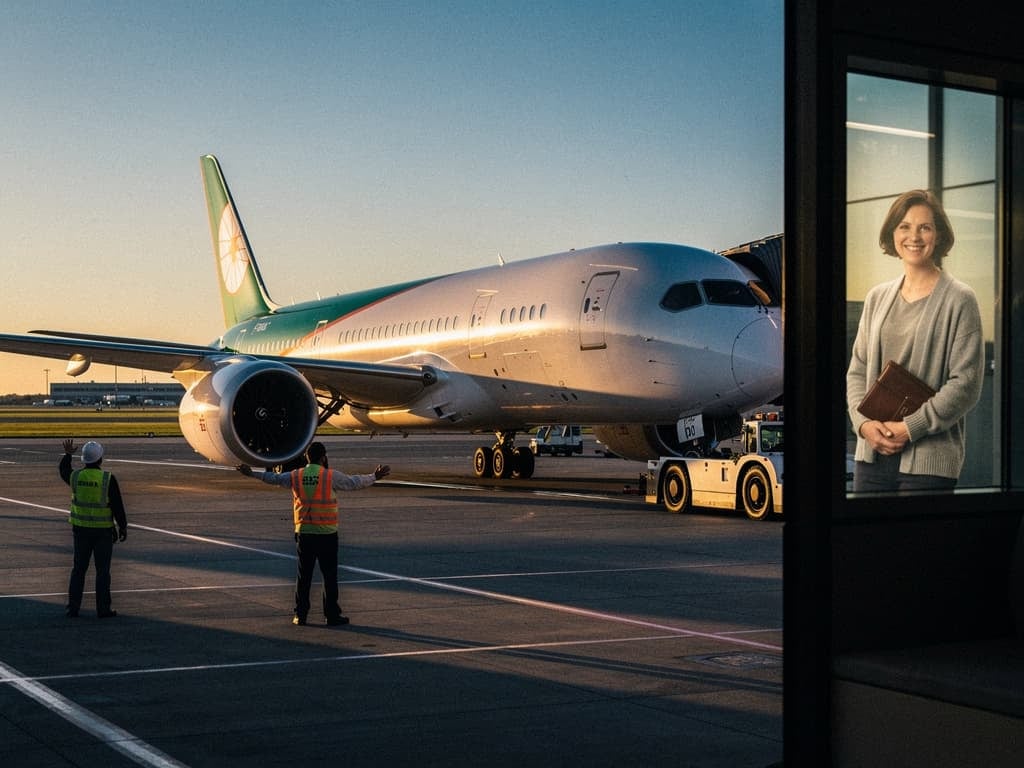
A turboprop just redefined what regional premium flying looks like in Southeast Asia. Berjaya Air has taken delivery of the world’s first ATR 72-600 configured entirely in business class — no economy rows, no mixed cabin compromise — and the aircraft is already in Kuala Lumpur preparing for commercial service.
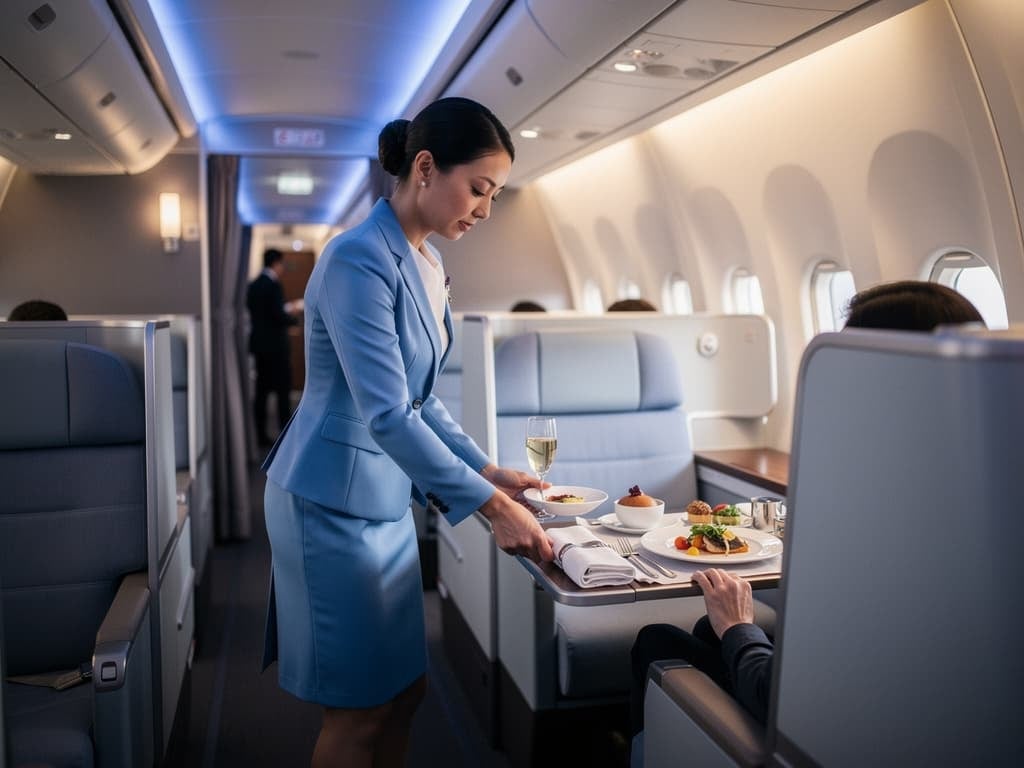
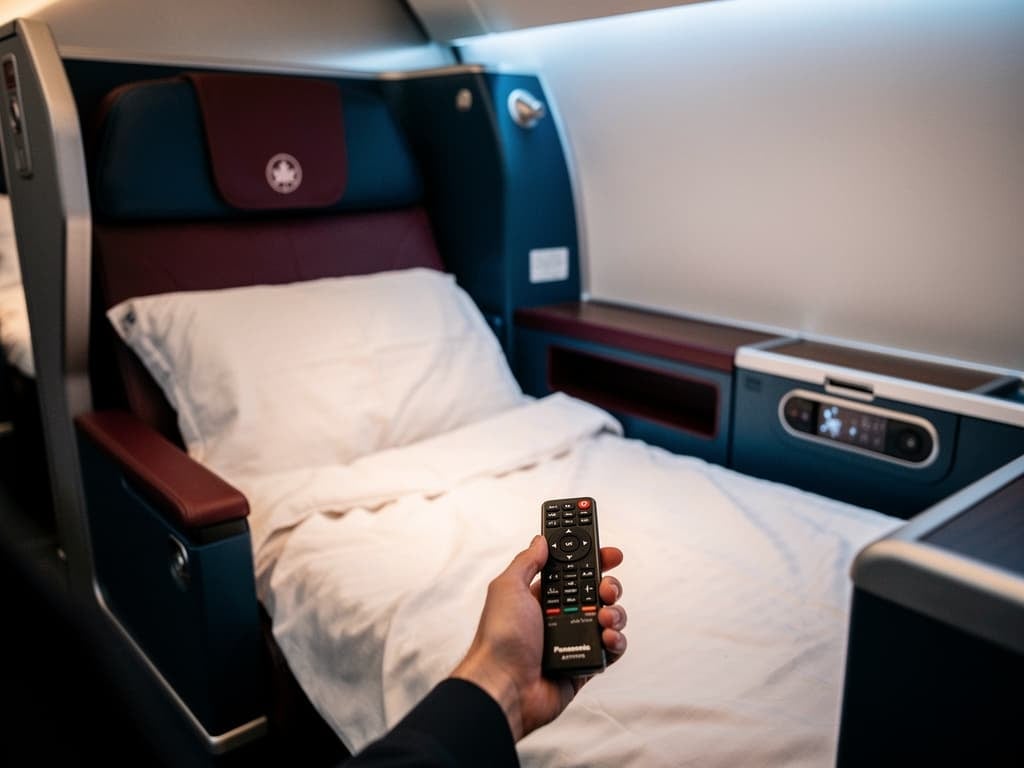
The ATR HighLine cabin seats 26 passengers in a 1-by-1 layout, a configuration that eliminates the middle-seat problem entirely and gives every guest direct aisle access and sightlines to multiple windows. That’s a product specification more commonly associated with private aviation than with a twin-turboprop operating short island hops.
Certification from both EASA and Malaysia’s Civil Aviation Authority came through earlier in May 2026, confirming the cabin meets airworthiness standards for commercial operations globally. The delivery marks two simultaneous firsts: Berjaya Air‘s inaugural factory-new ATR 72-600, and the global launch platform for ATR’s new premium cabin collection.
Initial scheduled service targets the Subang–Koh Samui corridor — a leisure-focused route connecting Kuala Lumpur’s secondary airport with one of Thailand’s most visited resort islands. From there, the airline plans to expand across its regional network, serving island destinations including Redang and Langkawi, with connections throughout Malaysia, Thailand, Vietnam, and Indonesia. Charter operations across Asia-Pacific are also planned from the outset.
What the ATR HighLine cabin actually delivers
The cabin’s most striking design decision is what’s missing: overhead bins. ATR and Berjaya Air replaced them with sleek valence panels, opening the ceiling line and flooding the interior with natural light. The effect, according to ATR’s official delivery announcement, creates a perceived volume comparable to the world’s largest private aircraft — a bold claim for a 70-seat-class turboprop, but one grounded in the physics of removing bulky bin structures from a narrow fuselage.
The seats themselves are handcrafted ETEREA units by Italian manufacturer Geven — described as the widest ever installed on the ATR platform. Each features a refined personal side console with integrated stowage, compensating for the absence of overhead storage. No verified seat-width measurements in centimeters or inches have been published in accessible sources, but the 1-by-1 layout across the ATR 72’s fuselage width implies a meaningful step up from any dual-seat regional configuration.
| Product | Aircraft type | Seat layout | Seat count | Aisle access |
|---|---|---|---|---|
| ATR HighLine (Berjaya Air) | ATR 72-600 | 1-by-1 | 26 | Direct — every seat |
| Business Suite (Malaysia Airlines) | Airbus A330 / Boeing 737 | 2-2 or 2-2-2 | Varies by aircraft | Window seats require step-over |
| Regional business (typical Southeast Asia) | Airbus A320 family / Boeing 737 | 2-2 | 12–16 | Window seats require step-over |
| Standard ATR 72-600 (economy config) | ATR 72-600 | 2-by-2 | 70–78 | Window seats require step-over |

Flight deals most people never see
Our AI monitors 150+ airlines for pricing anomalies that traditional search engines miss. Air Traveler Club members save $650 per trip per person on average: see how it works.
Each deal saves 40–80% vs. regular fares:

Why this matters beyond one aircraft delivery
The real question this launch poses isn’t whether the cabin looks impressive — it does — but whether the underlying economics work. Berjaya Air is betting that 26 premium seats on thin resort routes can generate yields that justify the configuration, particularly when the Berjaya Group’s own hotel and resort portfolio provides a captive demand base. That’s a structurally different business model than a conventional airline filling seats on the open market.
Air Traveler Club’s guide to securing launch fares on new routes is worth consulting before the Subang–Koh Samui timetable goes public — launch-period pricing on boutique premium products rarely repeats once the route matures.
The competitive framing matters too. This product doesn’t compete with Malaysia Airlines‘ Business Suite on trunk routes or with long-haul flatbeds. It occupies a different tier entirely — closer to semi-private charter economics than to conventional airline business class, but priced and marketed as scheduled service. That positioning is genuinely new on the ATR platform, and it’s what makes the second aircraft delivery in Q3 2026 a meaningful signal rather than a routine fleet addition.
If load factors hold outside peak holiday windows, expect other leisure-focused Southeast Asian operators to study the model closely. The ATR 72-600 is already the dominant turboprop on thin regional routes across the region — the HighLine cabin simply adds a revenue-per-seat argument that didn’t exist before.
How to position yourself for Subang–Koh Samui launch inventory
With just 26 seats per departure and a resort-focused network, availability on Berjaya Air‘s ATR HighLine service will be structurally constrained from day one. Here’s what to watch as the route goes live.
- Monitor Berjaya Air’s official channels directly: No public booking page or timetable for Subang–Koh Samui has been confirmed in accessible sources as of late May 2026. The airline’s own site and Berjaya Group resort-package sales channels are the most likely first points of availability.
- Treat launch fares as a one-time window: Boutique premium products on new routes rarely hold introductory pricing once demand is established. If fares appear, the booking window will likely be short.
- Charter is a parallel option: The aircraft is explicitly available for charter across Asia-Pacific. For groups traveling to Berjaya resort properties, a charter inquiry may unlock access outside the scheduled timetable.
- Plan around Q3 2026 for expanded capacity: The second ATR 72-600 in the same configuration arrives in Q3 2026, which should ease inventory pressure and potentially open additional routes on the Malaysia–Thailand–Vietnam–Indonesia network.
- Build a premium backup: Until the scheduled timetable is confirmed, travelers with fixed resort dates should hold a fallback option on Malaysia Airlines or regional full-service carriers on connecting itineraries.
Watch for whether a bookable timetable with published fares appears on the Subang–Koh Samui route within the next 30–60 days. That confirmation will determine whether this is a recurring scheduled premium product or primarily a charter and resort-package platform in its early phase.
FAQ
What is the ATR HighLine cabin and how does it differ from standard ATR configurations?
The ATR HighLine is ATR’s new premium cabin collection, configured for Berjaya Air as an all-business-class layout with 26 seats in a 1-by-1 arrangement. Every passenger gets direct aisle access and window views — a fundamental departure from the standard ATR 72-600’s 2-by-2 economy layout seating up to 78 passengers. Overhead bins are replaced by valence panels, and seats are handcrafted Geven ETEREA units, the widest ever installed on the ATR platform.
Which routes will Berjaya Air operate with the all-business ATR 72-600?
Berjaya Air will launch first on a new Subang–Koh Samui route, then expand across a regional network covering Malaysia, Thailand, Vietnam, and Indonesia, with a focus on resort destinations including Redang and Langkawi. The aircraft is also available for charter operations across Asia-Pacific. A second aircraft in the same configuration arrives in Q3 2026, which should support additional route openings.
Is the ATR HighLine cabin certified for commercial operations?
Yes. The cabin received certification from both EASA and Malaysia’s Civil Aviation Authority in May 2026, confirming it meets airworthiness standards for commercial operations. That dual certification also clears the configuration for use by other operators globally, not just on Malaysian routes.
Read more