Summary
The FAA certified American Airlines’ A321XLR Flagship Suite privacy doors on July 19, 2026, ending a months-long wait since the aircraft entered service. The doors, physically installed but locked open since December 2025, will now be activated on a per-aircraft basis, starting with N302NY — the most recently delivered jet — and rolling across the remaining five XLRs through the fall.
No fare or schedule changes accompany the certification. Passengers on premium transcontinental routes gain an incremental privacy advantage, but activation depends on technical operations visits that stretch the timeline weeks beyond the regulatory nod.
American Airlines’ newest narrowbody premium experience has operated with an asterisk since day one. The Airbus A321XLRs that began revenue flights in December 2025 arrived with suite doors that couldn’t close — a deliberate lockout pending certification that turned a flagship privacy feature into a visual promise. That changed today.
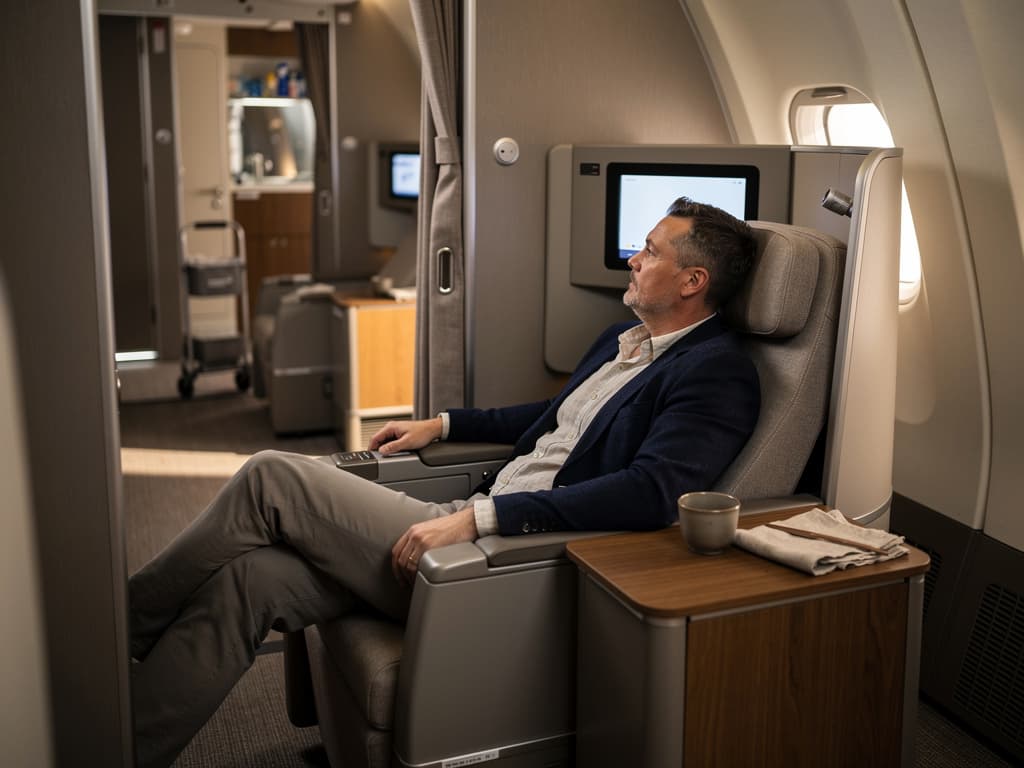
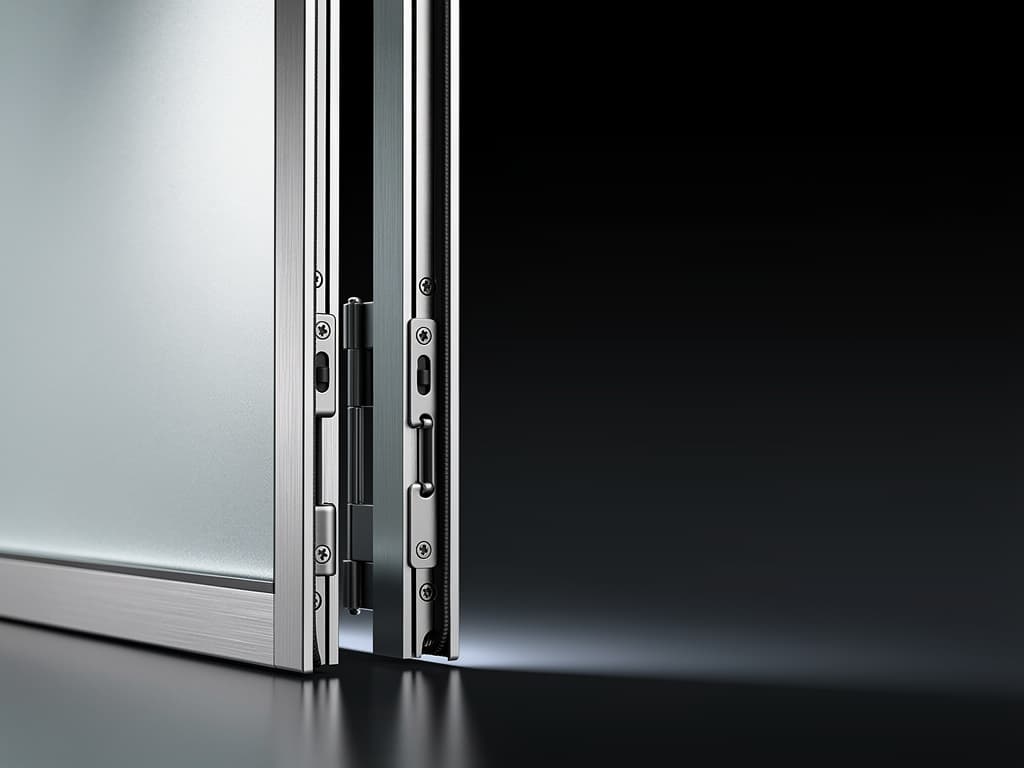
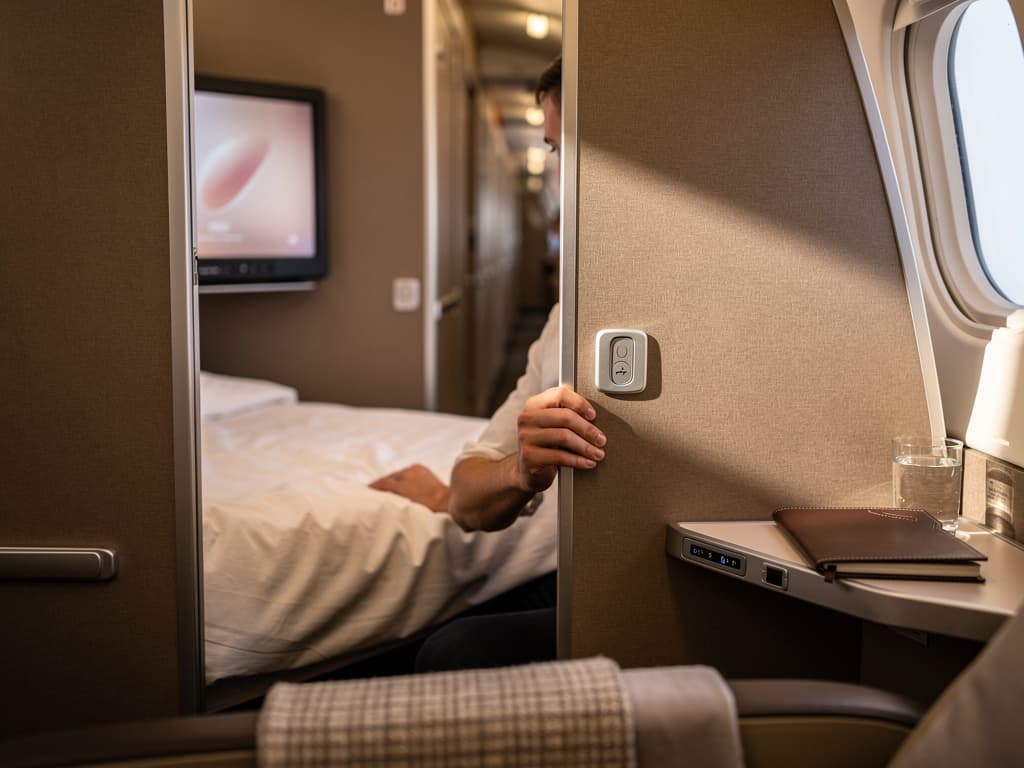
The FAA’s approval unlocks what was always there: sliding doors that transform the 20.5-inch wide, 78-inch lie-flat seat into a semi-enclosed suite. The difference matters. On transcontinental routes where American competes head-to-head against United’s Polaris and Delta’s widebody-lite products, door functionality isn’t cosmetic — it shifts the privacy equation entirely for the carrier’s highest-spending domestic travelers.
The rollout, however, is staggered. Aircraft N302NY, the newest in the six-strong fleet, becomes the proving ground, with remaining jets unlocked in phases through fall 2026. Each requires a technical operations crew visit — a process that, despite the certification, will take weeks per aircraft. American insists staffing is unchanged; the A321XLR’s 155-seat configuration plus suite doors already mandated five flight attendants, which the airline had been providing all along.
The first routes to see unlocked doors are JFK–LAX and JFK–Edinburgh, where N302NY is currently deployed. No aircraft swaps are guaranteed, but the registration number now doubles as a seating lottery for passengers chasing the full suite experience.
The unfolding timeline
Regulatory filings show the FAA’s certification came on July 19, 2026, after a review period that stretched across most of the A321XLR’s first year of service. The delay echoes United Airlines’ ongoing struggle to certify its own Dreamliner Polaris suite doors and Delta Air Lines’ well-documented challenges with new A321neo seats — a pattern the industry has watched closely as premium cabin complexity rises.
American’s activation sequence starts with N302NY, the sixth delivery, which was inducted into service most recently and fitted with doors that required the least rework to meet the final certification standard. Tech ops personnel must then cycle through the remaining five aircraft — N300NY through N304NY and N305NY — over several weeks, with the last unlock expected before the end of fall 2026. The exact procedure involves both a maintenance verification and a crew notification update, though the airline has not detailed the mechanical steps publicly.
The FAA’s staffing rule — one flight attendant per 50 seats plus an extra when suite doors are present — placed these jets at a five-crew minimum from the start. American already staffed to that level, so no schedule disruption or crew training revision is needed. That smooth staffing margin removes one operational headache that could have delayed the door activation further.
| Date | Event | Impact | Status |
|---|---|---|---|
| December 2025 | A321XLR enters revenue service | Suite doors locked open, no privacy feature | Completed |
| July 19, 2026 | FAA certifies suite doors | Doors can now be used by passengers | Completed |
| Late July 2026 | N302NY doors unlocked | First aircraft with functional suites | In progress |
| Fall 2026 | Remaining five A321XLRs unlocked | Full fleet privacy doors functional | Projected |
| Q4 2026 (est.) | United FAA exemption decision expected | Could reset narrowbody premium standards | Pending |
Industry-wide, seat certification has become a persistent bottleneck. United’s Dreamliner Polaris suite doors remain pending FAA approval, and Delta is reportedly reconsidering its seat supplier after prolonged A321neo certification issues. American’s relatively swift resolution — seven months from service entry to door certification — marks an outlier in the current regulatory climate, though the phased unlock underscores that certification alone doesn’t equal immediate passenger benefit.

Flight deals most people never see
Our AI monitors 150+ airlines for pricing anomalies that traditional search engines miss. Air Traveler Club members save $650 per trip per person on average: see how it works.
Each deal saves 40–80% vs. regular fares:

What the phased unlock reveals about premium narrowbody strategy
This certification is more than an operational tick box. It reshapes the competitive calculus on some of the most lucrative U.S. transcontinental routes. American’s A321XLR now becomes the only narrowbody option with functioning suite doors — a distinction that Delta cannot match and United can only promise for its upcoming A321XLR fleet, which won’t see doors certified before a likely Q4 2026 FAA ruling.
The gap is narrow but real. United’s 787 Polaris offers a fully enclosed suite on widebody aircraft, but on domestic legs, those planes are not always deployed. American’s slim-body XLR brings the door to a segment where competitors rely on unenclosed lie-flats. The phased rollout gives American a lead of several months during which savvy premium travelers can reliably secure the privacy benefit — if they catch the right tail number. Air Traveler Club’s deep dive into United’s A321XLR expansion confirms the rival will put 68 narrowbody jets into service by 2028, many with Polaris suites — making American’s current head start in door functionality a finite window.
How to lock in a suite door on your A321XLR flight
For passengers who value privacy specifically, the door unlock creates a real differentiator on transcontinental routes — but only on the right aircraft. Booking strategy now hinges on equipment tracking.
- Check the tail number before booking. Use flight-tracking tools like Flightradar24 or ExpertFlyer to confirm whether your intended flight is operated by N302NY. This aircraft is currently the only one with functional suite doors, primarily flying JFK–LAX and JFK–Edinburgh.
- Monitor flight number changes. Aircraft swaps are common, and American may rotate N302NY through other routes. Setting an alert for registration changes on your booking can prevent disappointment if the aircraft changes after purchase.
- Book JFK–LAX or JFK–Edinburgh. These routes are N302NY’s current home, and availability is more predictable than on routes where the aircraft might appear sporadically. No fare premium is attached to the door feature, so the cost is identical to any other A321XLR booking.
- Fall 2026 widens the map. Once the remaining five aircraft unlock, suite doors will become a standard feature on all A321XLR transcontinental and select international routes, eliminating the tail-number hunt.
FAQ
When will all American Airlines A321XLRs have unlocked suite doors?
The last of the five remaining aircraft is expected to be unlocked by the end of fall 2026, as tech ops cycles through the fleet. After that, every A321XLR business class suite will have functional doors.
Which routes currently guarantee an unlocked suite door?
Aircraft N302NY, which currently operates JFK–LAX and JFK–Edinburgh, is the only jet with doors unlocked. No route is guaranteed to always receive that aircraft, but these two routes are its primary assignment until further activation phases broaden the pool.
Does the door unlock change crew or service on board?
No. American already staffed these flights with five flight attendants — the FAA minimum required for 155 seats plus suite doors — so service patterns and crew counts remain unchanged.
Read more