Summary
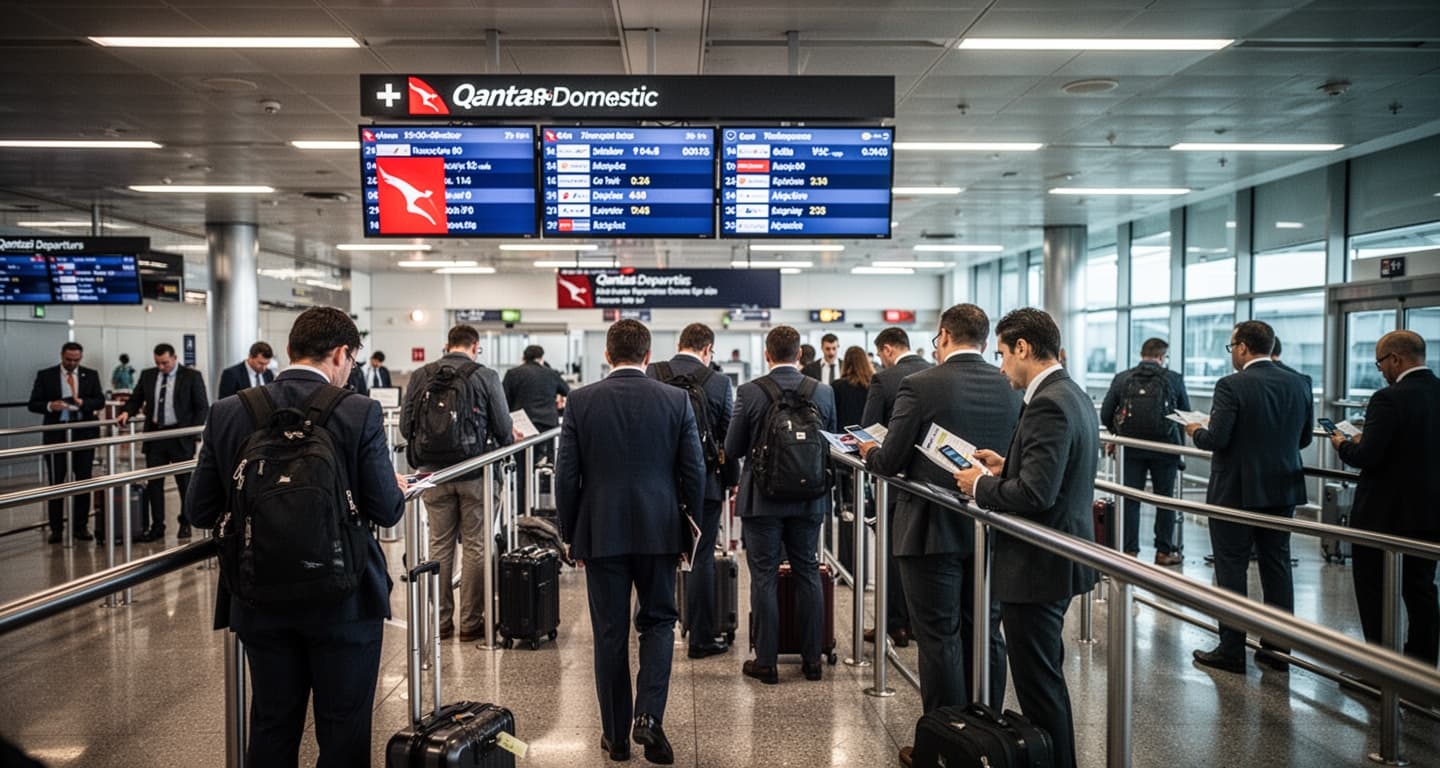
Hong Kong has committed to sourcing 1 to 3 percent of departing flight fuel as sustainable aviation fuel by 2030, embedding the target in both its first five-year plan and 2026 policy address. Yet the head of the Chief Executive’s Policy Unit warned days later that the city’s aviation hub status now hinges on securing a certified supply chain, not on setting policy goals.
European Union and United Kingdom mandates already require 2 percent SAF from 2025. A planned EcoCeres facility in Dongguan could bring 450,000 tonnes of annual capacity online by 2030.
Stephen Wong Yuen-shan delivered a blunt assessment at the Sustainable Aviation Futures China Congress on Tuesday. “It is a question of whether Hong Kong can remain an international aviation hub as the economics and rules of global aviation change,” he said, framing the fuel supply question as existential rather than operational.
His warning came days after Chief Executive John Lee Ka-chiu’s 2026 policy address formally adopted a 1 to 3 percent SAF target for departing flights by 2030. The timing underscores the gap between policy ambition and physical supply reality.
The strategy, which also appears in Hong Kong’s first five-year plan, commits the government to studying a mandatory consumption mechanism by 2028. For Cathay Pacific and other carriers operating through Hong Kong International Airport, that timeline matters: the EU and UK already require 2 percent SAF blends, and jurisdictions from Singapore to Japan are building their own frameworks.
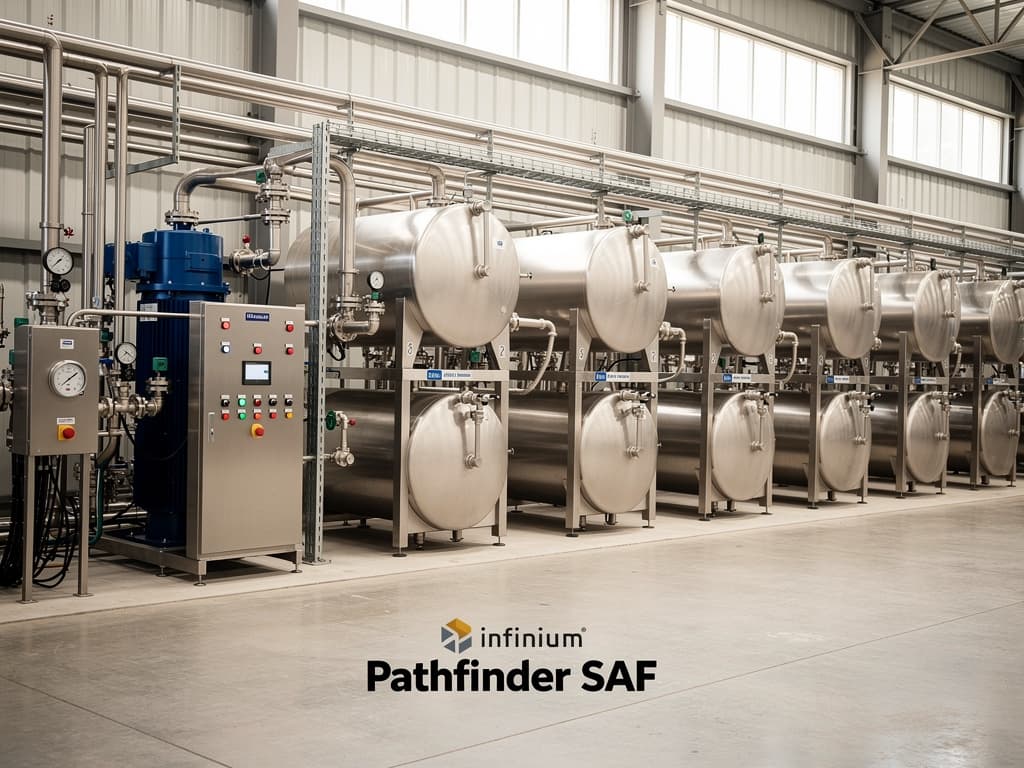
Wong cited regional supply progress as evidence the equation is shifting. EcoCeres, a biofuel producer, plans a Dongguan facility with 450,000 tonnes of annual SAF and renewable diesel capacity, targeting operations in 2030. Hong Kong’s role, he argued, should focus on financing, verification, and connecting regional supply with global buyers.
Hong Kong’s fuel policy framework in detail
The 2026 policy address marks the first time SAF targets have entered Hong Kong’s official economic planning documents. The 1 to 3 percent range leaves room for supply variability while establishing a floor for market expectations.
A mandatory consumption study due by 2028 will determine whether Hong Kong adopts a blending mandate, book-and-claim system, or alternative compliance mechanism. The choice matters because it shapes whether airlines can count SAF purchases made elsewhere toward their Hong Kong obligations.
Certification standards remain unresolved. The EU’s ReFuelEU Aviation framework accepts specific sustainability certifications, and Hong Kong will need to determine its own verification standards before regional supply can flow credibly.
| Year | Jurisdiction | SAF requirement | Status |
|---|---|---|---|
| 2025 | European Union | 2% at EU airports | Active mandate |
| 2025 | United Kingdom | 2% from 2025 | Active mandate |
| 2026 | Hong Kong | 1–3% target announced | Policy adopted |
| 2028 | Hong Kong | Mandatory mechanism study due | Pending |
| 2030 | Hong Kong | 1–3% on departing flights | Target deadline |
| 2030 | United Kingdom | 10% mandate | Scheduled |
| 2030 | EcoCeres Dongguan | 450,000 tonnes/year | Planned operational |
| 2050 | European Union | 70% mandate | Scheduled |

Flight deals most people never see
Our AI monitors 150+ airlines for pricing anomalies that traditional search engines miss. Air Traveler Club members save $650 per trip per person on average: see how it works.
Each deal saves 40–80% vs. regular fares:

Why hub competitiveness drives the urgency
Hong Kong competes not only with Singapore and Tokyo but with Gulf hubs that operate under different fuel economics. When EU and UK carriers face SAF obligations on their home departures, they weigh whether Hong Kong remains a cost-competitive transit point.
Air Traveler Club’s analysis of jet fuel price pressures on Asia-Pacific carriers shows how fuel costs ripple through premium fare structures, with regional carriers facing margin compression well above global averages.
The supply chain question cuts both ways: if Hong Kong secures certified SAF supply, it gains leverage over hubs that lag on fuel infrastructure.
What the supply gap means ahead of 2030
Hong Kong’s 2028 study will determine whether the city adopts a blending mandate, a book-and-claim framework, or a hybrid approach. The choice shapes the cost structure for every carrier serving Hong Kong International Airport.
If the study produces a binding rule, expect carriers to accelerate SAF procurement negotiations and potentially adjust long-haul routing economics. If the EcoCeres Dongguan facility hits its 2030 operational target with verified certification, Hong Kong gains a regional supply backbone that supports premium route density. A delay on either front would leave Hong Kong’s target aspirational while Singapore and Gulf hubs advance their own fuel ecosystems.
Watch for the study’s terms of reference and any consultation launch — those signals will indicate whether Hong Kong is preparing enforceable market rules or extending its target-setting phase.
FAQ
What does Hong Kong’s 1–3% SAF target actually mean for flights departing Hong Kong?
By 2030, between 1 and 3 percent of fuel loaded onto aircraft departing Hong Kong International Airport would need to be sustainable aviation fuel under the policy framework. The target is not yet a binding mandate — a study due by 2028 will determine whether compliance becomes mandatory.
How does Hong Kong’s SAF timeline compare with the EU and UK?
The European Union and United Kingdom already enforce 2 percent SAF mandates from 2025, rising to 10 percent (UK) by 2030 and 70 percent (EU) by 2050. Hong Kong’s 1–3 percent target for 2030 is lower in near-term stringency but signals formal commitment to align over time.
Will SAF mandates increase premium airfares on routes through Hong Kong?
EASA reference prices show SAF at roughly €1,925 per tonne versus €640 for conventional jet fuel. A 2 percent blend adds approximately €25.70 per tonne of total fuel. Whether carriers pass this through depends on competition, hedging, and how Hong Kong chooses to implement compliance after the 2028 study.
Read more