Summary
More than 100 countries now issue digital visas, yet airlines still verify them through a fragmented patchwork of email attachments, QR codes, website queries, and manual document checks. The asymmetry carries a steep price: carriers absorb an average of $9,000 in fines and removal costs per failed passenger verification. New standards from IATA and ICAO — formalized in a 2026 best-practices document — aim to close that gap before it reaches the check-in counter.
Airlines report documentation compliance rates up to 20 times higher where interactive Advance Passenger Information systems exist, yet fewer than 30 countries operate them. The challenge now is adoption, not technology.
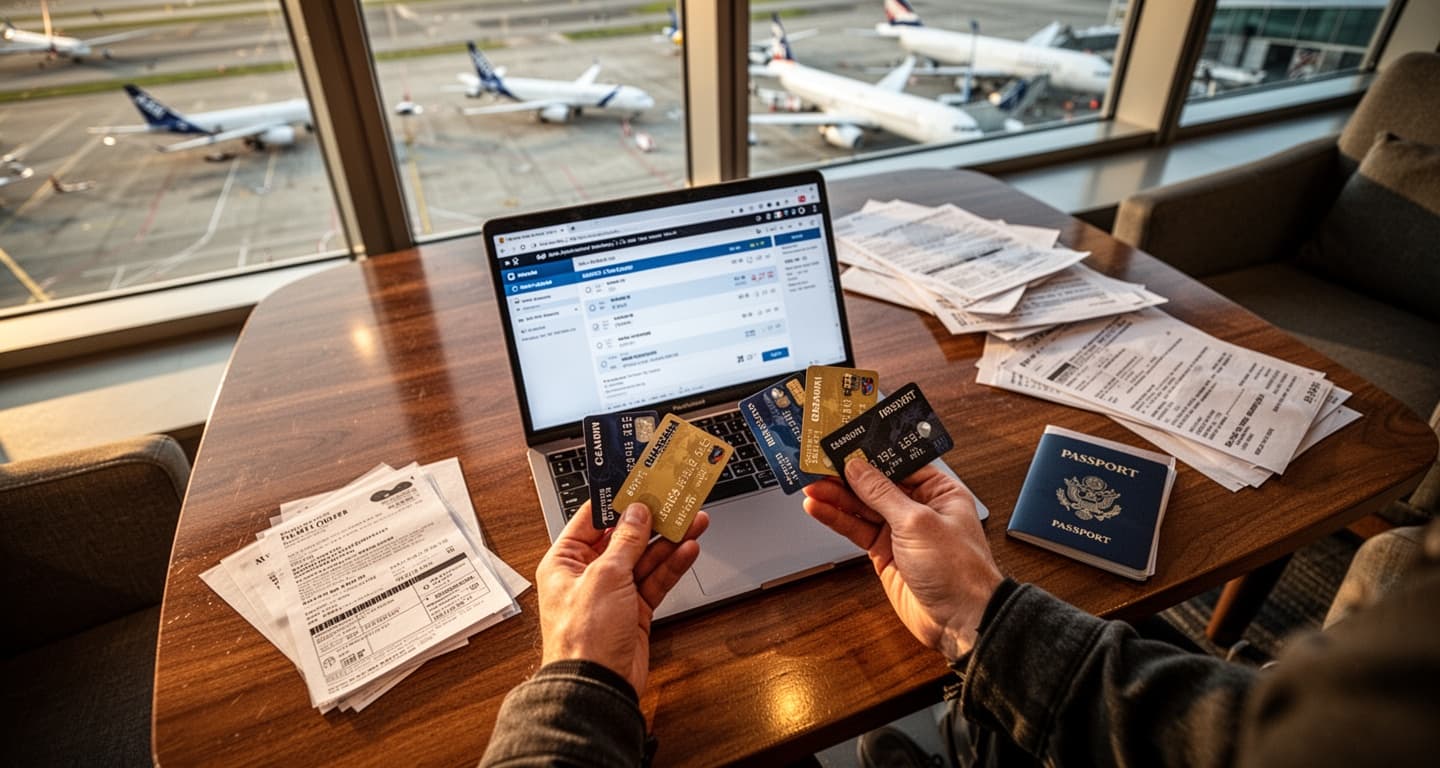
Your eVisa arrives in minutes — a clean PDF, a QR code, maybe just a confirmation email. The airline check-in agent, however, faces a different reality. They must determine whether that digital document is authentic, valid for your specific destination, and sufficient for every transit country along your route. Get it wrong, and the airline absorbs the cost of flying an inadmissible passenger back.
That verification burden predates digital visas. Carriers have always screened entry documents under laws that penalize them for boarding passengers who don’t meet entry requirements. What has changed is the format. Where once a physical visa stamp was self-evident, today’s authorizations arrive in hundreds of formats across more than 100 countries — and the checking process has not kept pace.
The Entry/Exit System in the European Union became fully operational on April 10, 2026, after a phased rollout that started in October 2025. That system alone added pre-departure checks for third-country nationals holding single or double-entry Schengen visas. Multiply that complexity across Africa, Asia, and the Middle East, and you understand why the verification problem has become a global operational bottleneck.
How airlines actually verify eVisas today
The verification process today is anything but standardized. An authorization might arrive as an email attachment requiring visual inspection. It might be a QR code that needs scanning and cross-referencing. Some airlines must log in to a government website for each passenger. In the most fragmented cases, a check-in agent manually reviews supporting paperwork with no digital verification at all.
IATA‘s Control Authorities Working Group addressed this directly in its 2026 publication, Non-Physical Authorizations to Travel, Best Practices for Issuers and Verifiers, building on earlier work at ICAO. The document centers on two complementary mechanisms.
The first is interactive Advance Passenger Information, or iAPI. During check-in, the airline transmits passenger details electronically to the destination government and receives a real-time response confirming whether entry requirements are met. The second is the ICAO Digital Travel Authorization, or DTA — a standardized, digitally signed proof that an electronic authorization exists, presented in a consistent format that can be authenticated regardless of which country issued it.
The two mechanisms are designed to work together. iAPI enables direct government verification when available. A DTA provides standardized proof when an iAPI connection does not exist. Both remain far from universal adoption.
| Timeline | Milestone | Impact on verification | Status |
|---|---|---|---|
| Pre-2024 | 100+ countries issue eVisas in varied formats | Airlines manage verification via email, PDF, QR codes, and website queries | Ongoing fragmentation |
| October 2024 | ICAO publishes iAPI best practices | Recommends 12–36 month implementation planning windows | Advisory |
| April 10, 2026 | EU Entry/Exit System fully operational | Pre-departure checks required via eu-LISA web service | Live |
| June 2026 | IATA CAWG releases Non-Physical Authorizations to Travel | Formalizes DTA standardization and iAPI+DTA interoperability | Published |
| Q4 2026 (expected) | ETIAS launch window | Adds authorization layer for visa-exempt Schengen visitors | Pending |

Flight deals most people never see
Our AI monitors 150+ airlines for pricing anomalies that traditional search engines miss. Air Traveler Club members save $650 per trip per person on average: see how it works.
Each deal saves 40–80% vs. regular fares:

Why the adoption gap will persist
The bottleneck is not technological. Governments that digitized visa issuance did so to modernize border management — but they did not relinquish control over verification. National security considerations will slow universal adoption of iAPI and DTA for years, even as the business case strengthens.
Air Traveler Club’s coverage of India’s biometric fast-track immigration expansion reveals a telling asymmetry: arrival-side processing is modernizing faster than airline-side document verification. Nearly 300,000 travelers in India now clear immigration through biometric e-gates in seconds — yet the same passenger flying out of a country without iAPI still faces manual document checks at the departure counter.
The winners in this environment will be carriers and travel platforms that connect government validation cleanly to passenger processing. The laggards will keep relying on manual reviews that disrupt boarding at the worst possible moment — exactly where premium travelers feel the pain most acutely.
The 2026–2027 verification timeline to watch
ICAO’s own guidance recommends states allow 12 to 36 months for iAPI implementation, meaning meaningful adoption improvements will not materialize before 2027 at the earliest. The European Commission’s ETIAS sequencing decision — currently pointing toward a Q4 2026 window — will signal whether Europe harmonizes digital entry checks or compounds the existing friction with another layer of pre-departure scrutiny. Any spike in check-in denial incidents at major European hubs after the EES go-live would indicate the two systems have not yet stabilized.
FAQ
What happens if an airline cannot verify a digital visa at check-in?
If verification fails, the airline typically denies boarding before departure — the passenger is not flown. The carrier absorbs the fine and removal cost average of $9,000 per passenger rather than risk penalties at the destination border.
Does the EU Entry/Exit System change what airlines must check before departure?
Yes. Air, sea, and international coach operators must perform pre-departure checks for third-country nationals holding single- or double-entry Schengen visas using a web service hosted by eu-LISA. This adds a structured verification step that did not exist in the same form before April 2026.
When will ETIAS launch and who needs it?
The European Commission’s revised timeline places ETIAS in the last quarter of 2026, with mandatory application timing expected to follow. ETIAS applies to visa-exempt travelers entering the Schengen Area, adding a pre-travel authorization requirement that currently does not exist for those passport holders.
Read more