Summary
Apollo Funds has taken a significant stake in Atlantic Aviation, valuing the largest North American fixed-base operator chain at roughly $10 billion, while KKR retains a substantial ownership position. The deal cements private equity’s grip on the ground infrastructure that supports private jet travel—and intensifies operator complaints about surging special-event fees.
Those fees, once reserved for the Super Bowl and Masters, now apply to regular-season NFL games and holiday weekends, with large-cabin jet charges exceeding $20,000. The dual-ownership structure concentrates pricing power at 105 airports, leaving private flyers with fewer ways to avoid escalating ground costs.
A $10 billion recapitalization of Atlantic Aviation pulls Apollo Funds into private aviation infrastructure alongside KKR, sharpening the debate over private-equity fee practices across North America’s largest fixed-base operator network. The transaction, announced August 27, values the company at approximately $10 billion and leaves KKR-managed funds with a substantial retained stake—a structure that signals institutional conviction in business aviation demand while concentrating pricing power further.
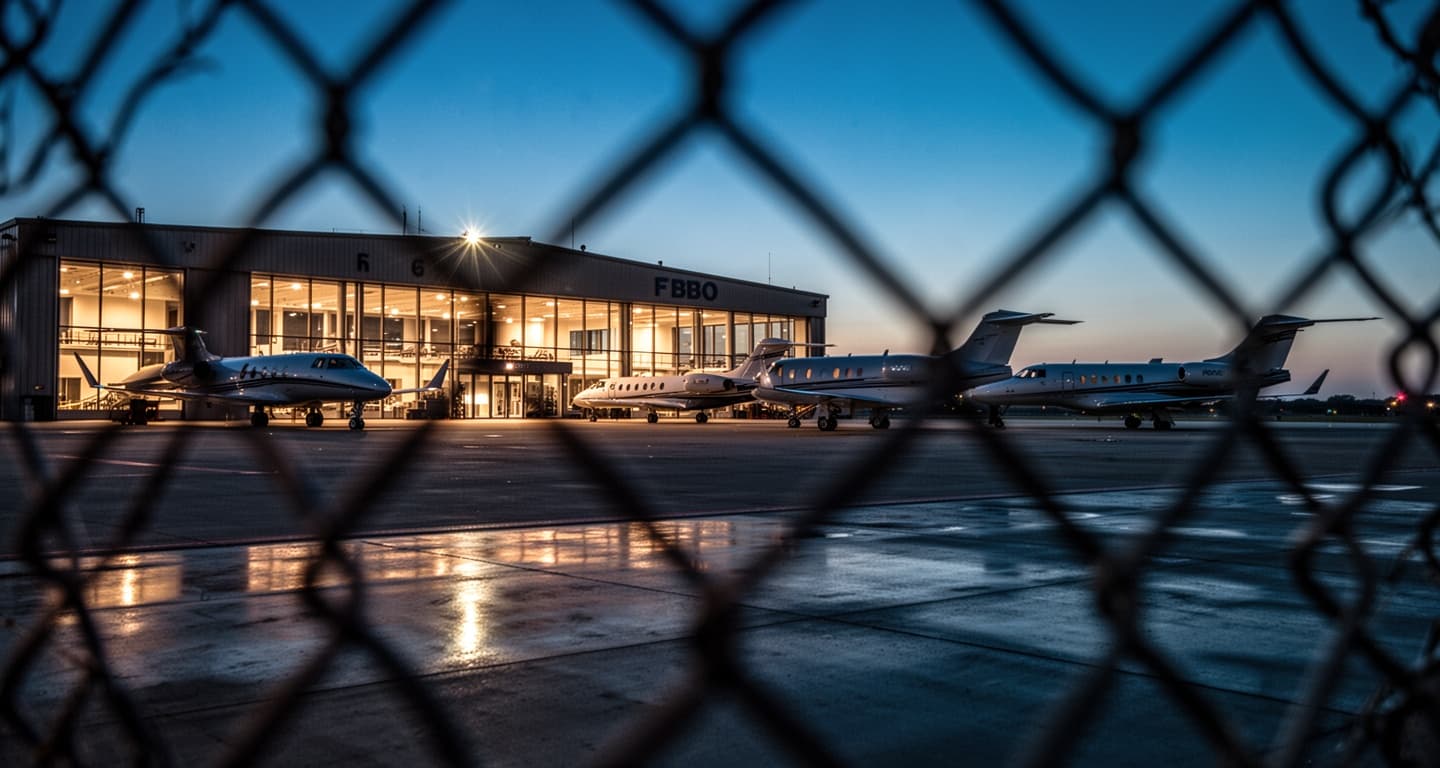
Atlantic Aviation operates 105 FBO locations across the United States and Canada, providing fueling, hangar space, ground handling, and other services essential to private jet operations. Its only rival of comparable scale is Signature Aviation, which was acquired by Blackstone Global Infrastructure Partners and Cascade Investments in 2021—the same year KKR first bought Atlantic. With both of the continent’s dominant FBO networks now under major institutional ownership, the competitive landscape has shifted from brand rivalry to a question of airport coverage and pricing discipline.
For private jet owners, fractional program participants, and charter clients, the deal’s immediate significance lies in the cost of ground services. Flexjet Chairman Kenn Ricci has publicly named private equity as a top concern, saying it “drives up costs—maintenance, FBOs, everything.” Special-event surcharges that were once confined to a handful of marquee occasions have spread to regular-season NFL home games and holiday weekends, with fees for large-cabin aircraft now capable of exceeding $20,000.
The details
Apollo-managed funds have acquired a significant interest in Atlantic Aviation, while KKR-managed funds remain substantial shareholders. The deal values the business at nearly $10 billion and was advised by Paul, Weiss, Rifkind, Wharton & Garrison LLP for Apollo, with Evercore and Morgan Stanley & Co. LLC serving as financial advisors, and Kirkland & Ellis advising KKR. The official announcement frames the investment as a bet on Atlantic’s long-term airport concession agreements and a customer base that prioritizes reliability.
Since 2015, KKR has invested more than $12 billion across the aviation sector, while Apollo has originated over $155 billion in infrastructure transactions during the past five years. The new partnership does not represent a full exit by KKR; rather, it introduces a co-investor with deep infrastructure experience at a moment when operator pushback against FBO fee inflation is reaching a new pitch.
| Date | Event | Impact | Status |
|---|---|---|---|
| 2021 | KKR acquires Atlantic Aviation | First major PE control of large FBO network | Completed |
| 2021 | Blackstone and Cascade acquire Signature Aviation | Both largest FBO chains under institutional ownership | Completed |
| 2025–2026 | Operator complaints about special-event fees intensify | Fees expand to NFL games, holidays; large-cabin charges exceed $20,000 | Ongoing |
| Aug 27, 2026 | Apollo Funds takes significant stake in Atlantic; KKR retains substantial holding | Valuation ~$10 billion; dual-ownership structure deepens PE control | Announced |

Flight deals most people never see
Our AI monitors 150+ airlines for pricing anomalies that traditional search engines miss. Air Traveler Club members save $650 per trip per person on average: see how it works.
Each deal saves 40–80% vs. regular fares:

The value-add
The Apollo-KKR structure points to a market where private-aviation infrastructure is being valued like toll roads: durable demand, scarce airport real estate, and weak traveler substitution. Over the next 3–12 months, expect more scrutiny of event-based FBO fees rather than any immediate rollback, because ownership concentration usually improves pricing discipline for owners before it helps customers. Air Traveler Club’s deep dive into the Apollo-Atlantic deal breaks down what private equity consolidation means for FBO pricing and how it could reshape access at the busiest business-aviation airports.
How to navigate rising FBO costs under the new ownership structure
For private jet users, fractional owners, and charter clients, the consolidation of FBO networks under private equity ownership means ground handling costs are likely to keep rising, and the ability to avoid special-event surcharges is shrinking. Taking a few proactive steps can help manage the impact.
- Review your FBO agreement’s special-event and holdover language. Atlantic’s own terms show that ramp occupancy can trigger daily penalties if an aircraft stays past the permitted window, and these charges often land on the trip invoice regardless of how you booked.
- Ask your operator about pass-through fees. Charter and fractional programs may pass through landing, parking, and ramp charges separately at busy airports, so clarify what’s included in your hourly rate or management fee before peak travel periods.
- Consider airports with independent FBOs. While Atlantic and Signature dominate many major hubs, some locations still have competitive alternatives that may offer lower or more predictable pricing—especially at secondary airports.
- Monitor airport concession reviews. If local authorities or industry bodies begin scrutinizing special-event fees, it could limit FBO pricing power at high-demand airports and create more transparency around surcharges.
Watch for any airport-level fee schedule changes or industry statements on special-event charges—if they materialize, it signals that operators are pushing back and could lead to more standardized, but not necessarily lower, costs.
FAQ
What is an FBO and why does this deal matter?
A fixed-base operator (FBO) provides fueling, hangar space, ground handling, and other essential services for private aircraft. Atlantic Aviation is the largest FBO network in North America with 105 locations, and its recapitalization by Apollo and KKR concentrates control of critical private-aviation infrastructure under institutional investors, which can influence pricing and service standards across the continent.
How do special-event fees affect private jet travelers?
Special-event fees are surcharges applied during high-demand periods such as major sporting events and holidays. They can add thousands of dollars to a trip—large-cabin jets have seen charges exceed $20,000—and are typically passed through to the traveler via fractional ownership statements, jet card invoices, or charter bills, often with little advance notice.
Will this deal lead to higher FBO fees?
The dual-ownership structure is unlikely to produce immediate across-the-board fee increases, but it does concentrate pricing power and reduces competitive pressure at airports where Atlantic and Signature are the only options. Over time, expect special-event fees to become more standardized and potentially expand to additional dates and locations.
What can private flyers do to manage FBO costs?
Review your operator’s pass-through policy for ground handling charges, check FBO fee schedules—especially special-event and holdover terms—before peak travel, and consider airports with independent FBOs where competition may keep pricing in check. Staying informed about any airport concession reviews can also provide early warning of fee policy shifts.
Read more