Summary
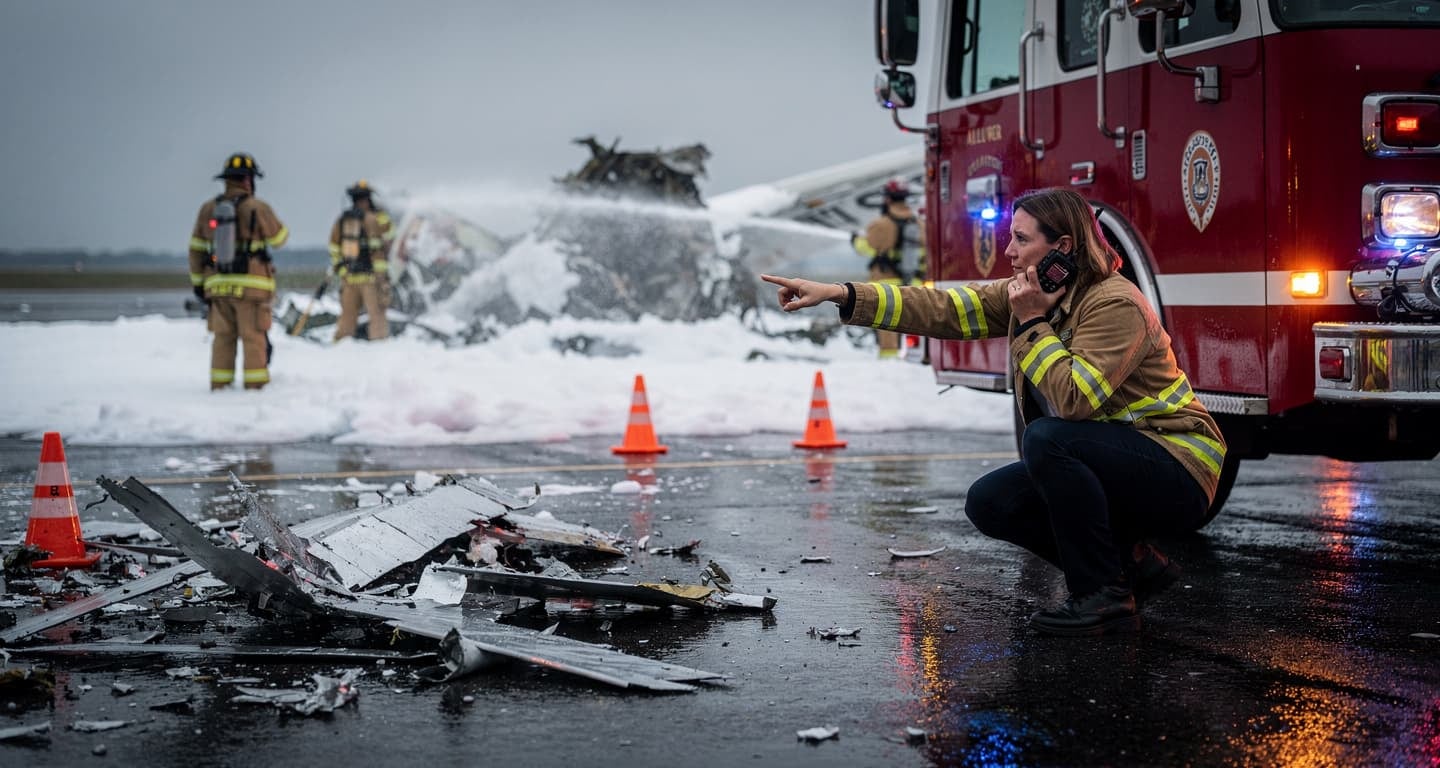
A runway trespasser was struck and killed by Frontier Airlines Flight F9 4345 at 11:19 p.m. on May 8, 2026, as the Airbus A321 began its takeoff roll on Runway 17L at Denver International Airport bound for Los Angeles. The collision triggered an engine fire and cabin smoke, forcing emergency evacuation of all 231 people onboard — 224 passengers and 7 crew. Twelve sustained minor injuries; five were transported to local hospitals. The trespasser, whose identity remains under investigation, had scaled a 12-foot razor-wire perimeter fence minutes before the collision.
Runway 17L remained closed until approximately 11 a.m. on May 9, and the NTSB has opened a formal investigation. Affected passengers require immediate rebooking action within the next 24–48 hours.
A fatal security breach at one of the country’s busiest airports turned a routine late-night departure into a major emergency — and exposed a perimeter vulnerability that federal officials are now scrambling to address. At 11:19 p.m. on May 8, 2026, a Frontier Airlines Airbus A321 operating as Flight F9 4345 struck and killed an unauthorized individual on Runway 17L at Denver International Airport during its takeoff roll to Los Angeles International Airport.
The sequence unfolded in under two minutes. The trespasser had scaled a 12-foot perimeter fence topped with razor wire — confirmed by U.S. Transportation Secretary Sean Duffy — and walked onto the active runway just moments before the aircraft reached takeoff speed. The flight deck crew spotted the individual and radioed air traffic control: “There is an individual walking across the runway.” Controllers initially assumed it was a ground crew member.
It was not.
Seconds later, the crew transmitted: “We just hit somebody,” then declared an emergency as an engine fire ignited and smoke entered the cabin. The crew aborted the takeoff, bringing the aircraft to a stop on the runway. All 231 people onboard were evacuated via emergency slides.
Twelve passengers sustained minor injuries in the evacuation; five were transported to nearby hospitals. The aircraft’s engine sustained severe damage. Runway 17L was closed for approximately 11.5 hours, reopening around 11 a.m. on May 9. The FAA, TSA, and local law enforcement are investigating alongside the NTSB, which has been formally notified.
What investigators know — and what remains unresolved
The trespasser’s identity had not been publicly confirmed as of the morning of May 9, 2026. Investigators are working to determine who the individual was and what circumstances led to the breach. What is confirmed: the person deliberately scaled a secured perimeter fence with razor wire, entered the airfield, and walked onto an active runway during nighttime operations — one of the highest-risk environments in commercial aviation.
Regulatory filings and official statements confirm the NTSB has opened an investigation. The FAA and TSA are providing support to local law enforcement. Transportation Secretary Duffy publicly confirmed the deliberate nature of the fence breach, characterizing it as an intentional act rather than an accidental incursion.
Passenger video circulating online captured the moments after impact — cabin smoke, crew commands, and the emergency slide evacuation that followed. The footage has drawn significant public attention to both the incident and the security gap it exposed.
| Time / Date | Event | Impact | Status |
|---|---|---|---|
| ~11:17 p.m., May 8 | Trespasser scales 12-ft razor-wire perimeter fence at DEN | Unauthorized individual enters active airfield | Under investigation |
| 11:19 p.m., May 8 | Frontier F9 4345 (A321) strikes trespasser on Runway 17L during takeoff roll | Fatality; engine fire; cabin smoke; takeoff aborted | Confirmed |
| 11:20–11:35 p.m., May 8 | Emergency evacuation via slides; 231 evacuated | 12 minor injuries; 5 hospitalized; engine severely damaged | Confirmed |
| 11:19 p.m. onward, May 8 | Runway 17L closed at Denver International Airport | Operational disruption to DEN departures and arrivals | Resolved ~11 a.m. May 9 |
| May 9, 2026 | NTSB notified; FAA, TSA, and local law enforcement open investigation | Federal investigation underway; trespasser identity unconfirmed | Ongoing |
| May 9, 2026 | Transportation Secretary Duffy confirms deliberate fence breach | Regulatory and security review initiated | Ongoing |

Flight deals most people never see
Our AI monitors 150+ airlines for pricing anomalies that traditional search engines miss. Air Traveler Club members save $650 per trip per person on average: see how it works.
Each deal saves 40–80% vs. regular fares:

The security failure behind the collision
The operational response by the Frontier flight crew was textbook: the pilots identified the threat, communicated with air traffic control, aborted the takeoff, and executed a full emergency evacuation. No procedural failure by the airline or crew has been identified. The failure was upstream — at the perimeter.
A 12-foot fence with razor wire is the primary physical barrier between the public and an active airfield at a Part 139 certificated airport. That barrier was defeated by a single individual in minutes, at night, without triggering any automated detection response before the aircraft was already rolling. Air traffic controllers initially assumed the figure on the runway was a ground crew member — a detail that underscores how little time existed between the breach and the collision.
Air Traveler Club’s investigation into the LaGuardia runway collision safety failure documented a similar pattern: detection systems that failed to identify a threat until it was too late to prevent a fatal outcome. Denver adds a different dimension — not a technology failure, but a physical perimeter gap that existing surveillance infrastructure did not close in time.
The FAA and TSA will face direct pressure to mandate upgraded perimeter detection at major hubs. Motion sensors, drone surveillance, and reinforced breach-detection systems have been discussed in regulatory circles for years. This incident provides the political and operational catalyst to accelerate that conversation.
What the NTSB timeline means for DEN operations and security policy
NTSB preliminary findings in incidents of this type are typically released within 30 days. The key determination investigators will make is whether the perimeter breach represents an isolated act of trespass or a systemic failure in Denver International Airport’s security architecture — a distinction that carries significant regulatory consequences.
If investigators identify a systemic detection gap, expect FAA airworthiness and TSA security directives covering perimeter surveillance upgrades at Part 139 airports within 90 days. A finding of isolated trespass would likely result in localized fence reinforcement at DEN without broader mandate. Either outcome will clarify the scope of any operational disruptions at Denver as security infrastructure is assessed and potentially upgraded.
Watch for the NTSB’s preliminary report, expected by early June 2026, and any joint FAA-TSA security directive that follows. The trespasser’s identity — still unconfirmed as of May 9 — may also shape the investigation’s direction if motive can be established.
FAQ
Are passengers on Flight F9 4345 entitled to compensation beyond rebooking?
DOT regulations require airlines to offer rebooking or a full refund for operational disruptions. Passengers who sustained injuries during the emergency evacuation may have additional claims under personal injury frameworks — those individuals should document all medical treatment and contact Frontier’s customer relations team in writing. The DOT’s operational disruption rules do not automatically provide cash compensation beyond transportation remedies, but hospitalized passengers have grounds to pursue further claims independently.
Was Frontier Airlines at fault for the incident?
Regulatory filings and official statements indicate no procedural failure by the flight crew or airline has been identified. The crew correctly identified the trespasser, communicated with air traffic control, aborted the takeoff, and executed a full emergency evacuation. The NTSB investigation is focused on the circumstances of the perimeter breach and the security systems in place at Denver International Airport — not on airline or crew conduct.
How long will the NTSB investigation take?
NTSB preliminary reports for incidents of this type are typically released within 30 days — placing the initial findings around early June 2026. A full investigation, including final report and safety recommendations, can take 12–24 months. The FAA and TSA may issue interim security directives before the NTSB final report is published if investigators identify actionable perimeter security gaps during the preliminary phase.
Is Denver International Airport operating normally now?
Runway 17L reopened at approximately 11 a.m. on May 9, 2026, following the overnight closure. Denver International Airport is operating on its standard schedule as of May 9. Passengers with upcoming DEN departures should check their airline’s app or website for any residual delays, but no extended operational disruption is currently indicated.
Read more