Summary
A Virgin Australia passenger with quadriplegia was offloaded from a Sydney–Adelaide flight on August 17, 2026, after a middle-seat assignment left no safe stowage for his power-assist wheelchair device under new lithium-ion battery rules. The 20-minute standoff, captured in a TikTok video now exceeding eight million views, ended with the passenger removed in front of a full cabin.
The passenger had flown three times in the prior four days without incident. Virgin Australia is reviewing its procedures, but the episode exposes a critical gap between battery-safety mandates and seat-allocation systems that fail to flag mobility-device and service-animal conflicts before boarding.
The confrontation began with a seat assignment that was physically incompatible with the passenger’s equipment. Shane Hryhorec, a 41-year-old disability advocate with C5 incomplete quadriplegia, boarded the Virgin Australia flight with his wheelchair, a removable SmartDrive power-assist device, and his service dog. New carrier restrictions on lithium-ion batteries required the device to be stowed at floor level under a seat — not in an overhead locker.
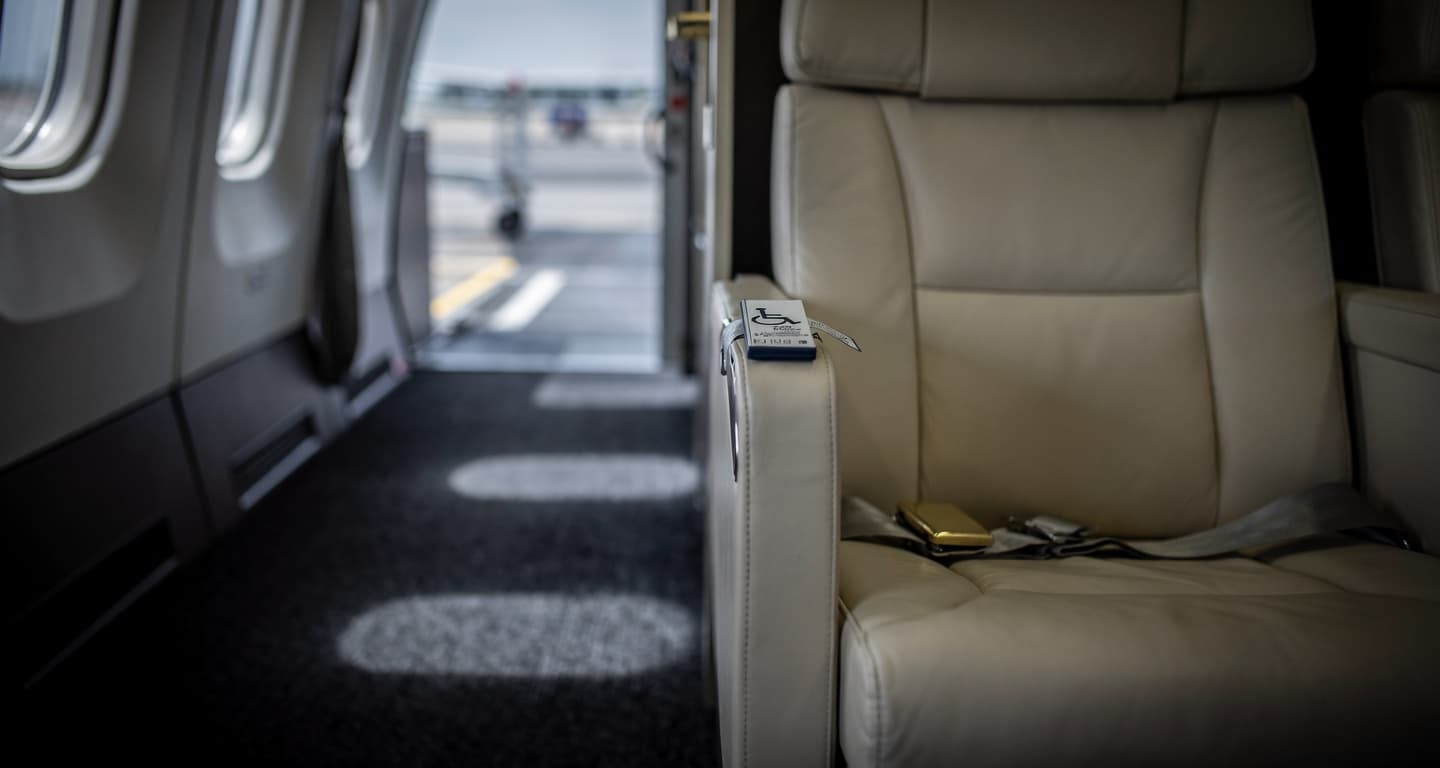
But the middle seat he had been assigned offered no usable under-seat storage. The seat in front was a business-class seat with a solid barrier. The adjacent footwell was occupied by his service dog. The aisle seat held another passenger. The SmartDrive’s omnidirectional wheels meant unsecured placement in the footwell risked rolling into the dog during flight.
What followed was a cabin-crew exchange lasting roughly 20 minutes. Hryhorec repeatedly stated he was willing to move seats or have the device secured elsewhere — he did not need it beside him during the flight. Crew members discussed strapping the device under an empty seat and moving him to a smaller seat, but no solution was accepted before the flight needed to depart. The passenger was offloaded in view of other travelers.
The airline rebooked him on a later flight, where the device was placed in a bag in an empty neighboring footwell without incident. But the damage was already public. A video Hryhorec posted on TikTok documenting the exchange had been viewed more than eight million times by August 18, 2026, turning a routine accessibility complaint into a viral pressure test of Virgin Australia’s disability commitments.
How a single seat assignment unraveled the boarding process
Virgin Australia’s new lithium-ion battery restrictions, which took effect recently, require removable power-assist devices to be stowed at floor level rather than in overhead bins or checked baggage. The rule aligns with broader industry tightening around battery fire risk, but it creates a hard constraint: the passenger must have a seat with usable under-seat clearance.
Not all seats meet that requirement. Bulkhead rows, rows behind premium-cabin barriers, and emergency exit rows often have reduced or zero under-seat stowage. In this case, the business-class barrier in front of Hryhorec’s seat eliminated the space entirely. With the service dog occupying the adjacent footwell, there was no compliant location for the SmartDrive.
The passenger told crew he had flown three times in the previous four days on Virgin Australia without encountering the same problem. When he pointed this out, one crew member responded that those previous crews “did the wrong thing then, just to accommodate you.” The exchange, captured on video, showed a customer experience manager insisting the battery “needs to go under your seat” despite the physical impossibility.
Virgin Australia issued a statement saying it “remains committed to providing an accessible and inclusive travel experience for all our guests” and confirmed it is reviewing the circumstances to identify whether seating or stowage requirements could be flagged earlier. The airline said it has reached out to Hryhorec. He has indicated he is considering contacting the Australian Human Rights Commission.
| Stage | Event | Outcome |
|---|---|---|
| Boarding | Passenger assigned middle seat behind business-class barrier; no under-seat stowage available | SmartDrive cannot be placed compliantly |
| Cabin exchange | 20-minute discussion with crew; passenger offers to move seats or have device secured elsewhere | No accepted solution reached |
| Offload | Passenger removed from aircraft in view of other travelers | Rebooked on later flight |
| Later flight | Device placed in bag in empty neighboring footwell | Travel completed without incident |
| August 18 | TikTok video surpasses 8 million views; Virgin Australia announces internal review | Public scrutiny intensifies |

Flight deals most people never see
Our AI monitors 150+ airlines for pricing anomalies that traditional search engines miss. Air Traveler Club members save $650 per trip per person on average: see how it works.
Each deal saves 40–80% vs. regular fares:

The dignity dimension that seat maps cannot capture
What makes this episode resonate beyond aviation circles is the public nature of the removal. Hryhorec described being offloaded “whilst people were watching” as “undignifying” and said it “truly makes you feel disabled.” The video captures not just a policy conflict but the human cost of a system that treated a stowage problem as a passenger problem.
This is not an isolated failure mode. Air Traveler Club’s reporting on premium cabin disability profiling has documented how seat-configuration decisions and crew discretion can produce discriminatory outcomes even when written policies appear compliant. The common thread is that airlines design stowage and seating rules around equipment, not around the passenger’s full set of needs — mobility device, service animal, and physical access requirements considered together.
For premium travelers, the business-class barrier that blocked Hryhorec’s stowage is a reminder that cabin dividers and bulkhead seats eliminate under-seat storage. Anyone traveling with medical equipment, mobility aids, or service animals should verify seat-specific stowage before departure — not at the aircraft door.
What the review means for passengers with mobility devices
The practical question for anyone booking Virgin Australia with a wheelchair, power-assist device, or assistance animal is whether the airline’s internal review will produce changes that prevent this kind of seat-assignment mismatch before it reaches the aircraft door.
- Reconfirm assistance details before departure. Virgin Australia’s Guest Contact Centre at 1300 139 303 (within Australia) or +61 7 3295 3941 (outside Australia) can flag mobility-device and service-animal requirements. If you already have a booking, call to verify that your assigned seat has usable under-seat clearance — do not assume the system has accounted for it.
- Document the seat configuration. If you encounter a similar conflict at the gate or onboard, photograph the seat and stowage area. This creates a record that matters if the dispute escalates to a formal complaint.
- Know the complaint pathway. The Australian Human Rights Commission accepts complaints online, by post to GPO Box 5218 Sydney NSW 2001, or by fax to 02 9284 9611. The National Information Service is reachable at 1300 656 419.
- Watch for procedural changes. If Virgin Australia’s review produces a published policy update — particularly advance seat flagging for mobility-device bookings — it will apply across the carrier’s domestic network and could influence how other airlines handle similar conflicts.
FAQ
Why couldn’t the SmartDrive be placed in the overhead bin?
Virgin Australia’s new lithium-ion battery restrictions require removable power-assist devices to be stowed at floor level under a seat rather than in overhead lockers or checked baggage, aligning with broader industry safety rules around battery fire risk.
What recourse does the passenger have under Australian law?
The passenger can file a complaint with the Australian Human Rights Commission, which investigates disability discrimination claims. If the Commission finds merit, remedies can include conciliation, enforceable undertakings, or referral to federal court.
Will Virgin Australia change its seating procedures?
The airline has announced an internal review to determine whether seating or stowage requirements can be identified earlier. No timeline has been published, but the viral attention on the incident creates pressure for a substantive procedural response rather than a statement-only outcome.
Read more